On the night of January 24, 1945, deep inside the frozen forests of East Prussia, a strange sound echoed through the darkness.

Explosions.
One after another, powerful blasts shook the ground around Rastenburg.
The Germans were destroying their own creation.
For more than three years, this place had been one of the most important locations in Nazi Germany. Hidden among the forests of Masuria, surrounded by secrecy and military protection, it had been the private command center where Adolf Hitler directed the war in the East.
It was called the Wolf’s Lair.
Now, as Soviet forces moved closer, the place that had once represented Nazi power was being turned into ruins by the same people who built it.
The order was simple:
Destroy everything.
Leave nothing behind.
But the concrete walls had other plans.
They refused to disappear.
And decades later, those broken structures would become one of the most haunting reminders of the Nazi war machine.
The story of Wolf’s Lair began in 1940, when Nazi Germany prepared for a conflict that would change the world.
After the invasion of Poland and the beginning of World War II, Hitler’s leadership needed a secure headquarters closer to the Eastern Front.
The chosen location was a heavily forested area near the small village of Görlitz, close to Rastenburg in East Prussia.
At first glance, the area looked ordinary.
Trees.
Lakes.
Quiet countryside.
That was exactly what made it perfect.
The Germans wanted a headquarters that would disappear into the landscape.
From the air, enemy aircraft should see nothing unusual.
The construction was designed around camouflage and secrecy.
Buildings were hidden beneath artificial vegetation.
Networks of branches and nets covered structures.
Grass and plants were placed over concrete roofs.
From above, the area looked like untouched forest.
But beneath that natural appearance was something completely different.
A military city was being created.
The complex eventually contained more than 80 reinforced concrete buildings, around 100 wooden structures, roads, communication systems, power stations, security zones, and living quarters.
Thousands of people worked and lived there.
Soldiers.
Officers.
Engineers.
Administrative staff.
Security personnel.
At its height, more than 2,000 people operated inside the complex.
Wolf’s Lair was not simply a bunker.
It was a command center designed to control a continent-wide war.
In June 1941, when Germany launched Operation Barbarossa against the Soviet Union, Hitler moved his main eastern headquarters there.
For more than 800 days, Wolf’s Lair became the center of Nazi military decisions.
Orders were sent from these forests to armies fighting thousands of kilometers away.
Generals arrived.
Maps covered the walls.
Reports from the front were delivered daily.
From this hidden location, Hitler followed the advance of German armies across the Soviet Union, then watched as the war gradually turned against Germany.
The place was built around one central idea:
Security.
Hitler needed to feel protected from enemies.
The complex was surrounded by guards, checkpoints, minefields, and strict access controls.
Visitors could not simply enter.
Every movement was monitored.
The entire area was designed to make one man feel unreachable.
But history created a strange irony.
The place built to hide Hitler became one of the most visible symbols of his failed war.
Inside Wolf’s Lair, decisions were made that affected millions of lives.
Military offensives were planned.
Retreats were ordered.
Millions of soldiers were sent into battles that would destroy entire regions.
The most famous event connected to Wolf’s Lair occurred on July 20, 1944.
That day, a group of German officers attempted to assassinate Hitler inside the headquarters.
Colonel Claus von Stauffenberg entered the complex carrying a bomb hidden inside a briefcase.
The plan was simple.
Place the explosive.
Leave the room.
Kill Hitler.
End the Nazi leadership.
The bomb was placed during a military conference inside a wooden building.
But several unexpected events changed history.
The meeting was moved from a stronger concrete bunker into a wooden conference room because of the summer heat.
A heavy table leg partially shielded Hitler from the explosion.
When the bomb detonated, the room was destroyed.
Several people died.
But Hitler survived.
The assassination attempt failed.
Within hours, the Nazi regime began hunting those involved.
The same headquarters that had become the target of a resistance plot became the place where Hitler declared his survival and revenge.
The failure of July 20 strengthened Hitler’s belief that he was protected by destiny.
But by late 1944, reality could no longer be ignored.
The war had changed completely.
Germany was losing on every major front.
The Soviet Army was advancing from the east.
The Allies were pushing through Western Europe.
The once-powerful Nazi military machine was collapsing.
The Wolf’s Lair, once considered almost impossible to attack, was no longer safe.
In November 1944, Hitler left the complex for the final time.
The eastern front had moved too close.
The headquarters near Rastenburg had lost its strategic importance.
Two days after Hitler’s departure, Field Marshal Wilhelm Keitel ordered the destruction of the facility.
The Germans did not want the Soviets to capture an intact command center.
The place that had represented Nazi control was now considered a liability.
But destroying Wolf’s Lair was not as easy as destroying ordinary buildings.
The Germans had built it to survive.
Now they discovered that the same strength protecting it from enemies also protected it from demolition.
On the night of January 24–25, 1945, German engineers began the destruction operation.
They planted enormous amounts of explosives throughout the complex.
The goal was total destruction.
The goal was to erase the evidence of Hitler’s headquarters.
The explosions were massive.
Concrete structures were lifted and cracked.
Walls collapsed.
Debris was thrown across the forest.
But the largest bunkers remained.
The reason was simple:
They were too strong.
Some bunkers contained several meters of reinforced concrete.
Some had been designed to withstand direct attacks.
The Germans had created structures almost impossible to destroy.
The destruction failed to achieve its main objective.
The Wolf’s Lair was damaged.
But it survived.
And only days later, the people who built it were gone.
On January 27, 1945, Soviet forces entered the area.
The Red Army captured the abandoned headquarters without a major battle.
The Nazis had left behind a ruined fortress.
But they had also left behind something even more dangerous:
Thousands of hidden mines.
The war was almost over.
Yet Wolf’s Lair was still capable of killing.
When Soviet soldiers entered Wolf’s Lair in January 1945, they found a place that looked like the remains of a defeated empire.
The buildings were damaged.
The command center was abandoned.
The symbols of Nazi power had disappeared.
But beneath the destroyed concrete and broken forests, another danger remained.
The ground itself was still waiting to kill.
The Germans had not only built a headquarters.
They had surrounded it with one of the largest minefields in the region.
For years, Wolf’s Lair had been protected by layers of security.
Barbed wire.
Guard posts.
Restricted zones.
And thousands of hidden explosives.
When the German army retreated, they destroyed what they could.
But they did not have enough time to remove every mine.
The result was a dangerous battlefield left behind after the war had already moved away.
For the soldiers and engineers who came afterward, the conflict was not over.
The enemy was invisible.
There were no uniforms.
No gunfire.
No front line.
Only the ground beneath their feet.
The minefields around Wolf’s Lair were enormous.
Some areas contained anti-personnel mines designed to explode when stepped on.
Others contained anti-tank mines powerful enough to destroy military vehicles.
The Germans had created defensive belts around the headquarters, making the area almost impossible to approach during the war.
Now, those same defenses became a threat to anyone entering the abandoned complex.
The first Soviet engineers cleared paths through the area shortly after capturing it.
But the task was far from complete.
The responsibility eventually passed to Polish engineers, who faced a terrifying challenge.
They had almost no complete maps of the minefields.
They had to assume that every section of ground could contain explosives.
Every step required caution.
Every movement could be fatal.
In the early 1950s, the Polish Heavy Engineer Brigade No. 2 received the mission of clearing the area around Wolf’s Lair.
Their instructions were simple but frightening:
Treat the entire zone as dangerous.
Assume nothing had been removed.
Trust only what could be verified.
The engineers moved slowly through the forest.
They searched centimeter by centimeter.
They marked dangerous areas.
They carefully removed or destroyed explosives.
Among them was Lieutenant Stefan Vidlak, who led early reconnaissance operations.
His men had to identify the patterns of the minefields before larger teams could safely enter.
They were not fighting an enemy army.
They were fighting the remains of one.
The work was extremely dangerous.
Some mines had been buried for years beneath soil and vegetation.
Some were damaged by weather but remained active.
Others had mechanisms designed to prevent safe removal.
The engineers knew that one mistake could be their last.
Several men lost their lives during the long clearance operation.
Vladislav Beginski died in 1952.
Jerzy Marawski was killed in 1953.
Earlier, another sapper, Mishtel, died after injuries connected to mine-clearing work.
The tragedy was that these deaths occurred years after World War II had officially ended.
The battlefield continued taking lives.
By the time the operation was completed, more than 65,000 mines had been removed.
A place created to protect one of history’s most powerful dictators had required years of dangerous work simply to make it safe again.
In 1955, after the area was finally considered secure, Wolf’s Lair entered a new chapter.
The question became:
What should happen to a place built by Nazi Germany?
Should it be destroyed completely?
Should it be forgotten?
Or should it remain as a reminder?
The answer was complicated.
After the war, Poland needed reconstruction materials.
Cities had been devastated.
Buildings had to be rebuilt.
And the ruins of Wolf’s Lair contained valuable resources.
Concrete.
Steel.
Stone.
Wood.
Materials once used to support Hitler’s war effort were now used for rebuilding a country damaged by that same war.
Some materials from the site were transported for reconstruction projects, including work connected to Warsaw and other damaged areas.
It created a powerful historical irony.
The physical remains of Nazi power were transformed into materials for a new future.
The place designed to help destroy Europe was partially used to rebuild it.
In 1959, Wolf’s Lair was opened to visitors.
The forest that had once been hidden behind military secrecy became accessible to ordinary people.
Tourists arrived to walk among the ruins.
They saw enormous concrete bunkers covered with moss.
Walls split open by explosives.
Rooms that once held military meetings now filled with silence.
Over time, Wolf’s Lair became one of Poland’s most famous World War II historical sites.
Visitors came from around the world.
Some wanted to understand the decisions made there.
Others came because of the mystery surrounding Hitler’s headquarters.
The ruins created a strange atmosphere.
Nature had begun taking back the site.
Trees grew around broken walls.
Plants covered abandoned structures.
The forest slowly absorbed the remains of the Nazi command center.
But the location also created difficult questions.
How should places connected to dictators and mass violence be presented?
Should they be preserved exactly as they are?
Should they become educational memorials?
Or should they be developed as tourist attractions?
The debate became stronger in the 21st century.
As visitor numbers increased, plans appeared to improve the site.
Some ideas focused on making the experience more interactive.
Others suggested historical performances or reconstructed scenes.
But critics argued that some proposals risked turning a place of tragedy into entertainment.
The most controversial suggestions involved ideas such as historical uniforms, recreated military scenes, and attractions connected to Nazi imagery.
Historians warned that Wolf’s Lair could never become a theme park.
It was not a place for celebrating military power.
It was a place for understanding the consequences of that power.
The debate revealed a larger problem faced by many historical sites:
How do you attract visitors while protecting the seriousness of history?
The answer was not simple.
Wolf’s Lair had to exist between two worlds.
It was both a tourist destination and a place of memory.
It contained both architecture and trauma.
The concrete walls were impressive.
But the decisions made inside them were devastating.
Another conflict surrounded the management of the site.
In 2012, part of the area was leased to a private company with plans to develop tourism facilities.
However, disputes later emerged over payments and management responsibilities.
The agreement was eventually canceled, and legal battles followed.
By 2017, court decisions confirmed that control of the area should return to state management.
The message was clear:
A place connected to such a significant part of history required careful responsibility.
Wolf’s Lair could not be treated only as a business opportunity.
It carried the weight of memory.
But even after decades of study and tourism, the site still had secrets.
In 2024, almost eighty years after the war, the forest revealed something unexpected.
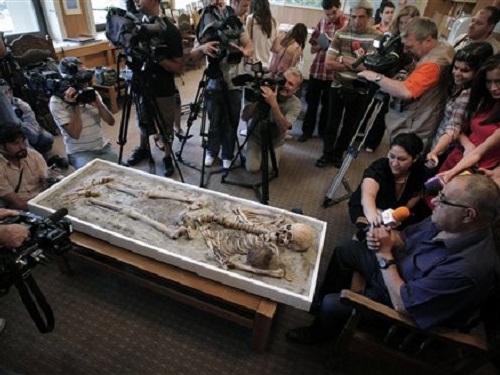
A group of researchers and volunteers working legally at the former home of Hermann Göring made a discovery beneath the remains of the building.
At first, they believed they had found old construction material.
Then they realized they had uncovered human remains.
The discovery immediately changed the atmosphere.
The excavation stopped.
Authorities were contacted.
The area became the center of a new investigation.
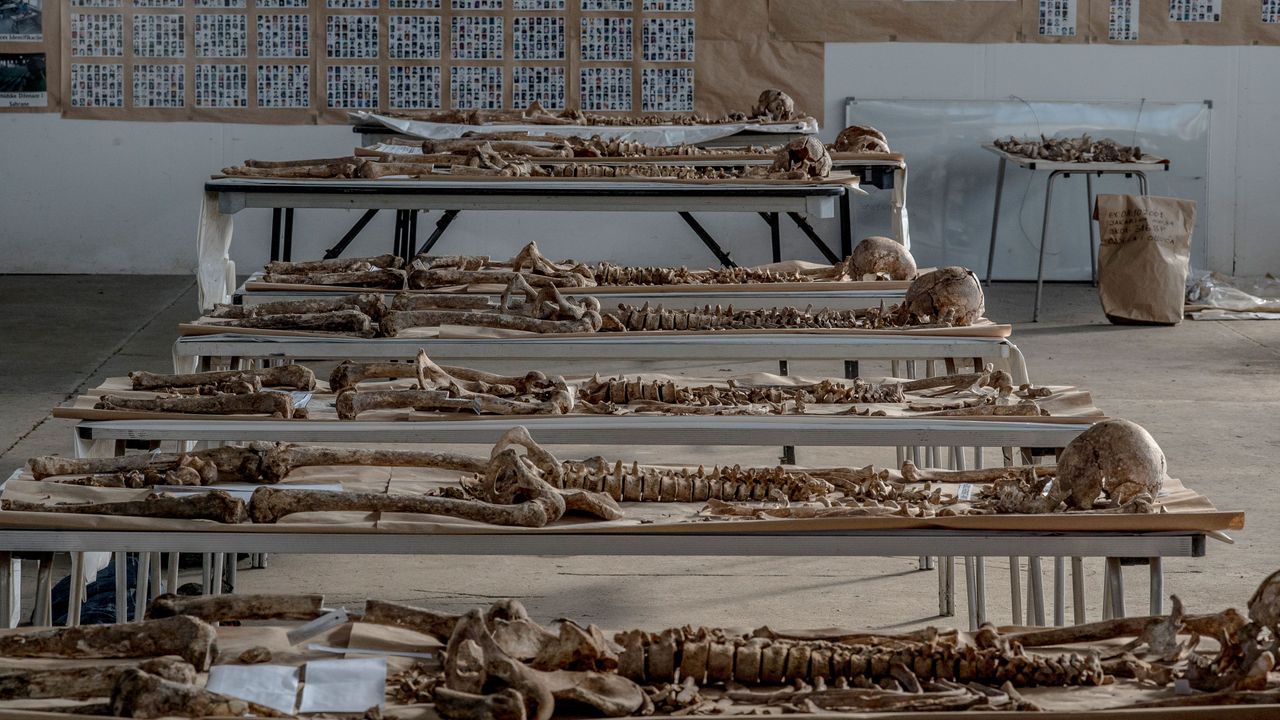
More bones were discovered.
The remains suggested at least four individuals had been buried there.
Three appeared to be adult men.
Another set belonged to a child, though exact details could not be confirmed.
The discovery created new questions.
Who were these people?
How did they die?
Why were they buried there?
But after examination, investigators could not determine a clear cause of death.
There was no evidence proving a criminal act.
The remains were too incomplete and too old to provide definite answers.
Several theories appeared.
Some suggested they could have been people who died after the war.
Others wondered if they were victims connected to the chaos surrounding the collapse of Nazi Germany.
But no explanation could be confirmed.
Eventually, prosecutors closed the investigation because there was not enough evidence for a criminal case.
The remains were handed over for proper burial.
Yet the discovery carried a deeper meaning.
Wolf’s Lair had spent decades revealing pieces of its past.
First, it revealed the remains of a dictatorship.
Then it revealed the dangers left behind by war.
Then it revealed the struggle of societies trying to remember painful history.
And finally, it revealed that even after eighty years, the ground could still hold unanswered questions.
Wolf’s Lair was built to hide.
It was designed so that enemies would never find it.
But history found it.
The bombs did not erase it.
The mines did not silence it.
Time did not bury it completely.
Today, the broken bunkers stand among the trees as a reminder of a vanished empire and the consequences of unchecked power.
It is no longer a command center.
No longer a symbol of Nazi control.
It is something different.
A place where the past continues to speak.