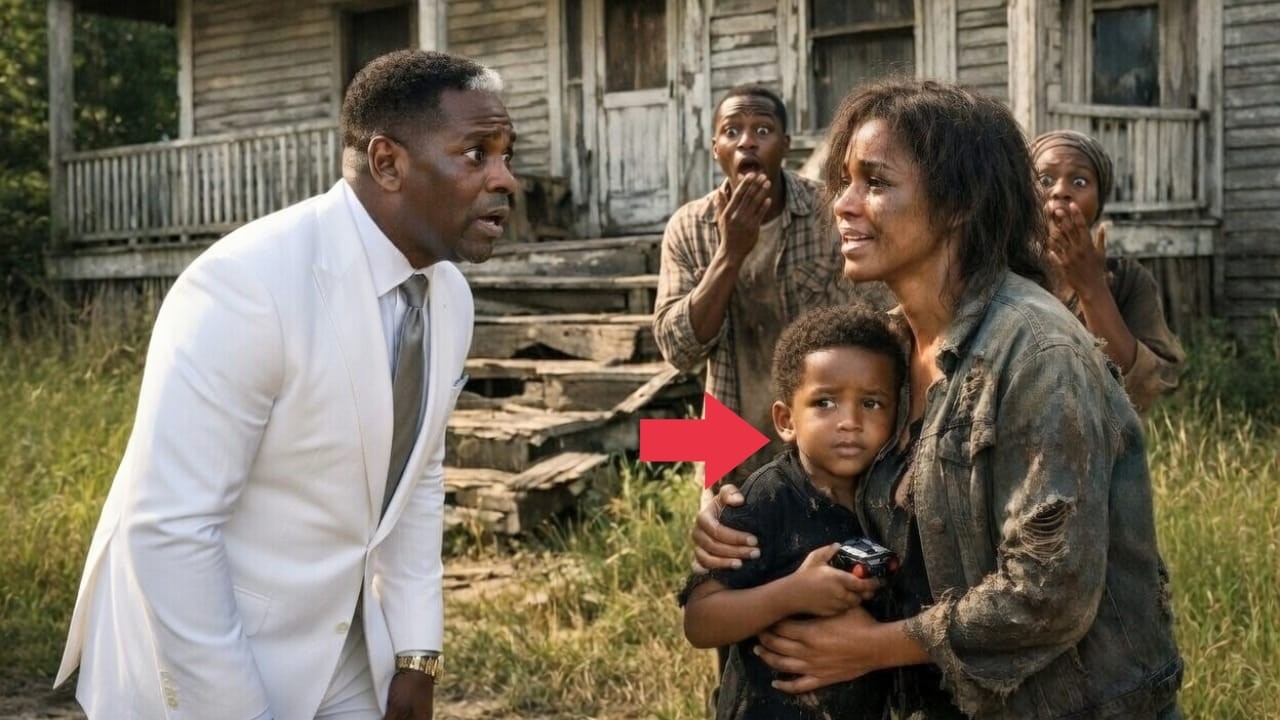
At 5:12 in the morning, Zora Torode stood in front of a forty-two-story glass tower in downtown New Orleans, both hands wrapped around the handle of her garbage cart.
Across the revolving glass doors, her father’s name was mounted in cold, polished metal:
TORODE ENERGY.
A security guard stepped outside and pointed at the streak of dirty water running from the wheels of her cart.
“Don’t leave that thing in front of the main entrance.”
Zora looked down at her mud-covered steel-toed boots, her faded orange safety vest, and the rubber gloves darkened by years of handling wet trash.
She could have told him that the man who owned the building had once carried her on his shoulders during a Mardi Gras parade.
She could have told him that the name on the wall was also hers.
She could have told him that five years earlier, half the city had attended her funeral.
Instead, Zora pulled the cart aside.
“Sorry,” she said.
Then she continued working as if she had never seen the name.
Thirty-nine floors above her, behind a wall of reinforced glass, Carver Torode stood alone in his dark office, staring down at streets that had not yet fully awakened.
He ran an energy corporation valued at more than $800 million.
He had three assistants, two drivers, a private security detail, a legal department, and a board of directors that waited for him to speak before anyone else dared to breathe.
But Carver had not slept more than three hours at a time in five years.
A framed photograph still sat on his desk.
In it, a thirteen-year-old girl with dark curls squinted into the sunlight, smiling with her whole face. Around her wrist was a thin gold bracelet engraved with one French word:
Toujours.
Forever.
Five years earlier, the police told Carver his daughter was dead.
Three days of searching the flooded marshlands had produced only a jacket, one shoe, and blood on the railing of a storm-damaged bridge.
No body was ever recovered.
But after weeks of rising water and violent currents, officials convinced Carver that he needed somewhere to place flowers.
So he buried an empty coffin.
And from that day forward, the white house on Audubon Street was no longer a home.
It became a container for everything he could not face.
That afternoon, Carver drove there alone.
The property had already been added to the city’s demolition schedule. The back section of the roof had collapsed. The fence leaned toward the sidewalk. Grass had grown almost to knee height.
Carver had signed the demolition papers one month earlier.
He told himself he was only there to inspect the place one last time.
But when he parked in front of the gate, he saw warm yellow light behind a second-floor window.
Carver remained frozen behind the wheel.
The electricity had been shut off years ago.
At least, that was what he believed.
He reached into the pocket of his suit and pulled out an old key. The metal felt cold against his palm.
The front door was unlocked.
The house was not empty.
A small pair of steel-toed work boots, caked in dried mud, sat neatly beside the stairs.
An orange safety vest hung over the back of a chair.
On the kitchen counter sat a jar of peanut butter, a packet of cheap crackers, and four envelopes labeled in small handwriting:
Electricity.
Water.
Property tax.
Next month.
Carver felt his throat tighten.
He climbed the stairs.
The door to Zora’s old bedroom was open.
The sheets had been replaced, but the white wooden dresser was still there. The pale blue paint she had chosen when she was ten still covered the walls.
And on the windowsill, beneath the fading autumn light, lay a gold bracelet.
Carver recognized it before he touched it.
He had ordered it in Paris for her twelfth birthday.
Only one had ever been made.
On the inside, beneath the word Toujours, were two tiny sets of initials:
C.T. – Z.T.
Carver picked it up.
His hands began to shake.
Then he heard the front door open downstairs.
Heavy footsteps climbed the stairs.
Carver turned.
A young woman appeared at the end of the hallway, a canvas work bag hanging from one shoulder. Her dark curls were tied low. A pale scar ran from her temple toward her left ear.
She stopped when she saw him.
The bag slipped from her shoulder and hit the floor.
Neither of them spoke.
Five years of grief, anger, searches, sleepless nights, death certificates, flowers, and an empty coffin stood between them in a hallway barely fifteen feet long.
Carver looked into her eyes.
Brown, with a faint blue ring around the iris.
Exactly like his mother’s.
“Zora?”
His voice broke.
The young woman said nothing.
Carver took one step forward.
She immediately stepped back.
That reaction stopped him.
Not because she failed to recognize him.
Because she was afraid of him.
Carver slowly lowered the hand holding the bracelet.
“Is it really you?”
Zora swallowed.
“You shouldn’t be here.”
Those were the first words his daughter had spoken to him in five years.
Not “Dad.”
Not “I’m alive.”
But:
You shouldn’t be here.
Carver looked around the room.
“How long have you been living here?”
“Three months.”
“Where were you before that?”
“Canada.”
“With who?”
She looked away.
“With my mother.”
Carver stared at her.
“Your mother died when you were eight.”
Zora looked directly at him.
“No. The woman you buried that year was not my mother.”
The silence in the room became so heavy that Carver could hear tree branches brushing against the window.
He waited for her to laugh.
He waited for her to say it was a cruel joke.
He waited for anything that would put the world back into the shape he understood.
Her face did not change.
“My mother’s name was Celestine Moreau,” Zora said. “She died three months ago in Montreal.”
Carver had to steady himself against the desk.
Celestine Moreau.
A name he had not heard in seventeen years.
The woman who had worked as an interpreter on Torode Energy’s first project in Quebec.
The woman he had loved before his marriage.
The woman who disappeared when Zora was still a baby.
Carver had been told Celestine died in a car fire outside Baton Rouge.
The family attorney brought him the official confirmation.
His mother told him the child needed stability and that the past needed to remain closed.
Carver stared at the young woman in front of him.
“Celestine was your biological mother?”
“She said you knew.”
“I didn’t.”
Zora gave a small laugh without humor.
“Do you always say that?”
Carver did not answer.
He knew he had no right to ask her to believe him.
Not after the entire world had declared her dead while she was still alive somewhere, waiting to be found.
“What happened five years ago?” he asked.
Zora entered the room, took the bracelet from his hand, and placed it back on the windowsill.
She moved carefully, as though the bracelet were not jewelry but something fragile containing her entire life.
“You really don’t know?”
“I searched for you.”
“For how long?”
“I never stopped.”
“You held a funeral after three weeks.”
“The police said—”
“The police said they never found a body.”
“They found your blood.”
“On the jacket I left behind.”
“And your shoe.”
“That was mine too.”
Carver stared at her.
“You staged your own death?”
“No.”
The answer came immediately.
“I was told it was the only way to stay alive.”
Outside, a truck passed, making the window glass tremble.
Zora sat on the edge of the bed. Her fingers locked together until the knuckles turned white.
Five years earlier, she had been thirteen.
On the night she disappeared, the city was being battered by a tropical storm. Wind bent trees toward the road. Water rose across the lower streets.
A family car picked Zora up from dance class at 6:20.
But the driver was not Henry, the man who had worked for the Torode family since she was little.
It was someone she had never seen before.
He told her Henry was sick.
The car did not go home.
When Zora asked where they were going, the man locked the doors and took her phone.
She pounded on the glass, screamed, and tried to pull the emergency brake. The driver slapped her hard enough to split her lip.
Near the Bayou Sauvage bridge, the car stopped.
A woman in a black raincoat climbed into the back seat.
She handed Zora an old photograph.
In it, Celestine was holding a small child.
The child wore the gold bracelet engraved with the word Toujours.
The woman said, “Your mother is waiting.”
Zora did not believe her.
Not until the woman opened a phone and played a recorded voice.
“Zora,” Celestine said through heavy static. “You have to do exactly what they say. Don’t call your father. Don’t let anyone know you’re alive.”
Zora remembered screaming that she wanted to go home.
Celestine began to cry.
Then the call ended.
Zora’s jacket was removed. The driver cut the palm of her hand with a blade, pressed blood onto the sleeve, then threw the jacket near the bridge railing.
They left behind one of her shoes.
Then they injected her with a sedative.
When Zora woke up, she was lying inside a small room with covered windows, on a boat moving north.
Three days later, she met Celestine at a motel near the Canadian border.
Celestine held her for a long time.
But the first thing she said afterward was:
“You must never contact Carver.”
Carver stood in the center of the bedroom, his face colorless.
“Why?”
“She said someone inside your company wanted me gone.”
“Who?”
“She refused to tell me.”
“In five years, you never called me?”
Zora looked up.
“I did.”
Carver stopped breathing.
“I called on my fourteenth birthday.”
“There was no call.”
“I called your private office number. A woman answered.”
Only three people had ever been authorized to answer that number.
“She said you knew I was alive,” Zora continued. “She said you had agreed I should stay in Canada because a scandal would destroy the company’s public offering.”
“No.”
“She knew the name of my old school. She knew the name of the dog I had as a child. She knew what Grandmother used to call me.”
“No.”
“She said if I came back, Celestine would be arrested for kidnapping. She said I would be placed in a psychiatric facility because I had injured myself and staged my death.”
Carver shook his head.
“That never happened.”
“I was fourteen. I believed adults.”
“Do you remember the woman’s voice?”
Zora was silent for a moment.
“Yes.”
“Who was she?”
“I don’t know.”
Carver pulled out his phone, but Zora stood immediately.
“Don’t call the police.”
“You were kidnapped.”
“The man who took me is dead.”
“Who told you?”
“Celestine.”
“And the woman on the phone?”
“I don’t know.”
“Then this needs to be investigated.”
Zora watched him carefully.
“The house is being demolished tomorrow.”
Carver lowered the phone.
“No one is demolishing this house.”
“I saw the city notice.”
“I own this house.”
“You abandoned it for five years.”
Every word she spoke was calm.
The calm made them hurt more than shouting would have.
Carver thought about the peanut butter jar downstairs, the envelopes of cash, and the work boots beside the stairs.
“You don’t have to live like this.”
“You don’t know what I need.”
“I’m your father.”
“You’re a man who buried an empty coffin.”
Carver had no answer.
He left the house after dark.
Before leaving, he placed his business card on the kitchen counter.
Zora did not touch it.
He sat in his car for nearly forty minutes, staring at the light in her bedroom.
For the first time in five years, Carver knew his daughter was alive.
But he also understood something more painful:
The little girl who used to run barefoot to the gate whenever she heard his car was gone.
The next morning, Zora arrived at work at 4:45.
Her sanitation supervisor, Ray Bell, handed her a new route sheet.
“You’ve been reassigned.”
“Why?”
“Orders from above.”
The new route covered the eastern industrial district, far from downtown and far from Torode Energy.
Zora looked at him.
“Who gave the order?”
Ray avoided her eyes.
“I just received the notice.”
“Carver Torode?”
“Don’t drag me into rich-people family trouble.”
Zora took the paper.
As she turned away, Ray called after her.
“A woman came asking about you this morning.”
Zora stopped.
“What kind of woman?”
“About sixty. Gray hair. Dressed like an attorney. Said she was family.”
“Did she leave a name?”
Ray handed her a card.
EVELYN TORODE.
Honorary Chairwoman, Torode Foundation.
Her grandmother.
Zora suddenly found the smell of motor oil and wet garbage inside the warehouse difficult to breathe through.
In her memory, Evelyn Torode always wore cream-colored clothes, spoke quietly, and never repeated a request.
She had taught Zora how to sit correctly at formal dinners.
She had told her that Torodes did not cry in front of employees.
She had called her Petite Étoile.
Little star.
That was the name the woman on the phone had known five years earlier.
Zora slipped the card into her vest pocket.
“Where did she go?”
Ray pointed toward the parking lot.
A black sedan sat across the street.
The rear window slowly lowered.
Evelyn sat inside.
She looked much older than Zora remembered, but her eyes were still sharp and controlled.
She did not wave.
She only stared.
Then the window rose and the car pulled away.
At the same time, on the thirty-ninth floor of Torode Energy, Carver was reviewing the original file from the search for his daughter.
There were things he had never studied closely because every page had felt like another confirmation that Zora was dead.
Now he read every line.
The jacket had been discovered at 2:10 in the morning.
The shoe at 2:46.
The blood sample had been identified as Zora’s within twelve hours.
Too fast.
Standard DNA testing could not have produced a result that quickly.
Carver called the head of legal affairs.
“Find the laboratory that processed Zora’s blood sample.”
“The case is five years old.”
“I know.”
“Do you want me to contact the police?”
“Not yet.”
“Has something happened?”
Carver looked through the glass wall.
Far below, sanitation trucks moved through the streets like small orange shapes.
“Find the laboratory.”
Two hours later, the attorney returned.
The lab had shut down three years earlier after a fraud investigation.
The physician who signed the DNA report was Dr. Milton Hale.
He had previously worked as a medical consultant for the Torode Foundation.
Carver felt cold move down his spine.
“Who approved the foundation contract?”
The attorney hesitated.
“Evelyn was chairwoman at the time.”
Carver placed the file on his desk.
“What about the substitute driver who picked up Zora?”
“Police identified him as a temporary contractor.”
“Name?”
“Julian Voss.”
“Where is he now?”
“He died in a car accident six months later.”
“Who hired him?”
“Braddock Transport.”
“Who owned Braddock?”
“The company was dissolved. I’m still tracing it.”
Carver stood.
At that moment, his office door opened.
Evelyn Torode walked in without an appointment.
She still wore cream.
She was still composed.
She still carried the faint scent of orange blossom that Zora had loved as a child.
“You found her,” Evelyn said.
It was not a question.
Carver looked at his mother.
“You knew.”
“I learned last night. The demolition contractor reported that someone was inside the house.”
“You knew before last night.”
Evelyn closed the door.
“Carver.”
“You knew she was alive.”
She did not answer.
A small muscle moved near her jaw.
Carver had never seen his mother hesitate like that.
He crossed to the desk, opened the DNA file, and pushed it toward her.
“Would you like to explain this?”
Evelyn looked at Milton Hale’s name.
“Not here.”
“This is my office.”
“And this is the company I helped you build.”
“My daughter was kidnapped.”
“Your daughter was moved away from a threat.”
Carver said nothing.
Evelyn pulled out a chair and sat down.
“Do you remember what the company was facing that year?”
“Nothing justifies this.”
“The Justice Department was reviewing payments in Louisiana. Investors were preparing to withdraw. Several board members wanted you removed.”
“What did Zora have to do with that?”
“Celestine had documents.”
Carver stared at her.
“What documents?”
“Evidence that several test wells contaminated the water supply in three poor communities to the north.”
Carver felt his stomach tighten.
“I was never told.”
“Of course not.”
“Who covered it up?”
Evelyn remained silent.
“You?”
“I protected the company.”
“By poisoning water?”
“No one died.”
“By kidnapping your granddaughter?”
Evelyn stood abruptly.
“I did not kidnap her.”
“Then what did you do?”
“I returned her to her biological mother.”
“After faking her death.”
“I created a story convincing enough to stop the people watching Celestine from searching.”
Carver looked at her as if he were seeing a stranger.
“What people?”
“The people who made millions by hiding those environmental reports. Celestine took copies and threatened to expose them. When they learned Zora was your daughter, they planned to use the child to silence her.”
“So you staged Zora’s death.”
“I moved her out of the country.”
“And told her I didn’t want her.”
“I did not say that.”
“Someone did.”
Evelyn turned toward the window.
The silence answered for her.
Carver stepped around the desk.
“You answered the call.”
She still did not look at him.
“She wanted to return. She was too young to understand.”
“So you told a fourteen-year-old that her father chose a stock offering over her?”
“I told her what was necessary to keep her hidden.”
Carver struck the desk with his hand.
A glass fell and shattered across the floor.
Outside the office, his assistant looked up but did not enter.
Evelyn turned.
“You think I did not suffer?” she asked. “I watched you stand in front of that coffin. I watched you destroy yourself.”
“And you still continued.”
“Because if Zora returned, Celestine would return. If Celestine returned, the documents would surface. The company would collapse. Thousands of people would lose their jobs. This family name would be ruined.”
“That is the real reason.”
“That is the practical reason.”
Carver looked at his mother.
She did not cry.
She adjusted the cuff of her jacket, as if they were discussing a difficult business transaction.
“Celestine is dead,” Carver said.
Evelyn stopped moving.
“Three months ago.”
For the first time, control vanished from her face.
“Zora told you?”
“Yes.”
“What did Celestine leave behind?”
Carver saw fear appear before Evelyn could hide it.
Not grief.
Not regret.
Fear.
He asked slowly:
“Where did she keep the documents?”
Evelyn did not answer.
At that moment, Carver’s phone vibrated.
A message from an unknown number.
A photograph appeared.
Zora stood outside the sanitation depot, with two men in dark jackets behind her.
The message beneath the image contained only six words:
Tell the girl to surrender the bracelet.
Carver looked up.
“What is inside the bracelet?”
Evelyn saw the screen.
Her face turned white.
Carver called Zora immediately.
No answer.
He called again.
Still nothing.
Meanwhile, Zora was running through an alley behind the industrial district.
She heard footsteps striking the wet pavement behind her.
The two men had entered the sanitation depot less than ten minutes after Evelyn left. They asked about the gold bracelet.
Zora said she knew nothing.
One of them grabbed her arm.
She drove her elbow into his throat, kicked his shin with her steel-toed boot, and ran.
Ray Bell tried to block the second man and was thrown into a stack of plastic bins.
Zora climbed through a side fence, cutting her palm on the wire, but she did not stop.
Her phone vibrated.
Carver’s name appeared on the screen.
She did not answer.
Five years earlier, one telephone call had convinced her that her father had abandoned her.
She would not place her life in another call.
Zora reached a bus stop and forced her way onto a bus just as the doors closed.
The two men stopped at the curb.
One raised his phone and photographed her through the glass.
As the bus moved away, Zora struggled to control her breathing.
She knew they would go to the house.
And the bracelet was still on the windowsill.
Forty minutes later, Zora got off the bus two blocks from Audubon Street.
She entered through the backyard.
The kitchen door had been forced open.
Drawers had been emptied. Cushions had been cut apart. Her envelopes of money were scattered across the floor.
Something crashed upstairs.
Zora grabbed a claw hammer from beside the sink and climbed the stairs.
One man was removing the window frame in her bedroom.
The other was holding the bracelet.
“Put it down,” Zora said.
He turned.
“The girl is here.”
The man near the door rushed at her.
Zora swung the hammer, but he caught her wrist and slammed her into the wall.
The hammer fell.
“What is inside the bracelet?” he demanded.
“I don’t know.”
“Why did Celestine give it to you?”
“It was a birthday present.”
The man holding the bracelet pressed his thumbnail into a narrow groove beside the clasp.
A thin metal compartment opened.
Inside was a tiny memory card.
Zora stared.
She had truly never known.
The man smiled.
“Thank you.”
Brakes screamed outside the house.
One second later, the front door burst open.
Carver entered with three members of his corporate security team.
The fight ended in less than a minute.
One man was pinned to the floor. The other jumped through a first-floor window but was caught by police in the backyard.
Carver ran upstairs.
He found Zora sitting against the wall, her wrist bruised and red.
“Are you hurt?”
She did not answer.
She was staring at the memory card sealed inside an evidence bag.
Carver knelt in front of her.
No employee in his company had ever seen him kneel before anyone.
“I’m sorry.”
Zora looked at him.
“Sorry for what?”
Carver opened his mouth, but no single answer was enough.
Sorry for believing an empty coffin?
Sorry for never questioning why the DNA report appeared so quickly?
Sorry for allowing the power of his own family to convince him that everything had been handled?
Sorry that his daughter had lived on crackers and peanut butter while he slept in houses with rooms he never entered?
Finally, he said:
“I’m sorry I let other people decide the truth for me.”
Zora turned her face away.
The police took both men into custody.
The memory card was handed to federal investigators.
What it contained triggered an emergency meeting of the Torode Energy board that same night.
There were altered water-quality reports.
Internal emails between executives.
Payments to the fraudulent laboratory.
Contracts linked to Braddock Transport.
A recording of Evelyn Torode ordering the false bridge scene.
And a video Celestine had recorded six months before her death.
In the video, Celestine looked thin. A scarf was wrapped around her head. She sat inside a small kitchen in Montreal.
“I don’t know who will see this,” she said. “But if it is Carver, I need you to understand that I did not take Zora to punish you.”
She stopped to catch her breath.
“Evelyn said people wanted the child dead. She showed me photographs, license plates, and copies of Zora’s school schedule. I believed her.”
Celestine lowered her eyes.
“Later, I understood that the greatest danger did not come from people outside the family.”
She explained that Evelyn had used the environmental evidence to control her. If Celestine returned Zora, she would be charged with kidnapping. Zora would be portrayed as an unstable teenager who staged her own death.
Celestine once tried to send copies of the documents to a journalist.
The journalist suffered a fatal accident the following week.
After that, Celestine remained silent.
Not because she was weak.
Because each time she considered speaking, a new photograph of Zora at school appeared in her mailbox.
The final part of the video was addressed directly to her daughter.
“Zora, I’m sorry I taught you that silence was the way to survive. Sometimes silence only gives dangerous people more time.”
Carver watched the video twice.
Zora watched it once.
The next morning, Carver called an emergency board meeting at Torode Energy headquarters.
Fourteen directors sat around a long walnut table.
Evelyn sat opposite her son.
She had hired three attorneys.
Rumors had already reached the press. Dozens of reporters gathered in the lobby. Employees stood in small groups, staring at their phones and whispering.
Carver entered with Zora.
She did not wear a dress or a designer coat.
She wore gray work pants, steel-toed boots, and a white shirt borrowed from a federal investigator.
As Zora crossed the lobby, the security guard who had ordered her away from the entrance the previous morning recognized her.
He saw the name printed on the visitor list.
Zora Torode.
His face went still.
His eyes dropped to the mud on her boots.
Then he stepped aside and silently opened the door.
Inside the boardroom, Evelyn watched Zora enter.
For several seconds, she did not move.
Then her eyes dropped to Zora’s wrist.
The bracelet was gone.
It was now in federal evidence.
Zora sat beside Carver.
Evelyn spoke softly.
“Petite Étoile.”
Zora looked at her.
“Don’t call me that.”
The room became completely silent.
Evelyn was no longer the most powerful person in it.
She knew.
Everyone could see the moment she understood.
Her shoulders stiffened.
Her fingers slowly closed around the folder in front of her.
The gaze that had silenced senior executives for decades moved toward her attorneys, waiting for one of them to rebuild the wall of influence around her.
No one did.
Carver turned on the wall display.
Evelyn’s recorded voice filled the room:
“Leave the jacket and one shoe. There must be enough blood for testing. No body.”
One director closed his eyes.
Another removed his glasses and placed them on the table.
Evelyn continued sitting upright, but the color drained from her face.
“The recording has been manipulated,” one of her attorneys said.
Carver opened the forensic report.
“The FBI disagrees.”
He moved to the next page.
Payments.
Shell companies.
Names.
Falsified environmental reports.
“Effective today,” Carver said, “I am resigning as CEO of Torode Energy.”
The room erupted.
Evelyn stared at him.
“You are destroying the company.”
Carver did not look at her.
“I will transfer my voting rights into an independent trust. The company will cooperate fully with investigators.”
“Carver, think carefully.”
“For five years, I thought about a child buried underground without a body.”
He turned to his mother.
“Now it is your turn to think.”
Evelyn tightened her jaw.
“I did everything for this family.”
Zora spoke.
“No.”
Every head turned.
Zora did not raise her voice.
She did not need to.
“You did everything for the family name. Not for the people inside the family.”
Evelyn stared at her.
For one brief moment, something close to pain crossed her face.
Then the boardroom door opened.
Two federal agents entered.
One read the arrest warrant.
Evelyn did not resist.
She slowly stood, adjusted her cream-colored jacket, and held out both hands.
But when the metal cuffs closed around her wrists, the sound was unmistakable in the quiet room.
She looked at Zora one final time.
There was no confidence left in her expression.
No authority.
Only an aging woman who had spent her life building an empire and had just discovered that no one would stand to protect her when the truth entered the room.
Outside the tower, cameras flashed continuously.
Carver and Zora did not leave together.
Zora used a side exit.
Carver respected that.
The investigation continued for eleven months.
Evelyn Torode was charged with conspiracy to commit kidnapping, obstruction of justice, evidence tampering, financial fraud, and several related crimes.
Three former executives were arrested.
Two local officials resigned.
Torode Energy was ordered to spend hundreds of millions of dollars cleaning contaminated water systems, compensating affected communities, and restructuring its leadership.
The share price collapsed.
News outlets called it the fall of the Torode dynasty.
Zora did not read the articles.
She continued waking at four in the morning.
When Carver suggested she leave her sanitation job, she replied:
“I’m not ashamed of my work.”
“I didn’t say you should be.”
“Then don’t act like I need to be rescued from it.”
Carver nodded.
He began learning not to use money to repair things money could not fix.
He did not buy her an apartment.
He did not send a driver.
He did not appear unexpectedly at her workplace.
Once a week, he sent a message.
I’ll be having coffee across from the park at 7:00 Saturday morning. You don’t have to come.
For three weeks, Zora did not appear.
On the fourth week, she arrived twenty minutes late.
She sat at an outdoor table, still wearing her work clothes.
Carver did not ask why she had not come earlier.
He only pushed a cup toward her.
“No sugar,” he said. “Did I remember correctly?”
Zora looked at the coffee.
“You used to give me hot chocolate.”
“I remembered incorrectly.”
It was the first time she smiled in front of him.
Barely.
But it was real.
They did not hug.
There was no miracle capable of repairing five stolen years in one morning.
They spoke about the weather, her work, and the house on Audubon Street.
Carver had canceled the demolition order.
He transferred ownership of the property into a trust controlled by Zora.
She did not immediately move back in.
Instead, she repaired the roof, replaced the electrical system, and converted the first floor into a support center for teenagers working overnight shifts.
They could eat breakfast, wash clothes, receive legal advice, and rest without being questioned.
The sign outside did not carry the Torode name.
It simply read:
TOUJOURS HOUSE.
Forever House.
One year after Carver found his daughter, they stood together outside the building on opening morning.
Ray Bell arrived with one arm still stiff from the attack at the sanitation depot.
Zora’s coworkers brought coffee in paper cups.
Several former Torode Energy employees stood along the sidewalk.
The security guard from the glass tower was there too.
He approached Zora, his face red.
“I’m sorry about that morning.”
Zora watched him for a moment.
“Next time, don’t look at someone’s uniform and decide where they belong.”
The man nodded.
“Yes, ma’am.”
Carver stood several feet away.
He held a small box.
After the crowd thinned, he handed it to Zora.
Inside was the gold bracelet.
The FBI had returned it after copying the data.
The clasp was scratched, but the word Toujours still caught the morning light.
Zora held it without putting it on.
“You don’t have to keep it,” Carver said.
Zora looked at the house.
“Celestine taught me that silence would keep me safe.”
Carver waited.
“But the bracelet she left behind forced everyone to listen.”
Zora fastened it around her wrist.
Carver looked at his daughter.
Not the girl in the framed photograph.
Not the child inside an empty coffin.
But the young woman who had supported herself, found her way home, and survived what he had never imagined.
“I lost five years,” Carver said.
Zora looked at him.
“No. You missed five years.”
Carver lowered his head.
“You’re right.”
Zora closed her hand around the bracelet.
“But we still have today.”
Then she opened the doors of Toujours House.
Light poured into rooms that had once been abandoned.
Steel-toed boots crossed the threshold.
People who had spent years being overlooked sat together at the same table.
And the man who had once owned almost everything in the city finally understood that real power was not making a room fall silent when you entered.
It was having the courage to tell the truth even when the truth could take away everything you had once used to define yourself.
Because sometimes, the person who has been buried is not the one who died.
It is the one who remained alive but was forced into silence—until the day they walked back into the light and made the world face what had been done to them.