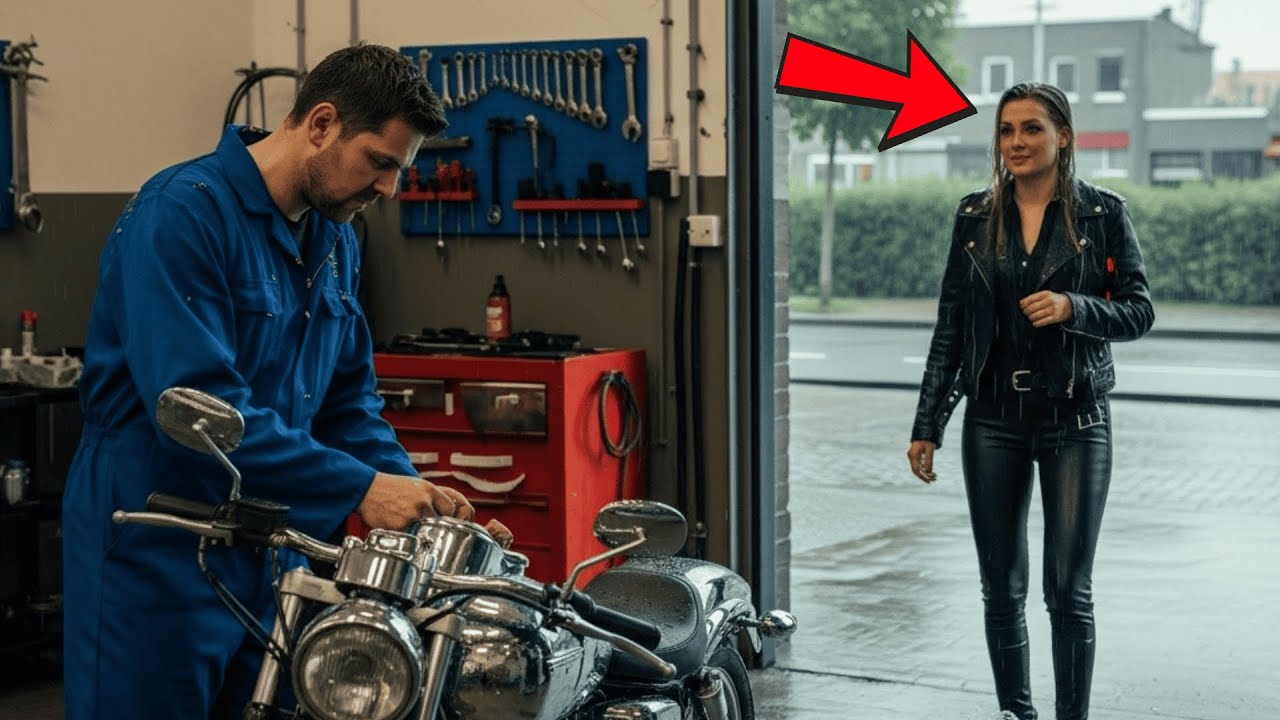
“She’s smaller than her bag.”
Petty Officer First Class Cole Briggs didn’t bother lowering his voice.
He stood beside the landing zone with his arms folded, watching the helicopter settle into the dust. Its rotors beat the frozen mountain air into violent circles, sending gravel rattling against the steel walls of the forward operating base.
A petite woman stepped down from the aircraft.
She was five feet four on a generous measurement, perhaps 118 pounds with her boots on. Her medical pack rose above her shoulders and hung almost to the backs of her knees.
Briggs glanced at the operator beside him.
“That’s our new field medic?”
The other man shrugged.
Briggs gave a short laugh.
“She’ll be a casualty before she treats one.”
Eighteen hours later, the valley erupted from both ridgelines at once.
The darkness split open with machine-gun fire.
Explosions rolled through the ravine. Dirt, rock, and pieces of metal rained down on nearly five hundred trapped men as red tracers crossed above them like burning wire.
Commander Nate Harwick had spent thirty years learning how fear sounded over a radio.
Sometimes it came as shouting.
Sometimes it came as silence.
That night, it came through his own voice.
“North element, report!”
Static answered.
“Albrecht, locate that gun position!”
Nothing.
“Command, we need air support now!”
The reply arrived broken and useless.
Drone feed unavailable.
Aircraft delayed.
Communications interference increasing.
On Harwick’s tactical display, his units were beginning to disappear one by one.
The task force had entered the valley expecting scattered resistance near an abandoned weapons depot. Instead, enemy fighters had allowed all 480 operators to move inside before opening fire from reinforced positions on both sides.
It was not an ambush.
It was an execution site.
Harwick pressed one hand against the blood spreading beneath his body armor. His breathing had become shallow, but he forced his voice to remain controlled.
“Any station with eyes on the southern drainage cut, respond.”
Gunfire answered first.
Then a woman’s voice came over the radio.
“Commander, listen carefully.”
It was not loud.
It was not hurried.
It carried none of the panic tearing through the valley.
“Your main route is closed,” the woman continued. “Do not move west. They’re waiting for you to do that.”
Harwick froze.
He knew every senior voice assigned to the operation.
He did not know hers.
“Identify yourself.”
A bullet struck stone near her position. The crack came through the radio.
She did not flinch.
“Medical support, eastern element.”
Harwick stared into the darkness.
“The medic?”
“Sir, I need you to move Second and Fourth Platoons into drainage channel C-nine. Stagger them in groups of twenty. Thirty-second intervals.”
“That channel narrows to six feet.”
“For forty meters. Then it opens beneath the southern shelf.”
Harwick looked at his map.
There was no southern shelf marked.
“How do you know that?”
Another burst of fire tore across the valley.
Somewhere below, a man screamed for a corpsman.
The woman’s reply remained steady.
“Because the contour lines are wrong.”
Harwick had commanded raids in mountains, deserts, cities, and forests. He had made decisions with seconds remaining and lives balanced on every word.
But something in her voice reached through the chaos and held his mind still.
Not confidence.
Certainty.
“Move them,” he ordered.
Six hundred meters away, Tessa Cole lay behind a fractured slab of rock.
A bullet had passed through her left shoulder twenty minutes earlier. Blood filled the sleeve beneath her body armor and dripped from her fingers.
She had packed the wound herself.
One-handed.
Her trauma kit lay open beside two wounded operators. One was unconscious. The other watched her with a pale, stunned expression as she held the radio in her right hand.
A rifle rested across her legs.
It did not belong to her.
Its owner lay ten feet away beneath a thermal blanket that no longer needed to keep him warm.
Tessa looked toward the ridgeline.
A small flash appeared near a dead cedar.
She raised the rifle.
Exhaled.
Fired once.
The machine gun above the southern trail stopped.
She returned to the radio.
“Commander, you have twelve seconds before the western gun team shifts toward C-nine.”
Harwick did not ask how she knew.
“Second Platoon, move now!”
Men began pouring into the drainage channel.
The enemy shifted exactly twelve seconds later.
Their rounds struck empty ground.
By sunrise, 477 of the 480 operators who entered the valley were still alive.
And the people who had mocked Tessa Cole when she stepped off the helicopter would spend the rest of their lives remembering the moment they learned who she really was.
But eighteen hours earlier, she had been nothing more than the smallest person on the base.
The forward operating station sat nearly 6,000 feet above sea level, pressed between black mountains and a sky so clear it looked sharpened.
Tessa arrived at 17:00.
She stepped away from the helicopter without hesitation and immediately turned toward the medical building.
She had memorized the base layout during the flight.
Operations center, eighty meters northwest.
Primary aid station, central compound.
Secondary vehicle entrance, western wall.
Fuel storage too close to sleeping quarters.
Eastern fence exposed from higher terrain.
She noticed all of it before anyone introduced themselves.
Her uniform carried no combat badge, no unit patch that meant anything to Briggs, and no visible sign that she belonged among the men preparing for the largest joint special operations raid conducted in that region in years.
Only her name was printed above her pocket.
COLE.
Beneath her uniform, inside a waterproof sleeve against her chest, she carried a folded letter.
She had kept it there for five years.
Briggs walked behind her as she crossed the compound.
“You need help with that pack?”
“No.”
“You sure?”
“Yes.”
He stepped in front of her.
Up close, his expression was not cruel. It was worse than cruelty.
It was dismissal.
Briggs was thirty-eight, broad-shouldered, decorated, and twelve years into a career that had taught him to measure people quickly. In his experience, hesitation killed. Weakness spread. Anyone who could not carry their own weight became weight for someone else.
His eyes moved from Tessa’s boots to the medical pack towering above her.
“You been outside the wire before?”
“Yes.”
“Where?”
“Several places.”
“That classified?”
“No.”
“Then why not answer?”
Tessa looked at him calmly.
“Because you’re not asking for information.”
A few operators nearby stopped what they were doing.
Briggs narrowed his eyes.
“What am I asking for?”
“Confirmation.”
“Of what?”
“That you’ve already judged me correctly.”
For the first time, someone laughed at Briggs instead of with him.
His jaw tightened.
Tessa stepped around him and continued toward the command building.
Her father had taught her about the economy of words.
Most people, Frank Cole used to say, spent language the way frightened men spent ammunition. Too much, too quickly, and usually in the wrong direction.
“Never argue with someone who has decided what you are,” he told her when she was twelve. “Let their mistake become your advantage.”
Tessa entered the operations center at 17:12.
Commander Nate Harwick stood over a table covered with maps, satellite images, and casualty estimates. His hair was gray at the temples, and the skin around his eyes had the weathered tension of a man who had spent most of his life sleeping lightly.
He looked up.
“Cole?”
“Yes, sir.”
“You’re early.”
“By three minutes.”
Harwick studied her for half a second longer than necessary.
He had been told a trauma specialist was being attached to the operation. He had expected someone older.
“Your equipment is in the aid station. Mission briefing is at thirteen hundred tomorrow.”
Tessa set a folder on the table.
“I reviewed the medical support plan.”
Harwick’s eyebrows lifted.
“During the flight?”
“Before the flight.”
“And?”
“The casualty estimate is low.”
One of the planning officers looked over.
Harwick placed both hands on the table.
“How low?”
“Approximately twenty percent.”
The planning officer frowned.
“Based on what?”
“The estimate uses evacuation times from last year.”
“That’s the most recent dataset available.”
“The southern road washed out six weeks ago. Your vehicles will have to use the western switchback. It adds eleven minutes in good weather and at least eighteen after dark.”
The room went quiet.
Harwick glanced at the map.
“That road is marked open.”
“It isn’t.”
“You confirmed that?”
“With the regional engineering report attached to the mission packet.”
The planning officer started flipping through his files.
Tessa continued.
“You also have one primary aid station positioned beside the vehicle corridor. If the base receives indirect fire, the casualties and evacuation vehicles will be concentrated in the same area.”
“What do you recommend?” Harwick asked.
“Three secondary treatment points. Minimal equipment. Hemorrhage control, airway supplies, fluids and warming materials.”
“We don’t have staff for four stations.”
“They don’t need permanent staff. They need supplies where people can reach them.”
Harwick watched her eyes.
Most new personnel softened recommendations with apologies. They surrounded useful information with nervous language.
Tessa did not.
She was not trying to impress him.
She was trying to prevent something.
“Set them up,” Harwick said.
The planning officer looked surprised.
“Commander—”
“Give her what she needs.”
Tessa nodded.
“Thank you, sir.”
As she turned to leave, Harwick noticed she had marked three locations on the map.
One near the eastern fence.
One beneath the communications platform.
One beside the unused maintenance trench.
All three were protected from direct fire from the surrounding ridgelines.
He looked toward the door after she was gone.
“Who recommended her?”
The planning officer checked the assignment page.
“There’s no name.”
“What does that mean?”
“It means the authorization came from above the level printed on the document.”
That evening, Tessa stood alone beside the eastern fence, studying the mountains as the light disappeared.
Most people looked into valleys.
Tessa looked along ridgelines.
She traced the descending rock formations, the shallow cuts where water collected, and the dark folds that could hide movement from thermal optics.
“You’re looking at the bones.”
The voice came from behind her.
Chief Petty Officer Vance Dunbar approached slowly. At fifty-three, Dunbar was one of the oldest men on the base and one of the few no one referred to as old.
His face carried the calm of someone who no longer needed to prove he had survived dangerous things.
Tessa lowered the map.
“I’m looking at the terrain.”
“No. You’re looking at what the terrain was before weather covered it.”
She said nothing.
Dunbar stopped beside her.
“Frank Cole used to read maps that way.”
For the first time since arriving, something shifted in Tessa’s expression.
It was small.
But Dunbar saw it.
“You knew my father?”
“I trained with him.”
Tessa looked back toward the mountains.
“Many people say that.”
“I trained with him before people started pretending they had.”
The corner of Dunbar’s mouth moved.
“SEAL Team Three. Winter rotation. He broke two ribs on a jump and still beat everyone to extraction.”
“That sounds like him.”
“He told us he slipped.”
“That also sounds like him.”
Dunbar studied her profile.
Frank Cole had retired in 2012 and died in 2019 after a sudden cerebral hemorrhage. His public record was respectable but ordinary.
Those who knew the hidden version spoke about him differently.
Frank had been what operators called a ghost.
His name did not appear in books. He never gave interviews. He refused photographs whenever possible.
But when experienced men encountered impossible wind, complicated terrain, or a shot no one else could explain, they still asked what Frank Cole would have seen.
“He talked about you,” Dunbar said.
Tessa’s fingers tightened slightly around the map.
“He shouldn’t have.”
“He didn’t say much.”
“That was his way.”
“He said you had the eye.”
Tessa turned to him.
Dunbar’s voice softened.
“He said it was the rarest thing he had ever seen.”
“He exaggerated.”
“Frank would rather bite through his tongue than exaggerate.”
The wind moved along the fence.
Dunbar looked toward the command building, making sure they were alone.
“I’m not asking why you’re here,” he said. “I’m only telling you that I understand what your name means.”
Tessa’s face became unreadable again.
“You understand my father’s name.”
Dunbar held her gaze.
“Maybe.”
A long silence passed between them.
Then he said, “Whatever you came here to do, you’re not going to do it without someone knowing.”
Tessa folded the map.
“You already know too much.”
“No,” Dunbar replied. “I know exactly enough.”
He walked away.
Tessa remained at the fence long after darkness settled over the compound.
When she was ten years old, her father had placed a hunting rifle on a table in front of her.
Her mother, Elaine, had objected immediately.
“She’s a child.”
Frank shook his head.
“She’s a child who notices things grown men miss.”
He did not teach Tessa to shoot because he wanted her to become a soldier.
He taught her because he believed every action carried weight, whether the person making it understood that weight or not.
He made her calculate distance before touching the rifle.
He made her describe the wind.
He made her identify what stood beyond the target.
Then he asked the same question every time.
“What happens after you pull the trigger?”
At first, Tessa answered with the obvious.
“The bullet hits.”
Frank shook his head.
“What happens after?”
“The target falls.”
“And after that?”
She eventually understood.
The trigger was only the beginning of the choice.
Every bullet changed the lives of people far beyond the person it struck. Families. Teams. Witnesses. Enemies. Friends.
“You should never be eager to touch a weapon,” Frank told her. “But if the day comes when innocent people are dying and you are the one person who can stop it, being afraid of what you are capable of is not morality.”
Years later, as his health began failing, Frank wrote her a letter.
March 2018.
He did not tell her about it.
Tessa found it two weeks after his funeral inside an old metal ammunition box beneath his workbench.
She read it once.
Then she folded it and placed it against her chest.
She had carried it every day since.
That night at the base, she waited until most of the compound was sleeping.
Then she moved through the darkness, placing secondary medical supplies at the three protected locations she had marked.
She carried every box herself.
At 05:30 the next morning, four hours before final equipment preparation, Tessa noticed Reed Kowalski miss a fastening clip.
He was twenty-three and preparing for his first major combat operation.
The mistake was tiny.
His hand reached for the clip, stopped two inches short, corrected, then missed again.
Tessa watched from across the equipment bay.
“Kowalski.”
He looked up.
“Yes?”
“Come here.”
“I’m in the middle of—”
“Now.”
Several men turned.
Kowalski approached, embarrassed.
Tessa held up a finger.
“Follow it with your eyes.”
He frowned.
“What?”
“Follow my finger.”
He obeyed.
“Did you sleep?”
“A little.”
“Headache?”
“No.”
“That means yes.”
“I’m fine.”
Tessa checked his pulse.
Too fast.
His skin was pale despite the cold.
“How much water have you had?”
“Enough.”
“How much?”
He hesitated.
“One bottle.”
“Since when?”
“Yesterday afternoon.”
Briggs stood near the doorway, listening.
Kowalski pulled his wrist away.
“I said I’m fine.”
“Your reaction time is approximately twelve percent slower than baseline. Your pulse is irregular, and you have early heat illness.”
“It’s freezing outside.”
“Your body armor doesn’t care.”
“I’m not missing this mission.”
Tessa looked directly at him.
“You’re not missing it. You’re sitting down for forty minutes, drinking electrolytes, and receiving fluids.”
“No.”
Her voice did not rise.
“You can be angry while sitting down.”
Kowalski looked toward his team leader.
Harwick had entered the bay without anyone noticing.
He had heard enough.
“Sit down, Kowalski.”
The young operator’s shoulders dropped.
“Yes, sir.”
Tessa placed an IV line with one smooth motion.
Forty-five minutes later, Kowalski’s pulse stabilized.
His hands stopped trembling.
His reaction time returned to normal.
As he stood, he avoided Tessa’s eyes.
Then he quietly said, “Thank you.”
She removed the line.
“Drink before you’re thirsty.”
Briggs watched her pack the equipment.
He did not apologize for what he had said at the landing zone.
But when she lifted the heavy medical case, he moved out of her way.
The mission briefing began at 13:00.
A large terrain map covered the front wall.
Harwick stood before 480 operators divided across multiple units. The objective was an abandoned industrial complex believed to contain weapons, communication equipment, and records connected to attacks throughout the region.
The primary route entered through the eastern valley.
The alternate route followed the northern ridge.
Intelligence assessed the enemy presence as limited.
One sniper team would provide overwatch.
Master Chief Albrecht, a veteran marksman with eighteen years of experience, sat near the front.
Harwick pointed to two possible support positions.
“Overwatch will establish here at grid four-seven-seven. If visibility is compromised, shift to four-seven-nine.”
Tessa stood along the rear wall with the medical personnel.
She studied the map.
“Sir.”
Heads turned.
Harwick looked at her.
“Yes?”
“Grid four-seven-seven places the southern assault element inside the danger area.”
Albrecht leaned back in his chair.
“Based on what?”
“The angle from the rock projection.”
“I’ve reviewed the angle.”
“The satellite image was taken in winter.”
“And?”
“The projection is wider now.”
Albrecht’s expression hardened.
“Rocks grow in summer?”
“Vegetation does.”
A few men smiled.
Tessa continued.
“The firing lane narrows by approximately four degrees. At four-seven-seven, your right-side correction crosses the southern approach. Four-seven-nine is thirty meters farther east and removes the overlap.”
Albrecht looked at Harwick.
“Commander, with respect, the medic won’t be making the shot.”
Tessa’s face did not change.
“No. But someone may be bleeding after it.”
The room became silent.
Briggs watched Albrecht’s jaw flex.
Harwick stepped closer to the map.
“Move the primary overwatch position to four-seven-nine.”
Albrecht stared at him.
“Sir?”
“You heard me.”
“Yes, sir.”
The briefing continued.
Tessa said nothing else.
But Briggs noticed something.
Whenever Harwick discussed logistics, she watched him.
Whenever he discussed medical evacuation, she watched the routes.
Whenever Albrecht discussed lines of fire, Tessa watched the wind indicator beside the operations tent.
At 21:10, the task force began moving.
The moon was thin, and the valley ahead appeared as a black cut between two darker ridges.
Tessa traveled with the eastern support element.
Her medical pack had been reorganized so efficiently that every item could be reached by touch. She carried no rifle, only a sidearm she clearly hoped not to use.
Briggs moved near the front of the same column.
After two hours, he slowed until he walked beside her.
“You always correct commanders in front of four hundred people?”
“Only when four hundred people might be affected.”
“Four hundred eighty.”
“That makes the correction more important.”
Briggs looked at her.
“You don’t get nervous, do you?”
“Yes.”
“You hide it well.”
“I use it.”
“For what?”
“Attention.”
He waited for more.
She gave him none.
They continued through the darkness.
At 00:43, the first element entered the valley.
At 01:12, Albrecht reported that overwatch was established at grid four-seven-nine.
At 01:37, Harwick received confirmation that the weapons facility appeared abandoned.
At 01:41, Tessa stopped walking.
The operator behind her nearly collided with her medical pack.
“What is it?”
She lifted one hand.
The valley was silent.
Too silent.
Then she heard a single metallic strike from the northern slope.
Not a gunshot.
A weapon’s support leg touching stone.
Tessa reached for her radio.
“Eastern element, hold position.”
Briggs turned.
“Why?”
A white flare rose from the western ridge.
The valley became daylight.
Gunfire exploded from both sides.
The first machine-gun burst struck the center column.
Three men fell before anyone located the shooter.
Rockets hit the vehicle route, blocking the western exit. A second explosion destroyed the communications relay.
The force scattered toward cover that did not exist.
“Contact north!”
“Contact south!”
“Multiple positions!”
“Man down!”
The radio filled with overlapping voices.
Tessa dropped behind a boulder as rounds cut through the air above her.
Briggs landed beside her.
“You called it before the flare.”
She opened her medical pack.
“We can discuss it later.”
A wounded operator crawled toward them with blood pumping from his thigh.
Tessa moved into the open.
Briggs grabbed the back of her armor.
“You’ll get hit.”
“He’ll bleed out.”
She pulled free.
Three rounds struck the ground beside her as she reached the wounded man.
Briggs fired toward the ridgeline, forcing the enemy shooter down.
Tessa dragged the operator behind the rock, applied a tourniquet, packed the wound, and marked the time on his forehead.
Another man collapsed twenty meters away.
Then another.
Within four minutes, the valley had become a field of isolated groups pinned beneath converging fire.
Harwick attempted to order a withdrawal.
The western route detonated beneath the first vehicle.
The northern ridge route was already covered.
Enemy fighters had studied the task force’s expected movements.
They knew the primary plan.
They knew the alternate plan.
They knew where the command element would stand.
A bullet passed through Harwick’s side.
He went down behind the remains of a stone wall.
“Commander hit!”
His radio operator pulled him into cover.
Harwick pressed his hand against the wound.
“Get Albrecht on the northern gun team.”
The radio operator called.
No answer.
“Albrecht, report.”
Static.
Three hundred meters above the valley, Albrecht lay beside his rifle.
The first shot of the ambush had struck his observer.
The second had hit Albrecht below the collarbone.
He managed to crawl away from the exposed position, leaving a dark trail across the rock.
He tried to reach his radio.
His fingers stopped six inches short.
Tessa heard the report that overwatch was down.
She closed her eyes for less than a second.
Then she turned to Briggs.
“Where is Albrecht’s position?”
“You’re not going up there.”
“Where?”
“He’s three hundred meters above us with two machine-gun teams between here and him.”
“Then I need the route they’re not watching.”
Briggs stared at her.
“You’re a medic.”
“Yes.”
“You can’t treat anyone if you’re dead.”
“I can’t treat five hundred men while those guns are firing.”
A blast struck the opposite side of the boulder.
Briggs grabbed her arm.
“What exactly are you planning to do?”
Tessa looked toward the ridge.
“Find Albrecht.”
She moved before he could stop her.
Tessa crossed the first open stretch when enemy fire shifted toward the command element.
She crawled through a shallow wash, dragging her medical pack beneath her body.
At the base of the ridge, she found one of the supply cases she had placed the night before.
Briggs, who had followed despite every instinct telling him not to, saw her open it.
Inside were trauma supplies, water, ammunition, and a compact radio battery.
His eyes widened.
“You put this here?”
“Yes.”
“When?”
“Last night.”
“You knew this would happen?”
“I knew something could.”
They climbed through a narrow break between two rock faces.
Halfway up, they found Albrecht’s observer.
He was alive but barely conscious.
Tessa stopped the bleeding and positioned him behind cover.
“Stay with him,” she told Briggs.
“No.”
“He needs pressure on the wound.”
“You’ll need cover.”
“I’ll have it.”
“With what?”
Tessa looked toward Albrecht’s rifle.
Briggs followed her eyes.
“No.”
She moved to the weapon.
“No,” he repeated. “You said you were medical support.”
“I am.”
“You ever used one of those outside a range?”
Tessa’s hand stopped above the rifle.
For the first time, Briggs saw uncertainty on her face.
It was not fear of the weapon.
It was memory.
Years earlier, Tessa had stood in her mother’s kitchen after returning from a deployment no official record acknowledged.
Her hands had been scrubbed clean, but she could still see blood beneath her fingernails.
Elaine Cole sat across from her, crying without sound.
“I already lost your father to that world,” her mother whispered. “I watched him come home piece by piece until there were parts of him neither of us could reach.”
Tessa said nothing.
Her mother placed both hands around hers.
“Promise me you won’t pick up a rifle again.”
Tessa had made the promise.
Not because she believed she would never need the rifle.
Because, at that moment, she needed her mother to believe it.
Now men were dying below her.
She could hear their calls over the radio.
A promise made in a quiet kitchen was colliding with the reality of a burning valley.
Tessa touched the waterproof sleeve beneath her uniform.
The letter rested against her chest.
Then she picked up the rifle.
The change in her body was immediate.
Her shoulders settled.
Her breathing slowed.
Her left hand adjusted the support as though the weapon had returned to the one place it remembered.
Briggs stopped speaking.
Tessa checked the optic, corrected the elevation setting Albrecht had used, and shifted six inches to the right.
She looked through the scope.
The first enemy gunner was partially concealed behind stacked stone.
Tessa did not aim at him.
She aimed at the rock beside him.
The shot struck the stone, breaking a sharp fragment into his face.
He recoiled.
The second shot ended the gunfire.
Briggs stared.
Tessa shifted to the next position.
One shot.
Then another.
A hidden spotter fell before the men below even realized he had been located.
Over the radio, someone shouted, “Overwatch is active!”
Briggs looked at Tessa’s hands.
No shaking.
No wasted movement.
No celebration after the shots.
Only calculation.
He had seen that before.
Not her face.
Not her size.
The rhythm.
Years ago, during an advanced training rotation, Briggs and twenty-three other operators had been instructed by an anonymous specialist whose identity remained classified.
They never saw the instructor clearly.
The lectures arrived through a screen. Field corrections came through a distorted radio channel. The voice had been lower, digitally altered, impossible to identify.
The instructor taught them not to chase visible targets.
To read what the enemy was forced to do next.
To study terrain as a living system.
One phrase had been repeated through every exercise.
Do not fight the valley.
Make the valley fight for you.
Briggs watched Tessa adjust the rifle.
A terrible possibility formed in his mind.
Below them, the task force continued taking fire.
Tessa spoke into Albrecht’s radio.
“Commander Harwick.”
Harwick answered through clenched teeth.
“Go.”
“Move Second and Fourth into drainage channel C-nine.”
“That route isn’t on the tactical map.”
“The map is wrong.”
Harwick looked at the blood on his hand.
“How certain are you?”
“Certain enough to remain here while you use it.”
The commander heard what she was not saying.
Her position would draw attention.
She intended to keep firing while nearly five hundred men escaped beneath her.
“Identify yourself,” Harwick said.
“Medical support, eastern element.”
Harwick almost laughed despite the pain.
“The medic.”
“Yes, sir.”
A round struck the rock inches from Tessa’s head.
Briggs ducked.
She did not.
She fired again.
“Commander, you have twelve seconds before the western gun team shifts toward C-nine.”
Harwick ordered the movement.
The enemy shifted exactly when Tessa predicted.
Their rounds struck empty ground.
Groups of twenty began entering the drainage channel.
The passage narrowed so tightly that larger men had to turn sideways. Above them, bullets struck stone, but the channel deepened as it curved beneath the southern shelf.
The satellite images had shown solid ground.
Tessa had seen the slight depression in the contour lines.
A hidden erosion cut.
A route invisible from both ridgelines.
“Keep them moving,” she said.
Harwick relayed the order.
For the next forty minutes, Tessa controlled the valley.
She identified enemy positions by muzzle flash, echo, dust movement, and the direction in which frightened birds left the cliffs.
She did not shoot constantly.
She waited until one shot changed the movement of ten men below.
When an enemy team advanced toward the drainage exit, she struck the lead fighter and forced the others behind a rock shelf where Fourth Platoon could contain them.
When the northern machine gun shifted to cover Harwick’s position, she hit its ammunition bearer.
When a rocket team prepared to fire toward the trapped vehicles, she struck the launcher’s sight assembly, sending the rocket harmlessly into the upper ridge.
Men began asking over the radio who was shooting.
No one knew.
Then Tessa used a phrase that made Briggs’s blood turn cold.
“Commander, don’t fight the valley. Make the valley fight for you.”
Briggs looked at her.
Tessa remained behind the scope.
His mouth opened, but no sound came out.
He remembered a dark training room.
He remembered the anonymous voice correcting his breathing after he missed a target hidden beyond moving branches.
He remembered an instructor explaining exactly how a ridge could become a weapon.
He remembered the name spoken only in whispers among experienced operators.
Northstar.
The mentor who had reshaped long-range doctrine across several special operations units.
The instructor no student had ever met.
The person many believed was Frank Cole.
Briggs’s face changed.
The arrogance disappeared first.
Then the certainty.
His eyes widened as he looked at the small woman he had mocked beside the helicopter.
Tessa saw the realization without looking away from the rifle.
“Do not say it over the radio,” she said.
“It was you.”
“Pressure on Albrecht’s wound.”
“You trained us.”
“Briggs.”
He did not move.
“You were Northstar.”
Tessa finally turned her head.
“Your friend is bleeding.”
The words struck him harder than any accusation.
Briggs dropped beside Albrecht and pressed both hands against the wound.
The rifle fired again above him.
Each shot now carried a different meaning.
This was not a medic who happened to know how to shoot.
This was the person whose lessons had kept Briggs alive for years.
The same person he had described as a future casualty.
Enemy fighters began concentrating fire on the overwatch position.
They understood that as long as the rifle remained active, the task force below had a path out.
Stone fragments cut Tessa’s face.
A round passed through the edge of her body armor.
Another struck her left shoulder.
The impact spun her onto her back.
Briggs shouted her name.
Tessa gasped once.
Blood spread beneath her shoulder.
He started toward her.
“Stay with Albrecht,” she ordered.
“You’ve been hit.”
“I’m aware.”
She rolled behind the rifle and attempted to raise it.
Her left arm would not respond.
Briggs crawled to her.
“You can’t hold it.”
“Then support the front.”
“What?”
“Put your hand beneath the stock.”
He positioned himself beside her.
Tessa rested the rifle across his arm.
They fired together.
She controlled the trigger.
He carried the weight.
Below, the final groups entered the drainage channel.
Harwick remained near the rear with the wounded.
“Tessa,” he said over the radio.
It was the first time he had used her name.
“You need to withdraw.”
“Not yet.”
“The last element is moving.”
“The enemy has a team above the southern exit.”
“How many?”
“Seven.”
“Can you stop them?”
A pause.
“Yes.”
It was a lie.
Her vision had begun narrowing.
Blood loss made the edges of the scope pulse black.
The seven fighters were moving quickly along the ridge, using the rocks for cover. If they reached the southern exit first, hundreds of operators would emerge into concentrated fire.
Tessa counted their movement.
One.
Two.
Pause.
Three.
She fired when the first fighter crossed a gap.
He fell.
The others scattered.
She fired at the rock above the second man, forcing him lower.
Briggs watched her breathing become uneven.
“You’re fading.”
“Call the wind.”
“What?”
“Call it.”
He looked toward the valley.
“Left to right. Maybe six knots.”
“Four.”
“How do you know?”
“The dust.”
She fired again.
The third fighter disappeared behind a ledge.
Tessa’s right hand began trembling.
Briggs saw it and understood how much blood she had lost.
“Tessa, give me the rifle.”
“No.”
“I can make the shot.”
“You can make a shot.”
She adjusted the optic.
“I need to make the right one.”
The enemy team’s leader appeared briefly behind a split boulder.
Tessa’s finger tightened.
Then stopped.
Briggs whispered, “Why aren’t you firing?”
“He wants me to.”
She shifted the rifle three meters left.
A second fighter rose with the actual weapon.
Tessa fired.
The man fell backward.
Briggs stared at the empty place where the first target had been.
She had recognized the decoy.
The remaining fighters withdrew.
At the southern exit, the trapped operators began emerging from the drainage channel.
The valley was losing its grip on them.
Harwick received the count.
Four hundred sixty.
Four hundred seventy.
Four hundred seventy-five.
Four hundred seventy-seven.
Three men were confirmed dead.
Every other operator had reached the protected shelf.
“Everyone is clear,” Harwick said. “Tessa, move now.”
She attempted to stand.
Her legs folded.
Briggs caught her.
“We’re coming down.”
A new voice cut through the radio.
“Enemy movement below your position. At least fifteen.”
The fighters were climbing toward them.
Briggs looked at the narrow route leading down.
They could not carry Tessa, Albrecht, and Albrecht’s observer while defending the passage.
Tessa understood immediately.
“Take them.”
Briggs stared at her.
“No.”
“Take Albrecht and his observer.”
“I’m not leaving you.”
“You are.”
“I said no.”
Tessa reached beneath her armor and removed the waterproof sleeve containing the letter.
She pressed it into Briggs’s hand.
“Give this to Dunbar.”
His face tightened.
“What are you doing?”
“Buying time.”
“We can hold together.”
“With two wounded men and one rifle?”
“You’re wounded too.”
“That’s why the decision is easy.”
Briggs shook his head.
“You don’t get to order me.”
Tessa’s eyes hardened.
“Northstar does.”
The words stopped him.
For years, that title had carried unquestioned authority inside training rooms and classified exercises.
Now it belonged to the bleeding woman in front of him.
Tessa leaned closer.
“You were wrong about me.”
Briggs’s face went pale.
She continued before he could speak.
“But I was wrong about you too.”
His eyes lifted.
“I thought you only knew how to judge people,” she said. “Prove me wrong.”
The enemy was getting closer.
Briggs looked at Albrecht.
Then at the observer.
Then back at Tessa.
His jaw trembled.
“We’ll come back.”
“I know.”
It was another lie.
Briggs lifted Albrecht onto his shoulders.
He gave the observer an arm to hold.
Then he began moving down the narrow passage.
After ten steps, he looked back.
Tessa had already turned toward the ridge.
The rifle rested against her good shoulder.
She appeared impossibly small beneath the dark mountain.
Then she fired.
The pursuing enemy stopped advancing.
Briggs carried the wounded men downhill while Tessa moved between three positions, making the enemy believe several shooters remained above them.
She fired from the left side of the ridge.
Crawled through broken stone.
Fired from the center.
Changed position again.
Every movement left more blood behind.
When her ammunition ran low, she spaced the shots farther apart.
When only three rounds remained, she used stones to create false movement.
The enemy slowed.
Those extra seconds allowed Briggs to reach the drainage channel.
By the time the rescue team climbed toward Tessa’s position, the ridge had become silent.
Reed Kowalski was among them.
The young operator Tessa had treated that morning moved faster than the others, carrying medical equipment over one shoulder.
They found five enemy fighters below the final rock shelf.
Two had been shot.
The others had retreated after receiving fire from what they believed was a larger defensive team.
The rescue group climbed higher.
“Tessa!”
No answer.
“Tessa Cole!”
Kowalski rounded a slab of stone.
She lay on her side beside the rifle.
Her face was gray.
Blood covered her uniform from the shoulder to the waist. One hand still held the radio against her chest.
Kowalski dropped beside her.
“I’ve got her!”
The medics cut away her armor.
Beneath it, they found old scars across her ribs and back.
Not the scars of a career spent inside medical stations.
The scars of someone who had been closer to violence than any of them had imagined.
One medic checked her pulse.
“Faint.”
“Entry wound left shoulder.”
“She’s got another one below the vest.”
“Get blood ready.”
Kowalski leaned close.
“Tessa, can you hear me?”
Her eyelids moved.
He squeezed her hand.
“You’re not dying here.”
Her lips parted.
No sound emerged.
He leaned closer.
“What?”
Tessa forced the words out.
“The count.”
Kowalski swallowed.
“Four hundred seventy-seven alive.”
Her eyes closed again.
A nearly invisible expression passed across her face.
Relief.
“Then we got them home,” she whispered.
The medics lifted her onto the evacuation litter.
As they moved her, something metallic fell from beneath her torn uniform.
It struck the rock.
Briggs, who had returned with the rescue element, bent down and picked it up.
It was a black coin marked with a small silver star.
No unit name.
No official insignia.
Only one word.
NORTHSTAR.
Every senior operator standing nearby recognized it.
The coin had been given to graduates of the classified program that had trained many of the task force’s most experienced leaders.
Briggs looked at Tessa.
Then at the coin.
Around him, wounded men fell silent.
Commander Harwick reached the ridge minutes later, supported by Dunbar.
He saw the rifle.
He saw the pattern of spent cartridges.
He saw the small woman on the litter and the operators gathered around her.
Dunbar’s eyes went to the waterproof letter in Briggs’s hand.
“You were supposed to give that to me,” he said.
Briggs nodded.
His voice had become hoarse.
“She said you’d understand.”
Dunbar opened the sleeve carefully.
Inside was Frank Cole’s final letter to his daughter.
Harwick started to turn away.
Dunbar stopped him.
“They need to hear this.”
He unfolded the paper.
The handwriting was uneven, written during the final year of Frank’s life.
Tessa,
If you are reading this, then I ran out of time before I learned how to say these things aloud.
People will remember me for work that was never mine alone.
They will repeat the Cole Method. They will tell stories about the shots I made and the men I trained.
Let them tell the stories if the stories keep someone alive.
But you and I know the truth.
You saw the hidden route before I did.
You corrected my calculations when you were sixteen.
You built the Northstar exercises. You trained men twice your age without allowing them to see your face because the institution was not yet brave enough to admit who was teaching them.
I allowed people to believe the eye belonged to me.
It did not.
It belonged to you.
I told myself I was protecting you.
Perhaps I was protecting my own pride too.
For that, I am sorry.
You carry a gift that can save lives, but the world will often mistake your size, your silence, and your kindness for weakness.
Let it.
Being underestimated gives you time.
But remember what I taught you.
The rifle is not who you are.
The uniform is not who you are.
Even the lives you save are not possessions you can carry forever.
You are the choice you make when everyone else has stopped believing there is a choice left.
And if that day comes, do not become me.
Come home.
Dunbar stopped reading.
No one spoke.
Briggs looked at the ground.
The truth moved through the group slowly.
The legendary Northstar instructor had not been Frank Cole.
It had been his daughter.
At nineteen, Tessa had begun designing advanced terrain-analysis exercises under her father’s supervision.
At twenty-one, she had corrected a fatal weakness in a classified overwatch doctrine.
At twenty-three, behind a distorted voice and a dark screen, she had trained senior operators who never knew their instructor was younger and smaller than many of their children.
She had later entered the field during a mission that was never publicly acknowledged.
Her team survived.
Her closest partner did not.
After returning home, Tessa abandoned long-range work and retrained as a combat trauma specialist.
She believed saving lives directly might quiet the voices of the people she had been unable to save.
The men who had respected Northstar’s lessons had walked past her at the base without recognition.
One of them had laughed at her.
Briggs’s face collapsed beneath the weight of it.
He remembered every dismissive word.
Smaller than her bag.
A casualty before she treats one.
A burden in the field.
Around him stood dozens of witnesses who remembered those words too.
No one needed to repeat them.
His body had already revealed the moment of recognition.
His shoulders lowered.
His eyes could not meet hers.
The confidence that had filled the landing zone was gone.
In its place was the expression of a man seeing the true size of his own mistake.
Tessa’s heart stopped during the evacuation flight.
The medical team restored it after forty-seven seconds.
At the regional hospital, surgeons operated for eleven hours.
The bullet through her shoulder had damaged nerves and blood vessels. A second round had entered below her armor and narrowly missed her spine.
She required thirty-one units of blood and three additional surgeries.
For six days, she remained unconscious.
During those six days, the investigation began.
The intelligence report had been compromised.
The enemy had received information about the primary route, alternate route, command position, evacuation plan, and scheduled time of entry.
The outdated casualty estimate Tessa had challenged was only one part of a larger failure.
The mission had been built around assumptions no one had questioned because the people who created them held senior titles.
Tessa had questioned them.
Her secondary medical caches saved fourteen operators who could not reach the primary aid station.
Her adjustment from grid four-seven-seven to four-seven-nine prevented Albrecht’s first shot from passing through the southern assault route when the ambush forced the teams into unexpected positions.
Her identification of Kowalski’s heat illness ensured he was physically capable of joining the rescue team that later kept her alive.
Each small decision had returned during the battle.
Nothing she noticed had been wasted.
When Tessa woke, Dunbar was sitting beside her hospital bed.
Her left arm was immobilized. Tubes ran beneath the blankets. Morning light passed through a narrow window.
She looked at him.
“The letter.”
“I read it.”
Her eyes closed.
“That wasn’t permission.”
“No.”
“You read it anyway.”
“Yes.”
“Why?”
“Because 477 men needed to know whose voice they followed out of that valley.”
Tessa turned toward the window.
“He wanted me to come home.”
“You did.”
“Three didn’t.”
Dunbar did not insult her with a simple answer.
He sat silently until she looked at him again.
“Harwick?” she asked.
“Recovering.”
“Albrecht?”
“Recovering.”
“The observer?”
“Already complaining about hospital food.”
“Kowalski?”
“Drank three liters of water yesterday. He made sure everyone knew you told him to.”
A weak smile touched her mouth.
Then the door opened.
Briggs entered alone.
He was not wearing his combat uniform.
He carried no weapon, no cap, and none of the confidence he had worn at the landing zone.
He stopped several feet from the bed.
Tessa watched him.
Dunbar stood.
“I’ll be outside.”
When the door closed, Briggs looked at his hands.
“I’ve rehearsed this conversation about a hundred times.”
“That usually makes conversations worse.”
He nodded.
“Probably.”
Silence filled the room.
Finally, Briggs looked at her.
“I was wrong.”
Tessa waited.
“I judged you before you crossed the landing zone,” he continued. “I spoke about you like you were equipment we’d been forced to carry.”
His voice tightened.
“I thought experience gave me the right to decide who belonged.”
Tessa’s expression remained calm.
Briggs swallowed.
“You trained me during the Northstar rotation.”
“Yes.”
“You corrected my firing position on the second day.”
“You were loading too much weight into your right shoulder.”
He stared at her.
“You remember?”
“You argued for twenty minutes.”
Despite himself, Briggs almost smiled.
Then his face became serious again.
“Your lessons kept me alive before that valley. And in that valley, you stayed behind after I left.”
“You were carrying two wounded men.”
“You ordered me to.”
“You still carried them.”
He stepped closer.
“When I looked back, I thought I was watching you die because I had obeyed you.”
“You followed the correct priority.”
“You made me leave you.”
“I made you save two people.”
Briggs’s eyes turned red.
“I called you a burden.”
Tessa held his gaze.
“Yes.”
He flinched.
She did not soften the truth for him.
But she did not use it to humiliate him either.
“You were wrong,” she said. “The question is whether you want the mistake to end with embarrassment or become useful.”
Briggs looked at her for a long time.
“What would make it useful?”
“Stop measuring people by how familiar their strength looks to you.”
He nodded slowly.
“I can do that.”
“No,” Tessa said. “You can practice it.”
Three months later, Commander Harwick stood before the surviving members of the task force.
Tessa watched from a wheelchair near the side of the auditorium. Her left arm remained weak, and doctors still did not know whether she would recover full movement.
Harwick carried a folder containing the official findings.
The operation had resulted in broad changes.
No major mission would again rely on a single overwatch position.
Medical supply points would be distributed along multiple routes.
Terrain assessments would include current environmental changes rather than archived satellite images alone.
Casualty projections could be challenged by any qualified medical officer, regardless of rank.
But Harwick did not begin with policy.
He looked toward Tessa.
“Many of us entered the valley believing leadership was a position,” he said. “We left understanding that leadership is the person who sees the path when everyone else sees only the trap.”
The room remained silent.
“Tessa Cole was assigned to us as a medic. She performed that duty before, during, and after direct contact.”
Harwick paused.
“She was also the architect of training that prepared many people in this room for the worst night of their careers.”
Several senior operators lowered their heads.
“Her identity was classified,” Harwick continued. “Her contribution was hidden. Her authority was underestimated.”
His eyes moved toward Briggs.
“And some of us made that underestimation public.”
Briggs stood.
Every person in the room turned toward him.
His face was tense, but he did not look away.
“I did,” he said.
No one had expected him to speak.
He faced Tessa.
“When she arrived, I said she was smaller than her bag.”
The words hung in the auditorium.
“I said she would become a casualty before she treated one. I called her a burden.”
Tessa remained still.
Briggs turned toward the others.
“I was not joking. I believed it.”
His voice grew firmer.
“That matters because prejudice rarely introduces itself as hatred. Sometimes it calls itself experience. Sometimes it calls itself standards. Sometimes it sounds like a confident person making a quick assessment.”
No one moved.
“I was wrong before the mission began. She saved my life anyway. Then she trusted me to carry two wounded men while she stayed behind alone.”
Briggs looked at Tessa again.
“I cannot undo what I said. But no one in this room will ever hear me say something like it about another person and remain silent.”
He sat down.
Harwick closed the folder.
The official recommendation was for Tessa to receive one of the nation’s highest decorations.
She declined the public ceremony.
Instead, she requested that the recognition be recorded collectively with the names of the three men who did not return.
She also made one private request.
The Northstar training program would no longer hide its instructors behind altered voices unless operational security truly required it.
“People cannot learn to challenge their assumptions,” she wrote, “while the institution continues protecting those assumptions.”
Six months after the valley, Tessa returned to the same base.
The temperature was below freezing.
A helicopter settled onto the landing zone, sending dust and ice across the compound.
She stepped down carrying a smaller medical pack.
Her left arm had regained enough strength to hold it.
Briggs stood beside the landing area.
For a moment, the scene looked almost identical to the day they met.
Then a young operator beside him glanced at Tessa and said, “That’s her?”
Briggs looked at him.
The young man seemed uncertain.
“I just expected someone…”
He stopped.
“Someone what?” Briggs asked.
The operator’s face reddened.
“Bigger.”
Briggs watched Tessa cross the landing zone.
“No,” he said. “You expected strength to announce itself.”
Tessa reached them.
Briggs took the medical case from the helicopter before she could lift it.
She raised an eyebrow.
“I can carry that.”
“I know.”
“Then why are you holding it?”
“Because I’m practicing.”
She studied him for a moment.
Then she let him carry the case.
Inside the operations center, a new terrain map covered the wall.
Tessa approached it.
This time, no one dismissed the direction of her eyes.
The room grew quiet as she traced the ridgelines.
Men who had once been taught by a faceless instructor now stood in front of the woman behind the voice.
She did not mention the medals.
She did not mention the valley.
She did not describe the shots she had made or the pain she still carried.
She pointed toward a narrow fold between two mountain slopes.
“What do you see?” she asked.
One operator studied the map.
“A possible approach route.”
“Anyone else?”
“A place for an observation post.”
Tessa shook her head.
“Look again.”
The room remained silent.
Finally, Kowalski raised his hand.
“A way out.”
Tessa looked at him.
“Yes.”
Then she turned toward the entire group.
“Anyone can study a map and find the path into danger,” she said. “Your responsibility is to notice the path that brings people home.”
For the 477 operators who survived that night, Tessa Cole would never be remembered as the smallest person on the base.
She would be remembered as the woman who stayed on the mountain when leaving would have been easier, who lifted a weapon she had sworn never to touch, and who turned an enemy’s perfect trap into a road home.
Because real strength does not always enter the room looking powerful.
Sometimes it arrives quietly, carrying a medical bag larger than its body, while everyone important is too busy laughing to recognize the person who may one day save them.
PART 2 — The Secret They Buried About Tessa Cole Was Bigger Than The Valley
For seven days after the battle, the official report said almost nothing about Tessa Cole.
The document mentioned a “female medical specialist attached to the eastern support element.”
It mentioned “exceptional battlefield decision-making.”
It mentioned “unusual familiarity with enemy movement patterns.”
But it did not mention the rifle.
It did not mention that a medic with a blood-soaked uniform had taken control of an entire battlefield after the most experienced sniper unit in the task force had been eliminated.
And it definitely did not mention the name that kept appearing in the private conversations between senior commanders.
Northstar.
Because Northstar was supposed to be dead.
Not physically.
Officially.
The program had been erased.
The instructor had disappeared.
The methods had been absorbed into newer training systems.
For years, operators believed Northstar was an old legend created by people who needed a hero to explain impossible survival stories.
They believed the mysterious instructor was a retired commander.
A ghost from another generation.
They never imagined the person behind the voice had been a young woman who spent years hiding behind her father’s reputation.
But the valley had forced the truth into the open.
And some people were not happy about it.
Three weeks after the battle, Tessa Cole received a visit.
Not from Commander Harwick.
Not from Dunbar.
Not from Briggs.
A man she had never seen before entered her hospital room carrying no flowers, no paperwork, and no expression.
He wore a plain suit.
The kind of suit that belonged in government offices, not hospitals.
“Tessa Cole.”
She looked up from the book in her hand.
“Yes?”
The man closed the door behind him.
“My name is Daniel Voss.”
She waited.
He did not sit.
“I was responsible for the Northstar program.”
Tessa’s fingers stopped moving.
“I thought Northstar didn’t exist.”
“That was the point.”
The room became quiet.
Voss placed a thin folder on the table.
“You violated a direct agreement.”
Tessa stared at him.
“I saved 477 lives.”
“That is not what I’m referring to.”
“Then what are you referring to?”
“The rifle.”
Tessa said nothing.
Voss opened the folder.
Inside were photographs.
Not from the valley.
Older photographs.
A young Tessa.
A training facility.
Classified exercises.
Operators learning terrain analysis.
A blacked-out document with one word visible.
NORTHSTAR.
“You were never supposed to enter combat operations again,” Voss said.
Tessa looked away.
“I know.”
“You promised.”
“I promised my mother.”
“No.”
Voss’s voice became sharper.
“You promised your father.”
That sentence landed differently.
Tessa looked back.
“Do not use him to make your argument.”
“Why?”
“Because you didn’t know him.”
Voss leaned forward slightly.
“I knew him better than you think.”
The room changed.
Tessa’s expression hardened.
“What does that mean?”
Voss looked at the old photograph.
“Your father didn’t create Northstar.”
She frowned.
“What?”
“He protected it.”
The words sat between them.
Voss continued.
“Frank Cole was one of the greatest field operators of his generation. But the reason he became legendary wasn’t because he was the best shooter.”
Tessa looked at him carefully.
“Then why?”
“Because he recognized something before everyone else did.”
Voss tapped the photograph.
“You.”
For years, Tessa believed her father had hidden her because he wanted to protect her.
Now, for the first time, she wondered if that was only part of the truth.
Voss continued.
“Frank discovered your ability when you were young. Not your shooting ability. Something else.”
“The eye.”
“Yes.”
Tessa looked down.
“The ability to predict human behavior inside chaos.”
Voss opened another file.
“Most operators see threats. They see weapons, movement, targets.”
He pointed to her.
“You see decisions before they happen.”
Tessa remained silent.
“That is why Northstar was created.”
She shook her head.
“No. My father created it.”
“No.”
Voss’s answer came immediately.
“Your father built the system around what you naturally did.”
A strange feeling moved through her.
Anger.
Confusion.
Grief.
“You’re telling me my entire career was built on something I didn’t know?”
Voss did not answer.
Because that was the answer.
The silence confirmed it.
Tessa turned toward the window.
For years she believed she had been running away from her father’s shadow.
But now she wondered if she had been standing inside it the entire time.
Two days later, Commander Harwick called an emergency meeting.
Not at the hospital.
At the same forward base where Tessa had first arrived.
The same place where Briggs had looked at her and seen weakness.
Now every senior operator stood when she entered.
Nobody laughed.
Nobody whispered.
But something was different.
Fear.
Not fear of her.
Fear of what she represented.
Harwick stood at the front.
“We discovered something during the investigation.”
A screen behind him turned on.
Satellite images appeared.
Not from the valley.
From six months earlier.
Tessa immediately recognized the terrain.
Her face changed.
“Where did you get this?”
Harwick looked at her.
“This is the question.”
The image showed an enemy training site.
But there was something strange.
The enemy had built their defensive positions according to Northstar principles.
The same principles Tessa had created.
The same principles only a handful of classified instructors knew.
Briggs stepped closer.
“They copied the program.”
Harwick nodded.
“That’s what we thought.”
Another image appeared.
A training manual.
Captured from the enemy facility.
The title was translated.
THE STAR METHOD.
Nobody spoke.
Tessa walked toward the screen.
“That’s impossible.”
“Why?”
“Because nobody outside the program had access.”
Harwick exchanged a look with Voss.
Tessa noticed.
And immediately understood.
“You suspected a leak.”
Nobody answered.
That was the answer.
For years, someone had been stealing pieces of Northstar.
The enemy did not simply know their routes.
They understood their thinking.
They predicted how elite operators would respond because someone had taught them.
The valley was not just an ambush.
It was a test.
Someone wanted to know if Northstar still worked.
And they used 480 lives as the experiment.
Tessa looked at the images.
“They weren’t trying to kill us.”
Harwick frowned.
“What?”
“They could have.”
Everyone became still.
“Their first attack was designed to trap, not eliminate.”
She pointed at the map.
“They closed escape routes but left one opening.”
“The drainage channel.”
“Yes.”
Briggs stared.
“The route you found.”
Tessa shook her head.
“No.”
She looked at the enemy positions.
“They wanted me to find it.”
The room went silent.
The realization hit everyone at the same time.
The enemy knew Northstar.
They knew how Northstar would think.
They built a battlefield that forced her to reveal herself.
Harwick’s voice lowered.
“Why?”
Tessa stared at the screen.
“Because they weren’t hunting the unit.”
She paused.
“They were hunting me.”
That night, Tessa returned to the eastern fence.
The same fence where Dunbar had found her before the mission.
The mountains looked exactly the same.
But she was different.
Before the valley, she thought she was carrying her father’s legacy.
Now she realized she might be carrying a war that started before she was born.
Dunbar approached quietly.
“You knew.”
Tessa did not turn.
“About what?”
“That someone was looking for you.”
She was silent.
Dunbar stopped beside her.
“Frank told me once.”
Tessa looked over.
“When?”
“Two years before he died.”
Her expression changed.
“He knew?”
Dunbar nodded.
“He told me, ‘One day they will come for the girl because they never understood the lesson.’”
Tessa’s breathing slowed.
“What lesson?”
Dunbar looked toward the mountains.
“That Northstar was never about winning.”
The wind moved through the fence.
“It was about preventing people from being forced into impossible choices.”
Tessa looked down.
Her father’s words.
The same words.
Different voice.
Dunbar continued.
“Frank was afraid.”
She almost laughed.
“My father?”
“Yes.”
“He was never afraid.”
Dunbar looked at her.
“He was afraid of what would happen if the world discovered what you could do.”
Tessa swallowed.
“Why?”
“Because people always want to own what they cannot understand.”
The next morning, Briggs found something strange.
A message had appeared on an encrypted channel used only by former Northstar trainees.
Nobody knew how it was still active.
The message contained one sentence.
The daughter finally stepped into the light.
Below it was a location.
And a name.
Frank Cole.
Briggs immediately contacted Harwick.
Within minutes, the entire command structure was activated.
Because Frank Cole had been dead for seven years.
And someone had just sent a message from an account that only he could have created.
Tessa entered the operations room as the message appeared on the screen.
Everyone watched her reaction.
She expected fear.
Anger.
Shock.
Instead, she became completely still.
“What is it?” Harwick asked.
Tessa walked closer.
The message contained an attachment.
A video file.
Recorded years earlier.
Before Frank died.
They played it.
The screen showed Frank Cole sitting in a dark room.
Older.
Tired.
But unmistakably alive.
Tessa stopped breathing.
Her father looked directly into the camera.
“If you are watching this, then I failed to keep you away from this world.”
Her eyes filled instantly.
But she did not look away.
“I need you to understand something, Tessa.”
Frank paused.
“The enemy will eventually learn how we think.”
A moment of silence.
“They will copy our methods. They will study our decisions. They will believe the advantage comes from knowing our tactics.”
He leaned closer.
“They are wrong.”
The room was silent.
“Because Northstar was never a tactic.”
Frank’s eyes softened.
“It was never the rifle. Never the map. Never the training.”
He looked directly at his daughter.
“It was always the person willing to see what everyone else refused to see.”
Tessa covered her mouth.
Then Frank said the sentence that changed everything.
“And if they have found you, it means they have found the truth I spent my life hiding.”
The video paused.
A second file appeared.
The title was simple.
THE FIRST NORTHSTAR.
Everyone looked at Tessa.
She stared at the screen.
Because she already knew.
The next secret was not about her father.
It was about the person who taught him.
The person who created the original method.
The person whose existence had been erased from every record.
And according to Frank Cole’s final message…
That person was still alive.
PART 3 — The Man Behind Northstar Was Alive, And He Had Been Watching Tessa The Entire Time
The room remained silent after the video stopped.
Not the ordinary silence that followed a briefing.
Not the silence of tired soldiers waiting for orders.
This was different.
This was the silence of people realizing the story they believed for years was incomplete.
On the screen, one sentence remained frozen.
THE FIRST NORTHSTAR.
Commander Nate Harwick stared at it.
Briggs stared at it.
Dunbar stared at it.
But Tessa Cole did not.
She was looking at the black reflection of herself on the screen.
Because deep inside, she already knew.
Her father had never been the beginning.
He had been protecting something older.
Something bigger.
Something that had existed long before anyone ever called it Northstar.
Harwick finally spoke.
“Who was he?”
Tessa did not answer immediately.
She looked at the paused image of her father.
The man who taught her how to read mountains.
The man who taught her that every decision carried consequences.
The man who spent his entire life hiding the truth from her.
Then she said quietly:
“I don’t know.”
And that frightened everyone more than any answer could have.
Because Tessa Cole knew almost everything.
She could read terrain.
She could predict enemy movement.
She could find patterns in chaos.
But this was the one mystery her own mind could not solve.
Her father had left her a map.
But he had hidden the destination.
The investigation into the mysterious message lasted forty-eight hours.
Forty-eight hours of encrypted searches.
Forty-eight hours of old intelligence files being reopened.
Forty-eight hours of people discovering that some of the most important pieces of military history had never existed officially.
Then Dunbar found something.
Not in a classified database.
Not in an intelligence archive.
In an old photograph.
The picture was taken in 1989.
A training compound.
A group of young operators standing in front of a mountain range.
At first glance, nothing was unusual.
Then Dunbar zoomed in.
His hands stopped moving.
“Tessa.”
She walked over.
“What?”
He pointed.
A man stood at the edge of the photo.
Half-hidden.
Not wearing a uniform.
No insignia.
No identification.
But Frank Cole was standing beside him.
And Frank was not looking at the camera.
He was looking at the man.
Like a student looking at a teacher.
Tessa felt something cold move through her.
“My father never mentioned him.”
Dunbar whispered.
“Because nobody was supposed to know.”
The man was identified as Elias Vane.
A name that appeared nowhere in official military records.
But among a handful of retired operators, the name carried a strange reputation.
A man who never led a unit.
Never wore a commander’s rank.
Never received public recognition.
Yet somehow influenced generations of people who did.
The original architect of Northstar.
The first person who understood that the greatest advantage in warfare was not strength.
It was understanding what people would do before they did it.
Three days later, Tessa received a package.
No sender.
No return address.
Inside was an old notebook.
Her father’s handwriting covered the first page.
March 2018.
The same month he wrote his final letter.
But this was not a goodbye letter.
It was something else.
A confession.
Tessa opened the first page.
Tessa,
If you are reading this, then you already know enough to ask the wrong questions.
She frowned.
The wrong questions.
She continued.
You will want to know who Elias Vane is.
You will want to know why I never told you.
You will want to know why I spent my life protecting a secret that was never mine.
Her fingers tightened around the notebook.
But the first question should never be who started Northstar.
The first question should be why Northstar was needed.
She turned the page.
A handwritten diagram appeared.
Not a map.
A human pattern.
Decisions.
Fear.
Movement.
Pressure.
Choice.
Below it, her father wrote:
The battlefield is not where people fight.
The battlefield is the moment before they decide.
Tessa stopped.
Because that was the sentence she remembered hearing her entire childhood.
Not from Frank.
From someone else.
A voice from old training recordings.
The first Northstar.
Elias Vane.
The search for Elias Vane ended in a place nobody expected.
Not another country.
Not a secret facility.
Not a military compound.
A small fishing town on the northern coast.
A man living alone in a wooden house overlooking the ocean.
When Harwick, Dunbar, Briggs, and Tessa arrived, the door was already open.
That was the first thing that bothered them.
The second was the voice.
“You took longer than Frank expected.”
Tessa froze.
The old man stood by the window.
He was thinner than the photographs.
His hair was completely white.
His hands shook slightly.
But his eyes were exactly the same.
Focused.
Observant.
Measuring everything.
Especially her.
“You knew we were coming,” Harwick said.
Elias smiled faintly.
“No.”
He looked at Tessa.
“She did.”
Everyone turned.
Tessa said nothing.
Because she understood.
She had not followed a trail.
She had followed a pattern.
The location.
The timing.
The message.
Everything had been designed around one assumption.
That she would think like Northstar.
Elias nodded.
“Your father was right.”
Tessa’s expression hardened.
“About what?”
“That you were better than him.”
The words should have angered her.
Instead, they hurt.
Because they sounded exactly like something Frank would have said.
“Why did you hide?” she asked.
Elias looked toward the ocean.
“Because every generation creates weapons.”
He paused.
“I wanted to create something that stopped people from becoming weapons.”
“That’s not what happened.”
“No.”
His voice became quieter.
“That is why your father left.”
Tessa looked at him.
“What do you mean?”
Elias turned.
“Northstar was never supposed to create perfect soldiers.”
He walked toward the table.
“It was supposed to create people who could see the human cost before making decisions.”
He touched an old notebook.
“Then governments discovered that prediction was useful.”
Silence.
“They didn’t want people who could prevent disasters.”
“They wanted people who could guarantee victories.”
Tessa understood.
The method had been corrupted.
The lesson had become a weapon.
Her father spent years trying to fix something he helped create.
And she had unknowingly inherited that responsibility.
Then Elias revealed the final secret.
The enemy who attacked the valley was not randomly using Northstar methods.
They were led by a former student.
A man who believed Frank Cole betrayed him.
A man who believed Northstar should belong only to those powerful enough to control it.
His name was Victor Raines.
And he had been watching Tessa since before she arrived at the base.
“He knew you would be there,” Elias said.
Tessa’s eyes narrowed.
“How?”
“Because he knew Frank had a daughter.”
“That doesn’t explain the valley.”
Elias looked at her.
“No.”
A long pause.
“He wanted proof.”
“Proof of what?”
“That Northstar still existed.”
The room became cold.
“He created the ambush because he wanted you to reveal yourself.”
Tessa remembered the battlefield.
The impossible trap.
The perfect timing.
The hidden escape route.
The enemy positions.
It all made sense now.
They were not trying to destroy her.
They were trying to find her.
“And now?” she asked.
Elias looked toward the ocean.
“Now he knows.”
Victor Raines was found six weeks later.
Not through intelligence.
Not through surveillance.
Through a mistake.
He assumed everyone would search for him using traditional methods.
So Tessa searched differently.
She studied what he believed.
What he valued.
What decision he would make when pressure increased.
She predicted where a man who wanted recognition would hide.
Not where he was safest.
Where he would feel important.
The final confrontation happened inside an abandoned mountain facility.
The same type of location where Northstar training had once begun.
Raines waited for her.
“You look disappointed.”
Tessa stood across from him.
“You expected someone else.”
“I expected Frank.”
“He’s dead.”
“Yes.”
Raines smiled.
“That’s the tragedy.”
“He created something brilliant.”
“He created something that should have made him powerful.”
Tessa looked around the room.
“You still don’t understand.”
“Understand what?”
“Northstar was never about control.”
Raines laughed.
“Everything is about control.”
“No.”
She shook her head.
“Everything is about responsibility.”
For the first time, his confidence disappeared.
Because he recognized the difference.
Frank had spent his life trying to prevent people like Raines from learning the method.
And Tessa had spent her life trying to escape the method.
Neither succeeded.
Because the lesson was never about hiding.
It was about choosing what to do when the world forced a choice.
Raines reached for his weapon.
Tessa moved first.
Not faster.
Earlier.
Because she already knew what he would choose.
The same way she knew the valley.
The same way she knew every battlefield.
The fight ended in less than a minute.
Not because Tessa was stronger.
Because she understood him.
Months later, the story of the valley finally became public.
Not every detail.
Some things remained classified.
But one fact could no longer be hidden.
The woman who saved 480 elite operators was not simply a medic.
She was the person who had trained many of them.
The person whose ideas shaped generations of warriors.
The person who walked into a battlefield where everyone underestimated her and walked out having changed the meaning of leadership.
Commander Harwick refused to let the award ceremony focus on her skills.
Instead, he spoke about the first moment he saw her.
“The mistake we made was simple.”
He looked at the audience.
“We assumed strength would look familiar.”
The room stayed quiet.
“We expected experience to come with a certain face. A certain voice. A certain appearance.”
He looked toward Tessa.
“And because she did not match our expectation, we almost missed the person who could save us.”
Briggs stood among the audience.
The same man who once laughed when she arrived.
The same man who now carried a small Northstar symbol inside his uniform.
Not as a badge.
As a reminder.
After the ceremony, Tessa returned to the mountains.
Not as a soldier.
Not as a legend.
Just as herself.
She stood beside the same eastern fence where Dunbar had found her before the mission.
The mountains looked unchanged.
But everything else was different.
Dunbar walked beside her.
“Do you miss it?”
She looked at him.
“Miss what?”
“The old days.”
Tessa thought for a moment.
“No.”
“Why?”
She watched the sun disappear behind the ridgeline.
“Because the old days are why people kept making the same mistakes.”
Dunbar smiled.
“You sound like your father.”
She looked away.
“I spent my whole life trying not to.”
“And now?”
Tessa looked at the mountains.
“Now I understand him.”
A long silence followed.
Then Dunbar asked:
“What happens to Northstar now?”
Tessa looked toward the horizon.
For years, people believed Northstar was a secret.
A program.
A weapon.
A legend.
They were wrong.
Northstar was a question.
A question every person faced when everything collapsed.
When fear arrived.
When the easy choice became the dangerous one.
When everyone else saw chaos.
Could you still see a way forward?
Tessa picked up her medical bag.
The same kind of bag that once made people underestimate her.
The same bag that had hidden the person who saved them.
Then she walked back toward the base.
Because the greatest lesson she learned from her father was not how to win a battle.
It was something much harder.
How to make sure people came home.
And that was why, years later, when new operators asked who the greatest warrior of their generation was, the old veterans never mentioned medals.
They never mentioned records.
They never mentioned the impossible shot on the mountain.
They simply said:
“Remember the woman everyone underestimated.”
“Because when the world thought she was the weakest person in the room…”
“She was the only one who already knew how to save everyone inside it.”