For forty-two years, I made my living finding damage other people could not see.
A hairline fracture beneath a layer of varnish. A patch of newer paint disguised to resemble an old master’s hand. A beautiful landscape hiding an unfinished portrait beneath its surface.
Most people looked at a painting and saw the image.
I saw what had been altered.
What had been concealed.
What was waiting underneath.
That ability saved hundreds of paintings during my career.
At sixty-seven years old, it nearly saved my life.
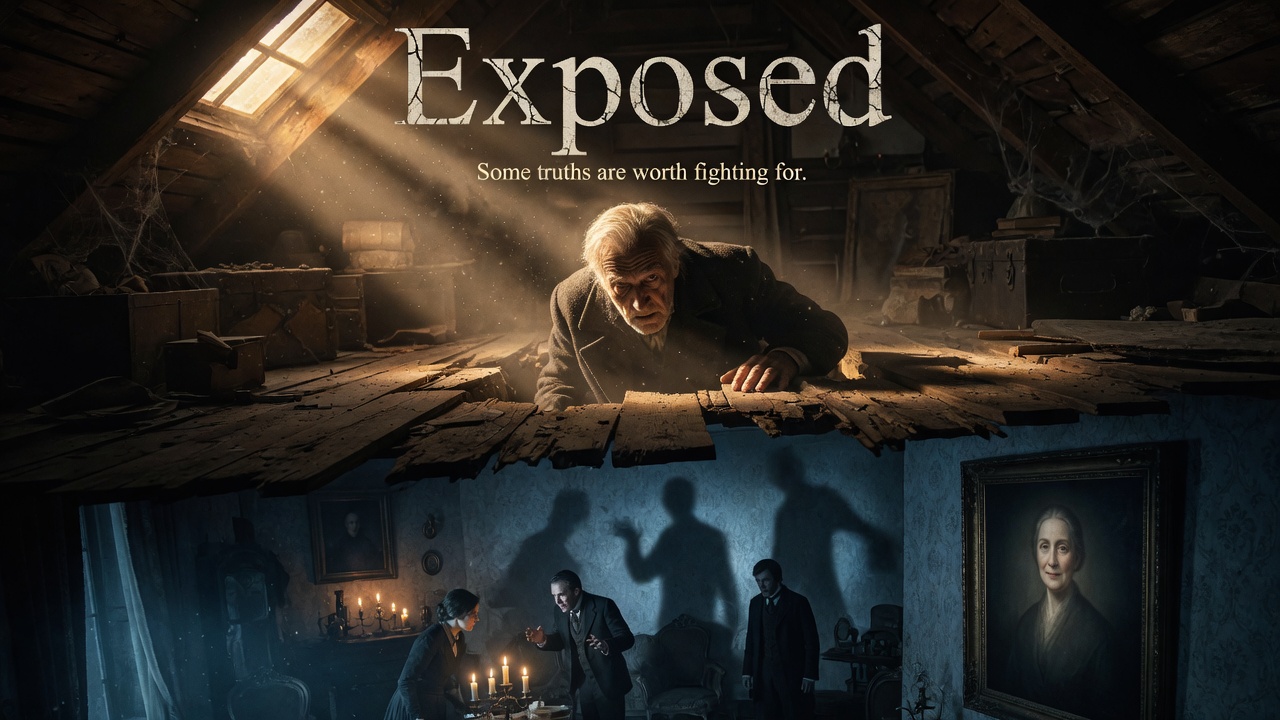
My name is Henry Shaw. I lived in a three-story Victorian house on Maple Street in Hillrest, an old neighborhood on the northern edge of Willowdale. The house had green shutters, a steep slate roof, and a narrow attic where my wife, Helen, used to complain that I stored “every broken picture frame in North America.”
She was exaggerating.
It was probably only half of them.
Helen died eight months before the night I realized someone was trying to erase me.
Cancer took her slowly, then all at once.
For eleven months, our lives revolved around appointments, medications, blood tests, and the terrible vocabulary of treatment. Remission. Progression. Metastasis. Palliative care.
After she died, the house became unbearably quiet.
I stopped restoring paintings.
Dust settled over my brushes. Unopened letters accumulated on the hall table. Some mornings, I sat in Helen’s chair with my coffee until noon, watching sunlight move across the floor.
Our son Ryan called almost every day. He worked for the FBI in another state and had a wife, two children, and the sort of schedule that made sleep seem optional.
“Come stay with us,” he said repeatedly.
“I’m not leaving the house.”
“Then let me arrange someone to check on you.”
“I’m grieving, Ryan. I’m not helpless.”
That was true when I said it.
A few weeks later, I was no longer certain.
My daughter Clare began visiting more often.
As a child, Clare had spent hours in my studio. She would sit cross-legged on the floor while I cleaned old canvases, asking why one shade of blue cost more than another and how I knew when a painting was lying.
“Paintings don’t lie,” I once told her. “People lie through them.”
She had laughed and dipped one finger into a jar of forbidden pigment.
I kept the tiny blue fingerprint she left on my worktable for thirty years.
That was the Clare I remembered when she offered to move home.
“You shouldn’t be alone, Dad,” she said. “Not yet.”
Her husband, Cameron Drake, stood behind her with one hand resting protectively on her shoulder.
Cameron was forty-three, handsome in a polished, impersonal way, with expensive glasses and teeth that seemed engineered rather than grown. He worked in financial consulting, though I never understood exactly what that meant.
He could talk for twenty minutes without saying anything that could be proven false.
“We can take care of the practical things,” Cameron said. “Bills, maintenance, appointments. You can focus on recovering.”
“I’m not sick.”
“No one said you were. But grief has physical consequences.”
He spoke gently, almost clinically.
Clare squeezed my hand.
“Please, Dad. I miss you.”
That sentence decided it.
They moved into the two rooms at the back of the second floor three days later.
At first, their presence felt like rescue.
Clare cooked. Cameron repaired the loose porch rail and organized the bills. They filled the house with footsteps, conversation, and the sound of a television playing somewhere other than my empty bedroom.
Then Clare cleaned out the medicine cabinet.
She threw away expired prescriptions, Helen’s unused nausea medication, and several bottles of supplements.
“You need something designed for memory and circulation,” she told me.
She placed a white capsule beside my breakfast.
“What is it?”
“Just vitamins. Dr. Russo recommended them.”
“I don’t know a Dr. Russo.”
“He works with Cameron’s firm. We spoke to him about what you’ve been experiencing.”
“What have I been experiencing?”
Clare’s smile tightened.
“Fatigue. Confusion. Forgetfulness.”
“I’m grieving.”
“Of course you are. The vitamins will help.”
I swallowed the capsule because refusing would have turned a small moment into an argument.
Within a week, I began losing time.
Not hours. Not enough to frighten me immediately.
Minutes.
I would walk into the kitchen and forget why I was there. I would find a cup of cold coffee in the studio without remembering making it. Once, I discovered the front door standing open at two in the afternoon.
Cameron closed it and frowned.
“You could have wandered outside.”
“I was in the studio.”
“Are you sure?”
I wanted to say yes.
Instead, I hesitated.
His concern grew in precise proportion to my uncertainty.
Soon Cameron installed cameras throughout the house.
“For falls,” he explained. “If you become disoriented, we’ll know where you are.”
One camera faced the stairs. Another watched the kitchen. A third covered the living room and the door to my studio.
There were no cameras in Clare and Cameron’s rooms.
I noticed that.
Then I forgot why it bothered me.
The capsules made my thoughts feel wrapped in wet cloth. My hands shook. Names came slowly. I sometimes woke with no memory of going to bed.
The first time I saw Helen, she was standing at the foot of my bed.
It was 3:17 in the morning.
Moonlight illuminated her white nightgown. Her hair was the way she wore it before chemotherapy. She looked younger, frightened, and impossibly solid.
“Henry,” she whispered.
I sat up so quickly that pain shot through my spine.
“Helen?”
She raised one hand.
Then the bedroom door opened.
Light flooded the room.
Clare stood in the doorway.
Helen disappeared.
“Dad, who are you talking to?”
“She was here.”
“Who?”
“Your mother.”
Clare sat beside me and placed a cool hand on my forehead.
“You were dreaming.”
“I was awake.”
“Grief can create very convincing images.”
“She spoke to me.”
Clare looked toward the hallway camera.
“Has this happened before?”
The question was too calm.
“No.”
“We should tell Dr. Russo.”
“I don’t need a doctor.”
“You just saw a dead woman standing in your bedroom.”
“She was your mother.”
“And she is gone.”
Her words cut through me.
Clare apologized immediately, embraced me, and brought another capsule with water.
The next morning, Cameron asked whether I remembered the episode.
When I said I did, he seemed disappointed.
Two days later, I found the Evergreen Behavioral Center file.
It slipped from Cameron’s leather briefcase while he was carrying documents through the hallway. He did not notice. I waited until he entered his office before picking it up.
My name was printed across the top.
HENRY ARTHUR SHAW
PROPOSED EMERGENCY INTAKE
Below it was a checklist.
Visual hallucinations.
Paranoid ideation.
Progressive memory impairment.
Inability to manage medication.
Risk of wandering.
Potential danger to self.
Most of the boxes had already been checked.
A space labeled ATTENDING PHYSICIAN contained the typed name Dr. Gerald Russo.
The examination date was blank.
The recommended diagnosis was not.
MAJOR NEUROCOGNITIVE DISORDER WITH PSYCHOTIC FEATURES.
My mouth went dry.
I heard Cameron’s chair move inside the office.
I returned the document to the floor and stepped away.
He emerged seconds later.
“Everything all right?”
“Yes.”
His eyes moved from me to the file.
“You dropped something,” I said.
He picked it up, glanced at the title, and slid it into his briefcase.
“Preliminary insurance paperwork.”
“With my name on it?”
“We’re arranging options in case you need more support.”
“I don’t need to be committed.”
“No one said committed.”
“The form says emergency intake.”
Cameron smiled.
Not warmly.
Patiently.
The way a person smiles at someone who cannot understand simple facts.
“You’re confusing preparation with intention, Henry.”
That evening, Clare increased my capsule from one to two.
I pretended to swallow both.
When she left, I removed them from beneath my tongue and hid them inside an empty tube of burnt umber paint.
By midnight, something in my mind had begun to clear.
The improvement was slight, but unmistakable. It felt like a window opening in a sealed room.
The following morning, I dropped one capsule into a glass of warm water.
The shell dissolved, releasing a gray cloud that settled at the bottom.
Helen’s old multivitamin dissolved into a pale yellow solution with an orange smell.
Clare’s “vitamin” smelled bitter and medicinal.
I searched the symptoms on my laptop, using an old connection in the attic that Cameron did not know still worked.
Sedatives and certain neurological medications could cause confusion, tremors, memory problems, slowed speech, vivid dreams, and hallucinations—especially in older adults.
Every symptom matched.
I stared at the gray residue in the glass.
They were not documenting my decline.
They were manufacturing it.
Once I understood that, my fear became colder.
More useful.
A conservator never attacks a damaged surface before identifying every layer. If you move too quickly, you destroy the evidence of what happened.
I needed to know how deep the alteration went.
When Clare and Cameron left for dinner the next evening, I entered Cameron’s office.
The room had once belonged to Helen. It still smelled faintly of her lavender hand cream beneath Cameron’s leather and aftershave.
His desk drawers were locked.
The filing cabinet was not.
Inside, I found a brochure for Evergreen Behavioral Center, several blank power-of-attorney forms, and a copy of a document containing my signature.
The document granted Cameron authority to manage my bank accounts, property, medical care, and personal collections if two physicians declared me mentally incapacitated.
I had no memory of signing it.
The signature resembled mine, but the final stroke curved upward.
I always ended my name with a downward line.
Someone had copied the shape without understanding the habit.
Beneath the power of attorney was an appraisal of my house, retirement accounts, and art collection.
Total estimated value: $6.4 million.
They had even priced Helen’s portrait.
I photographed everything.
A car door slammed outside.
I barely returned the papers before Clare entered the house.
That night, I lay awake thinking about my daughter’s childhood.
I remembered her small hands holding a magnifying glass above a damaged portrait.
“Look at the cracks, Daddy,” she had said.
Now I wondered how long the cracks had been inside her.
The next morning, Catherine Hayes knocked on the door.
Catherine lived across the street. She was seventy-four, a retired nurse with sharp eyes and no talent for pretending not to notice things.
Clare tried to stop her in the hallway.
“Dad’s resting.”
“I can see him standing behind you,” Catherine replied.
She entered without waiting for permission.
When she took my hand, her fingers pressed lightly against my pulse.
“You’ve lost weight.”
“I haven’t been hungry.”
“Your pupils look wrong.”
Clare folded her arms.
“He’s receiving medical care.”
“From whom?”
“Dr. Russo.”
Catherine’s face changed almost imperceptibly.
“Gerald Russo?”
“You know him?” I asked.
“By reputation.”
Clare moved between us.
“Dad needs his medication.”
Catherine looked directly at me.
“Henry, do you know what you’re taking?”
“Vitamins.”
“That wasn’t my question.”
For one dangerous second, I almost told her everything.
Then I saw the kitchen camera.
“I’m fine,” I said.
Catherine squeezed my hand.
“If you ever become less fine, I leave my back door unlocked.”
After she left, Clare accused me of embarrassing her.
“Catherine thinks you’re poisoning me,” I said.
The color drained from her face before she laughed.
“That is absurd.”
“Yes.”
“You don’t believe her, do you?”
I pretended to search for the word.
“I don’t remember.”
Her relief confirmed more than an argument would have.
That night, at 12:13, an old prepaid telephone vibrated beneath a loose floorboard in the attic.
Ryan had given it to me two years earlier.
“For emergencies,” he had said. “Especially the kind you don’t want anyone else knowing about.”
I had almost forgotten it existed.
“Dad?” Ryan’s voice was low and urgent. “Are you alone?”
“Yes.”
“Are you near any cameras?”
“No.”
“I need you to listen carefully. Cameron Drake is not Cameron Drake.”
The attic seemed to tilt.
Ryan explained that Cameron had used at least three other names. He had been connected to financial exploitation cases in Nevada, Arizona, and Oregon. Each case involved an elderly person, disputed medical diagnoses, rapidly transferred assets, and records that disappeared before trial.
“Why haven’t you arrested him?”
“Because connections aren’t evidence. And because you’re my father. I had to report the conflict and step away from parts of the investigation.”
“Clare is helping him.”
A painful silence followed.
“We don’t know how much she understands.”
“I do.”
“Dad—”
“I found the papers.”
I told him about Evergreen, the drugs, and the forged signature.
Ryan’s breathing changed.
“Can you leave tonight?”
“If I disappear, they’ll say I wandered.”
“Then we need evidence strong enough to survive what they’ve built around you.”
“How long?”
“Two weeks. Maybe less.”
“They’re preparing an emergency intake.”
“Then under no circumstances let them take you to Evergreen. Once you’re inside, they can control medication, visitors, and communication.”
“What should I do?”
“Act exactly as they expect. Keep collecting evidence. Use the attic or your studio—places without cameras. And trust Catherine.”
“You know Catherine?”
“I called her after Mom died.”
So even Ryan had been watching me.
Ordinarily, that would have angered me.
That night, it made me feel less alone.
At 2:40 in the morning, headlights swept across the ceiling.
A dark van stopped behind the house.
Through the attic window, I watched Cameron admit three men. They carried flat cases and document boxes. One went directly to the wall safe. Another photographed deeds, insurance policies, and Helen’s will.
They removed several files, copied them, and placed the originals back.
This was not a family taking advantage of a grieving father.
It was an operation.
The next morning, I decided to use Helen against them.
Her portrait hung above the living-room fireplace. I had painted it twenty-six years earlier, though I was never satisfied with the eyes. Helen said they made her look as though she knew something everyone else had missed.
She usually did.
Catherine received the miniature camera at her address. It operated through an independent cellular connection and transmitted video to a small tablet.
I drilled a hole through the rear of the frame and positioned the lens inside the dark center of Helen’s painted necklace.
The camera faced the sofa, fireplace, and front entrance.
When I activated the feed, Helen appeared to be watching the room.
“I hope you forgive me,” I whispered.
In my mind, I heard her answer.
Stop being dramatic and turn it three degrees to the left.
I adjusted it.
The first important recording came the following afternoon.
Clare and Cameron sat beneath the portrait while they believed I was sleeping.
“How soon?” Clare asked.
“Russo will sign after the evaluation.”
“And Evergreen?”
“A bed is reserved.”
“What if he refuses to go?”
Cameron glanced toward the stairs.
“Then he becomes aggressive. We call emergency services. Russo documents the episode.”
“He’s never been aggressive.”
“He doesn’t have to be.”
Clare rubbed her hands together.
“What about the collection?”
“Ashford will purchase it through a private sale. The house can be transferred after the competency order.”
“And the accounts?”
“Approximately three point two million liquid. More after the property clears.”
My daughter listened to the value of my life as though someone were reading a restaurant bill.
“What’s my share?” she asked.
“Enough.”
“That isn’t a number.”
“Forty percent after expenses.”
“Forty? You said half.”
Cameron leaned closer.
“You wouldn’t have access to any of it without me.”
Clare’s eyes hardened.
“You wouldn’t be in this house without me.”
For a moment, I saw the truth of their marriage.
Not love.
Mutual blackmail.
That evening, Clare received a telephone call in the living room.
Her voice softened.
“I miss you too,” she whispered. “I love you.”
Cameron was upstairs.
The following night, the man Clare loved entered my house.
He was about fifty, silver-haired, elegant, and utterly at ease. Clare kissed him before Cameron entered the room.
Cameron did not object.
Instead, all three sat beneath Helen’s portrait.
The stranger opened a laptop.
“Grand Cayman is ready,” he said. “Once the competency order clears, the transfers will be divided through the consulting entities.”
“And Cameron?” Clare asked.
Cameron looked at her.
The stranger smiled.
“If anyone begins asking questions, the paper trail ends with him.”
“What?” Cameron said.
“It’s protection.”
“For whom?”
“For the structure.”
Cameron stood.
“I built this case.”
“You prepared documents,” the stranger replied. “Do not confuse labor with ownership.”
Clare placed a hand on Cameron’s arm.
He shook it off.
That was when I realized Cameron was not the architect.
He was another layer of paint.
The man’s name was Nathaniel Holloway.
When I sent his photograph to Ryan, the reply came in less than five minutes.
STAY AWAY FROM HIM. HOLLOWAY HAS BEEN UNDER FEDERAL INVESTIGATION FOR SEVEN YEARS.
Nathaniel ran a network involving physicians, attorneys, private care facilities, appraisers, and shell corporations. Elderly victims were isolated, medicated, declared incompetent, and stripped of their assets. Some died inside facilities before relatives understood what had happened.
Evergreen was not a hospital participating in the scheme.
Evergreen was the machine at its center.
Catherine knew one of its victims.
Her younger sister, Evelyn, had been placed there after a minor stroke. Within four months, Evelyn’s home had been sold, her savings had vanished, and she was so heavily sedated she could no longer speak.
“She died before I proved anything,” Catherine told me. “Russo signed every report.”
We found two other surviving families through sealed civil cases.
Robert Klene’s mother had lost a house and $900,000 after Russo diagnosed her with dementia during a twelve-minute appointment.
Margaret Lawson had been forced to sign transfer documents while sedated.
“I kept telling them I understood what they were doing,” Margaret said during our secret call. “They wrote that my objections were paranoia.”
Both agreed to testify.
For the first time, the case was larger than me.
That made it more dangerous.
Through Helen’s camera, I heard Clare say Catherine had become a problem.
“We move him within forty-eight hours,” Nathaniel replied.
“Russo isn’t scheduled until Friday,” Cameron said.
“Then Friday becomes tomorrow.”
“What justification do we use?”
Nathaniel looked directly toward Helen’s portrait.
“An attack.”
Clare went still.
“On whom?”
“You. Henry becomes confused. He pushes you. You fall. Cameron calls emergency services.”
“My father would never hurt me.”
Nathaniel smiled.
“Your father does not need to hurt you. He only needs to be standing nearby when you begin screaming.”
My own daughter nodded.
The next morning, Dr. Gerald Russo arrived.
He was sixty, with carefully trimmed white hair and a gold watch that cost more than most people’s cars.
He asked me the date.
I gave the wrong month deliberately.
He asked who the president was. I answered correctly.
He asked me to remember three words: river, candle, door.
Five minutes later, I repeated all three.
He wrote that I remembered none.
“What are you writing?” I asked.
“That you’re struggling.”
“I answered correctly.”
“People with cognitive decline often believe they have.”
Then he asked whether I saw my wife.
I glanced at Clare.
“Sometimes.”
Russo made a large mark on the form.
Afterward, he entered the living room with Cameron.
Helen’s camera captured Cameron handing him an envelope thick with cash.
Russo signed two backdated medical affidavits.
“Tomorrow morning,” he said. “If he resists, sedate him before transport.”
That recording should have been enough.
But tomorrow arrived that night.
At 10:18, while I copied files onto three separate drives, a white medical transport vehicle stopped outside.
Four hours early.
Two men in blue uniforms stepped onto the porch carrying a collapsible stretcher. One had a syringe case clipped to his belt.
Clare called up the stairs.
“Dad? We need to talk.”
Ryan had told me to wait.
I could no longer wait.
I placed one drive in my shoe, another behind Helen’s portrait, and slipped the third through the bathroom window into Catherine’s hedge.
When I entered the hallway, Clare was crying.
She was very convincing.
“Dad attacked me,” she told the uniformed men.
There was no mark on her.
Cameron held papers bearing Russo’s signature.
“He’s experiencing a psychotic break,” he said. “He may become violent.”
One of the men approached me.
“Mr. Shaw, we’re taking you somewhere safe.”
“Which medical company employs you?”
He paused.
“We can discuss that in the vehicle.”
“What is my diagnosis?”
“Sir, please cooperate.”
He opened the syringe case.
I raised the tablet.
Helen’s portrait appeared on the screen behind them. Then Cameron’s recorded voice filled the hallway.
“Then he becomes aggressive. We call emergency services. Russo documents the episode.”
Everyone froze.
The recording continued.
Nathaniel discussed the false attack.
Clare’s face collapsed.
“How long have you been recording us?” Cameron demanded.
“Long enough.”
He rushed toward me.
The front door exploded inward.
“FBI! Hands where we can see them!”
Ryan entered behind Agent Mitchell and six armed officers.
The fake medical workers dropped to the floor. Cameron tried to run through the kitchen but found Catherine standing outside the back door beside two uniformed police officers.
Clare did not move.
She stared at me as though I had betrayed her.
“Dad,” she whispered, “you don’t understand.”
“You drugged me.”
“It wasn’t supposed to hurt you.”
“You tried to have me imprisoned inside my own mind.”
“Nathaniel said it was temporary.”
Ryan stepped forward with handcuffs.
“Where is Holloway?”
Clare looked at Cameron.
Cameron laughed bitterly.
“He left you both.”
Nathaniel’s house was empty. His accounts had been drained, his phones destroyed.
But he had made one mistake.
He believed everyone beneath him was disposable.
Cameron knew where the offshore records were hidden.
Within forty-eight hours, he began negotiating.
The FBI raided Evergreen at dawn three days later.
They found forty-three patients receiving medication without valid consent, eleven forged guardianship orders, hidden recording equipment, and thousands of pages of financial records.
One woman had been declared incapable of recognizing her children. When federal agents reduced her sedation, she named every grandchild and recited their birthdays.
Another patient had been confined for six years after arguing with a nephew about the sale of her farm.
Dr. Russo was arrested while attempting to leave the country.
Attorney Richard Crane was caught shredding backdated court filings.
Victor Ashford, the art dealer prepared to purchase my collection, had acquired paintings from nine other Evergreen patients at a fraction of their value.
Nathaniel Holloway was arrested in Montreal three weeks later.
He had Clare’s passport in his luggage.
He had no intention of taking her with him.
The cruelest revelation came during Clare’s interrogation.
She had not been manipulated into the plan after Helen’s death.
She had started it three years earlier.
Clare had contacted Nathaniel after learning the value of my collection. She told him I was “emotionally dependent” on Helen and would become vulnerable if anything happened to her.
The investigators found that sentence in an email.
For several terrible hours, I believed Clare might have caused Helen’s cancer.
She had not.
But she had watched her mother die while calculating how grief could be used against me.
Even Cameron had joined later.
My daughter had selected him because his financial history made him useful and disposable. Their marriage gave him legal access to the family while allowing Clare to appear like a concerned child trapped between a sick father and a controlling husband.
Every relationship had been designed.
Every kindness had an invoice hidden beneath it.
The trial began fourteen months later.
By then, prosecutors had identified sixty-eight victims across five states and more than $47 million moved through Holloway’s companies.
I testified for three days.
The defense tried to portray me as confused.
Cameron’s attorney asked whether I had seen my dead wife.
“Yes,” I replied.
“So you admit experiencing hallucinations?”
“I admit that your clients administered a drug known to cause them.”
The prosecutor played Helen’s camera footage.
The jury watched Clare discuss the false attack.
They watched Russo accept money.
They watched Nathaniel plan to frame Cameron and abandon Clare.
Then they watched me answer every question correctly while Russo documented failure.
Robert Klene testified about his mother.
Margaret Lawson described waking in Evergreen and discovering she no longer owned her home.
Catherine read the final letter her sister had written before sedation made handwriting impossible.
Ryan sat behind me throughout the proceedings.
He did not wear his badge.
He sat there as my son.
When Clare entered the courtroom, she avoided my eyes.
She had cut her hair short. Without the expensive clothes and carefully rehearsed concern, she looked younger.
For one moment, I saw the child in my studio with blue paint on her finger.
Then the prosecutor displayed her email about Helen.
The child vanished.
During victim statements, I stood before the court and looked at all of them.
“People assume theft begins when money changes hands,” I said. “It does not. It begins when someone decides another human being is no longer a person, only an obstacle between them and an asset.”
I turned toward Clare.
“They did not merely steal accounts. They stole credibility. They turned fear into a diagnosis, resistance into paranoia, and love into access.”
My voice nearly failed, but I continued.
“I spent my life repairing paintings damaged by time, neglect, and dishonesty. The most dangerous alterations were always the ones designed to look original. That is what this organization did. It painted abuse to resemble care.”
Dr. Russo received twenty-eight years and permanently lost his medical license.
Richard Crane was sentenced to twenty-four.
Victor Ashford received seventeen years and forfeited his business.
Cameron accepted a cooperation agreement and received twenty-one years.
Nathaniel Holloway was sentenced to sixty-eight years without the possibility of early release.
Clare received thirty-six years.
The judge described her conduct as “a sustained betrayal weaponizing the natural trust between parent and child.”
When officers approached her, Clare finally looked at me.
“I did love you,” she said.
The courtroom fell silent.
I believed she wanted me to deny it.
Instead, I answered honestly.
“Perhaps you did. But every time love stood between you and money, you chose money.”
She began crying.
I did not go to her.
Evergreen closed permanently.
Several victims recovered portions of their property, although some losses could never be repaired. Houses had been resold. Collections had vanished overseas. People had died believing their families had abandoned them.
Robert created a foundation for victims of elder exploitation and asked me to join its advisory board.
At first, I refused.
I wanted silence.
I wanted to sell the Maple Street house, move somewhere anonymous, and never hear the words guardianship, competency, or Evergreen again.
Then Margaret wrote to me.
Her letter contained only three sentences.
They made me believe no one would ever listen because I was old. You listened. Please do not stop now.
I joined the board.
I sold the house six months later.
On my final morning there, I removed the camera from Helen’s portrait. A tiny circular mark remained in the painted necklace.
I considered repairing it.
Then I left it untouched.
Some damage belongs to the history of an object. Remove it completely, and you risk replacing truth with beauty.
I moved into a smaller apartment near Ryan. It had large northern windows and enough space for a new studio.
I began restoring paintings again.
My first project was a nineteenth-century portrait of an old woman whose face had been covered by a badly painted field of flowers. As I removed the later layer, her eyes slowly returned.
It felt like excavating a witness.
Ryan visited every Sunday with his wife and children. My granddaughter Emma became fascinated with restoration. One afternoon, she asked the same question Clare had asked decades earlier.
“How do you know when a painting is lying?”
I looked at Helen’s portrait hanging above my new worktable.
“You study the cracks,” I said. “And you never let someone convince you they aren’t there.”
Clare sent me a postcard from prison two years after sentencing.
There was no picture on the front, only her inmate number and the institution’s address.
Dad,
I have rewritten this a hundred times. Every version sounds like I am asking you to make me feel better. I am not asking for forgiveness. I know what I did. I know Mom died while I was planning how to use your grief. There is no sentence that makes that smaller.
Nathaniel did manipulate me, but I contacted him first. Cameron helped me, but the idea was mine. For years, I blamed everyone around me because admitting the truth meant accepting that I had become the person I feared.
I remember the blue fingerprint on your table.
I wonder if it is still there.
Clare
I read the postcard twice.
Then I placed it in a wooden box with childhood photographs, school drawings, and a tiny watercolor she had painted when she was nine.
I did not answer.
Not then.
Forgiveness is often described as a door.
In reality, it is more like a painting damaged by fire. Before deciding whether restoration is possible, you must determine what remains beneath the blackened surface.
Some days, I believed my daughter was still somewhere underneath.
Other days, I believed the person I loved had existed only because I had refused to examine her closely.
Three months later, Ryan visited with an evidence envelope.
“There’s something you should see,” he said.
Inside was a memory card recovered from Nathaniel’s encrypted storage.
It contained video recorded in my bedroom on the night I first saw Helen.
The footage showed Clare entering before I woke.
She wore Helen’s white nightgown and a wig resembling her mother’s hair. She stood at the foot of my bed and whispered my name.
When I sat up, Clare slipped through the side door connecting the bedroom to Helen’s dressing room. Seconds later, she reentered through the hallway wearing different clothes.
It had never been a hallucination.
The drugs made me vulnerable, but my daughter had created the ghost.
I watched the video once.
Then again.
“She wanted a witness,” Ryan said. “The hallway camera recorded you claiming Mom was in the room. Clare staged the event to support the diagnosis.”
I felt something inside me break with extraordinary calm.
For two years, I had wondered whether some part of Helen had returned to warn me.
The answer was uglier.
My grief had been used as theater.
But there was another file on the card.
It had been recorded weeks later, after Clare believed I was unconscious.
She sat alone beside my bed.
For nearly five minutes, she said nothing.
Then she reached toward the photograph of Helen on the nightstand.
“I’m sorry, Mom,” she whispered.
Her voice trembled.
“I don’t know how to stop anymore.”
Footsteps sounded in the hall.
Clare stood quickly and became composed before Cameron entered.
The recording ended.
Ryan waited for me to speak.
“Does that change anything?” he asked.
“Yes.”
“What?”
“It makes it worse.”
Because Clare had known.
Somewhere inside her, the girl with the blue fingerprint understood exactly what she was doing—and continued.
A month later, I answered her postcard.
I wrote only one page.
Clare,
The fingerprint is still there.
Knowing that you regret what happened does not repair it. Regret is recognition, not restoration. If you want to become someone different, do the work without expecting me to reward you for it.
I cannot promise forgiveness.
I can promise I will not lie about what you did.
Dad
For a year, she sent nothing.
Then the foundation received a package from the prison.
Clare had begun assisting investigators with a database connecting fraudulent guardianship petitions, medical evaluations, and property transfers. Her information helped reopen seven cases and locate money belonging to three deceased victims’ families.
She received no reduction in sentence.
At the bottom of the enclosed letter, she had written:
I am trying to return what I helped people steal.
It did not make me proud.
It did not make me forgive her.
But for the first time, it gave me something other than betrayal to place beside her name.
I now speak at hospitals, senior centers, and legal conferences. I tell people that abuse rarely enters a home announcing itself as abuse.
It arrives carrying groceries.
It organizes medication.
It offers to pay bills.
It installs cameras “for your safety.”
It uses the language of love while quietly removing the locks from your life.
I tell older people to preserve independent contact with friends, doctors, and attorneys. I tell families that confusion deserves a real medical examination, not assumptions. I tell judges to listen when a supposedly incapable person says someone is controlling them.
Most importantly, I tell them this:
A person can be grieving, frightened, forgetful, and old—and still be telling the truth.
Four years after the arrests, I restored Helen’s portrait.
Not completely.
I repaired the frame and cleaned the surface, but I left the tiny opening in her necklace where the camera had been hidden.
Emma noticed it.
“You missed a spot,” she said.
“No.”
“Then why didn’t you fix it?”
“Because that mark saved my life.”
She studied the portrait.
“Grandma saved you?”
I considered the question.
Helen had been dead before the plan tightened around me. She had not planted the camera or collected the evidence.
But I had hidden the lens inside her portrait because I knew what she would have wanted me to do.
“Yes,” I said. “In a way.”
That evening, after Emma left, I received another letter from Clare.
This one was longer.
She told me about a prison art program. She had begun restoring damaged books and frames under the supervision of a volunteer conservator. She described cleaning mold from a family Bible recovered after a flood.
Near the end, she wrote:
The conservator told me some damage cannot be made invisible. He said the goal is not to pretend the object was never harmed, but to stabilize what remains so it can survive without continuing to fall apart.
I think I finally understand what you were teaching me when I was a child.
I sat beside the window until the room grew dark.
Then I took out the old wooden box.
The postcard lay beside photographs of Helen, Clare’s school drawings, and the tiny watercolor.
I added the new letter.
I still did not know whether I would ever visit her.
Not every broken thing must be returned to its original place.
Not every family deserves to be reconstructed in the same shape.
But I no longer believed damage was the only truth about my daughter.
There was also the blue fingerprint.
The whispered apology.
The seven reopened cases.
The damaged Bible she had helped preserve.
These things did not cancel her crimes.
They existed beside them.
That is the terrible complexity people avoid when they ask whether I forgive her. They want a clean ending: a father who rejects his criminal daughter forever, or a grieving old man who embraces her because blood is stronger than betrayal.
Neither answer is honest.
Blood did not stop Clare from poisoning me.
Love did not stop her from planning my confinement.
Regret did not return the years stolen from Evergreen’s victims.
But accountability may yet determine who she becomes during the years that remain.
Perhaps one day I will sit across from her behind prison glass.
Perhaps I will bring the tiny watercolor.
Perhaps I will ask whether she remembers painting it.
Or perhaps the unopened space between us is the only boundary strong enough to protect what I rebuilt.
I have learned not to force an ending before the layers are stable.
For now, I work.
Every morning, sunlight enters my studio and falls across Helen’s portrait. Beneath it sits a new worktable made from walnut.
In one corner of the table is a small blue fingerprint.
Before selling the Maple Street house, I removed that section of wood and fitted it into the new surface.
Most visitors assume it is a stain.
I know better.
It is evidence of the child Clare once was.
Evidence is not innocence.
It is not forgiveness.
It is simply proof that beneath everything later added—greed, deception, fear, manipulation—another layer existed first.
Whether that layer can ever be restored is a question I may spend the rest of my life answering.
But that is what survival gave me.
Not certainty.
Not the family I thought I had.
Not a life without cracks.
It gave me the strength to look beneath the surface, name what had been done, and refuse to let the final alteration become the only image anyone could see.
My daughter tried to make the world believe I had lost my mind.
She nearly succeeded.
But she forgot what I had taught her when she was a little girl sitting on my studio floor:
The truth does not always disappear when someone paints over it.
Sometimes it waits quietly beneath the surface.
And if you know where to look, the cracks will lead you straight to it.