Trapboy Freddy has broken his silence and publicly explained why he is cooperating with prosecutors against his former friend and collaborator Yella Beezy, a decision that has rocked the Dallas rap scene and ignited a firestorm of accusations, betrayal, and legal maneuvering.
The admission came in a series of interviews and social media posts following the release of court documents that showed Freddy was subpoenaed to testify in Beezy’s upcoming capital murder trial, which is scheduled to begin February 2, 2026.
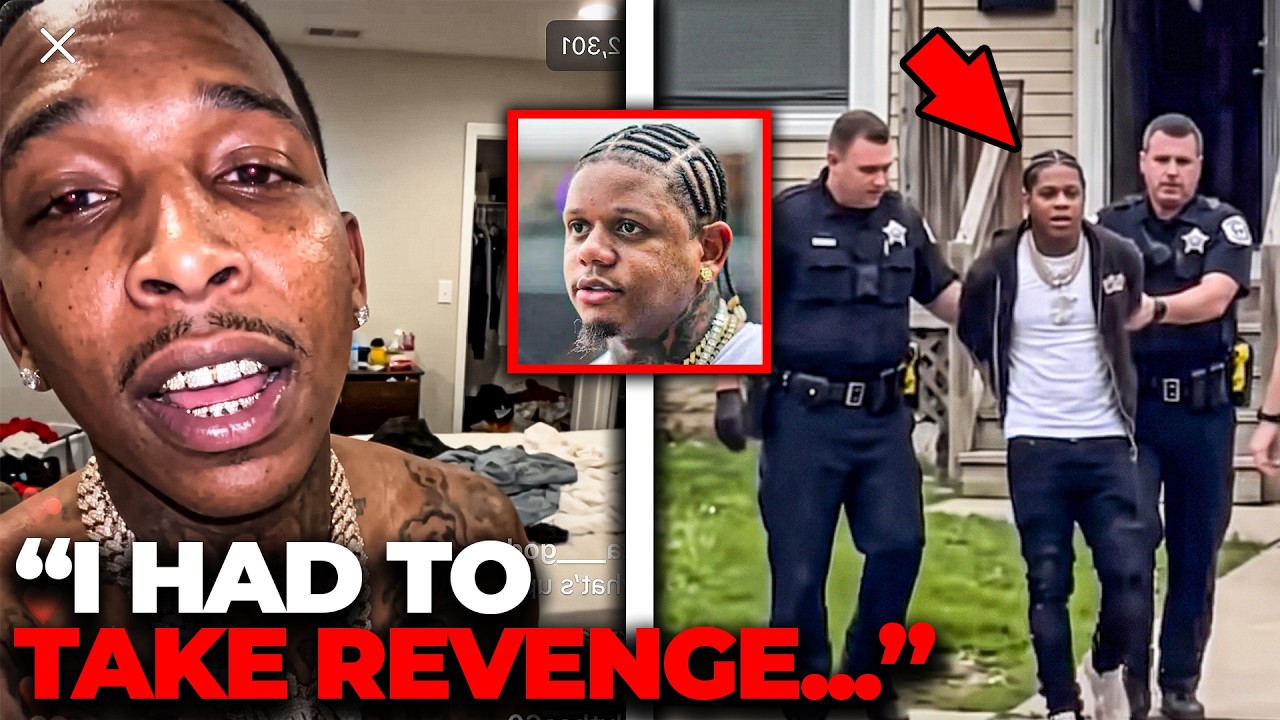 Freddy, born Devaris Dontez Moore, stated bluntly that he was not a volunteer in the process, but was compelled by law after being issued a court order to appear and provide testimony linked to the 2020 murder of Dallas rapper Mo3.
The friendship between the two artists was once celebrated in their 2020 joint project “I’m My Brother’s Keeper,” a 13-track salute to their shared Oak Cliff roots and street credibility that cemented them as family in the eyes of fans.
But that bond has now shattered completely, with Freddy confirming that the relationship had been deteriorating for years, long before Beezy was indicted on a charge of capital murder for remuneration in March 2025.
The case stems from the brazen daylight killing of Mo3, born Melvin Noble, on November 11, 2020, when a masked gunman chased him down Interstate 35E and shot him multiple times, including a fatal shot to the back of the head.
A bystander in another vehicle was also struck but survived, and the murder sent shockwaves through Dallas and the national hip-hop community, leaving unanswered questions for years.
Federal investigators eventually arrested Kewon Dontrell White on firearm charges tied to the shooting, and he is currently serving a 105-month sentence, but the deeper inquiry into who ordered and financed the hit continued.
That investigation culminated in a Dallas County grand jury indictment against Markeith Conway, known as Yella Beezy, on March 18, 2025, alleging he hired White to carry out the killing for payment and the promise of payment.
Beezy was arrested two days later, has pleaded not guilty, and remains under house arrest after his bond was reduced from $2 million to $750,000, forcing him to liquidate nearly all his assets to secure his release.
Trapboy Freddy did not hold back in his public statements, revealing that Beezy had sold everything he owned to fund his legal defense and bond, a detail he presented without sympathy, making clear their brotherhood was over.
The internet quickly branded Freddy a snitch, a label that has followed him across social media, YouTube reaction channels, and hip-hop blogs, but he insists the reality is far more complicated than a simple betrayal narrative.
Leaked court documents show that Freddy was not only subpoenaed but was also identified by law enforcement as a wanted suspect in the same Mo3 murder case, a fact that changes the entire dynamic of his cooperation.
According to reporting from outlets including the Dallas Observer, USA Today, and NBC DFW, authorities have developed leads that implicate Freddy in the plotting and carrying out of the crime, placing him directly in the crosshairs of the investigation.
 This means Freddy is not a disinterested witness testifying against a former friend, but a man with his own legal exposure who may be compelled to speak in order to protect himself, a distinction the public has largely ignored.
In the court of public opinion, the snitch label attaches swiftly and sticks, regardless of legal nuances such as subpoenas, warrants, or the absence of any confirmed cooperation agreement between Freddy’s attorneys and the state.
Freddy’s public mockery of Beezy’s financial ruin, including statements that Beezy had “sold everything” to make bail, added fuel to the fire, turning a legal matter into a deeply personal feud played out in the open.
The timeline of the case is critical: Beezy’s trial is set for February 2, 2026, with a pre-trial hearing on January 9, and the charge of capital murder for remuneration carries the possibility of the death penalty in Texas.
Prosecutors have presented evidence including financial records showing Beezy withdrew $40,000 in cash in the days around the killing, along with witness testimony and surveillance data that places multiple suspects near the scene.
On the defense side, Beezy’s legal team has been aggressively challenging the state’s case, issuing subpoenas to Securus Technologies for jail call records and to the Dallas and Lancaster police departments for incident reports.
The defense is also seeking records tied to a man named Theodore Thomas, signaling that they are building an alternative narrative aimed at undermining the prosecution’s central claim that Beezy orchestrated the murder.
Meanwhile, Trapboy Freddy remains a free man but reportedly faces his own legal reckoning, as authorities continue to investigate his role in the case and whether he had any direct involvement in the 2020 killing.
The fallout has devastated the once-unbreakable brotherhood celebrated in “I’m My Brother’s Keeper,” a project that now stands as a tragic irony, a musical relic of a friendship that could not survive the weight of a murder investigation.
For Mo3’s family, the legal proceedings bring a measure of hope after nearly five years of waiting for justice, but the public spectacle of two former allies tearing each other apart has added a layer of pain and confusion.
The San Antonio Express-News and other regional outlets have covered the case extensively, noting that the Dallas rap community is deeply divided, with some artists publicly supporting Beezy and others distancing themselves entirely.
 Freddy’s decision to speak out has been widely interpreted as a strategic move to control the narrative before the trial begins, but it has also opened him up to accusations of disloyalty from fans and peers who remember the brotherhood they once represented.
In one particularly revealing interview, Freddy said that Beezy had “changed” after achieving mainstream success, referencing Beezy’s platinum single “That’s On Me” and subsequent collaborations with T.I., 2 Chainz, and Boosie Badazz.
He claimed that the street credibility they once shared had eroded, and that Beezy’s legal troubles were a consequence of choices made without regard for the people around him, a statement that many interpreted as a veiled accusation.
The legal documents that surfaced in early 2025 showed that Freddy was subpoenaed to appear as a witness, but they did not specify whether he had agreed to cooperate voluntarily or under compulsion, leaving room for speculation.
What is clear is that both men are entangled in the same murder case, and the outcome of Beezy’s trial could have direct implications for Freddy’s own legal standing, making his testimony a high-stakes gamble for all involved.
The city of Dallas, still scarred by the image of Mo3’s body on the interstate, is watching closely as the case unfolds, with the trial expected to draw national attention given the high-profile nature of the defendants and the victim.
For Yella Beezy, life under house arrest has been marked by court filings that show even his request to attend his young son’s football game was denied, a stark reminder of how much his freedom has been curtailed.
His legal team has maintained his innocence, arguing that the prosecution’s case is built on circumstantial evidence and unreliable witnesses, including individuals with their own motivations to shift blame.
Trapboy Freddy, meanwhile, has been active on social media and in interviews, making clear that he no longer considers Beezy a friend and that the brotherhood they once celebrated is a thing of the past.
The snitch narrative that has dominated online discourse is, according to Freddy, a misunderstanding of the legal realities he faces, but in hip-hop culture, perception often outweighs fact, and the label has already stuck.
As the trial date approaches, the Dallas County district attorney’s office is expected to call a number of witnesses, including potentially Freddy, to establish the chain of events that led to Mo3’s murder.
 The defense will likely seek to impeach Freddy’s credibility, pointing to his own criminal history, including a federal firearms conviction that sent him to prison for 16 months, and his status as a wanted suspect in the same case.
The intersection of art, loyalty, and the law is a familiar theme in hip-hop, but the Mo3 case has laid bare the brutal consequences when street ties and legal obligations collide in the most public way possible.
Neither man has spoken directly to the other since the indictment, and the silence between them speaks volumes about the depth of the fracture, a rift that began long before the indictment but has now become irreparable.
For the fans who bought “I’m My Brother’s Keeper” and believed in the friendship it represented, the revelation that Freddy is cooperating with prosecutors against Beezy feels like a personal betrayal, even if the legal facts justify his actions.
The broader rap community in Texas is bracing for the trial, which is expected to be one of the most consequential in the state’s music history, with implications that reach far beyond the lives of the two artists involved.
Mo3’s mother, who has spoken publicly about her grief and her desire for justice, has not commented on the rift between Freddy and Beezy, but sources close to the family say they are focused solely on the prosecution’s case.
As of now, Trapboy Freddy has not been charged in connection with the murder, but law enforcement sources indicate that remains a possibility as the investigation continues to develop new leads.
The question of whether Freddy is truly “snitching” or simply complying with a subpoena while facing his own legal jeopardy is one that the courtroom will ultimately decide, but the court of public opinion has already rendered its verdict.
For Yella Beezy, the path ahead is uncertain, but the weight of a capital murder charge, the liquidation of his assets, and the loss of a friend he once called brother have left him in a position few could have imagined when they were making music together just five years ago.
Trapboy Freddy, speaking with a tone of resignation, said that he is prepared to face whatever criticism comes his way, but that the truth of what happened between him and Beezy is something only they understand.
The streets of Oak Cliff, the neighborhood that raised both men, are watching, and the outcome of this trial will resonate for years in a community that has seen too much violence and too many broken bonds.
For now, the Dallas rap scene holds its breath, as two of its most prominent figures are locked in a legal battle that has already cost them their friendship, their reputations, and for Beezy, his freedom.
The trial is set, the evidence is being assembled, and the world will soon see whether the brotherhood they once celebrated was strong enough to withstand the deadliest accusation of all.