Mark Zuckerberg is worth more than $200 billion.
He could have booked a private island, rented out an entire stadium, or surprised his wife with a gift most people could never afford.
Instead, he sat down with T-Pain and recorded an acoustic version of “Get Low.”
Yes, that “Get Low.”
The loud, unmistakable 2003 club anthem by Lil Jon & The East Side Boyz—the kind of song almost no one would ever describe as romantic.
When Zuckerberg shared the recording online, some people probably thought it was a joke.
Then he explained why he had done it.
The song had been playing at a college party more than 20 years earlier, on the night he first met Priscilla Chan.
And suddenly, the strange anniversary gift made perfect sense.
Long before the private jets, congressional hearings, global headlines, and billions of users, there was simply a young Harvard student standing at a party.
He had not yet built Facebook into one of the most powerful companies in the world.
She was not yet the doctor, philanthropist, and mother who would spend the next two decades beside him.
They were just Mark and Priscilla.
Two college students who happened to meet while an aggressively unromantic song played in the background.
Most people would have forgotten a detail like that.
Zuckerberg didn’t.
According to him, the couple has listened to “Get Low” every year on the anniversary of the day they began dating.
Not because it is a traditional love song.
Not because the lyrics describe their relationship.
But because memory does not always choose the most elegant soundtrack.
Sometimes the song that matters is simply the one that happened to be playing when your life changed.
For their latest anniversary, Zuckerberg decided that listening to the original version was no longer enough.
He contacted T-Pain and worked with him on a slower, acoustic interpretation of what Zuckerberg jokingly called a “lyrical masterpiece.”
The result was unexpected, slightly ridiculous, and deeply personal.
He posted the track with a brief message.
“Sound on for the track and also available on Spotify. Love you P.”
It was not written like a corporate announcement.
There was no long explanation about marriage or success.
There was no carefully polished statement about maintaining relationships while running a global technology company.
There was only a strange old song, a private memory, and a message to the woman who had been there before the world knew his name.
Priscilla’s response made the moment even more revealing.
“Can’t get quite as low anymore but more in love and grateful for that love than ever. Love you MZ.”
It was playful, affectionate, and completely unpretentious.
For a few seconds, the public image of one of the wealthiest couples in the world disappeared.
What remained was a husband trying to make his wife laugh and a wife reminding him that, after more than 20 years, she still understood the joke.
That may be why the gesture attracted so much attention.
People expect billionaires to express love through excess.

They expect enormous diamonds, luxury vacations, designer gifts, and carefully photographed celebrations.
The assumption is that the more money someone has, the more expensive the gesture must become.
Zuckerberg’s anniversary present challenged that assumption.
The money was not what made the gift meaningful.
The memory was.
Anyone could play “Get Low.”
Only two people could hear it and be taken back to the exact night their story began.
That is the strange truth about long relationships.
The most valuable things often look ordinary to everyone else.
A restaurant receipt.
An old voicemail.
A badly taken photograph.
A song that no one would ever put on a wedding playlist.
To the rest of the world, these things mean almost nothing.
To the right two people, they contain an entire life.
Mark and Priscilla began dating more than two decades ago, before Facebook became the company that would transform how people communicate online.
They married in 2012.
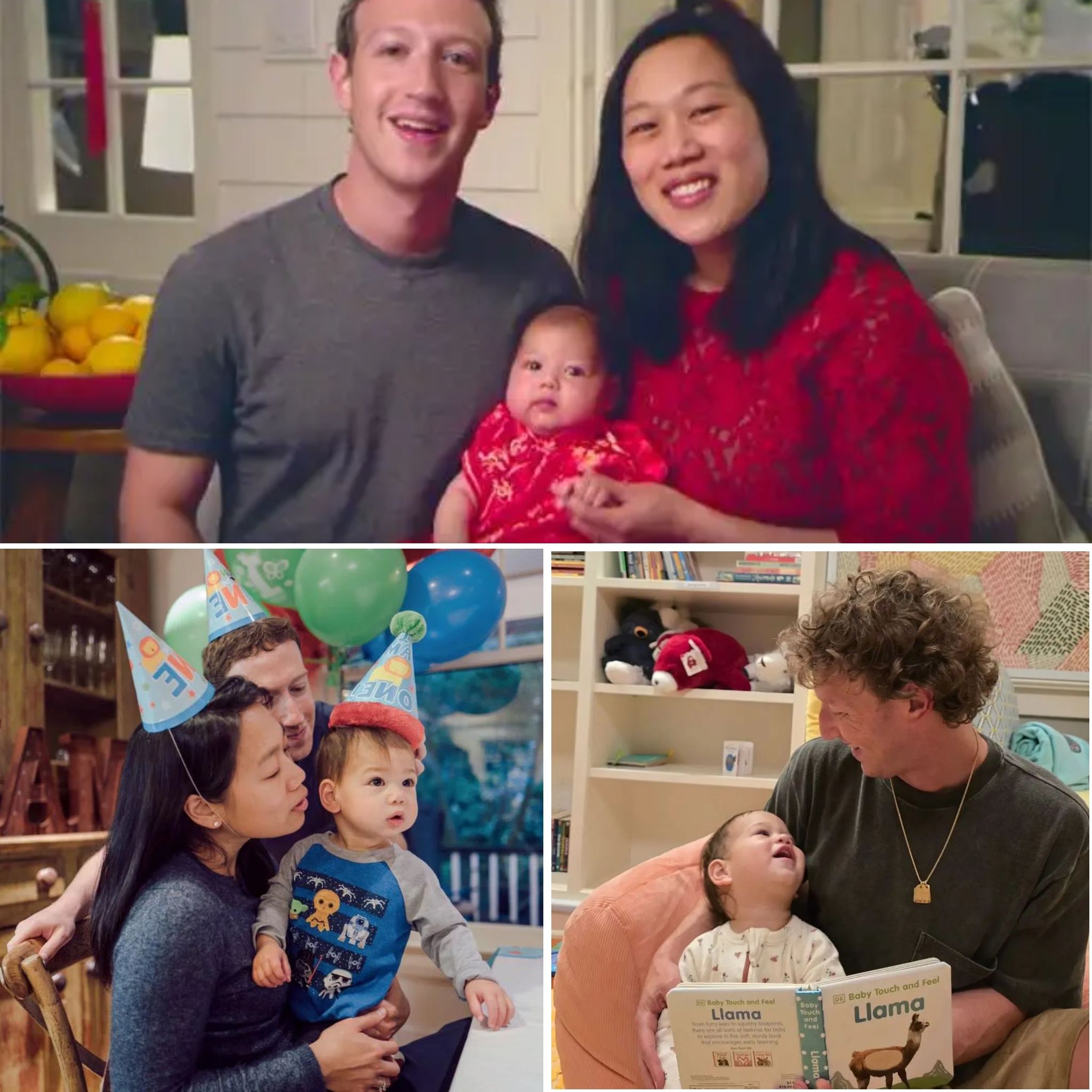
Since then, they have become parents to three daughters: Maxima, August, and Aurelia.
Public discussions about Zuckerberg usually revolve around technology, money, influence, artificial intelligence, privacy, or power.
But the moments he shares with his daughters reveal another part of his identity.
At home, he is not only a founder or chief executive.
He is a father raising three girls.
And he appears to have embraced the role completely.
When he took his family to see Taylor Swift at Levi’s Stadium, he did not stand at a distance pretending to be too important for the occasion.
He joined in.
In photographs from the concert, Zuckerberg appeared with sparkling decoration around his eyes, fully participating in the experience.
His caption was simple:
“Life of a girl dad.”
For a man whose daily decisions can affect companies, markets, and millions of people, the image was unexpectedly ordinary.
A father at a concert.
Surrounded by his daughters.
Wearing sparkles because, at that moment, that was what the evening required.
There is something quietly powerful about that image.
Children rarely understand their parents through job titles.
A daughter does not care what her father’s company is worth when she is waiting for him to pay attention.
She notices whether he looks up from his phone.
Whether he remembers what matters to her.
Whether he is willing to look slightly foolish in public just to share her excitement.
Those are the moments that become childhood.
Zuckerberg’s daughters will grow up knowing that their father built one of the most influential companies in history.
They will eventually understand the size of his wealth and the reach of his decisions.
But they may also remember something smaller.
They may remember that he wore glitter to a Taylor Swift concert.
They may remember that their parents laughed about an old song from college.
They may remember watching their mother’s face when their father played her a ridiculous acoustic love song that only the two of them fully understood.
That is where the story becomes bigger than an anniversary post.
Because Zuckerberg did not merely give Priscilla a gift.
He showed his daughters what remembering looks like.
He showed them that affection does not always need to be impressive to outsiders.
He showed them that love can survive enormous changes when two people continue protecting the small traditions that belonged to them before everything became complicated.
The man Priscilla met at that college party could not have predicted the life ahead of them.
He could not have known that the project he was building would become a global platform.
He could not have known that their family would live under public scrutiny or that strangers around the world would debate nearly every major decision he made.
Priscilla could not have known either.
She met a student, not a billionaire.
She stayed through the years when success brought opportunities, pressure, controversy, criticism, and responsibilities that few couples ever experience.
Their lives changed dramatically.
Their anniversary song did not.
That was the twist hidden inside Zuckerberg’s post.
At first, the story appeared to be about a billionaire collaborating with a famous musician.
It sounded like another example of what extraordinary wealth and access could make possible.
But the real story was not about T-Pain.
It was not about Spotify.
It was not even about the unusual cover version.
The real story was that, after more than two decades, Zuckerberg still remembered the music playing in the room when he first noticed the woman who would become his wife.
All the success that came later had not erased the beginning.
That realization changes the meaning of the entire gesture.
He was not trying to prove that he could arrange a celebrity collaboration.
He was returning to a moment when neither of them knew what their future would become.
For a few minutes, the chief executive disappeared.
The billionaire disappeared.
The public figure disappeared.
He was simply the young man from the college party again, reaching across more than 20 years to tell the same woman:
I remember where this started.
Priscilla’s response confirmed that she remembered too.
“Can’t get quite as low anymore.”
The sentence carried the kind of humor that only time creates.
They were older now.
They had built careers, survived difficult seasons, raised children, and taken on commitments that extended far beyond themselves.
They could laugh at who they used to be without dismissing those younger versions of themselves.
Then came the more important part of her message.
She was “more in love and grateful for that love than ever.”
There was no need for a dramatic declaration.
The history between them supplied the weight.
A relationship lasting more than 20 years is not created by a single grand gesture.
It is created by thousands of smaller decisions that the public never sees.
Showing up.
Listening.
Apologizing.
Adapting.
Remembering.
Making room for the other person as both lives continue to change.
The acoustic song was only the visible result of those invisible choices.
It was easy to laugh at the unexpected track.
It was harder to miss what it represented.
The same lesson appeared in Zuckerberg’s life as a father.
Being a “girl dad” is not a title someone earns through a social media caption.
It is built through participation.
It is choosing to enter a child’s world instead of asking the child to remain permanently inside yours.
It is attending the concert, wearing the sparkles, learning the names, listening to the stories, and treating the things your daughters love as worthy of your attention.
Power often teaches people to expect others to adjust around them.
Family demands the opposite.
At home, status does not replace presence.
Money does not replace patience.
Influence does not replace affection.
A child does not need a globally recognized father.
She needs a father who is available enough to recognize her.
And a marriage does not survive because two people can afford everything.
It survives because they refuse to forget what cannot be purchased.
That may be the most surprising detail in this story.
Zuckerberg could have chosen almost any anniversary gift in the world.
But the gift that mattered was connected to a moment when he had almost nothing.
No empire.
No global platform.
No $200 billion fortune.
Only a college party, an unforgettable song, and a woman he hoped would keep talking to him.
More than 20 years later, she is still there.
Their daughters are watching them.
And somewhere between the acoustic guitar, the laughter, the Taylor Swift sparkles, and the affectionate reply, a larger truth becomes impossible to ignore:
The greatest thing a father can give his daughters is not a perfect life—it is the example of a man who remembers, participates, and never becomes too powerful to show love without embarrassment.
Because in the end, children may forget what their parents owned, but they will never forget how love looked inside their home.


