The baby had already been born.
Friends knew.
Family knew.
The people closest to Elon Musk and Neuralink executive Shivon Zilis knew.
But the public did not.
Then a report mentioned that Musk had welcomed another child earlier in the year, and within days, one word began following the story everywhere:
“Secret.”
The headlines suggested that one of the world’s most recognizable billionaires had quietly fathered a 12th child and deliberately kept the baby hidden.
Musk responded with an argument that was both blunt and difficult to dismiss.
Not issuing a press release about the birth of a child, he said, did not make that child a secret.
The comment immediately transformed the story.
What began as celebrity news about another Musk baby became something larger: a debate about the line between privacy and concealment, and whether public figures are expected to announce every major event in their personal lives simply because millions of people are curious.
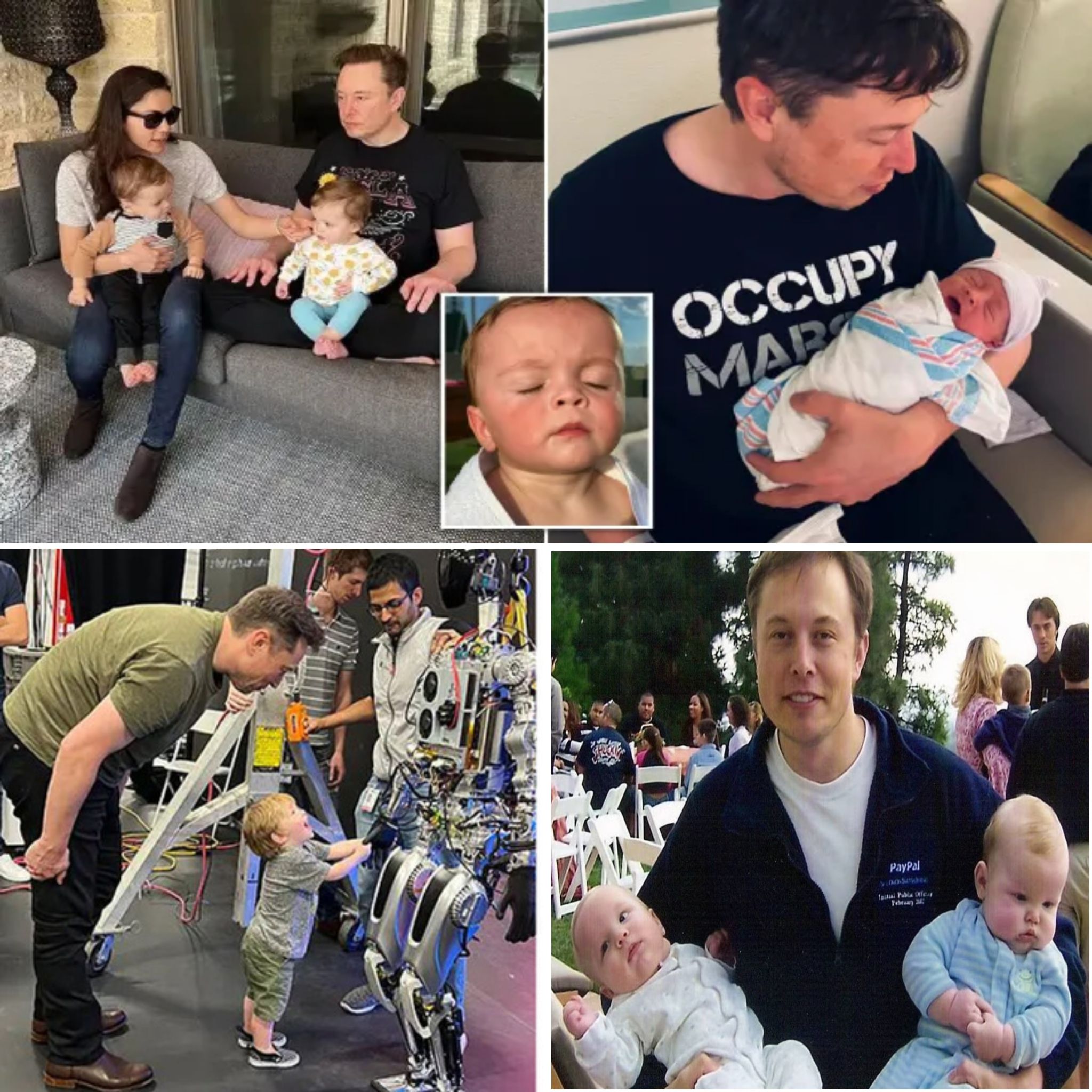
The child was Musk’s third with Zilis, an executive at Neuralink, the brain-technology company he co-founded.
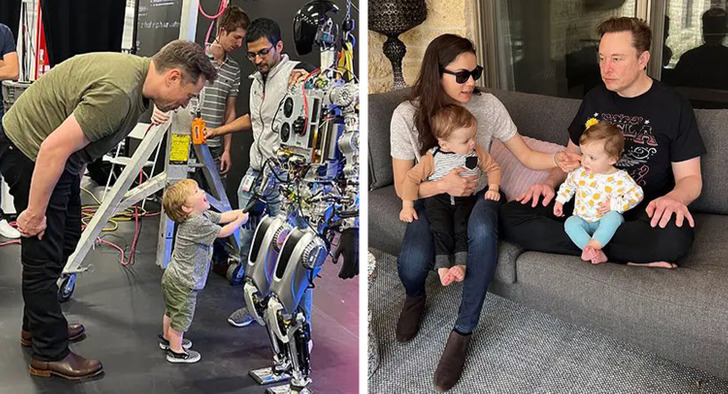
The pair had previously welcomed twins in November 2021.
The arrival of their newest child reportedly took place early in the year, but it did not become widely known until months later, when Bloomberg published a report titled “Elon Wants You to Have More Babies.”
The article focused on Musk’s long-running concern about declining birth rates and the possibility of future population collapse.
It also included a reference to the new baby.
That single detail quickly escaped the larger discussion about fertility statistics and became the headline itself.
Elon Musk had another child.
It was his 12th.
Why had no one been told?
For many people, the delay between the birth and the public learning about it seemed suspicious.
Musk’s answer was simple.
The baby had not been hidden from the people who mattered.
“All our friends and family know,” he told Page Six.
He then challenged the assumption behind the coverage.
A failure to issue a public announcement, he argued, was not the same as secrecy.
In fact, he suggested that formally distributing a press release about the birth would have been bizarre.
The distinction mattered.
A secret is something deliberately concealed from the people who have a legitimate reason to know.
A private event is something shared with the people directly involved while being withheld from the wider public.
Those two things can look identical from the outside.
The difference is who believes they are entitled to the information.
Musk has spent years occupying an unusual position in public life.
He is not simply a business executive whose name occasionally appears in financial newspapers.
Through Tesla, SpaceX, Neuralink, and his other ventures, he has become a constant presence in technology, politics, culture, and online debate.
His product launches become global events.
His social media posts can dominate news cycles.
His business decisions affect employees, investors, customers, and entire industries.
That level of influence naturally attracts scrutiny.
When a person has enormous power, the public has a legitimate interest in understanding how that power is used.
But personal visibility creates a strange expectation.
Once people know a great deal about someone, they often begin to believe they deserve to know everything.
The boundary moves quietly.
Business decisions become fair territory.
Then political opinions.
Then friendships.
Then romantic relationships.
Then children.
Eventually, the absence of information begins to look like deception.
That was the pressure surrounding the announcement of Musk’s 12th child.
The public had not been told immediately, so the baby was described as “secret.”
The word was dramatic.
It suggested a hidden life, a concealed relationship, or an effort to prevent the truth from emerging.

But Musk’s version of events contained no elaborate cover-up.
The people around him knew.
The child’s existence had simply not been formally presented to the world.
For an ordinary parent, this would barely qualify as a story.
Millions of people welcome children without publishing announcements beyond a family group chat or a private photograph.
Some wait weeks before posting anything online.
Others never share their children publicly at all.
They may be protecting the mother’s recovery, avoiding unwanted attention, or simply enjoying a major life event without turning it into content.
No one accuses them of secretly becoming parents.
But Musk is not an ordinary parent in the public imagination.
His life has been analyzed as if it were a continuously updated corporate filing.
Each new child becomes part of a wider narrative about his personality, his relationships, his wealth, and his views on the future of humanity.
That last part made this birth particularly significant.
Musk has repeatedly warned that declining fertility rates could become a serious threat to civilization.
He has pointed to countries where birth rates have fallen below the level needed to replace the existing population.
Around the same time that he commented on the new baby, he reportedly shared World Bank fertility data and drew attention to nations where fewer children were being born.
For Musk, the issue is not merely personal.
He has publicly treated population decline as a global problem.
His growing family is therefore often interpreted through the lens of his public beliefs.
To supporters, he appears to be living according to his stated concerns.
He warns that the world needs more children, and he has chosen to have a large family himself.
To critics, the situation raises more complicated questions.
Having many children is far easier for a billionaire than for families struggling with housing costs, childcare expenses, healthcare bills, and limited parental leave.
Telling society to have more babies does not remove the economic pressures that lead many people to delay parenthood or reject it entirely.
Those tensions surrounded the coverage.
But they were not the reason Musk objected.
He did not deny the child’s existence.
He did not dispute that the baby was his.
He confirmed the birth.
What he rejected was the story being told about the absence of an announcement.
He had not, in his view, been exposed.
He had simply chosen not to broadcast a family event.
That difference became the center of the entire controversy.
The more the story spread, the more the newborn seemed to disappear behind the public argument.
The baby’s name was not revealed.
The gender was not announced.
There were no official photographs, no carefully staged family portrait, and no detailed account of the birth.
Those missing details only increased curiosity.
But they also reinforced Musk’s point.
A child had entered the world.
The child’s identity did not automatically become public property because the father was famous.
This is where the story took an unexpected turn.
At first, it seemed to be about Elon Musk having a 12th child.
Then it appeared to be about whether he had hidden the baby.
But underneath both headlines was a more uncomfortable question:
When did privacy begin to require a public explanation?
The word “secret” had quietly reversed the burden.
Instead of journalists and readers asking why they deserved personal information, Musk was expected to explain why he had not provided it.
The absence of a press release was treated as evidence of concealment.
His response exposed the oddness of that expectation.
Imagine the announcement written like one of his companies’ official updates.
A headline.
A release date.
A prepared quotation.
Perhaps a statement about the family being delighted.
Perhaps a request for privacy attached to a document designed to generate attention.
For a corporate acquisition or spacecraft launch, such a release would be normal.
For the arrival of a child, it could feel strangely transactional.
That was the recognition moment in the story.
The public had become so accustomed to consuming every detail of famous lives that a normal act of privacy had begun to look abnormal.
Musk’s face was not visible in the written exchange, and there was no dramatic confrontation captured by a camera.
But the shift could still be felt in the wording.
He did not sound like a man apologizing for being caught.
He sounded like someone questioning the premise of the accusation.
Friends knew.
Family knew.
Why, then, was the baby considered secret?
The question did not erase every legitimate concern surrounding Musk’s personal life or public influence.
It did not resolve debates about large families, population growth, or the responsibilities of extremely wealthy parents.
It did something narrower.
It forced people to separate curiosity from entitlement.
Public figures voluntarily reveal different amounts of their family lives.
Some post ultrasound images, birth announcements, children’s birthdays, and photographs from school events.
Others reveal almost nothing.
Both choices can attract criticism.
Share too much, and people accuse a parent of exploiting the child for attention.
Share too little, and people begin searching for what is supposedly being hidden.
There is often no amount of disclosure that satisfies everyone.
For Musk, the consequences were immediate.
The birth was no longer private.
News organizations around the world reported that he had welcomed a 12th child.
His relationship with Zilis received renewed attention.
Old reports about their twins resurfaced.
His comments on fertility rates were examined again.
A newborn whose name and gender had not been publicly disclosed became part of a global conversation before the child could possibly understand what fame meant.
That is the price children of prominent people can pay without ever choosing it.
Their first public identity is often created by strangers.
They become “the secret child,” “the billionaire’s baby,” or a number in a headline counting how many children their parent has.
The individual disappears behind the category.
Musk’s response may not have stopped the coverage, but it changed the language of the debate.
It reminded people that keeping something away from the internet is not the same as keeping it away from the people who matter.
It also revealed the contradiction at the heart of modern celebrity culture.
Audiences regularly demand that famous parents protect their children.
At the same time, those audiences expect immediate access to information about births, names, photographs, and family relationships.
Privacy is praised in principle and treated with suspicion in practice.
The more famous the parent, the more difficult the contradiction becomes.
Musk has built much of his reputation on public spectacle.
Rockets launch in front of cameras.
Vehicles are unveiled on stages.
Company milestones are announced to millions.
His ideas about humanity’s future are presented in sweeping terms.
That public style may be one reason people expected the birth of his child to arrive as another announcement.
But a family is not a company.
A baby is not a product launch.
There is no obligation to synchronize a birth with the news cycle.
The larger debate about Musk’s concerns over declining population rates will continue.
Experts, governments, and families will keep discussing why people are having fewer children in many countries.
They will debate housing, education, healthcare, cultural change, economic uncertainty, and the growing cost of raising a family.
Musk will likely continue arguing that low birth rates present a serious long-term risk.
Critics will continue asking whether encouraging births means little without creating conditions in which ordinary people can afford to raise children safely.
Those are important conversations.
But none of them require the public release of a newborn’s personal details.
The child’s arrival can be relevant to a story about Musk’s beliefs without making every element of that child’s identity available for public consumption.
That boundary may be difficult to maintain once the world becomes interested.
Yet the boundary still exists.
Elon Musk confirmed that he had welcomed another child.
He denied hiding the baby.
He declined to provide the name and gender.
And in doing so, he left the public with an answer that was less dramatic than the headlines but perhaps more important.
The baby was known to loved ones.
The baby was unknown to strangers.
For a time, at least, the family had chosen to keep it that way.
That is not necessarily secrecy.
Sometimes it is simply a parent deciding that the most personal moment in a family’s life does not need to become a public event.
And perhaps the strongest lesson from the entire controversy is this:
Being famous may make someone’s life interesting to millions of people, but it does not make those millions part of the family.