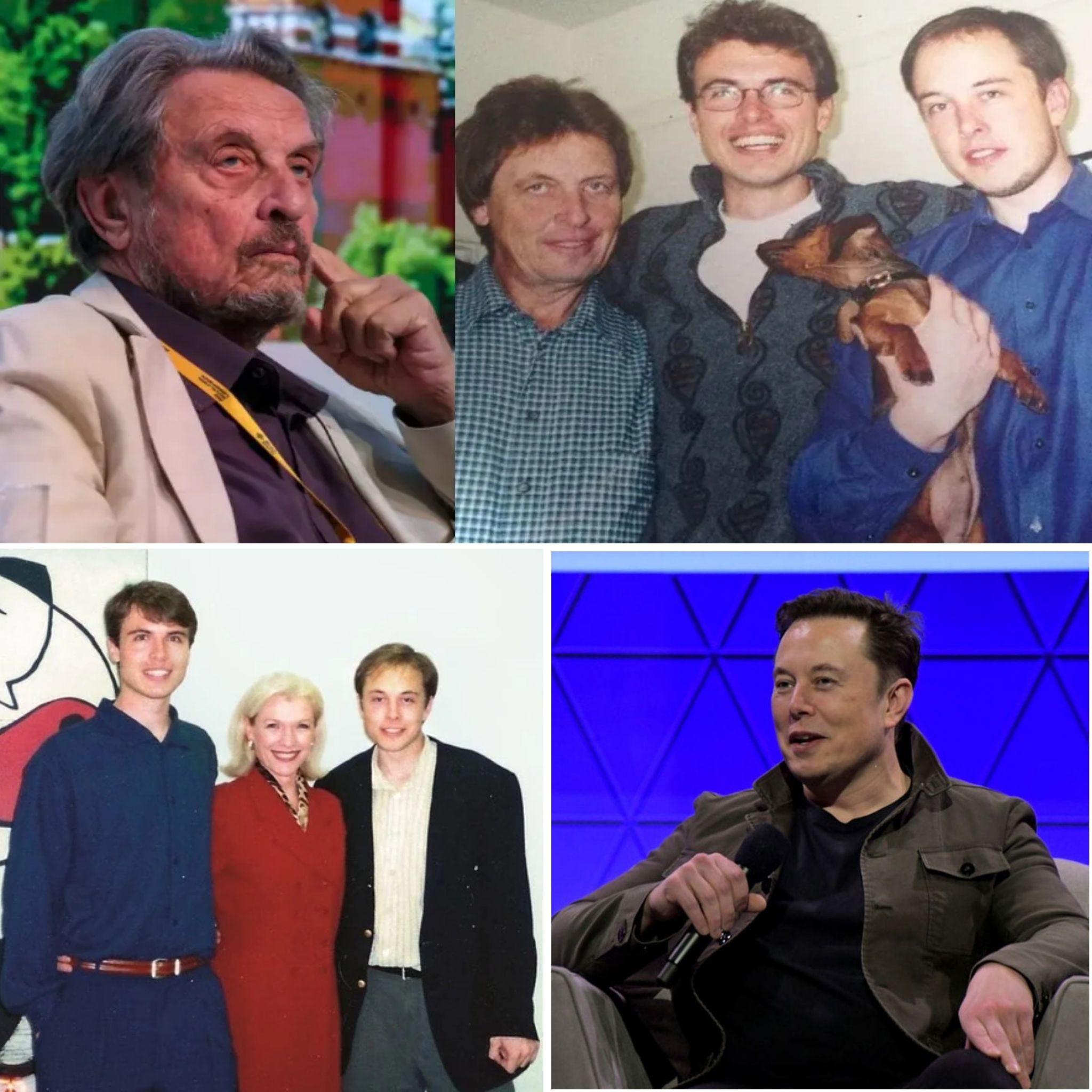
For years, Elon Musk has spoken publicly about almost everything.
He has discussed rockets, artificial intelligence, electric cars, declining birth rates, politics, and the future of civilization.
But there is one subject he has usually avoided.
His father.
Then, on September 23, 2025, a New York Times investigation offered a disturbing possible explanation for that silence.
According to the report, Errol Musk—the 79-year-old South African businessman and father of the Tesla and SpaceX chief—had been accused of sexually abusing five of his children and stepchildren.
The allegations reportedly stretched across more than three decades, beginning in South Africa in 1993 and later reaching California.
Errol Musk denied them.
He called the accusations false, “nonsense,” and “absolute rubbish.” He has not been convicted of a crime related to the claims.
That distinction matters.
These are serious allegations reported through interviews, family correspondence, social-worker accounts, police files, and court records. They are not proven findings from a criminal trial.
But the volume of material described by the investigation transformed what might otherwise have appeared to be another bitter family dispute.
The report did not describe one isolated accusation from one angry relative.
It described claims involving five children and stepchildren, multiple countries, and three separate law-enforcement investigations.
Two of those inquiries reportedly ended without charges. The outcome of the third was unclear when the investigation was published.
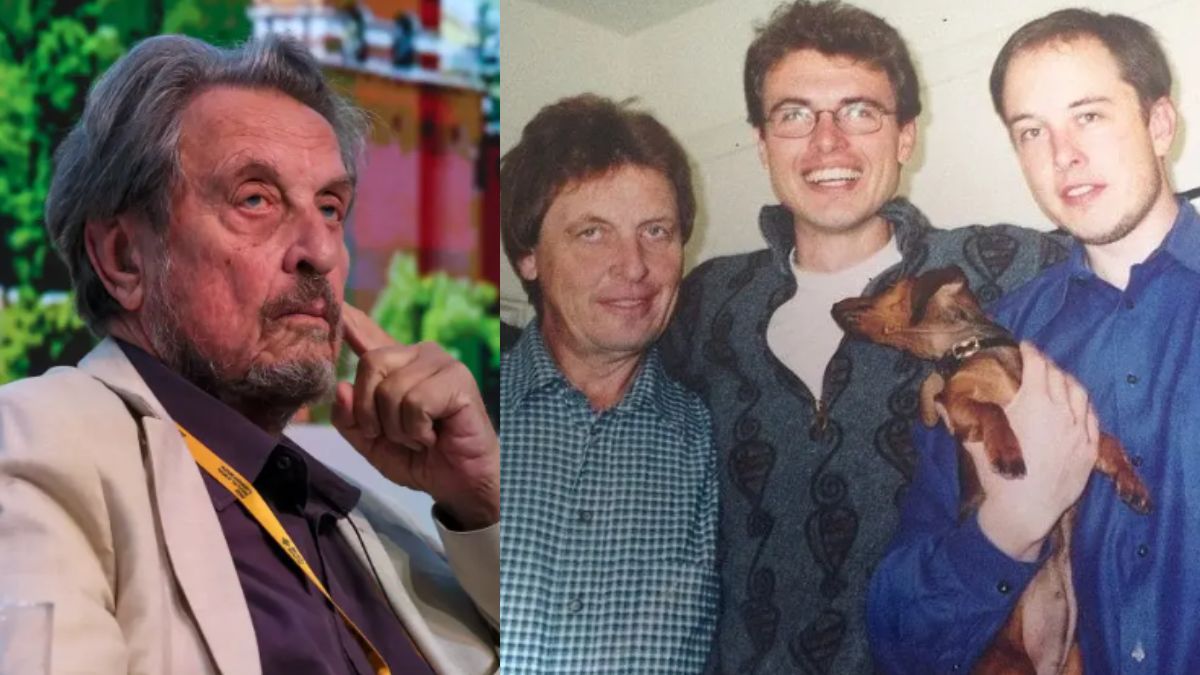
The earliest allegation dated to 1993.
According to the reporting, Errol’s four-year-old stepdaughter, Jana Bezuidenhout, told relatives that he had touched her inappropriately inside the family home.
A police matter was opened in South Africa, and the New York Times reportedly obtained a case number that was confirmed by police.
The charges were later withdrawn during divorce proceedings involving Errol and Jana’s mother.
Years passed.
The family changed.
Marriages ended, relationships fractured, and children grew into adults.
But according to the investigation, the accusations did not disappear.
The Times reported that family members later raised other concerns involving Jana, two of Errol’s daughters, and a stepson. A more recent claim reportedly prompted relatives and a social worker to intervene after a young child made an allegation in 2023.
Each time the story reached another decade, the same question returned:
Why had so much remained inside the family?
The answer described by the reporting was not simple.
Personal letters, emails, and interviews portrayed a family divided by fear, loyalty, dependency, money, and competing versions of the truth.
The Times described Errol as maintaining a powerful influence over much of the family.
Some relatives reportedly turned to Elon for help.
Others, according to Errol, were attempting to use Elon’s extraordinary wealth against him.
Errol claimed family members had coached children into making false statements because they wanted money from his famous son.
He said he was familiar with only one of the allegations, although reports noted that he also offered explanations concerning the circumstances around others.
His position remained firm: the accusations had been fabricated.
Elon Musk did not publicly respond to the investigation when it was published.
His previous comments about his father, however, suddenly took on a different weight.
In a 2017 interview, Elon described his relationship with Errol as deeply troubled. He said he had chosen to live with his father when he was around ten because he felt sorry for him after his parents separated.
At the time, Elon’s younger siblings remained with their mother.
He believed his father was lonely.
He wanted to keep him company.
Years later, Elon said the decision had been a mistake.
Without explaining every detail, he described his father as someone capable of carefully planning harmful acts.
Those comments had circulated before.
They had often been treated as another strange detail in the biography of one of the world’s most polarizing billionaires.
A difficult childhood.
A painful father-son relationship.
An eccentric family history.
But after the 2025 investigation, the old statements no longer sounded like vague resentment.
They sounded like pieces of a story Elon had never chosen to tell publicly.
That did not mean the investigation proved why the two men became estranged.
The Times reported that the accusations could be a significant factor in the rupture.
Only those inside the family know the full sequence of events.
Still, the report placed Elon’s silence inside a new and far darker context.
The man who frequently responded to strangers online had said almost nothing about his own father.
The man who publicly debated the future of humanity had avoided describing what happened inside his childhood home.
And the son whose name had become globally recognizable appeared unwilling to use that fame to rehabilitate his father’s public image.

The allegations became even more difficult for many readers to process because of what happened later between Errol and Jana.
Years after she became an adult, Errol entered a relationship with the woman who had been his stepdaughter.
They later had children together, a fact Errol has discussed publicly.
That relationship had already caused controversy long before the sexual-abuse investigation was published.
After the allegations surfaced, the family history was examined again under a harsher light.
Errol denied that the history supported the accusations.
His answers were not hesitant.
“This is nonsense.”
“This is absolute rubbish.”
“The reports are false.”
There was no apology, no admission, and no public moment in which he accepted wrongdoing.
Instead, he turned the accusation back toward the relatives who had spoken.
In his account, he was not the person abusing family power.
He was the target of a family attempting to reach Elon’s money.
That left two incompatible stories facing each other.
In one, multiple relatives had spent decades trying to be heard while navigating a family dominated by a powerful older man.
In the other, children and adults had been manipulated into repeating false claims as part of an effort to extract money from the richest member of the family.
A courtroom had not resolved those competing accounts.
There was no conviction that allowed the public to declare the case settled.
There was only a collection of records, allegations, denials, closed investigations, unanswered questions, and relatives carrying radically different memories of the same family.
That uncertainty is precisely why the language matters.
To say Errol Musk “sexually abused five children” as an established fact would go beyond the confirmed legal record.
To say that nothing serious happened because no conviction followed would also go beyond what the available reporting can prove.
Cases involving alleged abuse inside families are rarely simple.
Children may struggle to describe what happened.
Adults may disagree about what they witnessed.
Reports can be withdrawn.
Evidence may disappear with time.
Families may close ranks around the accused—or turn against someone for reasons unrelated to the allegation.
The absence of a conviction does not automatically prove innocence.
An accusation does not automatically prove guilt.
Both statements can be true at the same time.
But this was where the real twist in the story emerged.
The investigation initially attracted attention because Elon Musk’s name was in the headline.
He was the billionaire.
The celebrity.
The man connected to Tesla, SpaceX, Neuralink, and X.
His family history became news because the world already knew his name.
Yet the deeper the story went, the less it was truly about Elon.
It was about children who allegedly spoke and adults who decided whether to believe them.
It was about relatives who reportedly kept letters and emails because private conversations had failed to settle anything.
It was about the enormous difficulty of challenging a parent or family patriarch—especially when that person controls money, relationships, and the family’s version of its own history.
The famous son was not the center of the alleged harm.
His fame was the spotlight that finally illuminated the accusations.
That distinction changed the emotional balance of the entire report.
The public had spent years asking what kind of father could produce someone as ambitious, relentless, and emotionally guarded as Elon Musk.
The investigation posed another question:
What happens to the less famous children in a powerful family when the world is interested in only one son?
Some relatives reportedly contacted Elon and asked him to intervene.
According to the reporting, he sometimes offered financial assistance or took steps to help.
But wealth could not retroactively answer what had happened inside homes in South Africa or California.
Money could not turn contradictory family accounts into a verdict.
And global influence could not guarantee that every child involved would feel protected.
The investigation’s consequences were immediate.
Errol’s denials were published beside the accusations.
Elon’s old comments resurfaced.
The relationship between father and son was examined again.
Family members who had lived outside the center of public attention were suddenly discussed in international headlines.
But the legal position remained unchanged.
Errol Musk had been accused.
He had denied the allegations.
Several investigations had occurred.
No criminal conviction had established that he committed the alleged acts.
For readers, that may feel emotionally unsatisfying.
Viral stories usually offer certainty.
A clear villain.
A hidden document.
A confession.
A courtroom decision.
A final moment when the accused lowers his eyes and realizes that everyone knows the truth.
Real family trauma does not always end that way.
Sometimes the accused never admits anything.
Sometimes relatives remain divided forever.
Sometimes the official records close while the personal consequences continue for decades.
And sometimes the only public reckoning is that accusations once confined to private letters can no longer be dismissed as rumors nobody has documented.
That does not establish guilt.
It establishes that the allegations exist, that multiple people made them, and that responsible reporting must neither sensationalize them nor erase the denial.
Elon Musk’s silence also deserves careful treatment.
He was not accused in the investigation of committing the alleged abuse.
His limited public comments about Errol cannot be used as a substitute for evidence against his father.
Estrangement may come from many causes.
Still, the report offered a sobering possibility: silence is not always evidence that nothing happened.
Sometimes silence is the boundary a person builds around a history they do not want to relive in public.
Elon has built companies designed to send machines beyond Earth, connect human brains to computers, and reshape transportation.
Yet no amount of engineering can give a family a clean answer to decades of accusation and denial.
There is no rocket powerful enough to escape the past when the past remains unresolved.
There is no algorithm that can reconstruct every private moment with perfect certainty.
There are only people, records, memories, and the difficult responsibility to speak precisely.
Errol Musk deserves the legal presumption that accusations are not convictions.
The people who raised the allegations deserve not to have their claims erased simply because the accused is connected to an extraordinarily famous son.
Holding those two principles together is not weakness.
It is what fairness requires.
Because when allegations involve children, the goal should never be to create the most shocking headline.
The goal should be to protect the vulnerable, examine the evidence, respect due process, and refuse to let wealth or fame decide whose voice matters.
A family name can attract the world’s attention—but it should never be allowed to replace the truth.