“Can You Come Get Me?” — Abused Woman Calls Mafia Boss… at Her Sister’s Wedding
Chapter One: The Call
Nebula Cross knew exactly how much force it took to crack a human rib.
Not because she was a doctor.
Because her husband had just leaned his forearm against her side until something inside her gave with a small, wet pop.
The wedding orchestra was playing twenty feet away.
Beyond the carved walnut doors, one hundred and eighty guests lifted champagne beneath chandeliers dripping with crystal. Nebula’s younger sister was about to dance with her new husband. Their mother was probably scanning the room, checking posture, smiles and place settings as though family happiness could be measured in symmetry.
Daniel kept his voice low.
“You’re going to walk back into that ballroom,” he said, “and you’re going to sign the transfer before the cake is cut.”
Nebula pressed one palm against the paneled wall of Bellweather House.
The Hudson Valley rain tapped the tall windows. Her navy silk dress had been chosen for its high neckline and long sleeves. Underneath it, bruises bloomed across her ribs in different stages of healing—yellow at the edges, purple near the bone.
“I won’t sign it.”
Daniel’s expression barely changed.
He was forty-four, silver beginning at his temples in a way magazines called distinguished. His tuxedo fit perfectly. His cuff links bore the logo of Aster Resilience, the disaster-response company he claimed to have built from nothing.
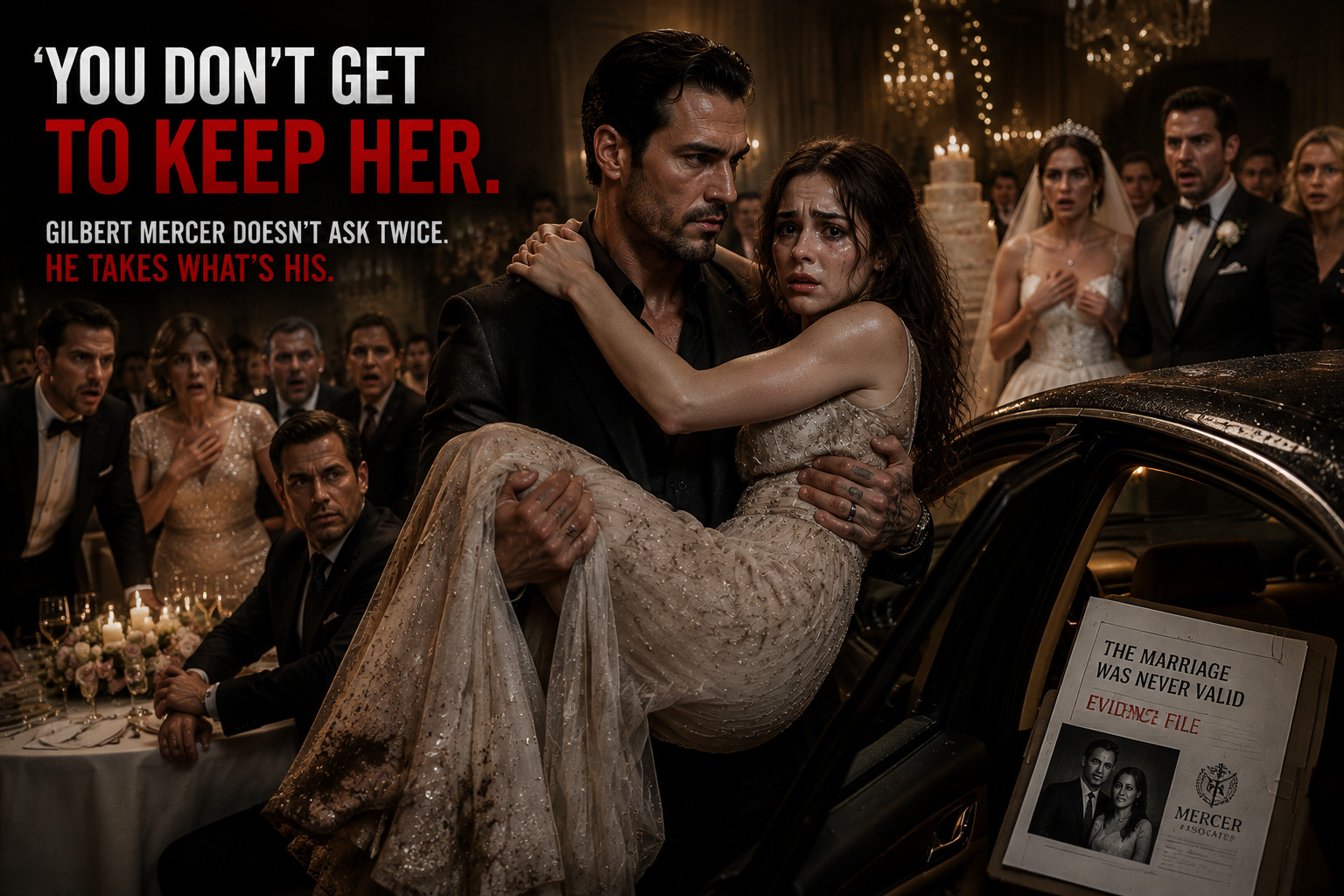
“You’re emotional,” he said.
“I read the audit.”
“You misunderstood it.”
“Eleven hospitals were billed for electrical systems they never received.”
His eyes moved toward the ballroom doors.
No one was coming.
Everyone had learned not to come.
“Those hospitals passed inspection.”
“Because you paid the inspectors.”
The muscle beside Daniel’s mouth flickered.
For one second, the polished chief executive disappeared. Nebula saw the man who had broken her phone against a kitchen counter because she had asked why a company in Delaware was receiving millions from federal relief grants.
Then he smiled again.
“You’ve been under considerable stress,” he said. “Your mother agrees. So does Celeste. Dr. Lyle is prepared to document a psychiatric episode if necessary.”
Nebula stared at him.
He had not merely planned to hurt her.
He had built a room around her and persuaded everyone she loved to hold the walls upright.
Daniel removed a folded document from inside his jacket.
At the bottom was a signature line.
Above it, in language designed to look harmless, Nebula would surrender the patents to the emergency-routing system she had designed before she ever met him.
Her life’s work.
Her name.
Her leverage.
“If you sign,” Daniel said, “we go home together. You sleep. Tomorrow, this becomes another misunderstanding.”
“And if I don’t?”
His gaze dropped to her ribs.
“You know what instability can cost a person.”
The orchestra shifted into the opening notes of “At Last.”
Guests applauded.
Nebula looked down at Daniel’s right hand. No bruising across the knuckles. No blood beneath the nails. He never struck her in ways that damaged the public version of himself.
He hurt her like an engineer.
Carefully.
Precisely.
Inside the ballroom, Celeste’s voice floated through the doors.
“Has anyone seen my sister?”
Daniel stepped closer.
Nebula smelled peppermint on his breath and the cedar cologne their mother had given him for Christmas.
“You have five minutes.”
He returned the document to his jacket and walked toward the music.
Before opening the doors, he looked back.
“Fix your face.”
Then he disappeared into applause.
Nebula waited until the doors closed.
She did not cry.
Crying hurt too much.
She moved down the service corridor, one hand sliding along the wall for balance. Bellweather House had been built in 1891, when wealthy families designed mansions with hidden passages so servants could move without being seen.
Nebula had studied the original plans that afternoon.
She always studied buildings.
Buildings told the truth about what their owners wanted hidden.
Behind the coatroom, through a narrow door painted the same color as the wallpaper, she found a service alcove with a sink, a fuse panel and an old beige telephone mounted beside the freight elevator.
Her hands trembled when she lifted the receiver.
She had not called the number in fourteen years.
She had deleted it from every phone she owned. Changed cities. Changed careers. Married a man whose photographs appeared in business journals beside words like visionary and humanitarian.
But the number was still carved into her memory.
Nebula dialed.
It rang once.
Twice.
On the third ring, a man answered.
He did not say hello.
“Mercer.”
Her throat closed.
Gilbert Mercer’s voice had grown deeper, stripped of the warmth she remembered. It sounded like a locked door in a burning building.
Nebula rested her forehead against the wall.
For several seconds, neither of them spoke.
Then Gilbert inhaled.
“Nebula?”
Somewhere beyond the alcove, guests laughed.
She closed her eyes.
“Can you come get me?”
Silence.
Not confusion.
Not hesitation.
The kind of silence that occurred when machinery too large to see had just been switched on.
“Are you bleeding?” Gilbert asked.
“Not where they can see.”
“Where are you?”
“Bellweather House. My sister’s wedding.”
“Is Cross with you?”
“He’s in the ballroom.”
A door opened at the far end of the service corridor.
Nebula lowered her voice.
“He wants me to sign something.”
“Do you want to leave?”
The question struck her harder than Daniel’s arm had.
Not Should you leave?
Not What did you do?
Not Are you sure?
Gilbert asked what she wanted.
“Yes.”
His answer came without drama.
“Then you’re leaving.”
Nebula heard movement on his end. A chair sliding back. A second voice asking a question. Gilbert covered the receiver, but she caught four words.
“Bring Mara. No weapons.”
The corridor door clicked shut again.
Gilbert returned.
“Can you lock the room?”
“There’s no lock.”
“Can you block the door?”
Nebula looked at the metal service cart beside the sink.
“Yes.”
“Do it.”
She wedged the cart beneath the handle.
“How far away are you?” she whispered.
“Twenty-seven minutes.”
“You can’t get here in twenty-seven minutes.”
“I didn’t say I was obeying the speed limit.”
Despite the pain, something almost like a laugh escaped her.
Gilbert heard it.
His voice softened by half a degree.
“There you are.”
Nebula gripped the receiver.
“I’m scared.”
“I know.”
“What if he calls the police?”
“Then we speak to the police.”
“What if my family stops me?”
“They don’t get a vote.”
“What if—”
The service door shuddered.
Someone pushed from the other side.
“Nebula?” Daniel called.
Her blood turned cold.
The cart wheels squealed against the tile.
Daniel pushed harder.
“Nebula, open the door.”
Gilbert’s voice sharpened.
“Stay with me.”
Daniel hit the door with his shoulder.
The cart shifted an inch.
“Nebula,” he said, the tenderness in his voice more terrifying than rage. “Your sister is waiting.”
Gilbert spoke into her ear.
“Tell him you’re on the phone.”
She swallowed.
“I’m on the phone.”
Daniel stopped pushing.
“With whom?”
Gilbert answered before she could.
“Tell him.”
Nebula stared at the shaking door.
“Gilbert Mercer.”
Nothing moved.
For the first time in seven years of marriage, Nebula heard her husband become completely silent.
Then Daniel stepped away.
When he spoke again, all the warmth was gone.
“You have no idea what you just invited into this family.”
Nebula looked at the phone in her hand.
Gilbert’s breathing remained steady.
“No,” she said. “I think I finally do.”
Outside, Daniel’s footsteps retreated.
Gilbert stayed on the line.
And twenty-three minutes later, the music stopped.
Chapter Two: The Man in the Rain
The first sign of Gilbert Mercer was not the black cars.
It was the way Bellweather House’s security director removed his earpiece, looked toward the front gates and went pale.
Three sedans rolled through the rain.
They did not arrive fast. They did not need to.
The vehicles curved around the stone fountain and stopped beneath the front portico with the measured precision of a funeral procession.
By then, Daniel had pulled the service cart away and escorted Nebula back into the ballroom with one hand firm against the small of her back.
To anyone watching, it looked affectionate.
Only Nebula knew his thumb was pressing directly into a bruise.
Celeste stood in the center of the dance floor, white satin glowing beneath the chandeliers. Her new husband, Andrew, hovered beside her. Their first dance had been interrupted. The musicians held their bows above their strings, uncertain whether to continue.
“Nebula,” Celeste hissed. “What did you do?”
Their mother appeared at her side.
Diane Vale was sixty-three and still possessed the straight-backed beauty that had made strangers behave better in her presence. She wore pearl earrings and an expression of controlled disappointment.
“You promised,” Diane said.
Nebula’s ribs pulsed.
“I promised what?”
“That today would not become about you.”
Daniel’s fingers tightened.
The front doors opened.
Cold air moved through the ballroom, carrying the smell of rain and wet stone.
Gilbert entered alone.
At forty-three, he was broader than Nebula remembered, though age had refined rather than softened him. His black suit carried no shine. His dark hair was clipped short, with a narrow streak of gray above his left ear. A pale burn scar disappeared beneath the cuff of his shirt.
He did not scan the room like a man expecting danger.
The room scanned him.
Gilbert Mercer was president of Mercer Atlantic Logistics, a shipping company with terminals from Baltimore to Montreal. Business magazines photographed him near cranes and cargo vessels. Politicians accepted his donations and avoided questions about the men who had built his father’s empire along the waterfront.
In three states, prosecutors had spent years trying to prove that Gilbert’s legitimate company was only the visible portion of something much larger.
No one had succeeded.
A woman in a charcoal coat entered behind him, carrying a leather portfolio. Mara Quinn, one of the most feared civil litigators in New York.
A second woman followed with a medical bag.
No army.
No displayed guns.
Gilbert had brought a lawyer and a doctor.
His gaze found Nebula.
For the first time that night, his control slipped.
His eyes moved from the concealer near her jaw to the way she guarded her left side. His scarred hand closed once at his side.
Then his face went still.
Daniel stepped forward.
“Mr. Mercer.”
Gilbert did not look at him.
“Nebula.”
Hearing her name in his voice nearly broke something she had spent years keeping intact.
Daniel smiled for the guests.
“My wife is unwell.”
Gilbert’s gaze remained on her.
“Did you ask me to come?”
Nebula felt Daniel’s hand against her back.
She saw her mother’s warning stare. Celeste’s ruined expression. The wedding guests leaning toward one another, already preparing the story they would tell later.
Gilbert waited.
He did not move closer.
He did not rescue her before she answered.
“Yes,” Nebula said.
Daniel’s fingers dug in.
“She’s confused.”
Gilbert finally looked at him.
The ballroom seemed to lose several degrees of heat.
“Take your hand off her.”
Daniel gave a small, incredulous laugh.
“This is my wife.”
“She is not an object that changes ownership when she signs a marriage certificate.”
“You have no place here.”
“I’m exactly where she asked me to be.”
Mara Quinn opened her portfolio.
“Mrs. Cross,” she said, “my name is Mara Quinn. I represent you for the limited purpose of leaving this property safely. Do you understand?”
“Yes.”
“Would you like Dr. Reese to examine you?”
Nebula glanced at the woman with the medical bag.
“Yes.”
“Would you like law enforcement contacted?”
Daniel’s smile faltered.
Nebula looked at him.
He had spent years predicting her choices before she made them. He knew which friends she would stop calling, which invitations she would decline, how long she could be punished with silence before apologizing for things she had not done.
He expected fear to make her quiet.
“Not yet,” Nebula said. “But I want everything documented.”
The wedding photographer lowered his camera.
Celeste moved toward him.
“Delete those.”
“Don’t,” Nebula said.
Her sister froze.
Nebula turned to the photographer.
“Keep every image.”
Daniel removed his hand from her back.
The absence of pain felt almost unreal.
He addressed the room.
“My wife has a documented history of panic attacks and paranoid thinking. Mr. Mercer is exploiting a medical situation because of their previous relationship.”
A murmur moved through the guests.
Gilbert’s expression did not change.
But Mara smiled.
“Thank you, Dr. Cross.”
Daniel’s eyes narrowed.
“I’m not a doctor.”
“No,” Mara said. “You’re not.”
A few guests looked away to hide their reactions.
Daniel stepped toward Nebula.
“We need to speak privately.”
Gilbert’s men did not appear.
No one touched Daniel.
Gilbert simply shifted half a step, placing himself between them.
Daniel stopped.
“I won’t ask again,” he said.
Gilbert glanced toward the folded paper inside Daniel’s jacket.
“You’ve been asking her the wrong questions for years.”
Daniel’s face tightened.
“You think your reputation frightens me?”
“No.”
Gilbert’s voice was almost gentle.
“I think yours should frighten you.”
For the first time, Daniel looked uncertain.
Nebula saw it pass through him—a tiny collapse beneath the polished exterior.
Then Celeste stepped between them.
“This is my wedding.”
Her voice cracked on the final word.
Nebula looked at the sister whose scraped knees she had bandaged, whose college applications she had edited, whose late-night calls she had answered even after Daniel began checking the phone bill.
Celeste’s eyes shone with anger rather than concern.
“Couldn’t you have waited until tomorrow?” she whispered.
Nebula felt something inside her become quiet.
Not numb.
Finished.
She pulled back the sleeve of her dress.
Finger-shaped bruises circled her wrist.
Celeste stared.
So did their mother.
Neither looked surprised.
That hurt more than the rib.
“You knew,” Nebula said.
Diane’s lips parted.
“Nebula, marriage is complicated.”
Gilbert turned his head slowly toward her.
Diane stepped back.
Nebula lowered her sleeve.
“No,” she said. “Silence is complicated. This is simple.”
She walked toward the doors.
Each step sent a blade of pain through her side. Gilbert stayed beside her but did not touch her until she reached the wet stone steps and nearly fell.
His hand caught her elbow.
The contact was firm, careful and gone as soon as she found her balance.
Behind them, Daniel called out.
“You leave with him, and everyone will know what you are.”
Nebula turned beneath the portico.
Rain silvered the darkness beyond the lights.
“What am I, Daniel?”
His gaze flicked toward the guests.
He had no answer he could say in public.
Nebula got into Gilbert’s car.
As the door closed, she saw Daniel standing beneath the chandelier with her family around him, still wearing the face of a reasonable man.
Gilbert sat across from her.
Dr. Reese opened her medical bag.
Mara began recording the time and location.
The car moved down the drive.
Only when the estate disappeared behind the trees did Gilbert speak.
“What did he want you to sign?”
Nebula watched rain race across the tinted window.
“He didn’t hurt me because he was jealous,” she said.
Gilbert waited.
“He hurt me because I found the eleven hospitals.”
Chapter Three: The House Without Locks
Gilbert’s house stood above the Hudson River on a wooded ridge forty miles south of Bellweather House.
It was not the mansion Nebula expected.
The structure was low and modern, built from weathered steel, slate and glass. Rain moved over the roof in a soft metallic whisper. Inside, there were no gold fixtures, no marble lions, no armed men standing in hallways.
Only warm lamps, dark wood and windows facing the black river.
Dr. Reese examined Nebula in a bedroom overlooking the water.
One fractured rib.
Two healing fractures.
A sprained wrist.
Bruising consistent with repeated restraint.
A faint scar beneath her hairline that Daniel had once explained to an emergency-room physician as the result of Nebula fainting near the bathtub.
Dr. Reese photographed everything with a forensic scale.
“You need imaging,” she said. “The rib may have displaced.”
“I can go in the morning.”
“You’re going now.”
Nebula flinched.
The doctor paused.
Then she corrected herself.
“I recommend that you go now. The choice is yours.”
Nebula studied her face.
“Gilbert hired you?”
“He called me.”
“Do you work for him?”
“No. My wife does his company’s occupational medicine. Mr. Mercer pays his bills promptly and frightens insurance executives. Those are his best qualities.”
For the first time since leaving the wedding, Nebula smiled.
It hurt.
“I’ll go tonight.”
When Dr. Reese stepped out to arrange transport, Nebula found Gilbert waiting in the hall.
He had removed his jacket. The white shirt beneath it made him look less like a businessman and more like the young man she had known before life hardened around him.
His eyes moved to the medical photographs on the doctor’s tablet.
Nebula closed the bedroom door between them.
The latch clicked.
Gilbert stared at the wood.
“You don’t get to see them,” she said.
“I know.”
“You don’t get to decide what happens next.”
“I know.”
“You don’t get to make Daniel disappear.”
A long pause.
“I know.”
Nebula opened the door.
Gilbert had not moved.
“Do you?”
His jaw tightened.
“Not naturally.”
She almost laughed again.
Then the movement caught her broken rib, and she pressed a hand to her side.
Gilbert took one step forward.
Nebula stepped back.
He stopped immediately.
The speed of it—the way he read her body before his own anger—brought tears to her eyes.
She hated them.
She turned toward the window.
“You used to break things when you were angry.”
“I still do.”
“That’s not comforting.”
“I didn’t intend it to be.”
Below them, the river caught a distant line of lights.
Fourteen years earlier, Nebula had loved Gilbert Mercer with the terrifying certainty of someone too young to understand that love and safety were not always the same thing.
They had met in a diner near the Port of Baltimore. She was twenty-three, an engineering graduate student sketching storm-resistant power grids on paper napkins. He was twenty-seven, managing trucks for his father and pretending not to be involved in the family’s other business.
Gilbert had believed in her designs before any professor did.
Nebula had believed he could walk away from his family’s violence.
They had both been wrong.
The night his older brother was shot outside a warehouse, Gilbert inherited an empire he had spent years claiming he did not want. Within six months, the men responsible had vanished from the city.
Nebula never asked where they went.
She left before the answer could destroy the part of her that still loved him.
Daniel Cross entered her life two years later.
He wore pale-blue shirts. He volunteered after hurricanes. He listened when she spoke about emergency systems and introduced her to investors who had ignored her when she entered rooms alone.
He did not look dangerous.
That had been part of the danger.
“Tell me about the hospitals,” Gilbert said.
Nebula sat at the dining table while Mara opened a laptop.
Aster Resilience installed backup power, water purification and emergency-routing systems in rural hospitals. Nebula had designed Lighthouse, an algorithm that identified which facilities would fail first during storms and redirected supplies accordingly.
Daniel turned it into a corporation.
Then, somewhere during the company’s rise, he began creating phantom upgrades.
Hospitals received invoices.
Federal grants paid them.
Equipment never arrived.
“Eleven facilities,” Nebula said. “Maybe more. They passed inspections because Daniel’s people uploaded photographs from different sites.”
Mara’s fingers moved over the keyboard.
“How did you discover it?”
“A serial number in West Virginia appeared in a report from Maine.”
“You remembered a serial number?”
Nebula looked at her.
“I designed the numbering system.”
Gilbert stood near the windows, arms folded.
“What was the money financing?”
“I don’t know. Daniel moved it through six subsidiaries.”
“Do you have copies?”
“I created an encrypted audit.”
“Where is it?”
Nebula hesitated.
“Inside Aster.”
Mara stopped typing.
“You left the evidence in the company’s network?”
“I built the network.”
“Daniel controls it now.”
“He thinks he does.”
Gilbert looked at her.
Something passed between them—the recognition of the woman who had once corrected his father’s shipping manifests from across a diner booth and uncovered forty thousand dollars in theft before dessert arrived.
“Why didn’t you go to the authorities?” Mara asked.
“I tried.”
She told them about the compliance director who resigned two days after Nebula raised questions. The board member who advised her to take medical leave. The psychiatrist Daniel persuaded her to visit after a panic attack, who recorded every fear as evidence of paranoia.
She told them how Daniel changed the passwords.
How her mother began receiving calls about Nebula’s “declining condition.”
How Celeste asked her to stop making accusations until after the wedding.
“How long has he been hurting you?” Gilbert asked.
Nebula looked at the grain of the table.
“The first time was three years ago.”
Gilbert’s hand closed around the back of a chair.
The wood creaked.
Nebula looked up.
“Don’t.”
He released it.
“The first time,” she continued, “he cried afterward. The second time, he explained why I had frightened him. By the fifth time, he was taking photographs of the rooms afterward to prove I had damaged things.”
Mara’s face remained composed, but her typing had stopped.
“Why tonight?” she asked.
“He found out about the audit.”
Gilbert’s gaze sharpened.
“How?”
“I don’t know.”
Nebula removed a small silver pendant from beneath her dress. It was shaped like a four-pointed star, scratched along one edge.
She placed it on the table.
Daniel had given it to her on their fifth anniversary.
Gilbert picked it up without touching her hand.
“This is a tracker.”
“I assumed it was.”
He turned it over.
“You kept wearing it?”
“I wanted him to believe I didn’t know.”
For the first time, Mara looked impressed.
Nebula stared at the pendant.
“I needed time.”
A phone vibrated on the table.
It belonged to Gilbert.
He read the screen.
His expression changed.
“What is it?” Nebula asked.
Gilbert handed the phone to Mara.
She read the message, then looked at Nebula.
“Daniel filed a missing-person report.”
Nebula’s stomach tightened.
“That doesn’t make sense. Everyone saw me leave.”
“That isn’t all,” Mara said. “Aster’s board has released a statement saying you suffered a breakdown after being confronted about financial irregularities.”
Gilbert’s phone vibrated again.
This time Mara swore under her breath.
“What?”
She turned the screen toward Nebula.
An alert carried her photograph.
Authorities seek Aster Resilience co-founder in connection with the suspected theft of $8.4 million in federal infrastructure funds.
Daniel had not tried to hide what he had done.
He had signed Nebula’s name to it.
And by leaving her sister’s wedding beside the most feared man on the East Coast, Nebula had given him the perfect ending to his story.
Chapter Four: The Woman They Could Blame
By sunrise, every cable network had footage from the wedding.
Gilbert entering through the rain.
Nebula walking beside him.
The black cars leaving Bellweather House.
One headline read:
MISSING EXECUTIVE FLEES WITH ALLEGED CRIME FIGURE.
Another asked whether Nebula had embezzled millions to fund a secret relationship.
The wedding photographer’s images had already been sold.
None showed the bruises beneath her sleeves.
Daniel appeared on television at eight fifteen.
He sat in the library at Bellweather House, still wearing his wedding tuxedo. His bow tie had been removed. His voice trembled at exactly the right moments.
“My wife is brilliant,” he told the interviewer. “But she has struggled privately for years. Our family’s only concern is bringing her home safely.”
Beside him sat Diane and Celeste.
Nebula watched from Gilbert’s kitchen while Dr. Reese taped her ribs.
Her mother kept one hand on Daniel’s shoulder.
Celeste’s makeup had been reapplied. She looked exhausted and beautiful.
“We love my sister,” Celeste said. “Yesterday was supposed to be a joyful day, but Nebula has been under tremendous pressure.”
The interviewer leaned forward.
“Did you witness Mr. Mercer forcibly remove her?”
Celeste hesitated.
Nebula stopped breathing.
“No,” Celeste said at last. “But my sister was not behaving like herself.”
Daniel lowered his eyes.
A man protecting his troubled wife.
A family united by concern.
A dangerous former lover waiting in the shadows.
The story had everything the public needed except the truth.
Gilbert muted the television.
“You don’t have to watch.”
“Yes, I do.”
“Why?”
“Because this is the version a jury will see.”
Mara entered carrying two phones and a stack of documents.
“Daniel’s moving quickly. Aster has frozen your accounts. Your corporate email has been disabled. The board is meeting tomorrow morning at Bellweather.”
“At the wedding venue?”
“Half the directors were already there as guests. Daniel calls it efficient.”
Nebula almost admired the cruelty of it.
Bellweather House had been chosen because Celeste’s new father-in-law, Howard Finch, controlled Harridan Capital—the investment firm attempting to purchase Nebula’s patents.
The wedding was not simply a family celebration.
It was a business trap decorated with orchids.
Mara placed a copy of the criminal complaint on the table.
Forty-seven transfers.
Each approved with Nebula’s executive credentials.
Each bearing her digital signature.
Gilbert read the pages in silence.
Nebula noticed how still he became when furious. As a young man, he had punched walls. Now the rage moved inward, compressed into something more dangerous.
“What do you need?” he asked Mara.
“For her to surrender voluntarily.”
“No.”
Nebula looked at him.
Gilbert did not look back.
Mara’s voice remained calm.
“If federal agents execute a warrant here, they will search your property and seize your devices.”
“I don’t care.”
“They may detain your employees.”
“I don’t care.”
“They may decide Mrs. Cross is being held under coercion.”
Gilbert’s gaze moved to Nebula.
“I care about that.”
Nebula pushed the complaint away.
“I’ll surrender.”
“No.”
She turned toward him.
He stood at the opposite end of the kitchen island, broad shoulders blocking the morning light.
“You asked me what I wanted at the wedding.”
“I’m asking you to reconsider.”
“That isn’t what you said.”
“It is now.”
“Because you think you know better?”
“Because Daniel built this to put you in a cell.”
“He built it to make me run.”
Gilbert’s eyes narrowed.
Nebula rose carefully.
“If I hide here, he wins. He gets to say I stole the money and fled into the arms of a criminal.”
“I’m not concerned about what he says.”
“I am.”
“Why?”
“Because the hospitals matter.”
The room went quiet.
Nebula picked up the complaint.
“Daniel thinks this is about surviving him. It isn’t only about me. There are nurses in buildings that lose power when storms come. There are patients connected to machines that were supposed to be protected by equipment Aster never delivered.”
“You can’t help them from a cell.”
“I can’t help them by becoming the woman Daniel says I am.”
Gilbert walked toward her.
He stopped several feet away.
“You think surrendering proves innocence?”
“No. Evidence proves innocence.”
“Do you have it?”
“Not here.”
“Then give me one day.”
“To do what?”
His face became unreadable.
“Make him afraid.”
Nebula shook her head.
“You still think fear is the same thing as power.”
“It kept me alive.”
“It kept you alone.”
The words landed between them.
Gilbert’s expression did not change, but the scarred hand at his side opened slowly.
Mara looked away.
Nebula regretted the sentence as soon as she said it.
Not because it was false.
Because it was true.
Gilbert had spent fourteen years building a world in which no one could reach him. He possessed ships, judges, warehouses and men who answered calls at three in the morning.
But his house contained one coffee cup beside the sink.
One coat on the rack.
No photographs.
No sound except rain.
“I’m sorry,” Nebula said.
“Don’t be.”
He glanced toward the river.
“You were always most dangerous when you were right.”
By noon, Mara arranged for Nebula to surrender at the federal building in White Plains.
Gilbert insisted on driving.
She refused.
He offered an armored vehicle.
She refused that too.
In the end, Nebula rode in Mara’s ordinary gray sedan with Dr. Reese’s medical report sealed in a folder on her lap.
Gilbert followed at a distance.
No convoy.
No spectacle.
At the entrance, cameras surrounded the car.
Reporters shouted questions.
“Mrs. Cross, did you steal federal funds?”
“Are you in a relationship with Gilbert Mercer?”
“Did Mr. Mercer threaten your husband?”
Nebula stepped onto the sidewalk.
The October wind lifted her dark hair, revealing the thin scar near her temple.
She wore no makeup.
Her left wrist was wrapped.
The cameras saw it.
Mara guided her through the doors.
Inside, two federal agents waited.
One was a woman in her fifties named Special Agent Helen Ward. She had tired eyes and the posture of someone who disliked being lied to.
“We have a problem,” Ward said.
Mara placed the medical report on the table.
“We have several.”
Ward did not touch it.
She opened a file and slid a sheet toward Nebula.
It was an authorization for a $620,000 payment to a shell company in Delaware.
Nebula’s digital signature appeared at the bottom.
“Is this your credential?” Ward asked.
“Yes.”
“Is that your signature?”
Nebula studied the document.
Every line was perfect.
The certificate number was correct. The time stamp matched a night she had been at home. The approval token belonged to her.
Daniel had not forged her access.
He had used the real thing.
Ward placed eleven more approvals on the table.
All identical.
All hers.
Mara leaned closer.
“Could someone have stolen your token?”
“It requires a thumbprint.”
“Could Daniel have forced you to use it?”
Nebula thought of the nights she woke with no memory of falling asleep.
The bitter taste in glasses of wine Daniel insisted she finish.
The anniversary pendant tracking her movements.
Then she noticed something in the transaction logs.
A delay of precisely nine seconds between authentication and approval.
Every time.
Her pulse changed.
Daniel had not made a mistake.
He had made the same choice forty-seven times.
Nebula looked at Agent Ward.
“May I see the raw device data?”
Ward’s expression hardened.
“Why?”
“Because someone used my token.”
“You just said it requires your thumbprint.”
“It does.”
“Then how?”
Nebula looked again at the nine-second delay.
A memory surfaced.
A prototype scanner on her workbench.
Daniel asking why she had added a secondary circuit.
Nebula telling him it was only a diagnostic feature.
She had lied.
“Because I designed it to let him.”
Chapter Five: The Trap Inside the Trap
Mara requested a private room.
Agent Ward refused until Nebula explained.
Three years earlier, after noticing unexplained changes inside Aster’s financial system, Nebula had modified her biometric token.
The scanner still recognized her thumbprint.
But it also contained a covert forensic mode.
If someone authenticated while pressing a hidden contact point on the back, the device would approve the transaction while silently copying the user’s biometric pattern, device location and network path to an encrypted archive.
“You created a second access method?” Ward asked.
“I created a way to identify coercion.”
“Why?”
Nebula looked toward the mirrored window.
“Because by then, I understood what I was married to.”
Mara folded her arms.
“Where is the archive?”
“Distributed across three continuity servers.”
“Who controls them?”
“One is at Aster. One is held by our outside engineering auditor.”
“And the third?”
Nebula did not answer immediately.
Fourteen years ago, before Aster existed, Lighthouse had been a collection of models on Nebula’s battered laptop.
She had needed access to shipping data that universities refused to share.
Gilbert had given it to her.
Not stolen data. Legitimate historical records from Mercer Atlantic—storms, port closures, fuel shortages and truck delays stretching back decades.
In exchange, Nebula had drafted a continuity agreement.
If her work ever became commercially valuable, Mercer Atlantic would serve as an independent custodian for emergency purposes.
She had forgotten the contract.
Daniel had not known it existed.
“The third archive is inside Mercer Atlantic’s disaster-recovery network,” Nebula said.
Ward stared at her.
“The company owned by the man you fled with last night?”
“I didn’t flee with him.”
“The footage suggests otherwise.”
“I called him because he was the only person Daniel could not pressure into deleting the archive.”
Mara’s expression changed.
“You knew the evidence was there?”
“I hoped it was.”
“You could have told us this morning.”
“I needed to know whether Daniel had used my real token.”
Gilbert was waiting in the corridor when Mara opened the door.
One look at Nebula’s face told him something had shifted.
“What happened?”
She held out her hand.
“I need your network.”
His gaze dropped to her palm.
“What part?”
“Disaster recovery. An archive created under the original Lighthouse continuity agreement.”
Recognition moved across his features.
“The contract from Baltimore.”
“You kept it?”
“I keep every agreement.”
“Even with people who leave you?”
“Especially those.”
Agent Ward stepped into the corridor.
“Mr. Mercer, federal agents will need immediate access to specific servers.”
Gilbert looked at Nebula.
“Do you authorize it?”
“Yes.”
“Then they have it.”
Ward seemed almost disappointed by his cooperation.
Two hours later, Mercer Atlantic technicians opened the archive under federal supervision.
The logs had been waiting.
Forty-seven transactions.
Forty-seven biometric scans.
None belonged to Nebula.
Daniel had created a silicone reproduction of her thumbprint from a wineglass collected after an Aster awards dinner. He had used it with a conductive film to activate the token.
The hidden sensor recorded everything.
His fingerprint ridge patterns.
His smartwatch identifier.
The private network inside his home office.
Even the precise room temperature.
Gilbert stood behind the technicians as the evidence appeared line by line.
Nebula watched his reflection in the dark monitor.
“You knew the archive existed,” she said.
“I knew the server existed.”
“You never opened it?”
“It wasn’t mine.”
“You could have.”
“Yes.”
“But you didn’t.”
“No.”
The distinction mattered more than she wanted it to.
Daniel had spent years reading her messages, checking her location and searching her notebooks. He claimed marriage entitled him to every private corner of her mind.
Gilbert, a man accused of ordering violence across the Eastern Seaboard, had possessed the key to Nebula’s most dangerous secret for fourteen years.
He had never turned it.
Agent Ward returned with a printed report.
“This clears you of the transfers.”
Nebula exhaled.
“But it creates another problem.”
The relief vanished.
“What problem?”
“Your archive shows Daniel Cross made the approvals. It does not prove he diverted the money for personal use.”
“He controlled the shell companies.”
“On paper, they’re controlled by other people.”
“Howard Finch,” Mara said.
Ward glanced at her.
“Among others.”
Celeste’s new father-in-law.
The man who had paid for the wedding.
The investor purchasing Nebula’s patents.
Ward closed the folder.
“We also found an automatic deletion command scheduled for midnight tomorrow. Someone intends to erase Aster’s primary records.”
“Daniel,” Nebula said.
“Probably. But probability is not enough for a warrant.”
Gilbert looked at the clock.
“He has twenty-nine hours.”
Ward’s gaze hardened.
“You are not to interfere.”
“I wasn’t speaking to you.”
She stepped closer.
“I know what people say you do when the law moves too slowly.”
Gilbert’s face revealed nothing.
“People say many things.”
“If Cross disappears—”
“He won’t.”
“How can you guarantee that?”
Gilbert looked at Nebula.
“Because she asked me not to.”
Ward studied him for several seconds.
Then she left.
Nebula waited until the technicians moved to the other side of the room.
“What are you going to do?”
“Nothing illegal.”
“That is not the same as nothing dangerous.”
“No.”
“Gilbert.”
He turned toward her.
For a moment, the powerful man vanished. She saw the twenty-seven-year-old standing beneath a Baltimore streetlamp after his brother’s funeral, begging her to believe he could hold an empire without becoming part of it.
“Daniel thinks he is protected by wealth, reputation and your family’s silence,” Gilbert said. “I’m going to remove those things in that order.”
“How?”
“Legally.”
She raised an eyebrow.
“Mostly.”
“Gilbert.”
His mouth almost curved.
“Entirely.”
Before Nebula could answer, Mara’s phone rang.
She listened, asked two questions and ended the call.
“That was Bellweather House,” she said. “Daniel has called an emergency board meeting for tomorrow morning.”
“At the wedding venue,” Nebula said.
“He intends to remove you from Aster, approve the sale to Harridan Capital and authorize destruction of the old continuity systems.”
“The board won’t approve that while he’s under investigation.”
Mara’s expression remained grim.
“They don’t know he is.”
Agent Ward was keeping the evidence sealed until she had enough for warrants.
Daniel believed his trap had worked.
And in less than twenty-four hours, he would destroy the only records proving what had happened to the eleven hospitals.
Nebula looked through the glass toward the federal agents.
“We need him to sign the sale.”
Mara stared at her.
“Why?”
“Because the assignment contains a warranty stating all Aster systems are complete and operational.”
Gilbert understood first.
“If he signs after learning they aren’t—”
“He personally certifies the fraud.”
Mara shook her head.
“He will require your signature too.”
Nebula thought of the document inside Daniel’s jacket.
The threat in the corridor.
The psychiatric petition waiting to be used against her.
“He believes I’m desperate,” she said. “He believes I’ve lost everything.”
Gilbert’s eyes narrowed.
“What are you proposing?”
Nebula picked up her coat.
“I’m going back to the wedding.”
Chapter Six: The Bride’s Second Morning
Bellweather House looked different in daylight.
The rain had cleared, leaving the Hudson Valley washed in cold blue light. Wet leaves clung to the circular drive. Florists carried wilted arrangements through the service entrance while exhausted guests drifted toward a farewell brunch.
Inside the ballroom, yesterday’s roses had begun to brown at the edges.
The musicians were gone.
The dance floor had been rearranged into a corporate boardroom.
Daniel stood at the head of the table in a fresh charcoal suit.
Beside him sat Howard Finch, Celeste’s father-in-law and chairman of Harridan Capital. He was seventy-one, round-faced and soft-spoken, the kind of man who had spent a lifetime making greed sound like stewardship.
Aster’s directors filled the remaining chairs.
Diane and Celeste waited near the windows.
Daniel had invited them as witnesses to Nebula’s instability.
At ten twelve, the ballroom doors opened.
Nebula entered with Mara Quinn.
Gilbert came in last.
He remained near the back wall.
Daniel’s gaze fixed on him.
“You were told this was a closed meeting.”
Gilbert pulled out a chair near the doors and sat.
“I’m not attending.”
Every director watched him.
Nebula understood the message.
He had come because she asked.
But the room belonged to her.
Daniel turned toward Nebula.
For one fleeting second, relief crossed his face. He believed she had returned to surrender.
Then he noticed her wrapped wrist and the absence of makeup.
His expression cooled.
“You’ve caused considerable damage.”
Nebula sat opposite him.
“So have you.”
Howard Finch cleared his throat.
“This family has endured enough spectacle. Let’s resolve the corporate matters quietly.”
Celeste stood beside her new husband. The diamonds at her throat caught the light.
Her wedding had become a crime scene without yellow tape.
Daniel placed the assignment document on the table.
“We are prepared to overlook Nebula’s misconduct if she executes the transfer and enters appropriate treatment.”
Mara leaned back.
“What misconduct?”
Daniel slid copies of the financial complaint toward the directors.
“Eight-point-four million dollars transferred under her credentials.”
“The federal government has not charged Mrs. Cross.”
“Yet.”
Nebula looked at him.
He was good.
Even now, with the room tightening around him, Daniel controlled his breathing. He adjusted his cuff links, used people’s first names and lowered his voice when discussing betrayal.
He did not think of himself as cruel.
He thought of himself as necessary.
Years earlier, Daniel’s father had lost a construction company after trusting a partner who emptied the accounts. Daniel had watched his mother sell their house and move into a two-bedroom apartment above a laundromat.
He had built his life around one private rule:
Never let anyone else control the structure.
When Nebula’s inventions attracted investors, Daniel told himself he was protecting them from her idealism. When she objected to shortcuts, he called her naïve. When she found the missing funds, he called her unstable.
In Daniel’s mind, every act of violence was maintenance.
A system correcting an unpredictable component.
Howard pushed a pen across the table.
“Sign, and we can end this.”
Nebula looked at the document.
“Has Daniel signed?”
“Not yet,” Howard said.
“Why not?”
Daniel smiled faintly.
“Because your approval is required first.”
“That isn’t what the bylaws say.”
His smile faded.
Nebula opened the document to page fourteen.
“The founder’s assignment requires the chief executive’s warranty before the inventor’s consent.”
Several directors began turning pages.
Daniel did not.
He knew exactly where the clause was.
Howard placed one hand on the document.
“This is a procedural detail.”
“It’s a personal certification,” Nebula said. “Daniel must affirm that every federally funded Aster installation is complete and functional.”
The room quieted.
Daniel’s gaze sharpened.
“You know they are.”
“Then sign.”
He studied her.
Nebula kept her face empty.
She had learned stillness from him.
Daniel glanced toward Gilbert.
Gilbert sat with one ankle resting across his knee, his scarred hand loose against the arm of the chair.
He offered Daniel nothing.
No threat.
No visible plan.
That unsettled Daniel more than anger would have.
“You disappeared with a criminal,” he said to Nebula. “Now you return demanding signatures?”
“You wanted mine badly enough to break my rib.”
Celeste closed her eyes.
A director near the end of the table looked at Daniel.
“What is she talking about?”
Daniel’s voice remained measured.
“My wife fell during an episode.”
Nebula pulled back her sleeve.
The bruising around her wrist was darker now.
She turned slightly so the directors could see the discoloration near her collarbone.
Diane whispered her name.
Nebula looked at her mother.
“Don’t.”
One word.
Diane’s mouth closed.
Daniel pushed back from the table.
“This meeting is over.”
Howard caught his arm.
“No.”
The investor’s softness disappeared.
“If she signs, we close today. Sign the warranty.”
Daniel looked around the room.
The board members waited.
His family watched.
The sale was worth hundreds of millions. It would pay the hidden debts, erase the phantom projects and place Nebula’s technology beyond her control.
He needed it.
Nebula saw the calculation occur behind his eyes.
The same calculation he made before every apology.
How much damage could he cause and still keep what he wanted?
Daniel picked up the pen.
He signed.
A small sound came from Mara’s phone.
The scan had been transmitted.
Nebula reached for the document.
Daniel covered the signature line with his hand.
“Before you sign, I want Mercer removed.”
Nebula looked toward Gilbert.
“Would you wait outside?”
Every face turned toward him.
Gilbert rose without objection.
As he reached the doors, Daniel spoke.
“Does it bother you?”
Gilbert stopped.
“That she came back to me?”
Nebula felt the room tighten.
Gilbert turned.
His expression held no jealousy. No wounded pride. Nothing Daniel could use.
“She didn’t come back to you,” Gilbert said. “She came back for you.”
Then he walked out.
Daniel’s hand lifted from the page.
Nebula picked up the pen.
She did not sign.
Instead, she drew a straight line through her signature field.
Daniel’s face emptied.
“What are you doing?”
Mara stood.
“The chief executive’s warranty has been received.”
Howard looked between them.
“What is this?”
Nebula closed the document.
“The moment Daniel certified that all systems were complete, he accepted personal liability for eleven fraudulent hospital installations.”
The ballroom doors opened again.
Special Agent Helen Ward entered with six federal agents.
Behind them came two investigators from the Department of Health and Human Services and a state police detective carrying a sealed evidence box.
No one spoke.
Daniel stared at them.
Then he looked toward Gilbert beyond the open doors.
Gilbert had not moved.
He stood in the hallway, hands empty.
The recognition began in Daniel’s eyes.
Not yet fear.
Disbelief.
His world had always divided people into two categories: those he controlled and those controlled by someone stronger.
He had assumed Nebula belonged to Gilbert now.
He had never imagined she might belong only to herself.
Agent Ward approached the table.
“Daniel Cross, step away from the documents.”
Daniel looked at Nebula again.
“You did this?”
His voice had changed.
The polished warmth was gone. His lips had lost their color. One hand remained suspended above the table, fingers slightly curled as though still holding a pen that was no longer there.
Nebula met his eyes.
“I designed the system.”
And at last, Daniel understood that the quietest person in the room had been building the trap around him.
Chapter Seven: The Moment the Music Ended
Daniel did not run.
Men like him rarely ran when witnesses were present.
They argued.
They explained.
They demanded to speak to someone important.
“This is a misunderstanding,” he said as Agent Ward moved behind him. “My wife has manipulated internal records. Gilbert Mercer has compromised the archive.”
“The Mercer server was accessed under federal supervision,” Ward said.
“You’re taking the word of a criminal.”
“No,” Nebula said. “They’re taking the word of your fingerprint.”
Mara connected her laptop to the ballroom screens.
The wedding slideshow vanished.
In its place appeared the transaction logs.
Daniel’s biometric pattern.
His home network.
The shell companies connected to Howard Finch.
Photographs of hospital utility rooms where new generators were supposed to stand.
Empty concrete pads.
Disconnected wiring.
Inspection images copied from other states.
One director covered his mouth.
Another pushed his chair away from the table.
Howard Finch looked toward his son.
Andrew stared back at him, horror spreading slowly across his face.
“Dad?”
Howard’s cheeks sagged.
“This was bridge financing.”
Agent Ward turned.
“For what?”
Howard said nothing.
Daniel found his voice.
“The company was growing too quickly. The grant schedules were inflexible. We temporarily allocated capital to protect Aster’s expansion.”
“You diverted emergency infrastructure funds,” Nebula said.
“To save the company.”
“One hospital lost power for six hours during Hurricane Cora.”
“The existing generator failed.”
“The replacement was supposed to be there.”
Daniel’s eyes flashed.
“We could not sacrifice a national system for one rural facility.”
Nebula heard a sound near the windows.
Celeste was crying.
Not delicately.
Not in the controlled way she had cried during her wedding vows.
Her shoulders shook as she looked at the photographs.
Daniel turned toward the board.
“This is exactly why Nebula could never lead Aster. She sees individual tragedies and loses sight of scale.”
The room stared at him.
He still believed he was making sense.
He still believed the correct explanation could restore the world.
Nebula walked toward the screen.
A photograph showed a darkened hospital corridor. Nurses held flashlights over patients while rain battered the windows.
“You called them acceptable losses,” she said.
“I called them temporary failures.”
“A woman died while staff manually ventilated her.”
Daniel’s jaw tightened.
“We save thousands.”
“You don’t get to balance a dead woman against a quarterly report.”
“I built the company that made any of it possible.”
Nebula looked at him.
There it was.
The sentence beneath every insult.
Every stolen idea.
Every bruise.
“I built Lighthouse before I met you.”
“You had equations on napkins.”
“I had a system.”
“You had nothing.”
Gilbert remained beyond the doorway.
His face did not change, but the air around him seemed to.
Nebula raised one hand.
He stayed where he was.
She turned back to Daniel.
“You introduced me to investors. You negotiated contracts. You understood rooms I had never been invited into.”
For the first time, Daniel looked surprised.
Nebula was not erasing what he had contributed.
That would have been easier for him to dismiss.
“You helped build Aster,” she said. “Then you decided helping meant owning. You convinced yourself that my work, my judgment and eventually my body were corporate assets you had the right to manage.”
Daniel’s face hardened.
“I protected you.”
“You monitored me.”
“You were reckless.”
“I questioned you.”
“You were sick.”
“I disagreed with you.”
“You humiliated me.”
“You hit me.”
His chair fell backward.
The sound cracked across the ballroom.
Daniel surged toward her.
He made it two steps.
The state detective caught one arm. Agent Ward took the other. Daniel struggled once, instinctively, and the officers forced him against the table.
The board members recoiled.
Diane made a small sound.
Daniel stopped fighting.
He saw the cameras.
The wedding photographer stood near the far wall.
His camera was raised.
This time, Celeste did not tell him to lower it.
Ward secured the handcuffs.
Daniel looked over his shoulder at Nebula.
All the color had drained from his face. A vein pulsed beneath his temple. His eyes moved to Gilbert and then back to her, searching for the hidden authority he could blame.
There was none.
Gilbert had not touched him.
Had not threatened him.
Had not needed to.
Daniel’s life was collapsing beneath the weight of Nebula’s evidence.
“You planned this,” he whispered.
Nebula thought of the nights she lay awake beside him, counting his breaths while data copied silently into the archive.
She thought of the glass he used to take her fingerprint.
The pendant she wore so he would believe she remained unaware.
The wedding document he assumed she would sign because pain had always made her compliant before.
“No,” she said. “I prepared for the possibility that you would never stop.”
Agent Ward led him toward the doors.
As Daniel passed Gilbert, he slowed.
“You think you saved her?”
Gilbert’s gaze moved to Nebula.
“No.”
The answer seemed to confuse Daniel.
Gilbert looked back at him.
“She saved herself before she ever made the call.”
The officers took Daniel away.
Howard Finch followed in separate handcuffs.
The ballroom remained silent long after the doors closed.
The tables were still covered in wedding linen. White roses leaned from silver vases. On the dance floor, Celeste’s monogram shone beneath the images of dark hospital corridors.
Nebula unplugged the laptop.
Her hands had begun to shake.
The adrenaline was leaving.
Diane approached her.
“We didn’t know.”
Nebula looked at her mother.
“Yes, you did.”
“We knew you were unhappy.”
“You saw bruises.”
“He said you fell.”
“You watched me stop speaking at dinner.”
“We thought you needed rest.”
“You helped him find a psychiatrist.”
“We were trying to keep your marriage together.”
Nebula’s voice remained quiet.
“You were trying to keep the family looking respectable.”
Diane’s face collapsed.
For decades, she had taught her daughters that survival meant remaining welcome in powerful rooms. Never raise your voice. Never embarrass your husband. Never make strangers uncomfortable with private pain.
She had inherited those rules from her mother.
That did not make them harmless.
“I was afraid,” Diane whispered.
“So was I.”
“I thought if you left him, he would destroy you.”
Nebula glanced toward the doors through which Daniel had been taken.
“He almost did.”
Celeste came forward in her wedding dress.
The hem was stained from yesterday’s rain.
“I saw him grab you last Christmas,” she said. “In the pantry.”
Nebula remembered.
Celeste had entered while Daniel twisted Nebula’s wrist behind her back. He released her immediately and laughed, claiming they were playing.
Celeste had laughed too.
“I knew something was wrong,” she continued. “But the engagement had just been announced. Howard was investing in Andrew’s company. Daniel said you were having episodes.”
“You believed him?”
Celeste’s eyes filled.
“I chose to.”
The honesty hurt more than another excuse.
“I wanted my wedding,” she said. “I wanted one perfect thing.”
Nebula looked around the ruined ballroom.
“And how did that work?”
Celeste covered her mouth.
Nebula’s anger did not disappear.
Neither did her love.
Both existed.
That was the cruelty of family.
“I’m sorry,” Celeste whispered.
“I believe you.”
Hope flickered in her sister’s face.
Nebula did not let it become absolution.
“But believing your apology is not the same as being ready to trust you.”
Celeste nodded.
For once, she did not ask Nebula to make the moment easier.
At the doorway, Gilbert waited.
Nebula walked toward him.
The shaking had spread from her hands to her shoulders.
“Can we go?” she asked.
He opened the door.
“Anywhere you choose.”
Chapter Eight: The Dangerous Man
Daniel’s arrest did not fix Nebula’s life.
Justice did not arrive like sunlight.
It arrived as paperwork.
Medical examinations.
Interviews.
Depositions.
Nights when the smallest sound in the hallway snapped her awake with Daniel’s name already formed in her mouth.
The federal court denied him bail after investigators found documents outlining plans to place Nebula under emergency guardianship.
Dr. Lyle surrendered his medical license while prosecutors examined payments from Aster.
Three board members resigned.
Howard Finch began cooperating before the week ended.
Aster’s stock collapsed.
Six hundred employees wondered whether they would still have jobs by Christmas.
Nebula could have walked away.
For the first month, she wanted to.
Then a nurse from West Virginia wrote to her.
The message contained no praise.
Only a photograph of a concrete pad beside a rural hospital.
The generator is finally here, the nurse wrote.
Nebula returned to Aster two days later.
She entered through the front doors without Gilbert.
Cameras waited outside. Employees gathered in the lobby. Some looked ashamed. Some looked frightened. Several had signed letters supporting Daniel’s decision to remove her.
Nebula did not demand apologies.
She went directly to the engineering floor.
The walls still displayed photographs of Daniel breaking ground at project sites. His quotations were printed across the conference rooms.
She ordered them removed.
Not out of vengeance.
Because none of the quotes were his.
He had taken the words from her notebooks.
The board appointed Nebula interim chief executive.
She accepted under three conditions: an independent investigation, repayment of every fraudulent grant and the conversion of Lighthouse into a public-benefit system that could not be sold without approval from hospital representatives.
The board agreed because the alternative was bankruptcy.
Nebula moved into a small apartment overlooking the river.
Gilbert arranged security.
She dismissed half of it.
He argued once.
Only once.
“No surveillance inside my home,” she told him. “No reading my messages. No decisions about my life made in rooms I’m not in.”
“You are still a target.”
“So are you.”
“That’s different.”
“It always is to the person holding the key.”
Gilbert stood in her empty living room while afternoon light cut across the floor.
He had brought no flowers.
No jewelry.
Only a paper folder.
Inside was the original Lighthouse continuity agreement.
At the bottom, beside Nebula’s twenty-three-year-old signature, was Gilbert’s.
“I’m releasing Mercer Atlantic’s rights,” he said.
“You don’t have to.”
“I know.”
“Why?”
“Because I never want you wondering whether I helped you to own a piece of what came after.”
Nebula closed the folder.
“Daniel used gifts as contracts.”
“I’m not Daniel.”
“No.”
She looked at the man before her.
Gilbert had ordered beatings in his youth. He had profited from fear. He had inherited a criminal network and expanded it before slowly pushing its income toward legitimate shipping, construction and security.
He did not deny those things.
That honesty did not erase them.
“You are still dangerous,” she said.
“Yes.”
“People fear you.”
“Yes.”
“Have you hurt people?”
His gaze did not move from hers.
“Yes.”
The truth entered the room without decoration.
Nebula’s pulse quickened.
Gilbert did not approach.
“I won’t tell you I was forced,” he said. “Sometimes I was. Sometimes I chose the fastest answer because I knew how to make men afraid. Sometimes I called revenge justice because it let me sleep.”
“Do you regret it?”
“Regret is cheap.”
“What isn’t?”
“Changing what happens next.”
Nebula sat on the windowsill.
“What happens next?”
“I dismantle what should have been dismantled years ago.”
“For me?”
“No.”
The answer came immediately.
“For me. If I do it for you, then one day I may blame you for the cost.”
That was the moment Nebula began to believe him.
Not trust him.
Not forgive him.
Believe him.
Gilbert transferred control of several private security companies to independent boards. He closed businesses that relied on intimidation. He released men from debts inherited from his father’s organization.
Some loyalists left.
Others threatened him.
One warehouse burned near the Baltimore waterfront.
A bullet cracked the rear window of his car outside Newark.
Gilbert did not hide any of it from Nebula.
He also did not use it to pull her closer.
For six months, they met in public places.
Coffee shops.
Courthouses.
A riverside park where Gilbert pretended not to hate the geese.
He never arrived unannounced.
Never reached for her without asking.
Never said he had saved her.
One evening in March, they stood outside Aster’s new emergency operations center.
Inside, engineers monitored storms crossing the Midwest. The walls glowed with maps and hospital routes.
Nebula wore a red coat.
Gilbert looked at it for a long moment.
“What?” she asked.
“You used to hate red.”
“I used to avoid being noticed.”
He nodded.
A silence settled between them.
Not empty.
Waiting.
“I loved you badly when we were young,” Gilbert said.
Nebula looked through the glass at the people working inside.
“You loved me like a man building a shelter during a war. Thick walls. No windows.”
“I thought keeping danger out was the same as keeping you safe.”
“It isn’t.”
“I know.”
“Do you?”
“Every day.”
Gilbert’s hand rested at his side.
Nebula looked at the scar across it. The old burn had come from pulling his brother out of a car after the shooting. He had never spoken about the pain. Only about failing to save him.
Nebula placed her hand in his.
Gilbert did not close his fingers immediately.
He waited.
She squeezed once.
Then he held on.
Chapter Nine: What Remained
Fourteen months after the wedding, Daniel stood before a federal judge.
He pleaded guilty to conspiracy, wire fraud, obstruction of justice and falsification of federal safety records. The state charges included assault, unlawful surveillance and coercive control.
Nebula sat in the second row.
Diane sat three seats away.
Celeste sat beside her mother, not because Nebula had forgiven them completely, but because they had finally learned not to demand the appearance of closeness.
Daniel wore a navy suit.
Without the tailored confidence of television interviews, he looked smaller. His hair had gone almost entirely gray. He kept turning his wedding ring around his finger although Nebula had filed for divorce the week after his arrest.
When the judge invited Nebula to speak, she walked to the front of the courtroom.
Daniel looked at her.
For years, he had taught her to measure every sentence against its possible punishment.
Now he had no power over what she said.
Nebula placed both hands on the lectern.
“I used to believe the worst thing Daniel took from me was my work,” she began. “Then I thought it was my family. Then my health.”
The courtroom remained still.
“But what he wanted most was authority over reality. He wanted to decide what happened, what it meant and whether I was allowed to name it.”
Daniel’s fingers stopped moving around the ring.
“He called violence concern. He called surveillance love. He called theft leadership. And because he said those words calmly, people accepted them.”
Nebula looked toward her mother and sister.
Neither looked away.
“The greatest protection an abuser has is not strength. It is the number of people willing to rename what they see.”
Daniel lowered his eyes.
Nebula did not address him again.
She spoke about the hospitals.
The engineers who had rebuilt every failed installation.
The employees whose pensions nearly disappeared.
The woman who died during the blackout.
When she finished, no one applauded.
It was not that kind of room.
But the silence belonged to her.
Outside the courthouse, reporters crowded behind metal barriers.
Gilbert waited across the street.
No bodyguards were visible, though Nebula knew better than to assume they were absent.
He did not approach until she crossed to him.
“How was it?” he asked.
“Finished.”
“Do you believe that?”
“No.”
He nodded.
Some endings required repetition before the body trusted them.
They walked toward the river.
A cold wind pushed between the buildings. Gilbert offered his arm. Nebula took it, not because she needed support, but because she wanted contact.
A year earlier, she had called him from a hidden room in her sister’s wedding venue.
At the time, she believed she was choosing between two dangerous men.
She understood now that danger had never been the only difference.
Daniel needed her smaller so he could feel powerful.
Gilbert was learning to stand beside her without blocking the light.
One had called possession protection.
The other had asked what she wanted and accepted the answer even when it hurt him.
They stopped at a crosswalk.
Gilbert looked down at her.
“Where do you want to go?”
Nebula smiled.
The question still mattered.
“Home.”
“Yours or mine?”
She considered it.
“Mine.”
He nodded.
“And are you coming up?” she asked.
“Do you want me to?”
“Yes.”
The light changed.
They crossed with the crowd, two people carrying histories neither love nor justice could erase.
But survival had never required erasure.
It required truth.
Choice.
Doors that opened from the inside.
The night Nebula called the most dangerous man she knew, she did not trade one monster for another.
She chose the first person who understood that rescue was not ownership.
And Daniel learned too late what powerful men have always struggled to understand:
Never confuse a woman’s silence with surrender—sometimes she is only waiting until the room is full enough to watch the truth stand up.


