GLENN ROGERS, the convicted serial killer known as the “Cross-Country Killer” and “Casanova Killer,” was executed by lethal injection on Thursday evening at Florida State Prison, ending a 28-year wait on death row for a string of murders that spanned four states and terrorized the nation in the mid-1990s
The 62-year-old was pronounced dead at 6:16 p. m. after a botched-feeling final hour that saw prison staff physically shake his body to check for signs of consciousness as the lethal drugs took effect.
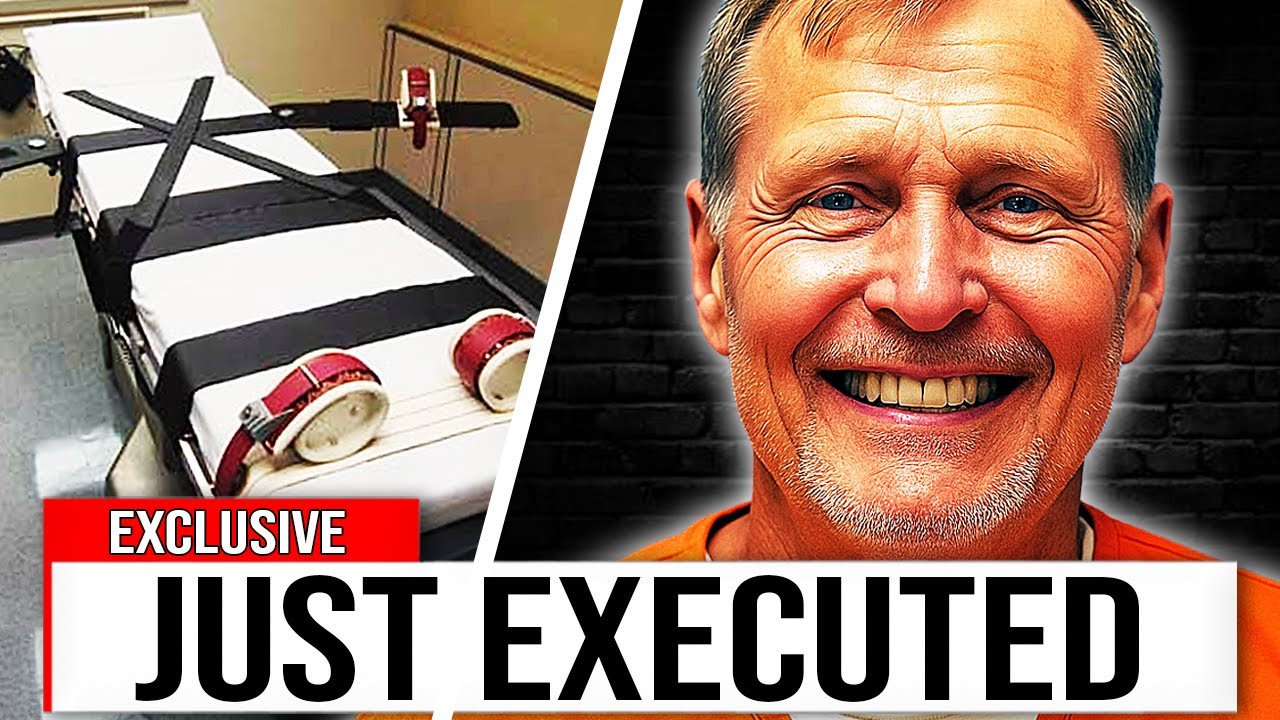 His execution marked the culmination of one of the most sprawling murder investigations in modern American history, one that linked crimes from California to Florida and produced a man who once bragged of killing more than 70 people.
Rogers woke at 3:45 a. m. on the day of his death, according to prison officials.
For his final meal, he requested a simple spread of pizza, chocolate cake, and a soda. He spent his last hours speaking with his wife, and later received a final visit from his brothers, sons, grandchildren, and a close friend who had assisted with his final appeals.
When strapped to the gurney and asked for final words, Rogers offered a cryptic and defiant message. He first addressed his loved ones directly, then turned his attention to the families of his victims, promising answers that may never come. “I know there’s a lot of questions that you need answers to.
I promise you in the near future the questions will be answered, and I hope in some way we’ll bring you closure,” he said.
Then, in a bizarre turn that stunned witnesses, he added: “President Trump, keep making America great. I’m ready to go.” Moments later, the drugs began flowing into his veins.
His eyes closed within two minutes, and his mouth fell open. A staff member grasped him by the shoulders, shook him, and shouted his name twice to test for consciousness. There was no response.
His face slowly turned pale as the procedure continued, and he was declared dead precisely at 6:16 p.m. The execution brought an end to a criminal saga that began decades earlier in Hamilton, Ohio, where Rogers was born on July 15, 1962, one of seven siblings in a chaotic household ruled by a red-haired mother with a heavy hand.
His father worked at a paper mill, and young Glenn was described as smart but unsettled. He was expelled from school by age 16, and by 17 he had impregnated and married a 14-year-old girl. The marriage produced two children before collapsing under accusations of abuse, setting the stage for a descent into violence that would claim innocent lives.
Through the late 1980s and early 1990s, Rogers drifted through life as a drinker, a fighter, and a thief, developing a reputation as a manipulator who could charm strangers while posing mortal danger to anyone who got too close. His first known killing came in 1993, when he returned to his hometown, low on money and without options.
His own mother refused to take him in, but a 71-year-old Air Force veteran and retired electrician named Mark Peters offered him a room. Peters, a family friend, extended a second chance and trusted the younger man completely. That trust cost him everything.
Peters disappeared shortly after Rogers moved in, along with his car, his guns, and his coin collection.
For months, police had little to work with. Then in January 1994, Rogers’ own brother directed detectives to a hunting cabin in Kentucky, across the state line. Inside, they found a chair buried under furniture.
Tied to it were the decaying remains of Mark Peters, bound, hidden, and left to rot by the man who had once been welcomed into his home.
That was the beginning. On the night of September 28, 1995, in Van Nuys, California, Rogers crossed paths with Sandra Gallagher at a bar. She was 33, a mother of three, and had just celebrated a lottery win of $1,250.
 Rogers watched her from across the room, not for beauty but for weakness, studying body language for signs of vulnerability.
He chose her, and they left together. Hours later, her body was found inside her burning truck. She had been raped and strangled, and the fire was set in a crude attempt to destroy evidence.
By the time her body was discovered, Rogers was already in Jackson, Mississippi, operating under aliases and avoiding bars where he might be recognized.
A federal warrant had been issued for his arrest, but he didn’t know it yet. Drifting from motel to motel, he turned up at the Mississippi State Fair in early October, just weeks after Sandra’s murder. There, he met Linda Price, a 34-year-old single mother of two teenagers, a woman with a rough history with men but no apparent warning signs about the stranger who charmed his way into her life.
Within days of meeting, Rogers moved in with her. On November 3rd, everything went silent. Linda’s family grew concerned when she stopped answering her phone, and they requested a welfare check.
Officers arrived to find a horrifying scene: Linda was face down in a bathtub, naked and submerged in shallow water, with four deep stab wounds and a slashed throat.
Her red Dodge pickup was gone, along with her purse, jewelry, and the man she’d been living with. The killer had tried to clean up. A bloody mop sat in the kitchen sink.
Crumpled, blood-soaked paper towels filled the trash. And on the bathroom mirror, written in lipstick, were the words: “Glenn, we found you.”
The message appeared to suggest someone had come looking for Rogers, found Linda instead, and killed her as a warning. Detectives weren’t buying it. The message felt staged, sloppy, a clumsy attempt to throw investigators off the trail.
It didn’t work, but Rogers was already gone again, boarding a bus headed west to Bossier City, Louisiana.
There, at a local bar, he struck up a conversation with 37-year-old Andy Sutton. They hit it off, and by the end of the night she invited him home. He left abruptly, for reasons unknown, and boarded another bus headed south to Florida.
He checked into the Tampa 8 Inn, paying cash for three nights, and on November 5th walked into a bar called Showtown USA.
Four women were sitting together after their shifts. Rogers spotted one immediately: Tina Marie Cribbs, a 34-year-old mother of two who worked as a maid at an inn in Apollo Beach. He turned on the charm, dancing, buying drinks, making sure everyone noticed him.
One of the women later recalled: “He was picking us out like oranges.”
 He was, in fact, doing exactly that. Every woman Rogers targeted had red hair, just like his mother. Before the night ended, he asked Tina for a ride back to his motel.
She agreed, ordered one last drink, told her friends she’d be back in ten minutes, and never returned. Two days later, police found her body in room 119 of the Tampa 8 Inn.
She lay face down in the bathtub, blood splattered across the tile, stabbed multiple times in the front and back. Her body had been rinsed clean, and her purse, diamond ring, and gold watch were gone. Witnesses identified Rogers.
A clerk said he walked out alone, hung a do not disturb sign on the knob, and told staff not to clean just yet.
Then he vanished in Tina’s white Ford Festiva. Investigators in multiple states began connecting the dots, recognizing the same pattern, the same man. America’s Most Wanted aired a segment featuring his face, and newspapers across the country picked up the story.
But Rogers stayed ahead of the dragnet, circling back to Louisiana, where he returned to Andy Sutton.
She had missed him and welcomed him back without hesitation. They went out drinking, barhopping, laughing like nothing had changed. On the morning of November 9th, her roommate came home to a nightmare: Andy was lying across a leaking waterbed, blood soaking into the mattress, her chest torn open by a large blade, with six more stab wounds in her back.
Rogers had waited until the roommate fell asleep on the couch before striking. She woke only to discover her purse was missing. Neighbors spotted Rogers loading up the stolen car, and Louisiana joined the growing list of states hunting for him.
That same day, police caught up with him in Kentucky, still behind the wheel of Tina’s white Ford Festiva.
When officers attempted to pull him over, he ran. A 13-mile chase across the highway ended when a trooper rammed his vehicle off the road. Rogers was dragged from the car and arrested.
His run was over. In 1997, he stood trial in Florida for Tina’s murder and was sentenced to death. Two years later, California convicted him of killing Sandra Gallagher, imposing another death sentence.
He became one of the few men in U. S. history facing execution in two different states.
But Rogers had more to say. In 2012, he appeared in a cable documentary claiming he was behind the 1994 murders of Nicole Brown Simpson and Ron Goldman, alleging that OJ Simpson had hired him to break into Nicole’s home and steal jewelry, with instructions that he “may have to kill.”
His brother Clay backed parts of the story, but the LAPD dismissed it, standing by their original case. Ron Goldman’s father responded forcefully, insisting the overwhelming evidence proved one person murdered Nicole and Ron, and that person was OJ Simpson. Rogers’ claims were widely viewed as attention-seeking, consistent with his history of fabricating and exaggerating.
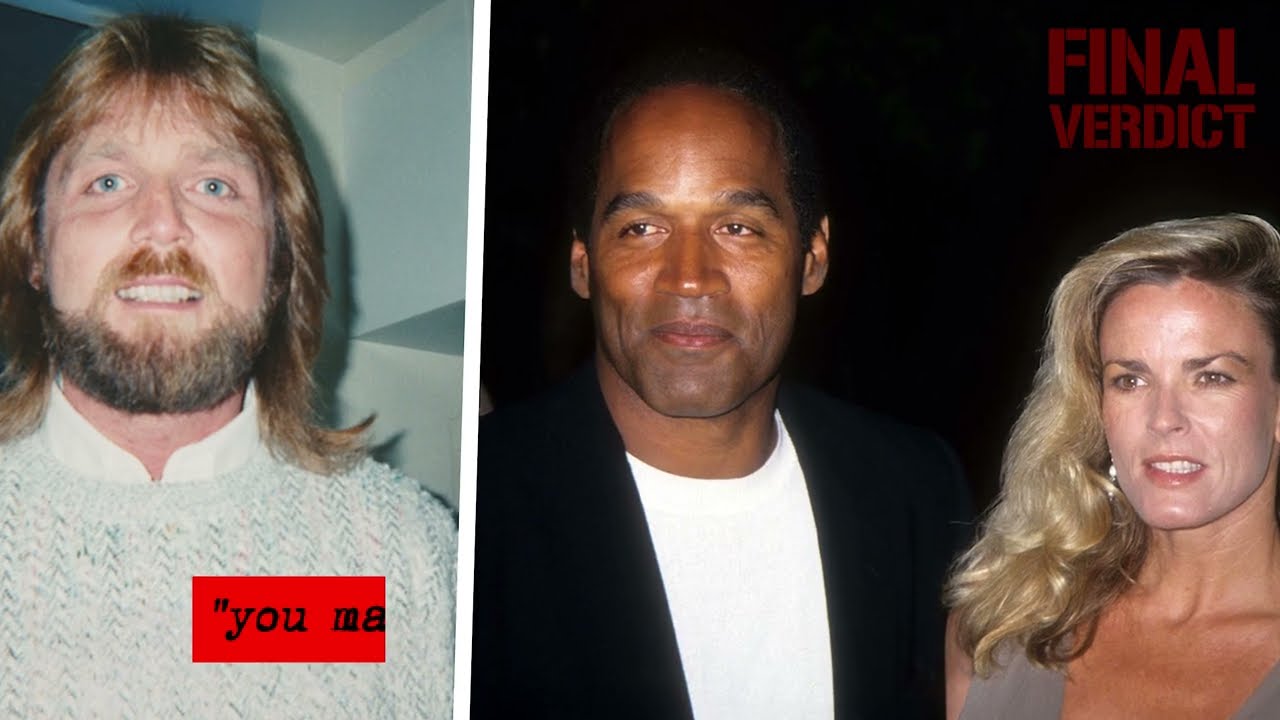 He claimed to have killed more than 70 people, but how much of that was real and how much was invented for notoriety remains unknown. What is certain is that his time ran out on May 15, 2025. After his final words, the execution proceeded without further incident, closing a chapter on one of the most prolific serial killer investigations of the 1990s.
The families of his confirmed victims have waited nearly three decades for this moment. For them, Thursday evening brought a measure of finality, though the questions Rogers hinted at in his last words may never be answered. His cryptic promise of future revelations appeared to die with him, along with any hope of learning the full extent of his crimes.
Florida prison officials confirmed the execution was carried out without complications, despite the dramatic moment when staff shook Rogers and called his name. The procedure took approximately two minutes before his eyes closed, and he was pronounced dead shortly after 6 p. m.
He was 62 years old, having spent more than half his adult life on death row.
His death leaves behind a complicated legacy of violence, manipulation, and unresolved questions. The women he killed were often chosen for their resemblance to his mother, a psychological detail that emerged during trials and horrified jurors. His childhood, marked by expulsion and early marriage, painted a picture of a life that spiraled steadily toward brutality.
For the families of Sandra Gallagher, Linda Price, Tina Marie Cribbs, and Andy Sutton, the execution closes a painful chapter that began with the disappearances of their loved ones in the fall of 1995. Each family has endured decades of appeals and legal battles, watching Rogers fight his sentences across multiple state jurisdictions.
The case also raised uncomfortable questions about the justice system’s ability to track serial offenders across state lines in the pre-internet era. Rogers exploited gaps in communication between law enforcement agencies, moving freely between California, Mississippi, Louisiana, Florida, and Kentucky while warrants piled up behind him.
His capture in Kentucky, following a high-speed chase in a stolen victim’s car, was a dramatic end to a five-week spree that left four confirmed dead. The Florida execution was the culmination of years of legal maneuvering, with Rogers exhausting his appeals in state and federal courts before the final warrant was signed.
In his final moments, Rogers appeared calm, even defiant. His words about President Trump drew raised eyebrows but no reaction from prison officials. His promise to victim families of forthcoming answers was met with skepticism by observers who noted his long history of manipulative statements designed to maintain control over his narrative.
The execution was witnessed by members of the victims’ families, who chose to be present for the moment of death. Prison officials described the atmosphere as somber and quiet, with Rogers’ own family members also in attendance. The two groups occupied separate areas of the witness room, a silent acknowledgment of the divide that has defined this case.
Rogers’ death marks the end of a 28-year legal saga, but it does not close the door on the full scope of his crimes. Law enforcement agencies in multiple states continue to review cold cases that might be connected to him, and his unsubstantiated claims about other murders could spark renewed investigations in the years ahead.
For now, the families of his confirmed victims have their closure. The man who terrorized them, who left bodies in bathtubs and burned trucks from California to Florida, is gone. The Cross-Country Killer took his secrets to the grave, along with his final meal of pizza, chocolate cake, and soda, and the cryptic promise that the answers would one day come.
Florida officials confirmed that Rogers’ body will be handled according to state protocol, and funeral arrangements are private. His wife, who visited him hours before his death, offered no public statement. The last words Rogers spoke, addressed to her, his brothers, his sons, and his grandchildren, remain private, shared only with those in the execution chamber.
The case of Glenn Rogers will be studied for years as an example of how a charming manipulator can evade justice across state lines while leaving a trail of devastation. His execution, delayed by decades of legal appeals, finally brought a measure of justice to a man who showed none during his killing spree.


