The decision was reportedly close to being made.
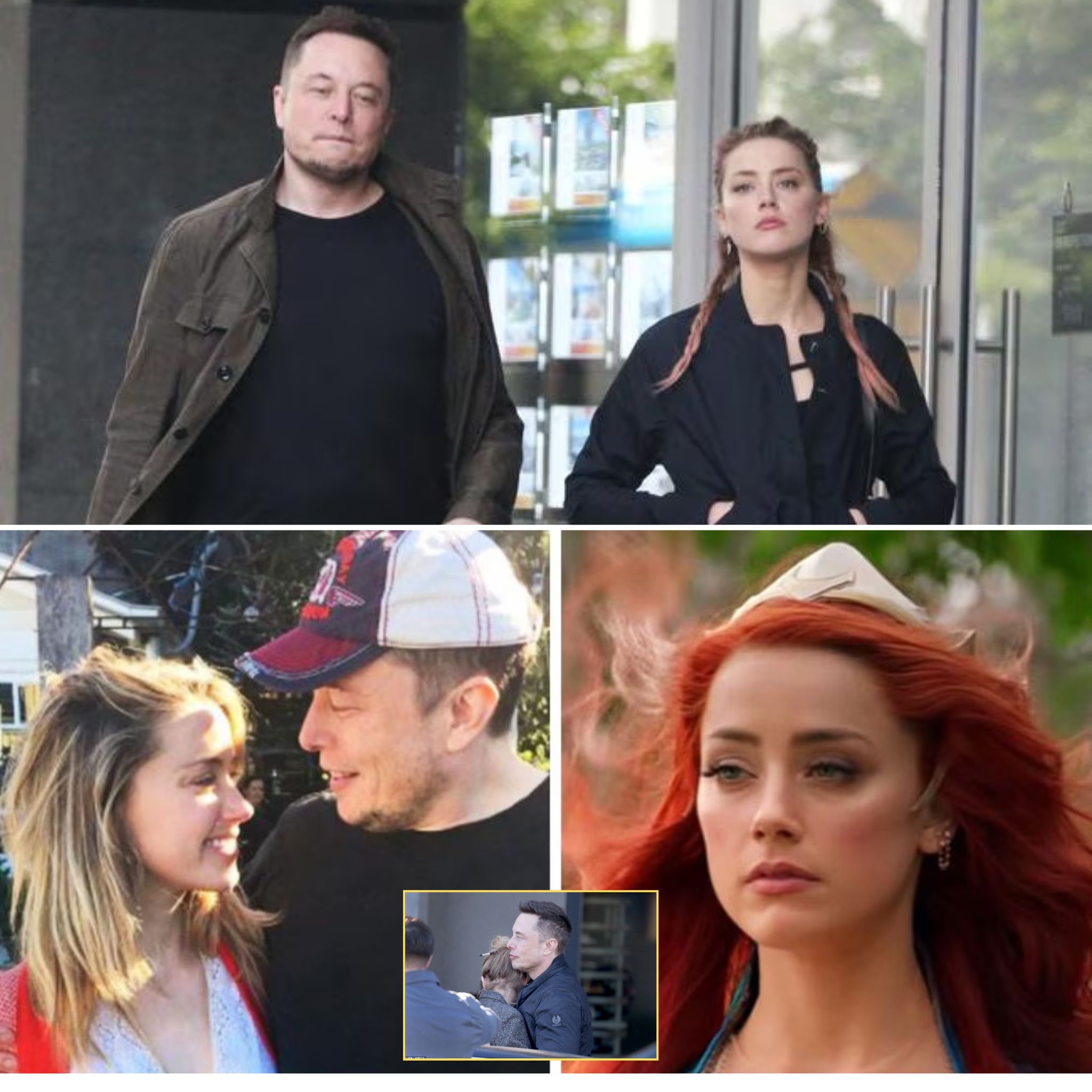
Amber Heard had played Mera, the red-haired underwater warrior who fought beside Jason Momoa’s Aquaman in one of Warner Bros.’ biggest superhero films.
But behind the studio walls, executives were allegedly considering moving forward without her.
There were concerns about her chemistry with Momoa.
There were rumors of tension with director James Wan.
And outside the production, Heard’s highly publicized legal conflict with her former husband, Johnny Depp, had turned every decision involving her into a potential public-relations crisis.
For a major studio, replacing one actor could be explained as a creative choice.

For Heard, it could have meant the collapse of one of the most important roles of her career.
Then, according to a later report, Elon Musk entered the dispute.
Not with a public tweet.
Not with an interview.
Not by calling a studio executive himself.
He reportedly used something far more serious.
His legal team.
A source familiar with the alleged behind-the-scenes battle claimed one of Musk’s attorneys sent Warner Bros. an aggressive letter warning the company of severe consequences if Heard was removed from the sequel.
The language was described as “scorched earth.”
The message, according to the source, was essentially this:
Fire Amber Heard, and prepare for a war.
The studio did not fire her.
Heard remained Mera in Aquaman and the Lost Kingdom.
But staying in the film did not mean she had won.
Because when the movie finally moved forward, her role appeared to be far smaller than the one she believed she had originally been promised.
And that was where the story became more complicated than a billionaire simply rescuing his girlfriend.
Heard had become part of the DC film universe in the first Aquaman, released in 2018.
The movie was an enormous commercial success, earning more than a billion dollars globally and transforming Jason Momoa’s version of the character into one of Warner Bros.’ most valuable superhero properties.
Heard’s Mera was not presented as a silent love interest standing behind the hero.
She had powers.
She fought.
She challenged Aquaman.
She guided him through the underwater kingdoms and played a central role in pushing him toward the throne he had resisted.
For Heard, the film offered what every actor in a massive franchise hopes for: visibility, long-term security, and a character who could become more important in future installments.
But by the time the sequel was being developed, the circumstances around her had changed dramatically.
Her marriage to Johnny Depp had ended in accusation, litigation, and years of public conflict.
Both actors accused the other of abuse.
Their private arguments became evidence.

Photographs, recordings, text messages, and testimony were examined by lawyers and then consumed by millions of strangers.
Every development created new online campaigns.
Depp’s supporters demanded Heard be removed from Aquaman.
Heard’s supporters argued that she was being punished while powerful men continued to receive opportunities.
Warner Bros. was no longer deciding only whether an actor fit a role.
The studio was being asked to make a judgment in one of the most hostile celebrity battles of the era.
Inside that environment, reports emerged that Heard’s position in the sequel was unstable.
The official explanation discussed publicly was not necessarily her legal controversy.
Instead, industry reports suggested concerns had been raised about the chemistry between Heard and Momoa.
Chemistry is one of Hollywood’s most useful words.
It sounds objective, but it is difficult to measure.
Two actors either appear believable together or they do not.
A studio can recast a role and describe the decision as creative rather than personal.
No accusation has to be proven.
No public side has to be chosen.
According to reporting about the production, Warner Bros. considered replacing Heard after the first film.
Director James Wan and star Jason Momoa were reportedly among the central figures in conversations about the sequel.
Heard’s representatives disputed the idea that she lacked chemistry with Momoa, and her side maintained that she had fought to remain in the franchise.
At that moment, she was facing something many actors quietly experience but few can successfully challenge.
The studio held the power.
It controlled the contract.
It controlled the script.
It controlled the final edit.
Heard could argue that she had helped make the first movie successful, but Warner Bros. owned the character and could decide who played her.
Then Elon Musk reportedly changed the balance.
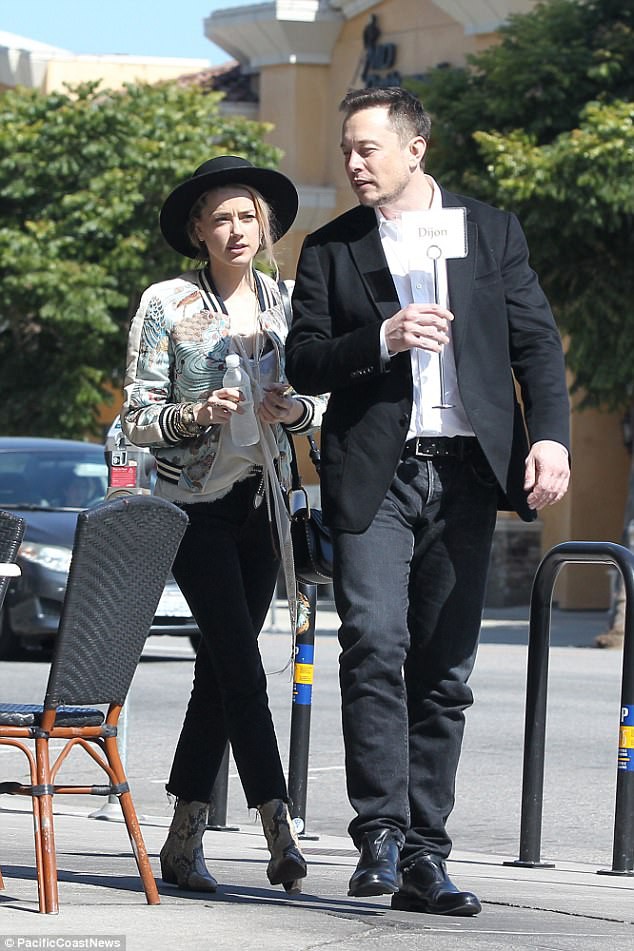
Musk and Heard had been romantically linked after the end of her marriage to Depp.
Their relationship attracted intense attention from the beginning.
He was already one of the most recognizable technology executives in the world, associated with Tesla, SpaceX, reusable rockets, electric cars, and ambitions that extended far beyond Earth.
She was an actress whose personal life had become inseparable from a global scandal.
They were photographed together.
Their messages and relationship timeline were later discussed during legal proceedings involving Depp and Heard.
By the time Warner Bros. was allegedly considering removing her from Aquaman 2, Musk and Heard were no longer simply a celebrity couple appearing in photographs.
According to the report, Musk was willing to use his resources to protect her career.
A person with knowledge of the dispute claimed Musk had an attorney send Warner Bros. a devastatingly aggressive letter.
The source used the image of burning the house down.
It was almost certainly not a literal threat of physical destruction.
It was a description of legal and reputational escalation—the kind of warning designed to make a corporation imagine lawsuits, discovery demands, damaging publicity, and an expensive public battle.
Warner Bros. was one of Hollywood’s largest studios.
Elon Musk was one of the richest men in the world.
This was no longer an actress asking executives to reconsider.
It was a studio being warned that removing her could create a conflict with someone capable of funding a legal fight for as long as he wanted.
There are no publicly released documents confirming the exact contents of the reported letter.
Musk did not publicly describe the alleged intervention in detail.
Warner Bros. did not announce that it had reversed a decision because of him.
The account came from an unnamed source cited in an industry exposé.
That distinction matters.
What followed, however, was visible.
Heard was not replaced.
She returned as Mera.
From the outside, it looked like a victory.
A studio had reportedly considered letting her go.
A powerful ally stepped in.
Her contract survived.
But surviving inside a franchise is not the same as remaining important to it.
During the 2022 defamation trial between Heard and Depp in Fairfax, Virginia, Heard testified that her participation in the sequel had been reduced.
She told the courtroom that she had received one version of the screenplay and then later versions in which significant material had been removed.
Action sequences disappeared.
Scenes were taken away.
Her presence became smaller.
She claimed she had fought hard to stay in the movie at all.
That testimony revealed the studio’s other form of power.
Perhaps executives could not—or chose not to—remove Heard entirely.
But they still controlled how much of Mera audiences would see.
A character can remain on a cast list while becoming almost invisible in the finished story.
A contract can be honored while an actor’s importance is quietly dismantled.
The name stays on the poster.
The scenes vanish from the script.
Heard described receiving new pages that no longer contained much of the action originally written for her.
In the first film, Mera had been essential.
In the sequel, her character’s presence became a subject of speculation long before the movie reached theaters.
Fans examined trailers frame by frame.
Some celebrated every brief appearance.
Others demanded that she be removed completely.
The film itself became secondary to the argument over whether she deserved to be in it.
For James Wan, the director, the situation created a nearly impossible public position.
He had to promote a massive superhero production while questions about one cast member dominated interviews.
Every answer risked becoming another headline.
If he said Heard’s role had always been smaller, critics could accuse the studio of rewriting history.
If he acknowledged changes, people would ask whether they were caused by pressure surrounding Depp.
If he defended her, one side would attack him.
If he criticized her, the other side would do the same.
Momoa faced similar scrutiny.
Rumors spread that he had pushed for Heard’s removal.
Other claims suggested the relationship between the two actors had become uncomfortable.
Supporters on both sides treated every unverified detail as proof.
One reported account even alleged that Momoa had arrived on set dressed in a way that reminded Heard of Depp, an accusation that was fiercely disputed by people connected to the production.
The environment surrounding the film had become more dramatic than anything in the screenplay.
There were competing narratives.
According to one, Heard was a difficult performer whom the studio had legitimate creative reasons to replace.
According to another, she was being systematically punished because of the controversy surrounding her former marriage.
According to a third, Musk’s reported intervention was the only reason she remained employed.
Each version offered someone to blame.
But the truth likely involved more than one pressure at the same time.
Studios think about performance.
They think about contracts.
They think about chemistry.
They think about publicity.
And above all, they think about risk.
Removing Heard carried risk.
Keeping her carried risk.
Giving her a large role carried risk.
Reducing her role carried risk.
The reported legal warning from Musk may not have made executives suddenly believe Heard was perfect for the film.
It may simply have changed which option appeared more dangerous.
That was the hidden power of the alleged letter.
It did not need to prove Heard was right.
It only needed to make firing her feel expensive.
For years, Hollywood has presented itself as a place where talent wins.
But careers are often decided in rooms where talent is only one factor.
Agents make calls.
Lawyers write letters.
Publicists manage narratives.
Executives calculate losses.
Power rarely announces itself honestly.
It does not say, “This person stayed because someone influential frightened us.”
It says, “After careful consideration, we decided to move forward.”
The public sees the cast list.
It does not see the threat behind it.
And for a time, Heard may not have known exactly how close she had come to being removed.
She continued preparing for the sequel.
She trained.
She appeared on set.
She performed scenes that may or may not have survived later drafts.
But as the legal conflict with Depp intensified, her future became increasingly uncertain.
During the Virginia trial, Heard spoke about the role as something she had nearly lost.
She said communication with the studio changed after the controversy around her grew.
Her character’s romantic storyline and action material were reportedly reduced.
She was still in the film, but the scale of her involvement no longer resembled what she expected.
That is when the apparent rescue began to look different.
Musk had reportedly stopped the studio from closing the door.
But he could not force Warner Bros. to make Heard central to the movie.
The letter may have protected her employment.
It could not protect her importance.
This was the plot twist few people noticed when the allegations about Musk first surfaced.
The billionaire did not necessarily “save” Amber Heard’s role.
He may have saved her name from being removed from the credits.
The studio still held the camera.
It still held the editing software.
It still decided how long Mera remained on screen.
Warner Bros. reportedly backed away from firing her, but it did not surrender control.
Instead, the battle moved from the employment contract to the screenplay.
And that was a fight Heard could not win through a legal warning alone.
In the courtroom, the imbalance became visible.
Heard sat beneath bright lights while attorneys questioned her career, reputation, marriage, and credibility.
She described receiving changing drafts.
She explained that scenes involving action had been reduced.
The role she had once expected to continue expanding had become another symbol of everything she believed she was losing.
Across the room sat Johnny Depp, the former husband whose lawsuit had forced their private history into public testimony.
Outside the courthouse, crowds gathered.
Online, clips of every reaction spread within minutes.
A raised eyebrow became proof.
A pause became proof.
A tear became proof.
Millions of people believed they could identify the truth from a few seconds of body language.
Meanwhile, one of Hollywood’s biggest studios waited for the controversy to pass.
When the trial ended, the jury largely sided with Depp on his defamation claims, while also finding Heard prevailed on one counterclaim.
The public response was even more decisive than the legal verdict.
Heard became the focus of enormous hostility online.
Petitions calling for her removal from Aquaman 2 attracted millions of signatures.
By then, replacing her would have created another problem.
The movie had already been filmed.
Reshoots would cost money.
Release plans had already shifted.
Removing her completely could suggest the studio was responding to an online campaign rather than making an independent creative decision.
Keeping her prominently could trigger further backlash.
The studio chose the narrow path between the two extremes.
Mera remained.
But she did not dominate the film’s promotion.
For Heard, the consequence was both professional and symbolic.
She could say she had not been fired.
But she could also look at the reduced role and see what the conflict had cost.
For Warner Bros., the result was a sequel surrounded by controversy before audiences could judge the story itself.
For Musk, the report added another surprising chapter to his public image.
He was known for threatening competitors, challenging regulators, attacking critics, and using social media to bypass traditional institutions.
Now he was accused of turning that same aggressive instinct toward a Hollywood studio to defend a woman he had dated.
The image was almost cinematic.
One of the richest men alive placing his legal machinery between an actress and a corporation.
But the romantic version of that story ignored a deeper problem.
Most actors do not have an Elon Musk.
They do not have someone capable of sending a letter that makes an entire studio reconsider.
They do not have unlimited legal resources.
They cannot threaten scorched-earth consequences when executives decide they are replaceable.
They simply receive a call from their agent.
The role is gone.
The studio moves on.
That is why the alleged intervention generated such fascination.
It exposed how differently institutions respond depending on who is standing behind a person.
When Heard stood alone, she was reportedly at risk of being removed.
When Musk’s legal team allegedly appeared, the calculation changed.
The studio did not suddenly discover new evidence of her talent.
It discovered new consequences.
Yet the most telling moment came later, when the reported details became public.
The story was no longer only about Heard, Musk, Momoa, Wan, or Depp.
It was about the silent machinery controlling Hollywood.
The cameras had shown superheroes fighting for kingdoms under the ocean.
Behind those cameras, lawyers were allegedly fighting over whether one performer would be allowed to remain on screen.
The studio executives had power.
Musk had money.
Heard had a contract.
And audiences had no idea that the character they were watching may have survived because of a letter they would never read.
There was no public scene in which a Warner Bros. executive opened the message and froze.
No camera captured the faces around the conference table.
But it is easy to imagine the silence after the legal team explained what might happen next.
The discussion would no longer have been limited to chemistry tests and casting preferences.
Names of attorneys would have entered the conversation.
Potential claims would have been examined.
Public statements would have been drafted.
The cost of replacing one actress would have been calculated against the cost of fighting a billionaire.
That is the moment the balance of power allegedly shifted.
Not because anyone admitted wrongdoing.
Not because Heard walked into the room and delivered a triumphant speech.
But because the studio reportedly recognized that she was no longer standing there alone.
Her defenders might view Musk’s alleged action as loyalty.
Her critics might view it as intimidation.
Both interpretations can exist at the same time.
A person can use power to protect someone while also demonstrating how easily wealth can pressure institutions.
What feels like rescue to one side can feel like coercion to the other.
And once that kind of power enters a creative decision, nobody can easily separate artistic judgment from fear.
Heard remained in Aquaman and the Lost Kingdom.
But the long battle surrounding her role ensured that Mera could no longer appear on screen without carrying the weight of everything that happened outside it.
Every scene invited a question.
Was this part reduced?
Was something removed?
Did the studio want her gone?
Did Musk force them to keep her?
The character had become evidence in an argument the film could never resolve.
In the end, there was no clean winner.
Warner Bros. avoided the reported confrontation over firing her, but inherited years of controversy.
Heard kept the role, but claimed much of it was taken away.
Musk may have prevented an immediate dismissal, but he could not control the final movie.
And audiences received a superhero sequel burdened by a real-world conflict far more powerful than its fictional villain.
The alleged letter did not burn down the studio.
It did something more subtle.
It revealed the structure holding the studio up.
Money.
Leverage.
Fear.
Access.
The ability to make powerful people believe that saying no will cost more than saying yes.
That is why this story continues to attract attention.
It is not simply about a billionaire defending his girlfriend.
It is about what happens when one person’s career depends on decisions made behind closed doors—and another person has enough power to force those doors open.
Amber Heard may have remained in Aquaman 2 because Warner Bros. reportedly feared the consequences of removing her.
But the reduced role offered its own message.
A powerful man might stop Hollywood from erasing your name.
Only Hollywood decides whether the audience will still see you.