Elon Musk’s mother was trying to defend her son.
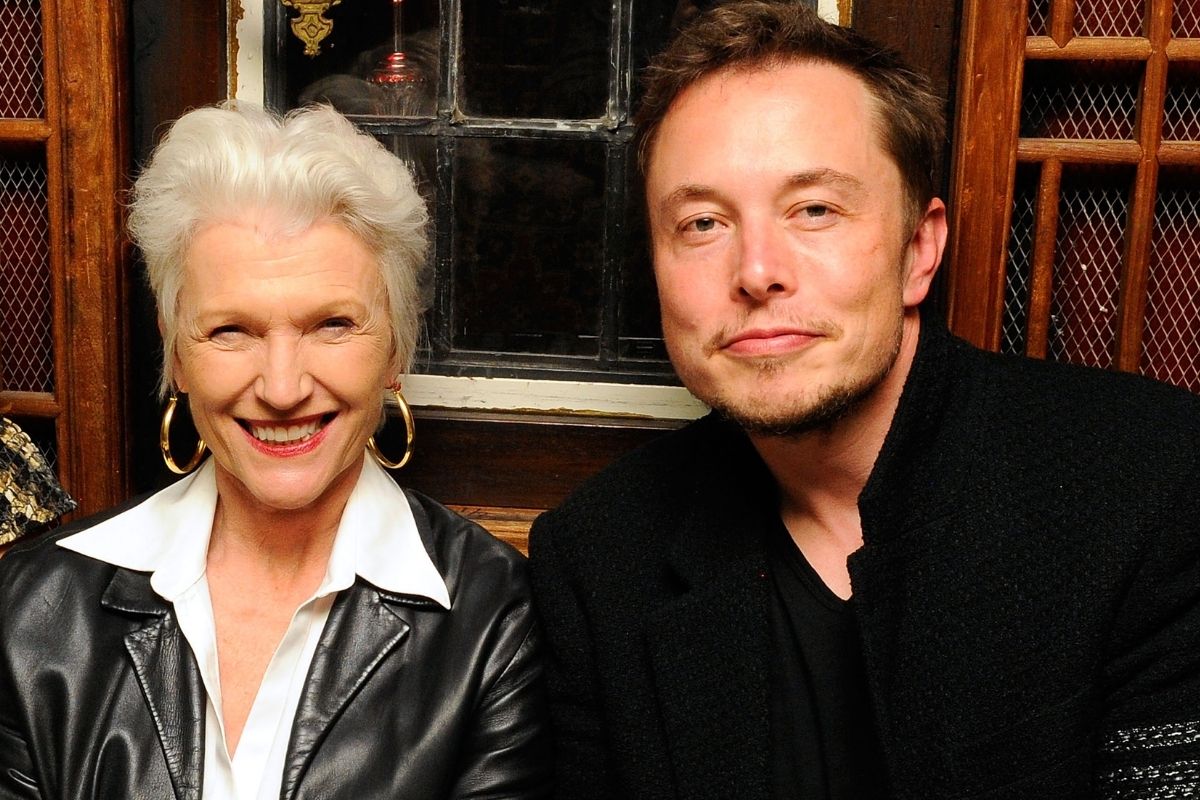
Instead, one sentence turned the attention directly onto her.
And within hours, people online were no longer debating the New York Times article she feared was coming.
They were debating Maye Musk.
It started with a post on X.
Maye Musk, the longtime model, author, and mother of billionaire entrepreneur Elon Musk, had apparently heard that New York Times technology reporter Ryan Mac was preparing a story about her son.
She clearly did not expect it to be flattering.
“I’ve heard there is going to be an Elon hit piece by @RMac18 in the New York Times tomorrow,” she wrote.
So far, it sounded like a mother doing what many parents might instinctively do when they believe their child is about to face harsh public criticism.
Then came the next sentence.
“Sadly, Ryan is an American Vietnamese reporter.”
That single word — “Sadly” — changed the entire conversation.
Maye continued by mentioning that her book, A Woman Makes a Plan: Advice for a Lifetime of Adventure, Beauty, and Success, had become a bestseller in Vietnam.
She suggested that her Vietnamese readers might not believe Mac’s article if it proved to be “hateful and/or dishonest.”
“Let’s see…” she concluded.
The post did not stay online for long.
But it stayed online long enough.
Screenshots were taken.
Reporters noticed.
And people immediately began asking the obvious question:
What did Ryan Mac’s ethnicity have to do with whether his reporting was accurate?
Ryan Mac is not an anonymous social media critic or a random blogger who happened to write something about Elon Musk.
He is an experienced technology journalist for The New York Times who has spent years covering Silicon Valley, major technology companies, and some of the most powerful figures in the industry.
That includes Elon Musk.
Mac’s reporting has also received professional recognition, including a George Polk Award, one of the better-known honors in American journalism.
None of that guarantees that every reader must agree with every story he publishes.
Journalism can be challenged.
Sources can be questioned.
Facts can be disputed.
Arguments can be criticized.
But those defending Mac quickly pointed out that none of those questions had anything to do with his Vietnamese heritage.
NBC reporter Tyler Kingkade was among the people who saw Maye’s post before it disappeared.
He reposted a screenshot.
“Elon Musk’s mom just deleted this tweet that said of a NYT reporter that he ‘Sadly…is an American Vietnamese reporter,’” Kingkade wrote.
Then he added an important detail.
“For the record, Ryan Mac was born and raised in California. Not that it matters.”
That last sentence captured exactly why the controversy was growing.
Not that it matters.
Because whether Mac was born in California, Vietnam, Canada, or anywhere else had no bearing on whether the article he was writing about Elon Musk would be accurate.
Kingkade continued defending Mac’s professional record.
“Calling out a reporter for their ethnic heritage is never appropriate,” he wrote.
He also pointed to Mac’s Polk Award and expressed confidence in his reporting.
By then, Maye Musk’s original post had already become something she probably did not intend it to become:
A screenshot being passed around as evidence against her.
And the backlash escalated quickly.
Some users accused her outright of racism.
Others connected the remark to criticism they already held toward Elon Musk.
“Like mother, like son,” one person wrote.
“The apple didn’t fall far from the tree,” said another.
Some of the comments became far more personal and hostile, attacking not just Maye, but the Musk family as a whole.
One called her “just as awful as her rotten son.”
Another said that “the racism runs deep in that family.”
One person even wrote, “Deport the whole family.”
The irony was difficult to miss.
A post written to protect Elon Musk from what Maye believed might be unfair treatment had produced an entirely new controversy — this one centered on Maye herself.
And that made the situation particularly uncomfortable.
Maye Musk has spent decades building a public identity that exists independently of her famous son.
Born in Canada and raised in South Africa, she built a career as a model and dietitian long before Elon became one of the most recognizable businessmen in the world.
She later became an author.
Her 2019 book, A Woman Makes a Plan, described lessons from her life, career, relationships, motherhood, and resilience.
She has spoken publicly about raising three children — Elon, Kimbal, and Tosca — and about the challenges the family experienced over the years.
Her children were born and raised in Pretoria, South Africa.
Elon would eventually move abroad, enter the technology industry, and become associated with companies including Tesla, SpaceX, and X.
Kimbal became an entrepreneur.
Tosca became a filmmaker and producer.
As Elon’s fame grew, however, Maye increasingly became a public defender of her eldest son.

She has challenged criticism of him online before.
She has objected to media coverage she believed was unfair.
And like many family members of highly polarizing public figures, she has occasionally found herself pulled directly into controversies surrounding him.
This time, however, the criticism was not really about Elon.
It was about the way she chose to describe the journalist covering him.
There is an important distinction here.
Maye did not explicitly say that Ryan Mac was dishonest because he was Vietnamese.
She did not use an overt racial slur.
And she did not publish a long statement attacking Vietnamese people.
But that was not what critics found troubling.
The issue was that she introduced his ethnic background into a dispute where it appeared to have no obvious relevance.
Imagine the same situation without that sentence.
“I’ve heard there is going to be an Elon hit piece in the New York Times tomorrow. My book is a bestseller in Vietnam. I don’t think my readers will believe the article if it is hateful or dishonest.”
People still might have questioned why her book sales were relevant.
People still might have accused her of prejudging an article before reading it.
But the story probably would not have exploded in the same way.
It was the phrase “Sadly, Ryan is an American Vietnamese reporter” that transformed the post.
And once it was screenshotted, deleting it could not undo that.
That is one of the brutal realities of being famous online.
For most people, an awkward comment disappears into a group chat, a dinner conversation, or an uncomfortable moment with friends.
For someone associated with one of the world’s most famous billionaires, a sentence can be captured by thousands of strangers before the author has time to reconsider it.
There is no private edit button after that.
The screenshots become the record.
The deleted post becomes the story.
And the attempt to explain what someone “really meant” often comes only after everyone has already formed an opinion.
There was another layer to the controversy.
Ryan Mac has spent years reporting critically on technology companies and their leaders.
That kind of reporting naturally produces powerful enemies.
A journalist covering a billionaire is almost guaranteed to face accusations of bias from people who admire that billionaire.
And billionaires, executives, politicians, actors, athletes, and their families have every right to challenge journalism they believe is wrong.

If a reporter makes a factual error, point it out.
If a headline is misleading, explain why.
If evidence was ignored, show the evidence.
If the story is unfair, demonstrate the unfairness.
That is a legitimate public dispute.
But once ancestry enters the argument, the argument changes.
The conversation is no longer about the reporting.
It becomes about the reporter.
That is why Maye’s remark drew such immediate scrutiny.
The controversy also revealed something about the modern relationship between public figures and journalism.
Decades ago, criticism of a newspaper article might have been handled through a spokesperson, a letter to an editor, or perhaps a television interview after publication.
Now the battle often begins before the article even appears.
A source hears that a story is coming.
Someone posts about it.
Supporters mobilize.
Critics respond.
Screenshots circulate.
And sometimes the pre-publication reaction becomes a larger story than the original reporting.
That appears to be exactly what happened here.
Maye wanted people to question a story about Elon Musk.
Instead, people questioned her judgment.
She wanted to create doubt about a journalist.
Instead, journalists defended him.
She wanted readers focused on whether the New York Times would treat her son fairly.
Instead, thousands of people focused on one strange and unnecessary reference to a reporter’s ethnicity.
And at some point, there was a moment when the direction of the story became impossible to reverse.
It came when the deleted screenshot began spreading outside Maye Musk’s own audience.
Once Tyler Kingkade reposted it and emphasized that Mac was born and raised in California, the framing shifted.
This was no longer a mother warning followers about an upcoming article.
It became a public example of what critics considered racialized language.
Maye’s original post disappeared.
But the screenshot remained.
And that is the part of the story that matters most.
Because deleting something can remove it from your profile.
It cannot remove it from everyone else’s memory.
For supporters of Maye Musk, some of the backlash undoubtedly went too far.
Personal insults about her family did nothing to clarify the issue.
Calls to “deport” people were especially ironic in a controversy supposedly centered on prejudice.
Online outrage often has a way of reproducing the same ugliness it claims to oppose.
One inappropriate remark becomes permission for hundreds of people to abandon restraint.
That does not make the original comment disappear.
But it does show how quickly moral criticism can turn into another form of cruelty.
And there is a difference between saying, “That comment was inappropriate,” and deciding that a single post gives strangers permission to dehumanize an entire family.
Both things can be true at once.
Maye Musk could have chosen her words badly.
And some people responding to her could have behaved badly too.
Still, the core criticism remained difficult to escape:
Ryan Mac’s Vietnamese heritage had nothing to do with the credibility of his journalism.
That was the question Maye never needed to introduce.
It was the detail that changed everything.
For someone as experienced in public life as Maye Musk, that may be the most surprising part.
She has spent years around cameras.
She has written a bestselling book.
She has worked internationally.
She knows that public words carry weight.
She also understands better than most people how aggressively anything connected to Elon Musk will be examined.
Yet one sentence turned a defense of her son into a controversy about herself.
Perhaps there is a lesson in that far beyond the Musk family.
When we believe someone we love is being attacked, instinct tells us to defend them.
That instinct can be powerful.
Parents do it for children.
Friends do it for friends.
Employees do it for colleagues.
Fans do it for celebrities they have never met.
But defending someone effectively requires discipline.
Because the easiest way to weaken a good defense is to attack something that was never relevant in the first place.
A journalist’s ethnicity does not prove whether the journalist is right.
A critic’s birthplace does not determine whether the criticism is fair.
A person’s ancestry does not make evidence stronger or weaker.
The facts have to do that.
And sometimes the sentence you delete tells people more than the argument you were trying to make.
Maye Musk wanted the public to wait and judge Ryan Mac’s reporting.
Instead, the public ended up judging her words.
That reversal happened in a matter of hours.
And by the time the post was gone, the screenshot had already made sure the lesson would stay:
When you have a legitimate argument, make the argument — because the moment you make someone’s ethnicity the issue, you may become the story instead.