

Long before rockets were landing themselves, before Tesla became one of the most recognizable companies on Earth, before Elon Musk was photographed with presidents and prime ministers, there was a young woman sitting at a university in Canada who had no idea that the intense student pursuing her would eventually become one of the most famous men alive.
Her name was Justine Wilson.
Years later, the world would know her as Justine Musk, Elon Musk’s first wife and the mother of five of his children.
But when their story began, there was no Tesla empire.
No SpaceX mythology.
No endless headlines about Mars, artificial intelligence, government, satellites, politics or multibillion-dollar companies.
There was simply Elon.
And there was Justine.
Two ambitious young people whose relationship began with persistence, books and romance—and ended with a divorce that Justine would later describe in strikingly candid terms.
The strange thing is that when people look backward at the marriage now, knowing everything Elon Musk eventually became, it is tempting to search for some dramatic moment when the relationship suddenly changed.
According to Justine, there was no single moment.
The warning signs were smaller than that.
Sometimes they even looked like love.
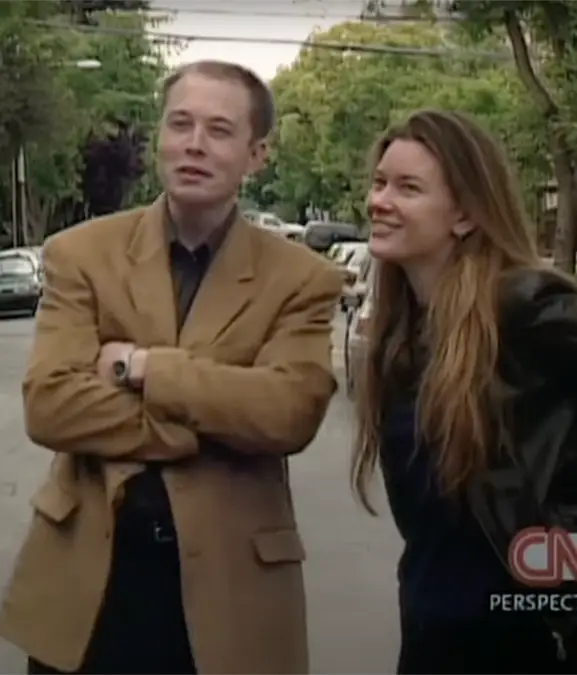
Elon met Justine while they were students at Queen’s University in Ontario.
She was studying literature and wanted to become a writer.
He was already intensely ambitious, focused and unusually persistent.
Justine later recalled that Elon pursued her with a determination that, at first, seemed romantic.
She was not immediately swept away.
That only seemed to make him try harder.
In one of the stories she later shared about their early years, Elon invited her out for ice cream. When she failed to show up because she had decided to study instead, he did not simply accept the rejection.
He found her.
He arrived carrying ice cream.
It was the sort of gesture that sounds almost engineered for a romantic movie: the brilliant, awkward young man refusing to be discouraged, showing up for the woman he wanted.
Years later, there were other gestures.
Justine loved books.
Elon knew it.
At one point, she recalled, he handed her his credit card and essentially gave her permission to buy books.
For a young writer, it was difficult to imagine a more perfectly targeted gift.
Flowers die.
Jewelry can feel generic.
But books?
Books suggested that he had been listening.
And that, perhaps more than anything, was what drew her in.
Elon was intense.
He was ambitious.
He thought on a scale that could be thrilling to be around.
Justine had ambitions of her own.
She wanted a literary career.
She wanted to write novels.
She was attracted not simply to money—which Elon did not yet possess on the scale he later would—but to momentum.
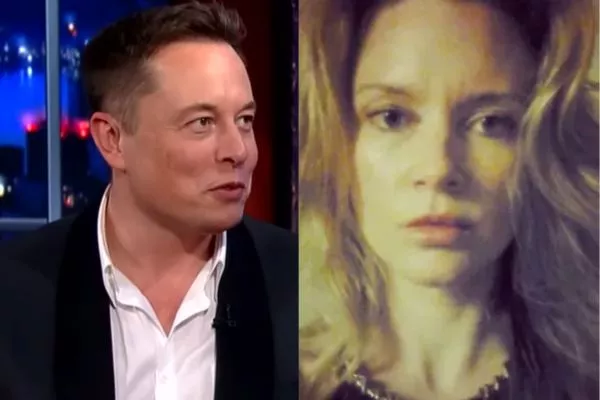
He seemed like a person going somewhere.
Fast.
They eventually married in 2000.
To an outsider looking backward, the marriage might seem like the beginning of a fairy tale.
Young entrepreneur.
Young novelist.
A future stretching in front of them.
Silicon Valley fortunes were being created almost overnight.
Elon’s business career was accelerating.
They were starting a family.
But years later, when Justine wrote publicly about the marriage, she returned to something she remembered from the wedding itself.
It was not an extravagant gift.
It was not a romantic sentence.
It was a declaration about power.
According to Justine, during their wedding celebration, Elon told her:
“I am the alpha in this relationship.”
At the time, she could interpret it as swagger.
A joke with an edge.
The sort of line an intensely competitive young man might say without understanding how it sounded.
But marriages have a way of giving old sentences new meanings.
And years later, that sentence would seem very different to her.
Because what began as a love story between two ambitious people slowly became, in Justine’s telling, a struggle over who was allowed to define the relationship.
Then came something far worse than marital tension.
Something no argument could prepare either of them for.
Their first child, Nevada Alexander Musk, was born in 2002.
He lived only about ten weeks.
Nevada died from sudden infant death syndrome.
There are tragedies that change a marriage.
And then there are tragedies that expose everything already hidden inside one.
Justine’s grief was overwhelming.
She had become a mother.
Then, almost immediately, she had become a mother who had lost her child.
There was no company strategy capable of solving that.
No amount of money could reverse it.
No intellectual argument could make the loss reasonable.
According to the account Justine later gave, she and Elon responded to Nevada’s death very differently.
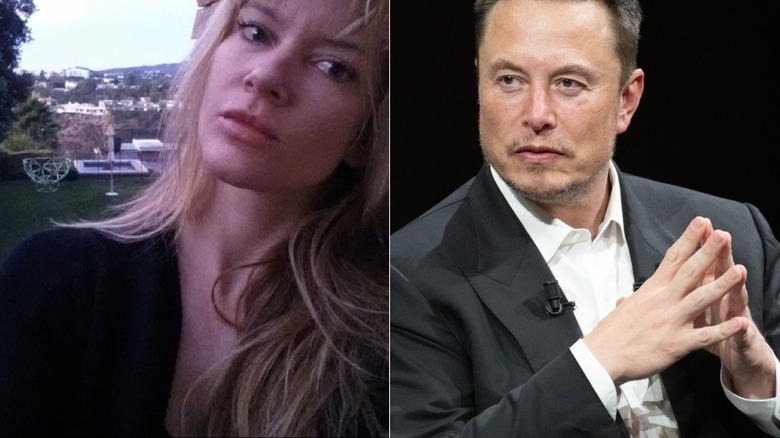
Justine wanted to grieve.
She needed to process what had happened.
She needed the loss to be acknowledged.
Elon, she wrote, did not want to dwell publicly or emotionally on the death in the same way.
To Justine, the emotional distance was devastating.
She later described feeling that her expressions of grief were treated almost as if they were manipulative rather than necessary.
That difference mattered.
Not because there is one correct way to mourn a child.
There isn’t.
People survive catastrophic grief in radically different ways.
Some talk constantly.
Some go silent.
Some bury themselves in work.
Some cannot get out of bed.
But when two parents lose the same child and begin grieving in opposite directions, the space between them can become enormous.
Justine moved toward the pain.
Elon, in her telling, often moved toward work.
And work was expanding.
The entrepreneur she had married was becoming something much larger.
Their family expanded too.
Through IVF, Justine later gave birth to twins and then triplets.
Five boys survived.
From the outside, the household could appear extraordinary.
A large family.
Increasing wealth.
Homes most people could never afford.
Nannies.
Cars.
A husband becoming increasingly famous.
A wife building her writing career.
It should have felt like success.
Instead, Justine later described something more complicated.
Money did not remove the pressure.
It magnified it.
That was the next twist in their marriage.
The thing that was supposed to make life easier became another force changing the balance of power inside the house.
As Elon’s business status grew, Justine wrote that the relationship increasingly began to feel less like a partnership between equals and more like an organization with a hierarchy.
And Elon, in that hierarchy, occupied the top position.
Justine would later describe him as extraordinarily driven.
That quality is central to almost every public version of Elon Musk.
People who admire him call it focus.
Critics call it obsession.
Employees have described demanding schedules and intense expectations.
But whatever word one uses, Justine experienced that intensity not from across a conference table.
She experienced it from inside a marriage.
According to her account, Elon could be dismissive when she challenged him.
During arguments, she said, he sometimes spoke to her in ways that made her feel less like a wife than an employee who had failed to meet expectations.
One sentence stayed with her.
“If you were my employee, I would fire you.”
Imagine hearing that from your spouse.
Not a boss.
Not an investor.
Not somebody negotiating a contract.
The person who had once arrived with ice cream when you ignored a date.
The man who knew you loved books.
The father of your children.
Now imagine what happens when the person saying it actually employs thousands of people and is becoming more powerful every year.
That was the transformation Justine struggled to describe.
Their arguments were not simply about schedules, money or childcare.
They were increasingly about identity.
Who was Justine allowed to be?
Elon’s wife?
The mother of his children?
A novelist?
An equal?
Or someone expected to fit neatly into the image of a successful man’s partner?
Justine later wrote that as their wealth increased, she felt pressure surrounding how she presented herself.
The environment around them was changing.
There were expensive clothes.
High-profile people.
Social expectations.
The idea of the polished, glamorous wife.
There were suggestions involving appearance.
Beauty treatments.
A more perfected image.
But Justine did not want to disappear inside a role constructed for her.
She was a writer before she was a billionaire’s wife.
Words mattered to her.
Independence mattered.
She wanted a voice.
And the more she tried to assert that voice, the more strained the marriage became.
This was the central contradiction.
Elon Musk was building companies around enormous ideas.
Colonizing Mars.
Transforming transportation.
Changing how money moved.
Reinventing entire industries.
His professional identity depended on rejecting conventional limitations.
But according to Justine’s account, inside their marriage she increasingly felt confined by a very conventional imbalance:
One person had the power.
The other person was expected to adapt.
The irony was difficult to miss.
The richer the family became, the less free Justine felt.
She had access to things millions of people would dream about.
But privilege did not erase emotional loneliness.
At times, it intensified it.
Because complaining when everything looks perfect from the outside creates another problem.
People ask what you could possibly be unhappy about.
You live in a beautiful house.
Your husband is successful.
You have healthy children.
You have help.
You have money.
What is wrong?
Justine’s answer, years later, was essentially that a luxurious life and an equal marriage were not the same thing.
A mansion can still contain two people who cannot hear each other.
A bank account can remove financial anxiety without removing emotional pain.
Status can make a difficult relationship harder to leave because the outside world sees the lifestyle before it sees the people inside it.
And by the middle of the marriage, the people inside it were moving farther apart.
Elon’s companies demanded extraordinary attention.
Justine had five young children.
She was trying to maintain her identity as a writer.
He was living at the speed of a founder convinced that his work could change civilization.
The household may have had resources ordinary families did not.
But time could not be multiplied.
Attention could not be automated.
Emotional presence could not be outsourced.
The tension kept building.
There were arguments about control.
Arguments about equality.
Arguments about what Justine should look like.
Arguments about how she should behave.
Arguments in which, according to her later writing, she felt that her husband’s professional style had crossed the invisible line into their private relationship.
Eventually, counseling entered the picture.
This should have been the place where the marriage changed.
A neutral room.
No board meetings.
No investors.
No employees.
No headlines.
Just two people and the question of whether they still knew how to be married.
But therapy does not guarantee reconciliation.
Sometimes it clarifies the problem so sharply that staying together becomes harder.
Justine had begun asking for something simple to describe and difficult to negotiate:
Equality.
Not identical careers.
Not identical personalities.
Not identical contributions.
Equality in the relationship.
To her, that meant being treated as a partner rather than someone beneath him in an informal hierarchy.
The request went to the heart of the sentence she remembered from their wedding.
“I am the alpha.”
What might once have sounded playful had become, in her interpretation, the organizing principle of the marriage.
And then the marriage reached its breaking point.
According to Justine, Elon gave her a stark choice.
They would fix the marriage immediately—or divorce.
It was the language of urgency.
The sort of decision-making style that may work when a company is facing a crisis.
Pick a direction.
Move.
Do not waste time.
But a marriage is not a production line.
Justine wanted space to think.
The answer, in her telling, came fast.
In 2008, Elon filed for divorce.
The speed shocked her.
For years she had been married to a man famous for acting decisively.
Now she experienced that decisiveness from the other side.
The relationship that had started with relentless pursuit had ended with equally relentless movement in the opposite direction.
And then came a development that made the emotional transition even harsher.
Elon soon began a relationship with British actress Talulah Riley.
The timeline became part of the public argument around the breakup.
Justine later wrote about how quickly her former husband seemed to move into another serious relationship.
Musk, for his part, disputed implications that the new relationship had overlapped improperly with the marriage and defended his version of the sequence of events.
That distinction matters.
Divorces have two histories.
The legal history.
And the emotional history.
They rarely match perfectly.
One person remembers the marriage ending long before anybody filed paperwork.
Another remembers the filing as the moment everything was destroyed.
One person calls a relationship already dead.
The other believes it was still fighting for oxygen.
Justine eventually did something unusual.
She wrote about it.
Publicly.
Not as an anonymous ex-wife.
Not through unnamed sources.
Not through a friend leaking details.
In her own voice.
Her essay did not portray Elon as a cartoon villain.
That was what made it more interesting.
She acknowledged his intelligence.
His ambition.
His enormous capacity for work.
She admitted what had attracted her to him.
She remembered the romance.
The books.
The intensity.
She could describe qualities she respected while also describing a marriage that, from her perspective, had become deeply unequal.
That complexity made the account harder to dismiss as simple revenge.
She did not say the entire relationship had been fake.
She said it changed.
And perhaps more importantly, she said she changed too.
Divorce forced her to confront the version of herself she believed she had lost.
For years, she had been Mrs. Musk.
Mother of Musk’s children.
Wife of a rising technology figure.
Part of a family whose wealth and public significance were accelerating almost beyond imagination.
After the divorce, she had to become Justine again.
That sounds simple until you consider how identity works inside a powerful marriage.
When one partner becomes internationally famous, the other person’s name can slowly turn into an extension of theirs.
Interviews ask about the famous spouse.
Headlines use the famous spouse’s name.
Strangers become interested not because of your work, but because of whom you married.
Even after divorce, the relationship can remain the thing people want to discuss most.
Justine understood that problem better than almost anyone.
She wanted to be a writer.
Yet one of the most widely read pieces connected to her name became an essay explaining what it had been like to be Elon Musk’s wife.
There is an uncomfortable irony in that.
Leaving the marriage gave her back her independence.
But telling the truth as she understood it tied her publicly to the marriage all over again.
And the story did not end in 2008.
That is where the biggest plot twist arrives.
Because the conflicts Justine described—control, identity, family expectations and the cost of living inside one powerful person’s worldview—would echo years later through another relationship in the Musk family.
This time, not between husband and wife.
Between father and child.
One of Elon and Justine’s children, Vivian Jenna Wilson, later publicly distanced herself from her father.
In 2022, Vivian legally changed her name and gender.
Court documents associated with the name change stated that she no longer wished to be related to her biological father.
That was not ordinary celebrity gossip.
It was an adult child making an unusually explicit public break.
Years later, the conflict became even more visible.
Musk spoke publicly about Vivian while discussing his opposition to gender-affirming care and what he often describes as “woke” politics.
His comments were severe.
Vivian responded publicly as well, rejecting his description of her and disputing aspects of the childhood he described.
A private family fracture had become part of a national political argument.
And suddenly Justine’s old story looked different.
Not because every relationship in a family is the same.
It is not.
A marriage cannot be used as proof of what happened between a parent and an adult child.
And the experiences of different family members should not be collapsed into one convenient narrative.
But the themes were impossible to ignore.
Identity.
Authority.
Who gets to define whom.
Whose version of events becomes dominant.
What happens when one member of a family possesses an almost unmatched ability to command public attention.
Years earlier, Justine had written about fighting to define herself inside her marriage.
Now Vivian was publicly insisting on the right to define herself.
The contexts were different.
The stakes were different.
But the question underneath both conflicts sounded eerily familiar:
Who has the right to tell you who you are?
Justine’s public response to Vivian was notably supportive.
And that created a striking contrast.
The couple who had once stood together at the center of one household now appeared, years after their divorce, on opposite sides of another emotionally charged family dispute.
By then Elon Musk was no longer merely a wealthy entrepreneur.
He had become a global political and cultural figure.
He owned major platforms and companies.
His opinions could move markets, dominate news cycles and trigger worldwide arguments within minutes.
That power changes the environment around every personal disagreement.
When an ordinary father argues with his child, a few relatives may know.
When Elon Musk argues publicly with his daughter, millions of people watch.
Political factions join in.
Activists respond.
Journalists investigate.
Fans defend him.
Critics attack him.
Private pain becomes content.
And that may be the most difficult part of the Musk family story.
There is almost no clean line anymore between family and public life.
Elon’s ideas about population decline, parenthood, gender, civilization and the future are not private philosophies.
He broadcasts them.
His family structure therefore becomes part of how the public interprets those ideas.
He has frequently spoken about declining birth rates and his belief that civilization needs more children.
He has built an unusually large family.
To supporters, that makes him consistent: he acts on his belief that people should have more children.
To critics, the more important question is not the number of children.
It is the quality of the relationships within the family.
And that is precisely where Justine’s old account becomes relevant again.
Because she did not write primarily about money.
She wrote about power.
She did not argue that Elon failed because he became rich.
She described what she believed happened when one person’s ambition, certainty and authority came to dominate the emotional space of a marriage.
That is a much more complicated accusation.
And a much more universal one.
Most people will never marry a billionaire.
Most people will never live beside someone launching rockets or building companies worth hundreds of billions of dollars.
But millions of people understand the feeling of being in a relationship where one person’s needs slowly become the default.
One person chooses where the family lives.
One career receives priority.
One personality controls the temperature of the room.
One person becomes “difficult” while the other becomes “decisive.”
One is accused of being emotional.
The other is praised for being rational.
One adapts.
Then adapts again.
Then wakes up one day unable to remember how much of themselves has been negotiated away.
That is why Justine’s account still attracts attention years later.
It is not really a story about luxury.
It is a story about imbalance.
And imbalance can exist in a studio apartment as easily as in a mansion.
There is another reason the story refuses to disappear.
Elon Musk’s public image has always depended partly on mythology.
The man who sleeps at the factory.
The man who risks everything on impossible companies.
The man who demands results when other people say something cannot be done.
The man who pushes until systems break—or suddenly work.
In business, those traits can create extraordinary outcomes.
But families do not respond to pressure the way rockets do.
You cannot optimize a grieving spouse.
You cannot command intimacy into existence.
You cannot set a deadline for another person’s emotional recovery.
You cannot fire a partner and expect the language to disappear when the argument ends.
This is perhaps the central tragedy in Justine’s version of the marriage.
The qualities that helped Elon become Elon may have been some of the same qualities that made living beside him extraordinarily difficult.
Intolerance for delay.
Extreme certainty.
Relentless standards.
An instinct to push through resistance.
An obsession with outcomes.
A willingness to endure levels of pressure that would overwhelm most people.
In a company, those traits can be rewarded with billions.
Inside a family, the results are much harder to calculate.
And unlike a failed rocket, a broken relationship does not produce clean engineering data.
There is no telemetry showing exactly where trust disappeared.
There is no graph identifying the second resentment became permanent.
There is no software update for grief.
No replacement component for respect.
There are only people remembering the same years differently.
That is important because Elon has never simply accepted every interpretation of his first marriage offered by his ex-wife.
He has challenged parts of the story.
He has defended himself.
He has disputed timelines and implications.
That should be included in any fair retelling.
Justine’s essay is her account.
It is powerful because it is firsthand.
But firsthand does not mean omniscient.
Elon has his version.
Their children have experiences that belong to them.
And outsiders will never know every private conversation that took place behind closed doors.
There is no hidden camera recording an entire marriage.
No transcript.
No objective narrator.
But there is something else.
Patterns people choose to describe publicly.
And once those patterns emerge across years, people naturally begin asking whether seemingly separate conflicts are connected.
That is where the story becomes uncomfortable.
Not because there is a simple answer.
Because there isn’t.
The uncomfortable question is whether someone can become extraordinarily skilled at shaping the external world while struggling with the fact that the people closest to them cannot be shaped the same way.
A company can be reorganized.
A machine can be redesigned.
An employee can be replaced.
A business model can be abandoned.
A rocket can explode and another can be built.
But a spouse who says, “I need equality,” is not an engineering problem.
A child who says, “This is who I am,” is not a production bottleneck.
Human beings are not systems waiting for the strongest personality in the room to optimize them.
That may be the lesson buried inside Justine Musk’s story.
The story began with pursuit.
Elon wanted her.
He pursued her.
He found her when she skipped their ice-cream date.
He learned what she loved.
He bought her books.
The young woman who wanted to become a novelist became the wife of the man who wanted to change the world.
Then the world started changing around them.
The money came.
The companies grew.
The pressure increased.
Their son Nevada died.
They had five more children.
Their home became more elaborate.
Their lives became more privileged.
And somehow, amid all that expansion, the marriage contracted.
Until Justine felt there was not enough room left inside it for both of them to exist as equals.
That is the final reversal.
At first, Elon Musk’s enormous ambition may have been part of what attracted her.
By the end, according to her account, she was fighting not to be absorbed by it.
The man who had once pursued her across a university campus eventually became the person she believed she needed to leave in order to recover herself.
There was no movie ending.
No public reconciliation.
No final scene in which every misunderstanding was resolved.
And there is no verified cinematic moment in which Elon suddenly looked across a room and admitted that Justine had been right about everything.
Real relationships rarely give us that satisfaction.
Powerful people do not always receive a dramatic moment of recognition.
Sometimes the recognition happens around them.
In the former spouse who rebuilds her identity.
In the adult child who chooses a different name.
In the family argument that refuses to stay private.
In old sentences that sound different twenty years later.
“I am the alpha in this relationship.”
If Justine’s recollection of that line captures anything essential, perhaps it is not that it predicted every argument that followed.
It is that marriage was already being spoken about as a hierarchy on the day it was supposed to become a partnership.
And that is why this story still matters.
Not because Elon Musk is rich.
Not because Justine Musk wrote about a famous ex-husband.
Not because people enjoy watching the private lives of powerful families fall apart in public.
It matters because success can hide imbalance better than failure can.
When a family is poor and struggling, everyone notices the strain.
When a family is wealthy, photographed and surrounded by symbols of achievement, people assume the private structure must be strong too.
It may not be.
Money can buy privacy.
It can buy assistance.
It can buy houses with enough rooms for everyone to avoid one another.
It cannot force emotional equality.
Fame can make millions of people listen to your ideas.
It cannot force the people closest to you to accept your version of themselves.
Power can make employees move faster.
It cannot make grief disappear on command.
And intelligence—no matter how extraordinary—does not automatically make someone wise about the human beings who love them.
Today, when people think of Elon Musk, they are likely to picture rockets, electric cars, artificial intelligence, satellites, political arguments or his enormous wealth.
Justine remembers something the public never saw.
The young man with the ice cream.
The husband at the wedding.
The father after unimaginable loss.
The entrepreneur whose ambition seemed to grow until it occupied almost every available space.
And the marriage in which she eventually concluded that love without equality was not enough.
That does not erase Elon’s achievements.
It does not require anyone to choose a hero and a villain.
But it does complicate the mythology.
Because behind almost every public figure who appears larger than life, there are private relationships that measure greatness using completely different standards.
The stock market measures value one way.
History books measure influence another.
Families use quieter metrics.
Did you listen?
Did you stay?
Did you respect me when I disagreed?
Could I be myself beside you?
Were you present when I was hurting?
Did your success make room for the people you loved—or require them to make themselves smaller?
Those questions cannot be answered by a company valuation.
They cannot be launched into orbit.
And they cannot be solved by becoming the most powerful person in the room.
Sometimes the hardest person to persuade is the person who once knew you before the world knew your name.
And sometimes the most revealing story about a man trying to shape humanity’s future is the one told by the woman who knew him when all he was trying to do was convince her to go get ice cream.


