A Dallas courtroom erupted in tension this week as prosecutors laid out a chilling roadmap detailing how a simmering rap feud escalated from diss tracks to a brazen interstate murder, alleging that rapper Yella Beezy orchestrated the killing of his rival, MO3, by placing a bounty on his head.
For six years, the streets of Dallas whispered about who truly wanted MO3 dead. Now, in a packed courtroom, the state of Texas has finally answered that question, accusing Marquise Conway, known professionally as Yella Beezy, of being the mastermind behind the November 2020 murder of Melvin Noble, the 28-year-old rapper known as MO3.
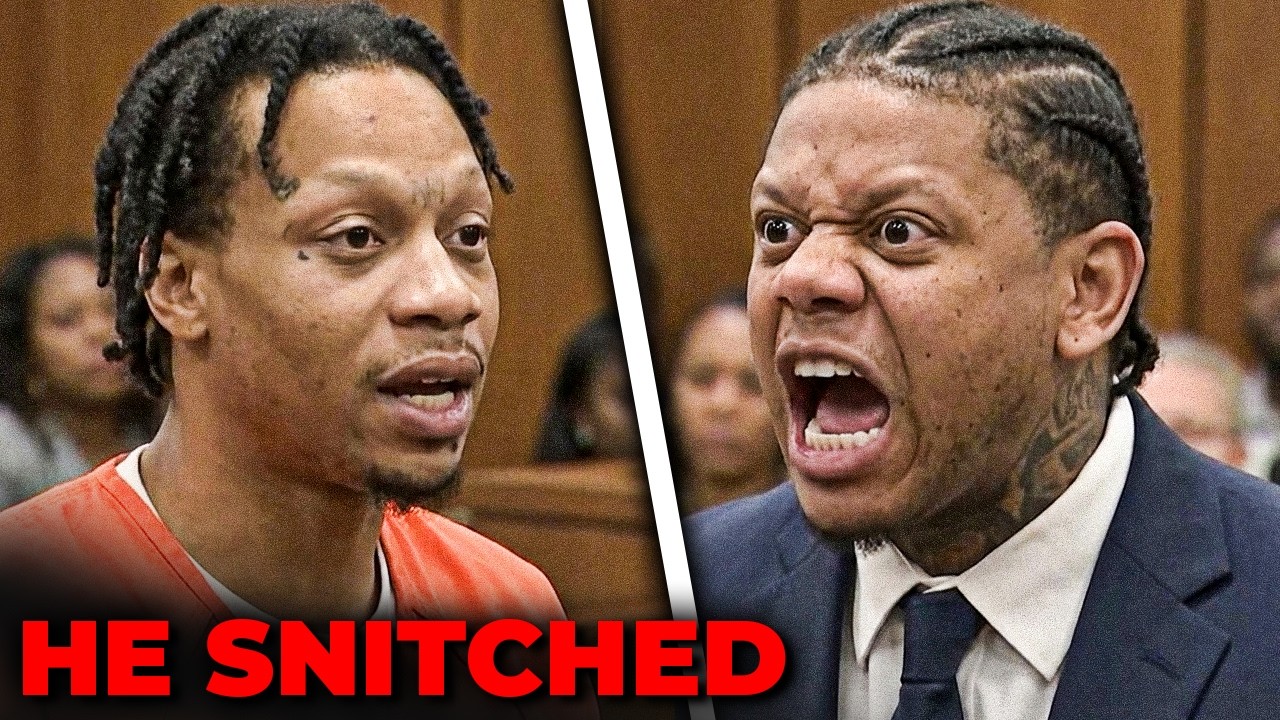 The prosecution’s case, unveiled over several days, is built on a foundation of rap lyrics, text messages, and a trail of escalating violence that they argue culminated in a cold-blooded execution on a Dallas freeway. The heart of their argument is a bounty, a price for blood.
During a bond hearing earlier this year, prosecutors revealed a stunning claim. A witness is prepared to testify that Yella Beezy participated in conversations about paying for the hit. Bank records, they say, support this, showing a $40,000 cash withdrawal in the days immediately following the murder.
The murder itself was captured in horrifying detail by witness accounts. On November 11, 2020, around midday, MO3 was driving north on Interstate 35E near the Dallas Zoo when a dark car pulled up alongside him. A masked man emerged with a rifle.
The gunman walked up to Noble’s car and opened fire, sending the rapper scrambling from his vehicle. In broad daylight, with other drivers watching in horror, MO3 ran down the highway, the masked man chasing him and firing relentlessly.
MO3 was struck multiple times, including in the back. An innocent bystander in another vehicle was also hit but survived. Police later recovered dozens of shell casings from the roadway, calling the attack brazen for its location and the public nature of the execution.
Nine days later, police released surveillance images of a thin man in a ski mask. A witness identified him as Keiwon Dontrell White. Arrested in December 2020, White was later convicted on a federal gun charge and is serving nearly nine years.
But the state murder case against White remains pending, and for years, Dallas asked one question. Who wanted MO3 dead? This week, the prosecutor finally stood up and provided their answer.
According to prosecutors, the feud began with a dispute over neighborhood credibility. A Dallas comedian and MO3’s close friend, Royalty Payte, spent years publicly challenging whether Yella Beezy was truly from Oak Cliff.
On September 25, 2018, Payte was shot while sitting in a car at a shopping center. He survived the initial shooting but died weeks later from a blood clot connected to his injury. The prosecutor told the court that police asked Yella Beezy directly if the feud played a role.
Prosecutors say Payte’s death became a turning point. Just hours after he died, Yella Beezy was himself shot multiple times while driving on the Sam Rayburn Tollway. His car was riddled with bullets, but he survived.
 According to prosecutors, police told Yella Beezy the next morning that the vehicle used in the shooting belonged to MO3’s head of security. That moment, the state argues, changed the course of the rivalry and only escalated the violence.
Two months later, a van belonging to another Dallas rapper, Davarious Moore, known as Trap Boy Freddy, was shot up. Then came a song. MO3 released a track called 219, which prosecutors say contained clear declarations.
The prosecutor argued the song went far beyond an ordinary diss record. In the lyrics, the prosecutor stated, MO3 claimed responsibility for both shootings. The state says these bars were statements against interest, legally meaning a man admitted something that could only hurt him.
The timeline sped up badly. In early 2020 came an attack on MO3’s manager. Then Trap Boy Freddy was shot again, this time in the leg.
In September 2020, MO3 was ambushed at a club in Houston.
Two months after that ambush, MO3 was dead on Interstate 35E. But the prosecutor didn’t stop with Yella Beezy. He also pointed the finger at Trap Boy Freddy, naming him as an alleged co-conspirator on the record.
The state played a catalog of songs to the judge, arguing they were direct evidence of the conspiracy. One track, On Ya Head, features a line from Trap Boy Freddy that prosecutors say describes a specific bounty.
Here is the line that the state believes turns a lyric into evidence of a price. He says he put 50 bags on the seat. 50 bags, a specific number, allegedly named on a commercially released record, aimed at a man who would later be chased down a freeway.
The prosecutor argued that because Yella Beezy had creative control over the song and did not remove the line, he legally adopted those words as his own. This argument, if accepted, could have enormous implications for all artists.
 The timing of the evidence is damning. Hours after MO3 died, the state says Yella Beezy texted a song called Take 3 to a co-defendant, Jerry Johnson. The prosecutor described the track as a mockery of MO3’s music.
Another song, Gassed Up, was composed just days after the murder. It was never finished or released to the public but was also texted to Jerry Johnson. The prosecutor grouped three more tracks together, calling them co-conspirator songs.
One of those three was played for Yella Beezy while a camera was rolling on a live stream. As he listened, the prosecutor argued, his reaction reeked of consciousness of guilt. The state wants a jury to see that reaction.
The defense, however, fought back fiercely. They argued that the music is protected speech under the First Amendment, bringing in an expert who co-wrote a book called Rap on Trial to warn against misusing lyrics in court.
Professor Erik Nielson testified that gangster rap often features fictional characters and hyperbole, making it dangerous for jurors to interpret as confession. Stripped of its artistic intent, it can sound like a straight confession, he warned.
The defense also pointed out that Yella Beezy was himself the target of a drive-by shooting linked to MO3’s associates in 2018. They argued that the feud was manufactured by MO3 for controversy and profit.
The attorney argued that the conspiracy ended the moment MO3 died. Every song made after that day sits outside the conspiracy and cannot be used as a co-conspirator statement under the rules of evidence.
The defense went after the state’s biggest structural problem, Trap Boy Freddy. Prosecutors want his lyrics treated as Yella Beezy’s, but the defense argued the two men were not joined at the hip.
The lead detective testified there is not enough evidence to arrest Trap Boy Freddy for the murder. The defense named the actual indicted co-defendants, including the alleged gunman and Jerry Johnson, who received the incriminating text messages.
 The attorney pushed back hard on the picture of his client as a gang leader, stating he has never been accused of being in a gang. He argued the case has a lot of puffing and boasting but nothing more.
The defense asked how investigators built their theory. The answer was not a wiretap or informant but social media and music released to the public. The defense argued this is opinion dressed up as expert testimony.
As of the close of these hearings, Judge Chika Anyiam has not ruled. She can let all the evidence in, some of it, or throw it all out. She also has to decide which of the men goes to trial first.
The target date for jury selection in this trial is August 24th. The stakes are immense. Capital murder while remuneration in Texas carries only two possible outcomes for an adult, life in prison with no parole or death.
Yella Beezy has been on house arrest with an ankle monitor since March 2025, allowed out one day a week for a few hours to record music. The trial date looms.
The reality is heavier than a confession would have been. Prosecutors stood in a courtroom and explained they need those songs so badly because the streets gave them almost nothing else to work with.
A capital murder case with a possible death sentence attached to it may come down to whether 12 strangers are allowed to hear rap music. The man prosecutors branded a co-conspirator has never been arrested.
Six years after MO3 ran down that freeway, the answer to who wanted him dead is still sitting in one judge’s hands, waiting on a ruling about song lyrics. Jury selection is set for August 24th.


