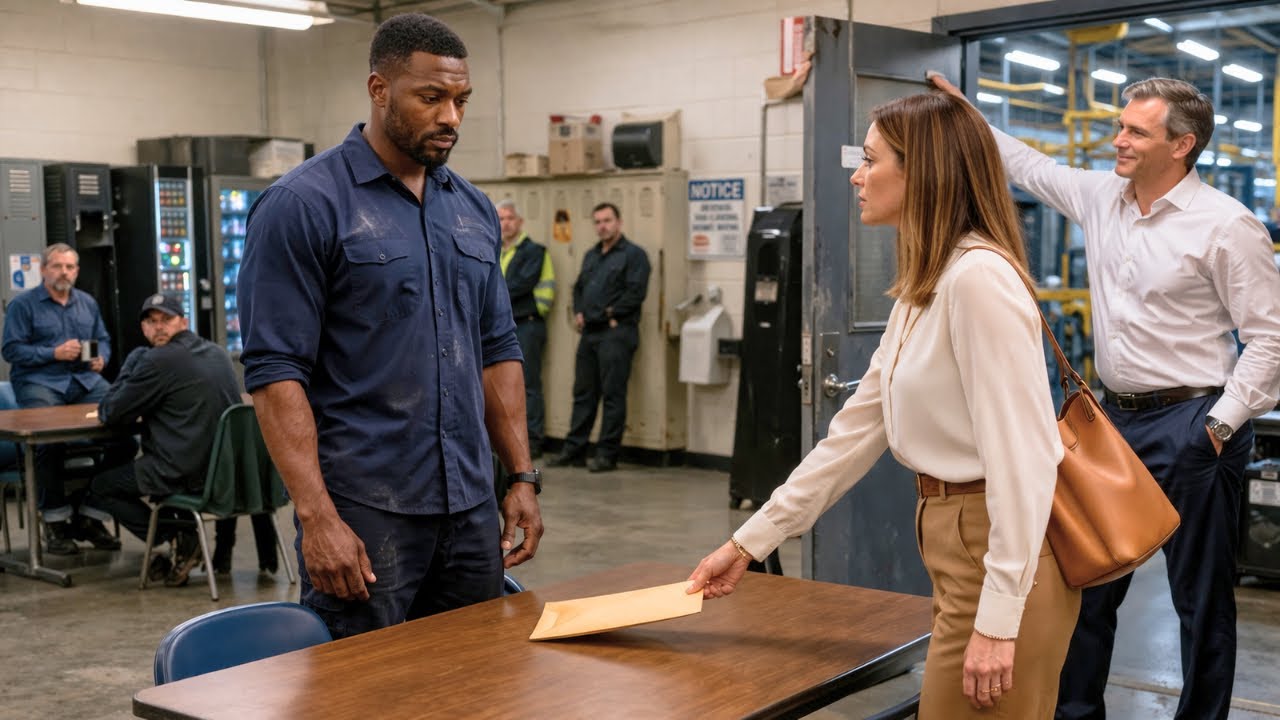
At the hospital, before I could ask to see my husband’s body, my mother-in-law pushed past me and asked the doctor where his briefcase was. Rick had collapsed on his morning jog and died of a brain aneurysm before the ambulance reached the hospital. I was still on the floor, still trying to breathe, when Beatrice Montgomery swept in wearing expensive perfume and zero grief. She demanded his briefcase, his phone, and the keys to our house.

My sister-in-law Kimberly stood beside her, arms crossed, declaring that they were his actual family and couldn’t trust an outsider with classified military logistics. I pulled myself up and said Rick was dead. Her son was dead. And she was only asking for his briefcase.
Beatrice finally looked at me. Her eyes were dry. “Don’t play the grieving widow,” she said. “Everyone knows why you married a man fifteen years older.
His assets belong to this family. You’re a temporary mistake, and I’m going to rectify that today. ”
Then Rick’s brother-in-law, Jamal, walked in with two cups of coffee. He ignored his wife and his mother-in-law, handed me a warm cup, and guided me to a chair.
“They’ve been waiting for an opportunity like this for years,” he whispered. “Brace yourself. ”
He was right. They weren’t grieving.
They were strategizing. The hospital released Rick’s personal effects to me, his legal spouse. Beatrice stood at the nurses’ station threatening to call the Pentagon and have me detained. The head nurse ignored her and handed me the clear evidence bag with his phone, wallet, and keys.
Jamal offered to drive me home. Kimberly grabbed his arm and demanded he drive them to their attorney’s office instead. I drove alone. When I reached our Arlington home, my key wouldn’t turn.
The lock was brand new. Beatrice opened the door wearing a smug smile, flanked by two locksmiths. “I’m securing my family’s assets,” she said. “Your name may be on the deed, but this house was bought with Montgomery money.
I changed the locks and reset the security code. You can collect your clothing tomorrow during a supervised fifteen-minute window. ”
She slammed the door in my face. I called the police.
They arrived, verified my ID and the property tax records, and ordered Beatrice to step aside or face arrest. She did, but only after swearing she would bleed me dry in civil court. I sat on Rick’s side of the bed, buried my face in his pillow, and cried until there was nothing left. At the funeral, Kimberly blocked my path to the front row.
“That row is for immediate family,” she said. “You were only married for four years. Go sit with the employees. ”
Jamal moved her aside with one hard look and escorted me to the widow’s seat himself.
When the honor guard presented the folded flag, Beatrice reached out to receive it. The officer stepped around her and knelt in front of me. On behalf of the President and a grateful nation, he gave the flag to me. I held it against my chest and watched Beatrice’s mask crack into pure fury.
The next morning, a summons arrived. A reading of the will. Same day. I walked into the law firm’s penthouse conference room and found Beatrice and Kimberly already seated, glowing with anticipation.
Jamal sat at the far end, arms crossed, staring out the window. Mr. Harrison, their attorney, announced the will had been signed ten years ago. Rick’s corporate counsel had no record of an updated version.
The old will left everything—the company, the real estate, the portfolios—to Beatrice. Kimberly was the backup. I wasn’t mentioned once. I objected.
Rick and I updated our estate plans after our honeymoon. The attorney smiled. “The most recent legally binding document is the one on my desk. ”
Beatrice then pointed at my diamond.
She claimed it was bought with family trust money and demanded I hand it over. Kimberly held out her palm. Mr. Harrison told me I would face a grand larceny injunction if I refused.
I looked at Beatrice and said no. I told her the ring was purchased with my husband’s military pension, independent of her trust. If she wanted it, she could take me to court and prove otherwise. And as a digital forensics consultant, I could easily prove the purchase records.
She slammed the table. I stood up, walked out, and didn’t look back. I had thirty days to vacate the house. I started packing.
In Rick’s empty home office, I stopped. I was a forensic investigator. I knew how Rick worked. He was a military intelligence officer who believed that one copy meant zero copies.
I got under his desk and found a black USB drive taped to the underside. Inside was a single folder: “Purge Protocol for Naomi Only. ”
There was a video. Rick’s face appeared.
He looked tired. “If you’re watching this, I’m gone, and my mother has made her move,” he said. “Three years ago, I discovered she was embezzling from the company to fund her and Kimberly’s lifestyle. I couldn’t send my mother to federal prison, but I knew she’d come after you if I died.
So I built a trap. ”
He explained that all real defense contracts, software patents, and capital had been moved to a new entity called Vanguard Sentinel, placed in an irrevocable trust in Zurich, with me as sole beneficiary. Montgomery Defense Logistics was now an empty shell holding $12 million in unpaid IRS taxes and a $5 million Department of Defense penalty from Beatrice’s fraud. “Let her take it,” Rick said.
“Let her sign the documents. The moment she does, the debt becomes hers. ”
I froze. Then I printed every document and found the opening I needed.
Beatrice sued me for $100,000 in retroactive rent. Kimberly sent a group email accusing me of being a gold-digger and warned everyone not to do business with my firm. I told my attorney, Gallagher, to set up mediation. And I told him to let them know I was broken.
The morning of mediation, I dressed in a wrinkled blouse, no makeup, trembling hands. I gave them the performance they expected. In the conference room, I asked for ten percent of the company so I could rebuild my life. Kimberly laughed.
Beatrice offered me nothing—sign a quitclaim deed to the house and the company, and she would drop the lawsuit and the smear campaign. I cried. I let my shoulders shake. I signed the quitclaim deed.
Then I signed the indemnification waiver. Beatrice never read it. She just snatched the pen and signed her name across every line. The trap closed.
In the hallway, Jamal stopped me. He had pulled the company ledgers and suspected what I was doing. I told him the truth. His wife and mother-in-law were inheriting $20 million in federal debt.
I told him to leave now, separate his money, and fight for his children. He did. I went home and sent the signed documents to the IRS. Three weeks later, we stood in front of Judge Harmon to finalize the estate transfer.
Beatrice and Kimberly walked in like they were attending a fashion show. Kimberly wore sunglasses indoors and complained about the lack of valet parking. The judge asked Mr. Harrison if he had explained the assumed liabilities to his client.
He stammered. He said it was standard boilerplate. Gallagher stood up, opened his titanium briefcase, and placed red-taped federal documents on the judge’s bench. Montgomery Defense Logistics owed $12.
4 million in unpaid taxes. The Department of Defense demanded $5. 2 million in restitution for Beatrice’s embezzlement. The Arlington house was cross-collateralized against a $3 million commercial loan tied to the shell company.
Total: over $20 million. Beatrice screamed. Mr. Harrison dropped her as a client and ran.
The judge ruled the waiver binding. Beatrice was solely responsible for every dollar. I stood up, walked past her as she collapsed, and told her quietly, “I gave you exactly what you demanded. ”
The IRS froze everything within hours.
The bank foreclosed on the house. Kimberly was arrested in a motel parking lot two weeks later, charged with wire fraud and misappropriation of federal defense funds. Local news cameras caught her screaming for her mother. Jamal got full custody of his children and disappeared safely into a new life in Maryland.
Beatrice avoided prison by cooperating with investigators. She lost every asset, every friend, and every claim to the Montgomery name. The woman who wore Chanel to the grocery store now works a reception desk at a dental clinic and takes public transportation. Kimberly was sentenced to three years in federal prison.
I sold Vanguard Sentinel to a major defense technology firm for a fortune. Then I used the money to create the Montgomery Sentinel Foundation, giving free legal and forensic support to military widows being exploited by predatory relatives. One year after Rick died, I visited Arlington National Cemetery. I placed my hand on his headstone.
“We did it,” I said. “The perimeter is secure. I protected your legacy. I miss you every day.
”
I wiped one tear, stood up, and walked back to my car with my head held high. The people who tried to destroy me didn’t lose because I fought harder. They lost because I let them have exactly what they asked for.