The phone rang at the Rowlett Police Department just after 2 a. m. on June 6, 1996, and the voice on the other end was frantic, breathless, a woman screaming that someone had been in her home, that her boys had been stabbed, that she needed help right now.
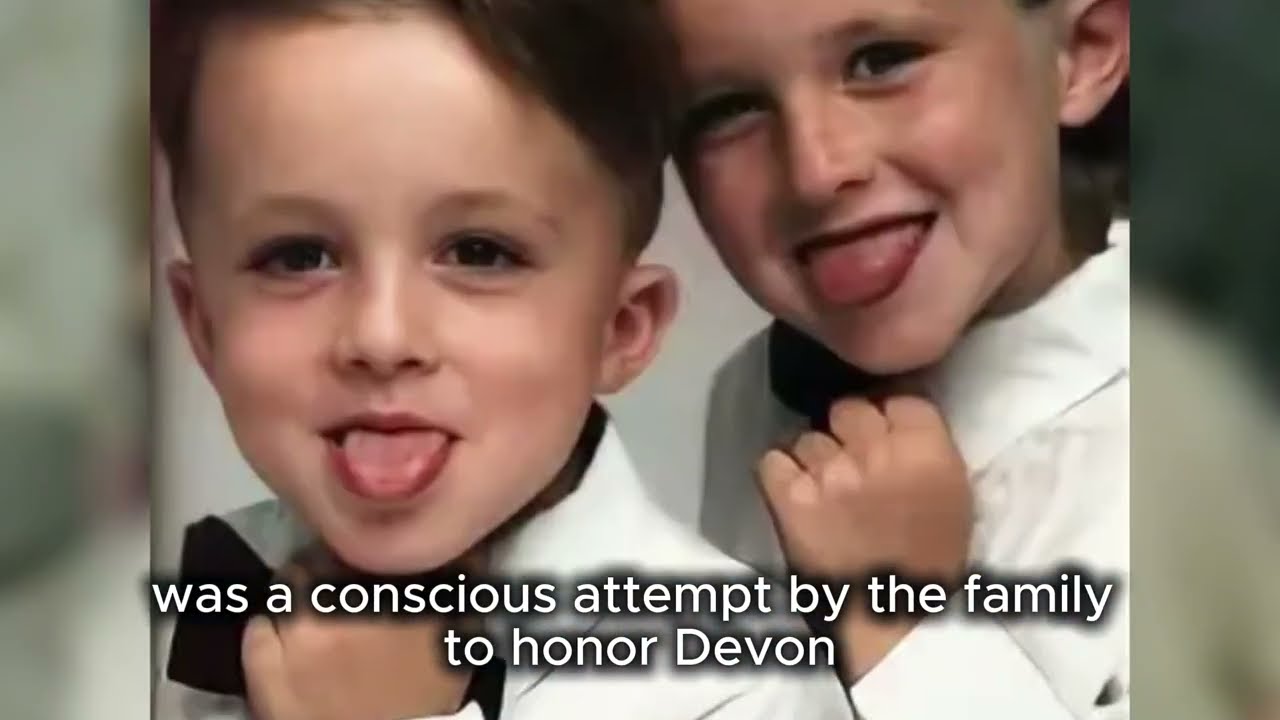
By the time officers pulled up to 5801 Eagle Drive, the house was still, the kind of still that does not feel like peace. Inside, they found what would become one of the most disturbing crime scenes in Texas history. Two little boys, 6-year-old Devon and 5-year-old Damon, lay bleeding on the family room floor.
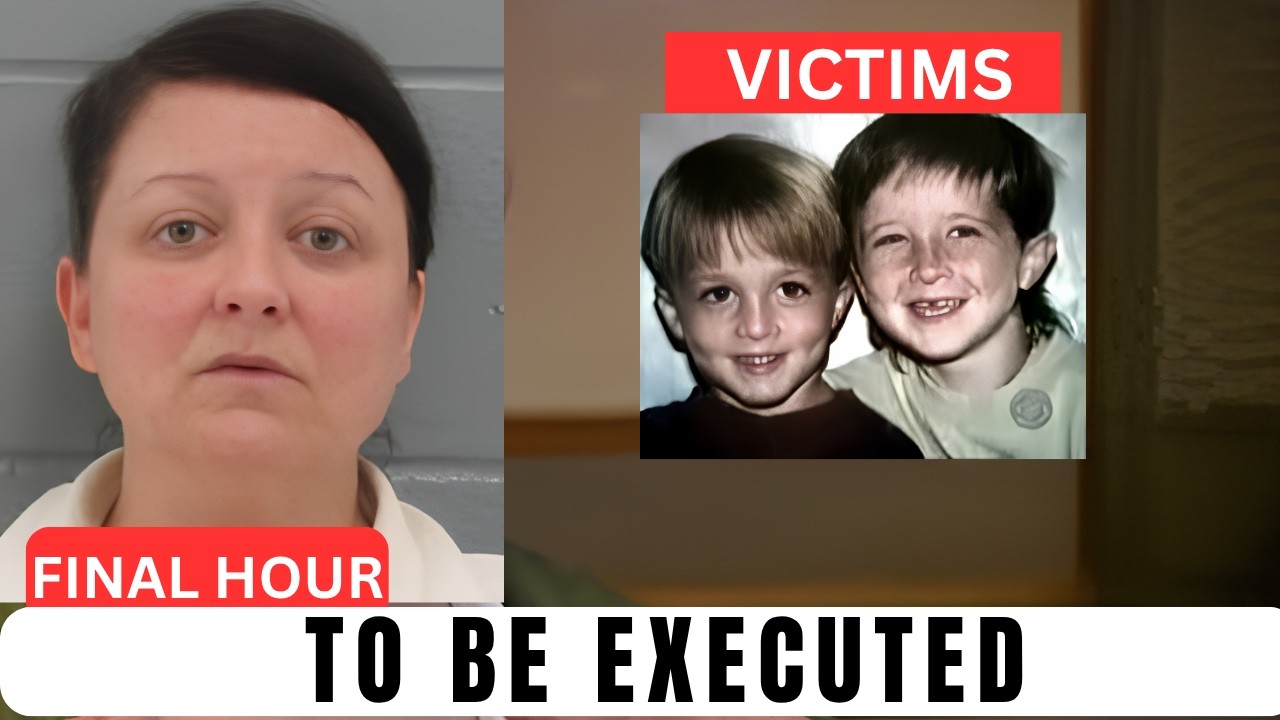 They had been stabbed multiple times. Neither would survive. Their mother, Darlie Routier, was wounded, too, a cut to her neck, a gash on her arm.
She told police she had woken up to find a man in the house, a stranger, walking away through the kitchen. She chased him. She said she tried to stop him.
She said she had no idea how badly her sons were already hurt. Within hours, Devon was gone. Damon died shortly after.
And just like that, a quiet suburban neighborhood outside Dallas would never be the same.
Now, nearly three decades later, the state of Texas is set to execute Darlie Routier, a mother convicted of capital murder in the deaths of her own children, a case that has divided investigators, legal scholars, journalists, and everyday people for nearly 30 years. There are those who believe the evidence against her was overwhelming. And there are those who believe she never should have been convicted at all.
What makes this case so difficult, so genuinely unsettling, is that even after all this time, after all the appeals, the documentaries, the DNA testing, the courtroom battles, we still do not have a clean answer. What we do have is a woman who has spent nearly three decades on Texas death row, a woman who has maintained her innocence from the moment she was arrested, and a case that even today refuses to be closed.
To understand what happened inside that house, you have to first understand the setup. The Routier home on Eagle Drive was a comfortable, well-furnished property in Rowlett, a quiet suburb sitting just east of Dallas. Darin Routier, Darlie’s husband, had done well for himself.
The couple had built what looked from the outside like a genuinely good life. Nice home, nice things, three young sons, Devon, Damon, and baby Drake. On the night of June 5th, 1996, going into the early hours of June 6th, the house was arranged the way it often was at night.
Darin and infant Drake were sleeping upstairs. Darlie and the two older boys, Devon and Damon, had settled downstairs in the family room as they sometimes did during the summer. At approximately 2:31 in the morning, Darlie made that 911 call.
She told the dispatcher that a man had been in the house, that he had attacked her children, that she had woken up, she believed, because Damon touched her shoulder, and seen a figure moving through the kitchen toward the utility room. She said she followed him. She said she saw him disappear through the garage.
When she turned back to her boys, the full horror of what had happened became clear. Both Devon and Damon had been stabbed in the chest. Multiple times, deeply.
Darlie told dispatchers she had tried to apply pressure to their wounds while waiting for help to arrive. Officers and paramedics reached the scene within minutes. Despite their efforts, Devon was pronounced dead at the hospital shortly after arrival.
Damon died hours later, never regaining consciousness. Darlie herself had visible injuries, a laceration to her neck and a wound on her forearm. She was treated at the same hospital where her sons were taken.
The garage window screen had been cut. A bloody sock belonging to one of the boys was later found in an alley roughly 75 yards from the home. To the first officers on scene, the evidence appeared to support what Darlie was telling them.
That someone had come in from outside, attacked the family, and fled. For a brief window of time, the investigation pointed outward, toward a stranger. Toward an intruder who had slipped in, done the unthinkable, and vanished into the night.
That window did not stay open for long.
In the days that followed, something shifted. It started quietly, the way doubt usually does. A question here, an inconsistency there.
But as detectives spent more time with the evidence, more time with the scene, more time with Darlie’s account, the question stopped being quiet. The first thing that troubled investigators was the cut window screen in the garage. On the surface, it suggested forced entry.
But when forensic technicians examined it more closely, the cut pattern raised immediate concern. It did not look like the work of someone forcing their way in from outside. It looked to the investigators studying it like it had been cut from the inside.
Staged. Then there was the crime scene itself. Darlie had described a violent, chaotic struggle with an intruder, a physical confrontation in the family room before she chased him toward the garage.
 But the scene around her did not fully reflect that account. Items that should have been disturbed in a struggle of that nature were largely intact. The layout told a story that did not quite match the one she was telling.
Detectives also took a long, careful look at the wounds. Devon and Damon had each been stabbed multiple times in the chest with significant force. These were not hesitation wounds.
They were deliberate, deep, and fatal. Darlie’s injuries, while real, were assessed by investigators as comparatively controlled. Particularly the neck wound, which sat close to the carotid artery, but had not severed it.
The defense would later argue that proximity alone made it potentially life-threatening. But to investigators at the time, the contrast between her wounds and her sons’ wounds was difficult to ignore. And then there was the matter of Darlie’s behavior at the scene.
Witnesses and first responders noted details that unsettled them. Not because grief looks one particular way, but because certain specific actions and movements seemed to those present inconsistent with the account she had given. Small things, placement, timing.
The kind of details that, individually, mean very little, but collectively begin to form a pattern. None of it was conclusive on its own, but detectives stopped looking outward. They turned their focus to the one person who had been in that room all night.
And then came the detail that has never been fully explained. Not by the prosecution, not by the defense, not by anyone in the 30 years since. A single bloody sock belonging to one of the boys.
Found in an alley 75 yards from the house. Well beyond the path Darlie said the intruder had taken. Too far to have been carried there accidentally.
Too deliberate to be dismissed. That sock has never been explained and it never stopped mattering.
On June 14th, 1996, 8 days after Devon and Damon were murdered, family and friends gathered at the cemetery where the boys had been buried. It was Devon’s birthday. He would have turned seven.
What happened at that graveside has followed Darlie Routier ever since. Footage captured that day showed Darlie spraying silly string over her son’s grave, laughing, dancing, and joining in as those around her sang happy birthday. The atmosphere in the clip appeared celebratory, light even.
8 days after two of her children had been stabbed to death in their own home. Television stations got hold of the footage. They played it.
Then they played it again and again. It spread across national news coverage with a velocity that in 1996 was remarkable. People who had never heard the name Darlie Routier watched that clip and formed a judgment within seconds.
The damage was immediate and severe. What most of those viewers never saw was the earlier portion of that same gathering. A quiet, tearful memorial service that had taken place before the celebratory segment began.
Those who were present described a mother visibly broken with grief, weeping at her son’s grave, struggling to hold herself together. The silly string moment, supporters argued, was a conscious attempt by the family to honor Devon the way a 6-year-old boy would have wanted to be remembered. A child’s birthday marked the way a child might have loved.
That context was not included in the broadcasts. What the public received was 40 seconds of a mother laughing at her dead son’s grave. And in a case that was already drawing enormous media attention, those 40 seconds became the defining image of Darlie Routier before her trial had even begun.
This matters not because it proves guilt or innocence, but because it illustrates something deeply important about how we process information, about how quickly a single image, stripped of its surrounding context, can harden into a verdict in the public mind. By the time Darlie Routier walked into that courtroom, millions of people had already decided.
By the time Darlie Routier’s trial began in January 1997, the case had attracted the kind of media attention that made a fair proceeding in Dallas County nearly impossible. The venue was moved to Kerrville, Texas, a small hill country town roughly 300 miles from Rowlett. The hope was distance, a jury that had not already been saturated with coverage, a courtroom where the evidence, not the narrative, could take center stage.
Whether that hope was fulfilled remains one of the most debated questions in the entire case. The prosecution came prepared with science. Blood stain pattern analysis became the backbone of the state’s argument.
 Expert witnesses testified that the distribution of blood at the scene was inconsistent with Darlie’s account of events. Specifically, the absence of blood in certain areas, areas where a struggle of the kind she described should have left clear traces, suggested to analysts that the scene had been arranged after the fact. The state’s position was direct.
Darlie Routier had stabbed her sons, then constructed a story around herself as a surviving victim. The prosecution also pointed to the family’s financial situation, mounting credit card debt, a lifestyle that had stretched beyond their means as evidence of motive. Not a dramatic motive, a quiet, pressured, desperate one.
The defense pushed back on every point. Defense attorneys challenged the blood stain analysis. Arguing the interpretation was not as definitive as the state presented it.
They returned again to the unidentified fingerprints found at the scene. Prints that were never matched to anyone in the household. They pointed to the bloody sock still sitting in that alley 75 yards away with no clean explanation.
They reminded the jury that there was no confession, no eyewitness. No murder weapon recovered with Darlie’s prints on it. Their core argument was straightforward.
The state had built a case on interpretation, not certainty. And interpretation, they said, was not enough to send a mother to death row. The jury disagreed.
On February 4th, 1997, Darlie Routier was convicted of capital murder in the death of her son, Damon. The verdict came after roughly 8 hours of deliberation. She was sentenced to death by lethal injection.
She was 27 years old. The courtroom that day was silent in the way that rooms only go silent when something irreversible has just happened.
Darlie Routier has now spent nearly three decades inside the Patrick L. O’Daniel Unit in Gatesville, Texas, a facility that houses the state’s female death row population. Life there is defined by restriction.
Inmates spend the majority of each day confined to small individual cells. Recreation is limited. Visits are non-contact.
The rhythm of daily existence on death row is one of almost complete isolation punctuated by the slow grinding movement of the legal system working or failing to work on your behalf. For Darlie, that legal movement has never fully stopped. In the years following her conviction, her attorneys pursued what has become one of the longest-running appeals processes in Texas death row history.
The central focus, particularly in more recent years, has been DNA evidence. Advances in forensic technology opened doors that did not exist in 1997, and Darlie’s legal team moved to have several items from the crime scene submitted for modern testing, including fingernail scrapings, the bloody sock, and other biological material collected on the night of the murders. Courts eventually approved testing on a number of those items.
The results, however, did not deliver the clean resolution either side might have hoped for. Some findings were inconclusive. Others raised new questions without answering existing ones.
An unidentified fingerprint recovered from the scene was run through FBI databases and returned no confirmed match. To supporters, that unmatched print remains one of the strongest indicators that someone else was present in that house. To prosecutors, an unmatched print alone proves nothing.
The appeals process has also surfaced claims of prosecutorial misconduct. Allegations that certain evidence was mishandled or withheld during the original trial. Those claims have been examined and contested across multiple court hearings over the years without producing a definitive ruling in Darlie’s favor.
Through all of it, she has maintained her innocence consistently, without deviation. Accounts from journalists and faith volunteers who have visited the unit describe a woman who found religion during her years behind bars. Someone who became deeply involved in prayer, in prison work programs, in crafting stuffed animals and blankets alongside fellow inmates.
Her son Drake, who was an infant the night his brothers were killed, has grown into an adult who publicly supports his mother’s innocence claims. His father, Darin, now Darlie’s ex-husband, has done the same.
As of now, the state of Texas is moving forward with the execution, though no specific date has been set for the lethal injection. The machinery that leads to an execution in Texas requires steps that have not yet been fully taken, but the announcement signals that the legal process is nearing its end. No clemency hearing has been scheduled.
The case waits, and the questions wait with her. 30 years on, the Routier case refuses to settle into a clean narrative. And that discomfort is worth sitting with because there are things this case reveals about the world we live in that go far beyond one family, one courtroom, and one verdict.
 The first is about media and perception. Darlie Routier was in many ways tried twice. Once inside a Kerrville courtroom, and once on national television, where the jury was everyone watching.
The evidence was a 40-second video clip. And the verdict came in before a single witness had been sworn in. We have to be honest with ourselves about how much that footage shaped public opinion.
And we have to ask, if we had seen the full gathering that day, the grief that preceded the silly string, would we have judged differently? The answer for most people is almost certainly yes. That should give us pause.
The second is about forensic evidence and its limits. We live in an era that has enormous faith in forensic science. And largely, that faith is earned.
But the Routier case is a reminder that forensic interpretation is not the same as forensic fact. Blood stain pattern analysis, crime scene reconstruction, wound assessment, these are disciplines practiced by human beings, shaped by assumptions, and open to genuine disagreement between equally qualified experts. Conviction based heavily on interpretation, without a confession, without an eyewitness, without a recovered weapon, carries a weight that the justice system should never take lightly.
The third, and perhaps the most personal, is about grief. There is no universal language for loss. People grieve differently.
Loudly, quietly, through laughter, through numbness, through action, through collapse. The moment we decide that grief must look a certain way, that a mother must cry in a specific manner, must carry herself with a particular kind of visible devastation. We stop seeing the person in front of us.
We start judging a performance instead of witnessing a human being. That instinct to measure grief against an invisible standard has consequences in courtrooms, in communities, in the way we treat people at the worst moments of their lives. The Routier case asks us to examine that instinct honestly and to consider what it costs when we do not.
Darlie Routier is still alive as of now, but her execution looms. She sits on Texas death row nearly 30 years after two little boys were found bleeding on a family room floor in Rowlett. The DNA testing is still unresolved.
The unidentified fingerprint still has no confirmed match. The bloody sock still has no clean explanation. And Darlie Routier still says she did not do it.
The truth is we may never get a definitive answer. And that is perhaps the most difficult thing about this case. Not the evidence, not the verdict, not even the sentence.
It is the uncertainty, the very real very uncomfortable possibility that the full truth of what happened inside that house on the night of June 6th, 1996 died with Devon and Damon Routier. What we are left with is a question that has outlasted the trial, the appeals, the documentaries, and three decades of public debate. Was Darlie Routier a mother who lost everything that night, including eventually her freedom, or did those boys lose everything because of her?
The answer remains elusive, and as the state prepares to carry out the sentence, the debate rages on. The case has drawn attention from across the globe, with advocates and legal experts calling for a stay of execution to allow for further review of the evidence. The Texas Court of Criminal Appeals has denied multiple requests for relief, but supporters continue to push for clemency from the governor, arguing that the conviction was based on flawed science and media sensationalism.
The governor’s office has not commented on whether clemency is being considered. The families of Devon and Damon have remained largely out of the public eye in recent years, but the pain of that night has never faded. The community of Rowlett still remembers the horror of that June morning, and the case remains a scar on the town’s history.
As the execution date approaches, the nation watches, waiting to see if the state will carry out the sentence or if a last-minute intervention will halt the process. The legal team for Routier has filed a final appeal, citing new evidence that they argue casts doubt on the original conviction. That appeal is currently pending before the courts.
The clock is ticking, and the outcome is uncertain. What is certain is that this case has become a symbol of the complexities of the American justice system, a system that is supposed to be infallible but often proves to be anything but. The story of Darlie Routier is a story of tragedy, of loss, of a family torn apart by violence, and of a legal battle that has spanned a generation.
It is a story that forces us to confront uncomfortable questions about guilt and innocence, about the role of media in shaping public opinion, and about the limits of forensic science. It is a story that will not be easily forgotten, no matter what happens next. The execution of Darlie Routier, if it proceeds, will mark the end of a long and painful chapter in Texas legal history.
But for those who have followed the case, the questions will remain long after the sentence is carried out. Was justice served? Or was an innocent woman condemned to die?
The answer may never be known, but the debate will continue, a testament to the enduring power of a case that has refused to be closed.