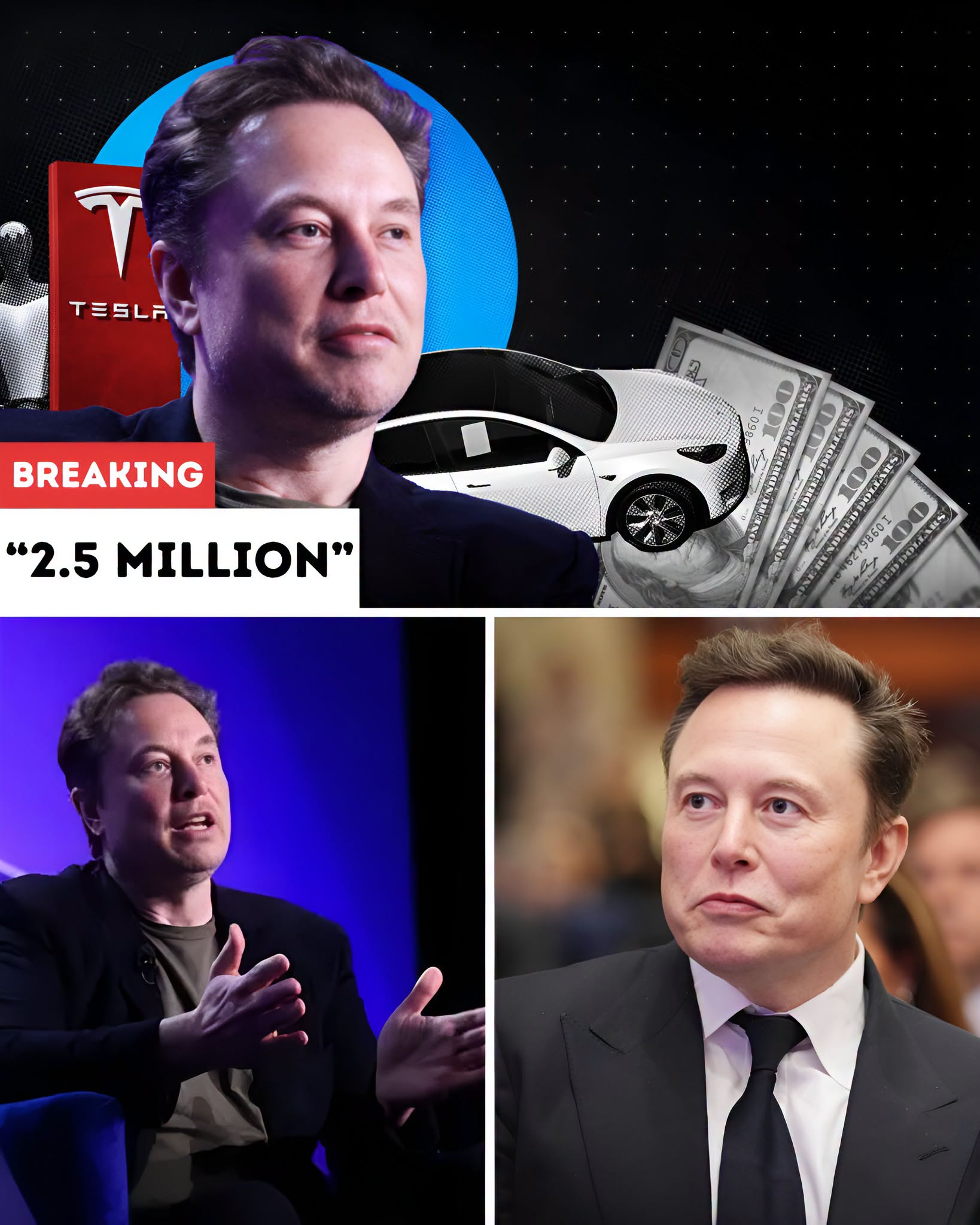
Imagine finishing a full year of work at Tesla.
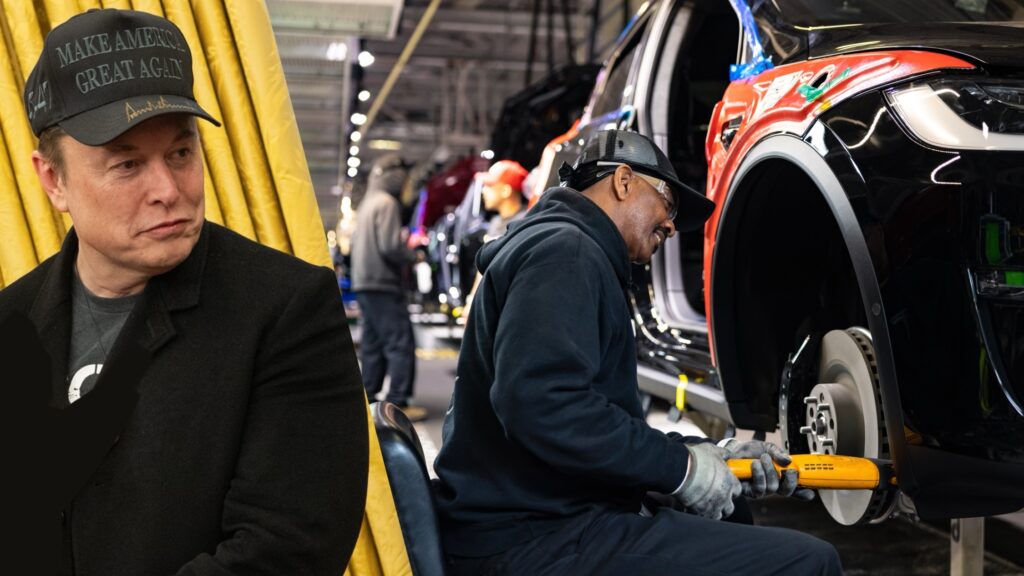
You show up for your shifts, solve problems, hit deadlines, sit through production pushes, handle customer issues, write code, repair machines, manage logistics or help build the cars that made the company famous.
At the end of the year, the median Tesla employee earned $57,243.
Now imagine someone receiving the equivalent of that entire annual salary every few seconds.
Not every few hours.
Not every few minutes.
Every 4.23 seconds.
That is the comparison the AFL-CIO drew after examining Elon Musk’s 2025 compensation package at Tesla.
According to the labor federation’s annual Executive Paywatch report, Musk’s Tesla compensation was valued at approximately $158 billion.
That made it 2,522,203 times larger than the pay of Tesla’s median employee.
The number was so enormous that it didn’t merely put Musk at the top of the CEO compensation rankings.
It distorted the entire ranking.
According to the AFL-CIO, Musk’s compensation alone was roughly 14 times larger than the combined compensation of every other S&P 500 CEO.
And once his package was included in the calculations, something unusual happened.
Average CEO pay across the S&P 500 appeared to explode.
The figure jumped to roughly $340.1 million for 2025—an increase of around 1,700% from the previous year.
But remove Musk from the calculation, and the picture changes dramatically.
Without him, average CEO compensation among S&P 500 companies was approximately $22.8 million.
Still enormous.
Still up 21% from approximately $18.9 million in 2024.
And, according to the AFL-CIO, still the highest level since the organization began tracking executive compensation in the 1990s.
But nowhere close to $340 million.
One individual package had become large enough to bend the statistical picture of corporate America.
For labor advocates, that was the point.
Fred Redmond, the AFL-CIO’s secretary-treasurer, warned that Musk’s arrangement could have consequences far beyond Tesla.
Once a corporate board approves a compensation plan on this scale, he argued, other executives and compensation committees suddenly have a new reference point.
Something that would previously have looked impossible becomes something that has already happened.
And that can change negotiations everywhere.
Executive pay rarely exists in isolation.
Boards look at comparable companies.
Consultants look at competing packages.
Executives compare themselves with other executives.
A number that once looked outrageous can gradually become a benchmark.
That was why the Tesla package mattered even to people who had never owned a Tesla, never worked at Tesla and never invested in the company.
It had the potential to reset expectations.
But there was another number in the report that made the divide even clearer.
Across the S&P 500, the average CEO-to-worker pay ratio reached 5,387-to-1 in 2025 when Musk was included.
Remove him, and the ratio falls to 312-to-1.
That lower number was still higher than the 285-to-1 ratio recorded in 2024.
The gap was already widening.
Musk’s package simply made it look almost surreal.
Manufacturing became the sector with the highest average CEO-to-worker compensation ratio, reaching approximately 11,139-to-1.
Again, Tesla’s CEO package was the overwhelming reason.
On paper, these are financial statistics.
But statistics can hide what they actually mean.
A ratio of 2.5 million to one is difficult for the human brain to process.
So translate it into time.
Tesla’s median employee earned $57,243 in 2025.
At the rate represented by Musk’s compensation package, the value of one median employee’s annual salary was being matched roughly every 4.23 seconds.
By the time someone finished reading a short email, several annual salaries could theoretically have passed.
During a ten-minute meeting, the equivalent of more than a century of median-worker annual pay could be represented.
That is the scale of the difference.
And yet the story was more complicated than simply saying Elon Musk received $158 billion in cash.
He did not.
The AFL-CIO’s calculation was based on the grant-date fair value of restricted Tesla stock awards granted to Musk in 2025.
That distinction matters.
Stock-based compensation is tied to company value and performance.
The ultimate value Musk receives depends on whether Tesla achieves a series of ambitious targets.
According to the report, those awards could eventually be worth as much as $1 trillion if the company reaches all of the required milestones.
And those milestones are not modest.
One of the most striking targets involves Tesla reaching a market valuation above $8.5 trillion within ten years.
For comparison, achieving that would require Tesla to grow into one of the most valuable corporate entities ever created.
That is part of the argument made by supporters of performance-based executive compensation.
If shareholders believe a CEO can create trillions of dollars in additional value, they may decide that granting that CEO an extraordinary financial reward is rational.
Tesla shareholders approved the package.
From that perspective, Musk is not simply being handed money for showing up.
He must meet enormous objectives.
If Tesla fails to achieve them, the full potential value does not materialize.
That is the defense.
The criticism becomes more powerful when the company’s actual 2025 financial performance enters the picture.
Because while Musk’s compensation package carried an estimated grant-date value of $158 billion, Tesla reported approximately $94 billion in total revenue from customers during 2025.
In other words, the accounting value assigned to Musk’s compensation package was greater than everything Tesla collected in revenue from customers that entire year.
That alone would have made headlines.
But Tesla’s revenue had also declined.
According to figures cited by Electrek, annual revenue fell roughly 3% year over year in 2025.
It marked the first annual revenue decline in Tesla’s history.
Profitability also weakened sharply.
Tesla’s GAAP earnings reportedly fell 61% from the previous year.
So the timing created an uncomfortable contrast.
Workers, investors and customers were looking at a company whose revenue had contracted and whose earnings had fallen dramatically.
At almost the exact same moment, its CEO was associated with one of the largest compensation packages ever recorded.
The AFL-CIO also highlighted another figure.
According to its report, Tesla reported owing $0 in U.S. federal income taxes on approximately $5.68 billion in adjusted income for the year.
Taken together, the numbers gave critics an easy narrative.
Revenue down.
Profit down.
An enormous executive compensation award.
Median employee pay of $57,243.
And a CEO package valued at 2.5 million times that median salary.
For people already concerned about inequality inside American corporations, it looked less like an unusual compensation package and more like a symbol.
But then came the part that complicates the story.
Because Tesla did not simply continue declining.
By the second quarter of 2026, its financial performance showed signs of recovery.
The company reported $28.24 billion in quarterly revenue, up approximately 26% from a year earlier.
For the first time, Tesla’s trailing twelve-month revenue crossed $100 billion.
That mattered.
Supporters of Musk could point to the rebound and argue that evaluating a long-term performance package based on one difficult year misses the entire purpose of the structure.
The compensation was designed around the future.
If Tesla recovers, expands into new businesses and eventually reaches the extraordinary valuation targets attached to Musk’s stock awards, shareholders could still come out far ahead.
That argument cannot simply be dismissed.
But the rebound contained another uncomfortable detail.
Tesla’s GAAP net income in the quarter declined approximately 5% year over year to $1.11 billion.
And the company reported a $1.09 billion free-cash-flow deficit.
Revenue had improved.
Other financial pressures remained.
That is where the story changes.
Because the real conflict is not simply whether Elon Musk “deserves” $158 billion.
That question is almost impossible to answer objectively.
The real question is what modern corporations are actually paying CEOs for.
Historically, compensation was supposed to reward performance.
But increasingly, the largest executive packages are designed to reward a specific version of future performance.
Boards are not only paying for what a company did last quarter.
They are purchasing the possibility that one individual can create extraordinary value over the next decade.
Tesla’s package takes that logic to its extreme.
If Musk succeeds in pushing Tesla toward an $8.5 trillion valuation, shareholders who approved the arrangement could argue that the compensation was a bargain.
If Tesla fails to reach those ambitions, then much of the potential value disappears.
But here is the twist.
The most important part of Musk’s compensation package may not be how much Musk eventually receives.
It may be what happens to executive compensation everywhere else because the package exists.
That was the concern Fred Redmond raised.
Corporate boards do not make compensation decisions in a vacuum.
They compare.
They benchmark.
They ask what other companies are willing to pay for supposedly irreplaceable leadership.
Imagine a CEO walking into a compensation discussion after Tesla shareholders have already approved a potential trillion-dollar package for Musk.
The psychological ceiling has moved.
A $50 million compensation plan no longer sounds as shocking.
A $100 million plan looks smaller by comparison.
A $500 million incentive structure can be defended as tiny relative to the value theoretically available to Musk.
The extraordinary becomes the reference point that makes everything below it appear ordinary.
And suddenly the Tesla package is no longer only a Tesla story.
It becomes a corporate governance story.
A labor story.
An inequality story.
And potentially a precedent.
That is why the AFL-CIO emphasized what happened to the S&P 500 averages.
One individual’s compensation was so large that including him pushed the average CEO pay calculation from roughly $22.8 million to $340.1 million.
Think about that.
Thousands of companies spend enormous amounts of time discussing “market compensation.”
Boards hire consultants.
Consultants compile peer groups.
Executive pay is justified partly by what similar leaders receive.
But what happens when one compensation package is so large that it distorts the market itself?
The benchmark stops being a neutral measurement.
It begins influencing the behavior it is supposed to measure.
That was the deeper concern.
Inside Tesla, meanwhile, the comparison remains impossible to ignore.
$57,243.
That was the median employee compensation figure cited for 2025.
For many workers, that number represents rent or a mortgage.
Groceries.
Childcare.
Car payments.
Healthcare.
Savings.
An entire year built around dozens of ordinary financial decisions.
Against it sits $158 billion.
Even acknowledging that Musk’s number represents restricted stock valued at grant date rather than a cash paycheck, the contrast is staggering.
And you can imagine how different people see it.
A Tesla shareholder might look at Musk and say:
If he creates trillions of dollars in new shareholder value, reward him.
A Tesla employee might look at the same numbers and ask:
If the company can assign this much value to one person’s future contribution, what does that say about everyone else already building the cars, writing the software, running the factories and serving the customers?
A corporate board member might see a precedent.
A union organizer might see proof that executive compensation has become disconnected from worker pay.
An investor might simply ask whether the incentives actually produce the results being promised.
None of those reactions requires Musk to be either a hero or a villain.
That is what makes the controversy harder than the headline.
The numbers are extreme enough without turning the story into a caricature.
Tesla shareholders made a choice.
They decided that Musk’s leadership could be valuable enough to justify one of the most ambitious compensation structures ever created.
Now the company has to produce the results that make that decision look rational.
Musk has to deliver.
And everyone else gets to watch.
Because if Tesla eventually grows beyond an $8.5 trillion valuation, launches new businesses at massive scale and creates trillions of dollars in additional shareholder wealth, defenders of the package will have one of the strongest arguments imaginable.
They will say the incentives worked.
But if those targets remain out of reach while executive pay elsewhere continues rising because Musk’s package helped reset expectations, critics will point back to this moment and say the consequences extended far beyond Tesla.
Either way, something changed in 2025.
A CEO compensation package became so large that ordinary corporate comparisons almost stopped working.
It exceeded the company’s annual customer revenue.
It pushed an entire index’s average executive compensation into another universe.
It drove manufacturing’s CEO-to-worker ratio above 11,000-to-1.
And it was valued at more than 2.5 million times Tesla’s median employee pay.
Numbers that large have a strange effect.
At first they shock you.
Then they become familiar.
And eventually, if nobody questions them, they can become normal.
That may be the most important lesson buried inside Tesla’s $158 billion compensation story.
The debate is not only about how much one billionaire can earn.
It is about what happens when the exception becomes the benchmark.
Because once 2.5 million times the average worker’s pay exists on a corporate compensation chart, the next outrageous number doesn’t have to look quite so outrageous anymore.
And that is how inequality stops looking like an exception—not when the numbers get bigger, but when people finally stop being surprised by them.