The court filing contained a sentence no parent would want to read.
“I no longer live with or wish to be related to my biological father in any way, shape or form.”
The person who wrote it was Vivian Jenna Wilson, the 18-year-old daughter of Elon Musk and his first wife, Canadian author Justine Wilson.
She wasn’t posting an angry message on social media.
She wasn’t giving an interview.
She wasn’t trying to start a public fight.
Vivian had gone to court.
In a petition filed in Los Angeles County, she asked to legally change her name, have official records reflect her gender identity, and stop carrying the surname of one of the most famous men in the world.
Then her mother appeared to respond publicly.
And Justine Wilson’s message was remarkably simple.
She was proud of her daughter.
For years, Elon Musk’s family had existed in the shadow of his enormous public profile.

Tesla.
SpaceX.
Rockets.
Electric cars.
Billions of dollars.
Headlines that seemed to appear almost daily.
But this story was not about a company valuation or a launch into orbit.
It was about something money could not fix.
A relationship between a father and a child had apparently broken down so badly that, upon reaching adulthood, that child wanted the separation reflected in law.
Vivian had recently turned 18 when details of the court filing became public in 2022.
She had previously been known as Xavier Alexander Musk.
In the petition, she asked to be legally recognized as Vivian Jenna Wilson, adopting her mother’s surname.
She also sought a legal change recognizing her gender.
But buried inside the routine legal language was the sentence that transformed the filing into international news.
Vivian wrote that she did not want to “be related to my biological father in any way, shape or form.”
It was unusually direct.
There was no public explanation attached to it.
No long list of accusations.
No detailed account of what had happened inside the family.
Just a boundary.
And because the biological father in question was Elon Musk, that boundary immediately became a global headline.
Musk had built much of his public identity around doing things other people considered impossible.
He had helped transform Tesla into the world’s most prominent electric vehicle company.
SpaceX had launched rockets, landed boosters and pursued plans that sounded like science fiction.
His supporters saw him as a man who refused to accept conventional limits.
His critics saw someone whose personal behavior often created as much controversy as his businesses created innovation.
Either way, Musk had become difficult to ignore.
Vivian appeared to want the opposite.
Distance.
The Musk surname itself carried extraordinary weight.
Keeping it meant carrying an automatic connection to a man whose every statement could become news.
Removing it meant making a deeply personal decision in the most formal way available.
She chose Wilson.
Her mother’s name.
That detail mattered because Justine Wilson knew better than almost anyone what life inside Elon Musk’s orbit could look like.
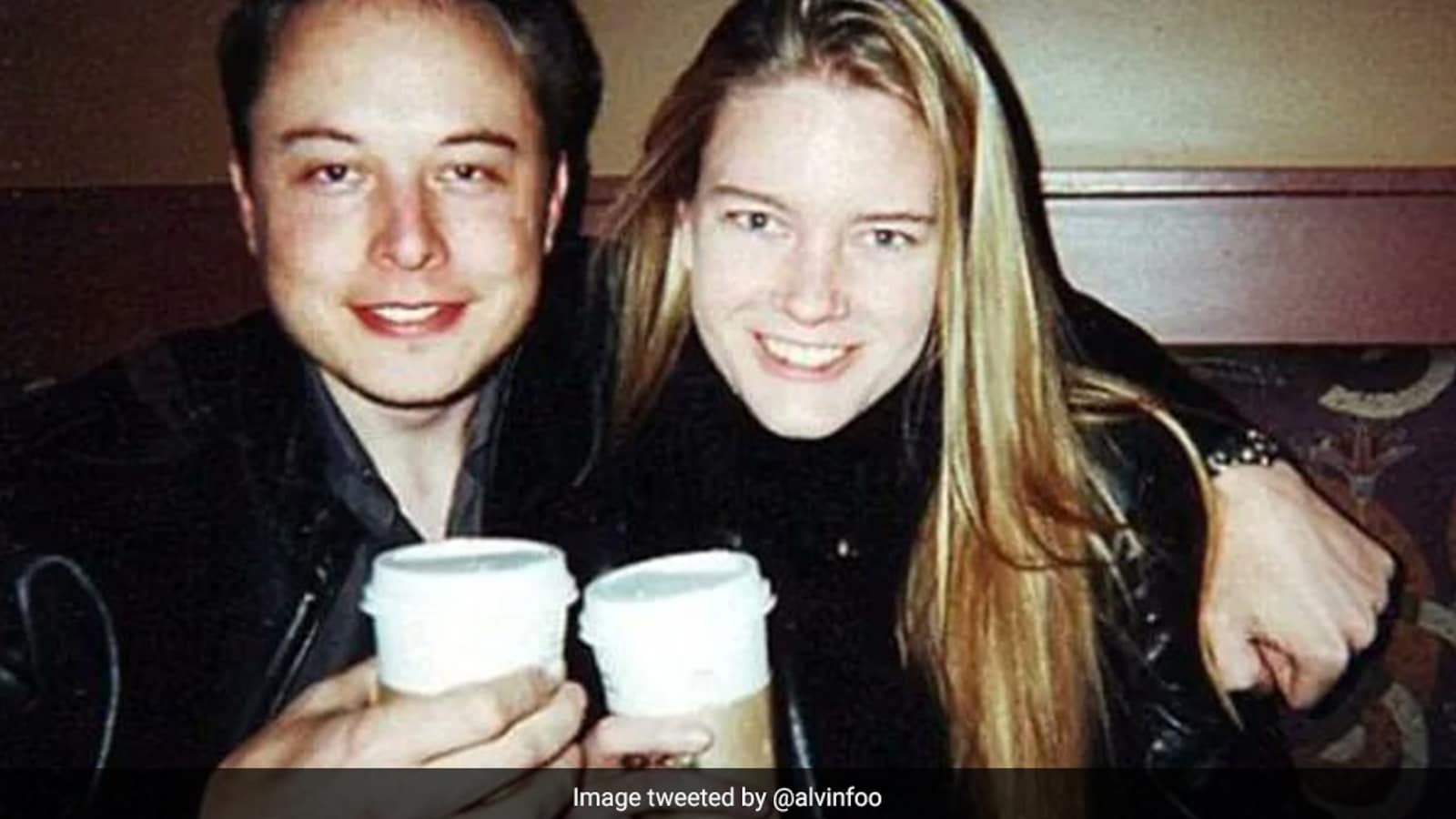
Justine and Elon married in 2000.
Their first son, Nevada Alexander Musk, died in infancy.
The couple later had twins and then triplets.
Their marriage ended in divorce in 2008.
By the time Vivian filed her petition years later, her parents had long since built separate lives.
But children do not experience divorce as a clean line on a calendar.
Parents separate.
Households change.
Relationships evolve.
Old disagreements can fade.
Others can deepen.
And eventually, children become adults capable of drawing their own conclusions about the people who raised them.
Vivian had reached that age.

Whatever had happened privately, she was now legally old enough to decide how she wanted to identify herself.
She made that decision unmistakably clear.
Then, on Twitter, Justine posted something that immediately drew attention.
She described a conversation with her 18-year-old child.
“I had a weird childhood,” Justine quoted her as saying.
Then came another line.
“I can’t believe I’m as normal-seeming as I am.”
It was darkly humorous, but there was an unmistakable weight beneath it.
Justine’s answer was only a few words.
“I’m very proud of you.”
Her daughter responded:
“I’m proud of myself!”
Justine did not explicitly attach the tweet to the court filing.
She did not name Elon.
She did not explain the family’s private history.
But the timing meant many observers interpreted the exchange as support for Vivian during one of the most consequential decisions of her young adult life.
And the difference between those two statements — “I’m proud of you” and “I’m proud of myself” — said more than a long public statement might have.
One came from a mother.
The other came from a daughter who appeared to have decided she no longer needed anyone else to define her.
That was where the story became larger than celebrity gossip.
Because there are few things more complicated than a child deciding that a parent’s presence in their life is no longer healthy or wanted.
From the outside, people tend to demand explanations.
What happened?
Who started it?
Who was wrong?
Can they reconcile?
But families rarely collapse in neat public timelines.
There may be years of private conversations that nobody else hears.
Missed moments.
Different values.
Arguments.
Attempts to reconnect.
Silences.
And memories that two people remember completely differently.
The public knew the result.
It did not know every step that led there.
That distinction mattered.
Vivian’s legal filing stated what she wanted.
It did not provide the world with a complete history of why she wanted it.
And Justine’s tweet showed support without turning her daughter’s decision into a public prosecution of her former husband.
That restraint was significant.
It would have been easy for the situation to become a spectacle.
This was Elon Musk, after all.
Every part of his life attracted debate.
Any accusation involving him could generate thousands of comments within minutes.
People could immediately choose teams.
Supporters could defend him.
Critics could attack him.
Strangers could turn a family rupture into another argument about a famous billionaire.
But at the center of the story was an 18-year-old making decisions about her own identity.
Vivian had asked the court to recognize the name she chose.
She had asked for legal recognition of her gender.
And she had asked to remove the surname tying her directly to her father.
Those were not abstract internet debates.
They were decisions about how she would move through the world.
Imagine what carrying the Musk name meant at that moment.
Most people can introduce themselves without instantly triggering assumptions.
Vivian could not.
“Musk” was not simply a family name.
It was a brand.
A company story.
A political argument.
A wealth story.
A technology story.
A celebrity story.
A name recognized across continents.
People hearing it might immediately ask whether she was related to Elon Musk.
Every introduction could potentially pull her back toward someone from whom she was explicitly trying to establish distance.
So she chose Wilson.
The name linked her to the parent publicly telling her:
“I’m very proud of you.”
There was something almost impossible to miss in that contrast.
One parent’s surname was being removed.
The other parent’s surname was being adopted.
No dramatic speech was required.
The legal paperwork already showed the direction Vivian had chosen.
And that is where many people misunderstood the story.
The most important moment was not necessarily Vivian rejecting something.
It was Vivian choosing something.
A name.
An identity.
A boundary.
A future in which she would determine how she was introduced.
That difference is important.
When people hear that someone has cut contact with a parent, the story is often framed entirely around loss.
What was abandoned?
What was destroyed?
What family relationship disappeared?
But from the perspective of the person creating the boundary, the experience may feel very different.
Sometimes a boundary is not only an ending.
Sometimes it is the first act of ownership over your own life.
Justine’s response appeared to recognize exactly that.
She did not publicly instruct Vivian what to think.
She did not present herself as the hero who had rescued her daughter.
Instead, she quoted her.
That mattered.
“I’m proud of myself.”
Those words placed Vivian at the center of her own story.
Not Elon.
Not Justine.
Vivian.
For someone whose family surname guaranteed immediate association with one of the richest and most discussed people on Earth, that may have been exactly the point.
The moment also revealed something about motherhood that is rarely as simple as it appears.
Parents often say they want their children to become independent.
But independence becomes much harder to celebrate when a child starts making choices the family cannot control.
Real independence means your adult child may choose a career you did not expect.
A partner you did not choose.
A city far away.
A different worldview.
A different identity.
Different relationships with relatives.
And sometimes, painful boundaries.
Supporting an adult child does not mean controlling those decisions.
It means accepting that the decisions ultimately belong to them.
Justine’s public message suggested that she understood the distinction.
She was not saying, “I made this decision for you.”
She was saying, “I’m proud of you.”
Then her daughter answered with perhaps the most important sentence in the exchange.
“I’m proud of myself.”
That was the moment of recognition.
Not from a villain suddenly realizing they had lost.
Not from a crowd delivering applause.
But from an 18-year-old recognizing her own authority over her life.
For years, countless headlines had been written about the Musk family through Elon’s perspective.
His marriages.
His businesses.
His relationships.
His children.
His decisions.
His ambitions.
Suddenly, one of those children was old enough to speak through a legal document.
And the message was unmistakable.
She wanted to be known on her own terms.
The court process would decide the legal elements of the request.
But the emotional decision appeared already made.
Vivian had selected the name she wanted.
She had stated the relationship she no longer wanted.
And her mother had publicly expressed pride.
There was no indication in the filing that Vivian wanted public attention.
Ironically, the magnitude of her father’s fame made privacy almost impossible once the court documents were reported.
That is another burden children of extremely famous people face.
Most 18-year-olds can make major personal decisions without international newspapers analyzing them.
A billionaire’s child may not get that privilege.
Even changing your own name can become news.
Even stepping away can generate more attention.
There is a painful irony in that.
The harder Vivian attempted to separate her identity from her famous father, the more headlines initially connected them.
“Elon Musk’s daughter…”
“Elon Musk’s child…”
“Elon Musk’s ex-wife responds…”
The public needed the connection to understand the story.
Vivian appeared to be asking for a future in which the connection was no longer the first thing people saw.
And perhaps that explains why Justine’s small exchange with her daughter resonated.
There was no billionaire language in it.
No corporations.
No court arguments.
No enormous claims.
It sounded like a conversation that could happen in an ordinary kitchen.
A child looks back at a difficult childhood and makes a dry observation about surviving it.
A mother answers with pride.
The child says she is proud too.
For a family associated with extraordinary wealth and extraordinary public attention, the most powerful moment was painfully ordinary.
A mother telling her daughter:
I see you.
And a daughter answering:
I see myself too.
No amount of money can manufacture that.
No company can engineer it.
No public-relations team can create it after the fact.
It has to come from the relationship itself.
There was still one uncomfortable reality hanging over the entire story.
Vivian’s decision indicated that something significant had broken between her and her father.
At the time the filing became public, there was no complete explanation of the rift.
That absence did not make the decision meaningless.
It simply meant outsiders should be careful about inventing what they did not know.
The public did not need every private detail to understand one basic fact.
An adult had clearly expressed a boundary.
That boundary deserved to be taken seriously.
Family loyalty is often treated as unconditional.
People are told that blood is blood.
That parents must always be forgiven.
That children owe access to the people who raised them.
But adulthood introduces a harder truth.
Relationships are not maintained by DNA alone.
They are maintained by trust, respect, safety, communication and the willingness of both people to continue participating.
A biological connection may be permanent.
Access is not.
A surname can be inherited.
It can also be changed.
And sometimes becoming an adult means deciding which parts of your inheritance you want to carry forward.
Vivian Jenna Wilson made that decision at 18.
Her mother’s reaction did not appear to be anger.
It was pride.
And the final twist was that Vivian did not simply accept that pride from someone else.
She claimed it for herself.
“I’m proud of myself.”
Perhaps that is the line worth remembering.
Because eventually every child reaches an age when their life stops being a continuation of their parents’ story and becomes something they must author for themselves.
Famous father or unknown father.
Billionaire family or ordinary family.
The principle remains the same.
Parents may give us our first name, our first home and our first understanding of the world.
But adulthood is the moment when we begin deciding what stays.
And sometimes the strongest thing a parent can say when their child finally makes that decision is not, “Choose me.”
It is, “I’m proud of you.”