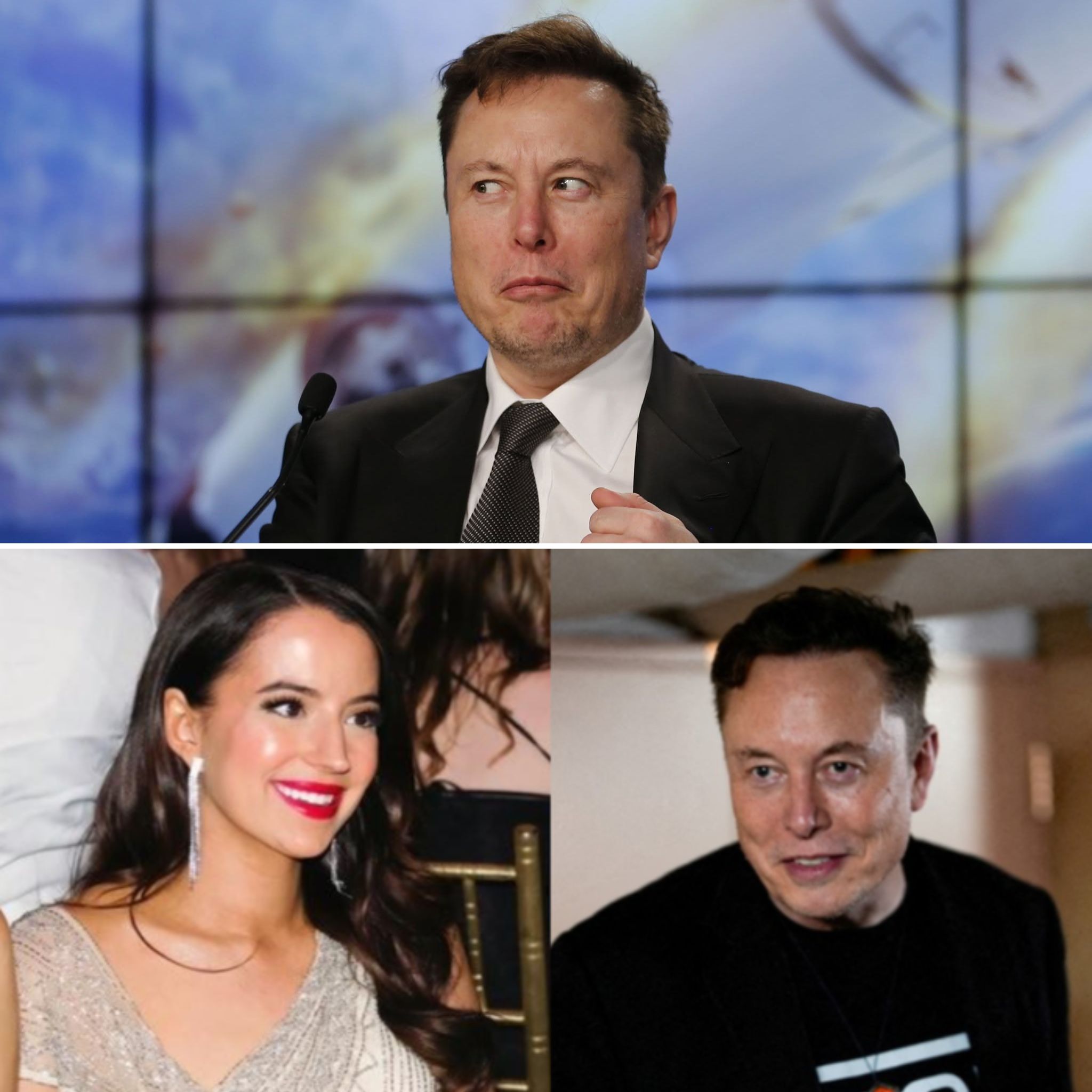
On Valentine’s Day 2025, Ashley St. Clair published the kind of post that can change several lives with a few lines of text.
The conservative influencer and author told her followers that five months earlier, she had welcomed a baby.
Then came the sentence that turned a private family matter into international news:
“Elon Musk is the father.”
St. Clair said she had kept the information private because she wanted to protect her child’s safety and allow the baby to grow up away from intrusive attention. She said she was speaking publicly only because she believed tabloid coverage was about to expose the story anyway.
Within hours, the internet did what it always does when a billionaire, an influencer and a secret baby appear in the same story.
It chose sides before it had all the facts.
Some people congratulated St. Clair.
Others questioned her motives.
Still others immediately turned to Musk’s public history, trying to determine whether the claim fit into what was already known about his large family.
But one person was conspicuously absent from the conversation.
Elon Musk himself.
And that silence became almost as interesting as the original announcement.
Musk was one of the most active high-profile users on X, the social media platform he owned. His account regularly commented on politics, technology, artificial intelligence, memes, cultural arguments and breaking news.
So when St. Clair made an allegation this personal—and Musk continued posting without directly confirming or denying it—people noticed.
The absence of a response created a vacuum.
And into that vacuum rushed speculation.
Then someone found an old conversation.
The posts were from May 2020, almost five years before St. Clair’s baby announcement.
In the resurfaced exchange, St. Clair jokingly told conservative commentator Greg Price that she needed something to get Elon Musk’s attention for a marriage proposal.
Price responded that Musk already had children and suggested the idea was unlikely to work.
St. Clair joked back about Musk having several children and moving quickly through relationships.
Five years earlier, the exchange looked like exactly what many social-media conversations are: exaggerated joking between people online.
In February 2025, however, it was suddenly being read through an entirely different lens.
One account reposted screenshots and claimed St. Clair had spent “half a decade” plotting to “ensnare” Musk.
That was the post Musk finally responded to.
His entire reaction was one word.
“Whoa.”
And with that, the story exploded again.
It was not a confirmation that the baby was his.
It was not a denial.
It was not an explanation of his relationship with St. Clair.
Technically, it wasn’t even a direct response to her original announcement.
He was reacting to someone else’s interpretation of tweets she had written nearly five years earlier.
But online, one word can be enough to create a thousand conclusions.
Supporters of Musk treated “Whoa” as evidence that he had discovered something alarming.
Critics asked why he was willing to react publicly to an accusation against St. Clair while apparently avoiding the central question.
St. Clair herself soon entered the exchange.
In a response that was later deleted, she said she had been trying to communicate with Musk for several days and asked when he would respond to her instead of publicly engaging with accusations about her.
That changed the tone.
Because suddenly this wasn’t simply internet gossip about whether a five-year-old joke had predicted the future.
There was reportedly a mother attempting to discuss an infant.
There was a globally famous billionaire saying almost nothing publicly about the core allegation.
And there was a crowd of millions trying to reconstruct an intensely private relationship from screenshots, old jokes and fragments of posts.
The easiest version of the story was also the most dramatic:
Woman jokes about marrying billionaire.
Years later woman says she had billionaire’s child.
Old joke resurfaces.
Billionaire says, “Whoa.”
Case closed.
Except it wasn’t.
A week after her public announcement, St. Clair moved the dispute away from X and into a place where screenshots and viral interpretations carry much less weight:
A courtroom.
On February 21, 2025, she filed petitions in New York seeking to have Musk legally declared the child’s father and seeking sole custody.
According to reporting on the court filing, St. Clair alleged that Musk had met the baby only a small number of times and had little involvement in the child’s day-to-day upbringing. Musk did not publicly answer those specific allegations at the time.
Now there were two very different stories unfolding.
One lived on social media.
The other lived in legal documents.
On social media, people could interpret a joke from 2020 however they wanted.
In court, the questions were less entertaining but far more important.
Who was the father?
What responsibility followed from that?
What arrangement would protect the child?
And what could actually be proven?
The distinction mattered.
Because the central problem with the viral “five-year plot” theory was obvious once the noise was stripped away.
A joke can suggest motive.
A screenshot can create suspicion.
A one-word response can fuel speculation.
But none of those things establish paternity.
Only evidence can do that.
Weeks passed.
The disagreement became increasingly public.
Then, on March 31, Musk finally addressed the paternity question more directly.
He wrote on X that he did not know for certain whether the child was his but was willing to find out. He also claimed that he had already provided St. Clair with $2.5 million and was sending her $500,000 per year.
St. Clair disputed his characterization of the financial arrangement and said she had previously asked him to confirm paternity through testing.
The internet once again divided immediately.
Some focused on the extraordinary amount of money Musk said he had provided.
Others focused on the phrase that mattered most:
He still said he did not know for sure.
For nearly two months, that uncertainty had defined the entire public argument.
Was St. Clair telling the truth?
Was the 2020 post evidence of something calculated?
Had Musk been unfairly dragged into a claim that had not been established?
Or was everyone spending too much time analyzing social-media theater while ignoring a question that science could answer?
Then came the detail that changed the story.
In April 2025, The Wall Street Journal reported that Musk had taken a paternity test.
According to the report, a Labcorp result showed a 99.9999 percent probability of paternity. Other reporting subsequently cited the same result.
And suddenly that old 2020 screenshot looked very different.
Not because it disappeared.
Not because people could no longer debate what St. Clair meant when she wrote it.
They could.
But because the fundamental question was no longer whether a five-year-old joke looked suspicious.
The fundamental question had been answered by something far less dramatic than a viral post.
Data.
That was the real twist in the story.
For weeks, millions of people had been studying words.
One word from Musk.
A few sentences from St. Clair.
A joke from 2020.
Deleted replies.
Accusations.
Screenshots.
Reposts.
Every fragment became evidence in the court of public opinion.
Then an actual test arrived.
And it carried more weight than all of them combined.
The tone of the story could no longer remain exactly the same.
The people who had treated Musk’s “Whoa” as if it settled the matter had to confront an uncomfortable distinction.
Someone’s intentions and someone’s biological parentage are two different questions.
Even if a person believes St. Clair’s old comment was calculated rather than joking, that interpretation does not erase parental responsibility.
And even if someone believes Musk behaved badly, that does not automatically prove every accusation made against him.
That is what makes stories like this so revealing.
People often don’t wait for the missing evidence.
They fill in the gap themselves.
One group creates a villain.
Another creates a victim.
Then both sides begin searching for details that confirm the version they already prefer.
The human beings involved almost disappear.
And in this case, the person easiest to forget was the one person who never asked to become part of an online controversy:
The child.
That baby did not write the 2020 tweets.
The baby did not post the “Whoa.”
The baby did not create the headlines, choose political sides, debate Musk’s reputation or ask millions of strangers to examine the private lives of two adults.
Yet the consequences of everything being argued about ultimately belonged to that child more than anyone else.
St. Clair’s original announcement had specifically asked for privacy for her baby.
What followed was the opposite.
Old posts were excavated.
Motives were debated.
Legal filings became headlines.
Financial claims were fought over publicly.
And a deeply personal question about parenthood became another arena in which the internet demanded immediate winners and losers.
There is also a reason the story became so irresistible.
Musk is not an ordinary private citizen.
He is one of the world’s most famous business figures, the owner of X and a man who has publicly spoken repeatedly about declining birth rates and the importance of having children.
St. Clair was not anonymous either.
She had built a large political-media presence of her own.
When two people with public platforms collide over something this personal, attention is inevitable.
But attention and truth are not the same thing.
That may be the most important part of what happened.
When St. Clair first made her announcement, people wanted Musk to respond immediately.
When he responded “Whoa” to the resurfaced tweets, people tried to decode a single word.
When St. Clair challenged him publicly, people examined her language.
When the court petitions arrived, people examined allegations.
When Musk discussed money, people argued over his figures.
But eventually, one piece of evidence cut through months of interpretation.
A paternity result did not tell the public everything about the relationship.
It did not determine who behaved perfectly.
It did not settle every legal, financial or custody question.
It did something much narrower—and much more important.
It answered the factual question that had been hanging over the story from the beginning.
And that is where the internet’s favorite habit becomes dangerous.
We are increasingly asked to decide what is true before truth has had time to arrive.
A screenshot appears.
A headline is posted.
A celebrity reacts.
Within minutes, strangers build complete stories around people they have never met.
Then the facts arrive days, weeks or months later.
By then, millions of people have already decided what they believe.
The first narrative becomes emotionally satisfying.
The correction becomes inconvenient.
This story began with a five-month-old baby.
Then it became a story about an influencer.
Then Elon Musk.
Then an old tweet.
Then a single word.
Then money.
Then lawyers.
Then DNA.
But underneath all of it was a simpler issue:
When a child’s identity and future are involved, adults eventually have to leave the world of memes and accusations and enter the world of responsibility.
The internet can speculate about motive forever.
It can argue over who embarrassed whom.
It can turn five-year-old jokes into evidence and one-word replies into verdicts.
But reality does not care which version went viral first.
Reality waits for evidence.
And perhaps that is why the most important moment in this entire saga was not Ashley St. Clair’s announcement.
It wasn’t Elon Musk typing “Whoa.”
It wasn’t the resurfaced tweet.
It wasn’t even the millions of people debating what all of it meant.
It was the moment a factual question finally encountered a factual answer.
Because when millions of strangers are shouting their conclusions before the evidence is in, remembering this may save us from getting the next story wrong:
The loudest post on the internet is still only a post. When a child’s future is at stake, evidence should always get the final word.