The revelation did not come from Elon Musk.
It did not come from a glossy magazine interview, a carefully worded announcement or one of the billionaire’s famously unpredictable posts on X.
It came from court documents.
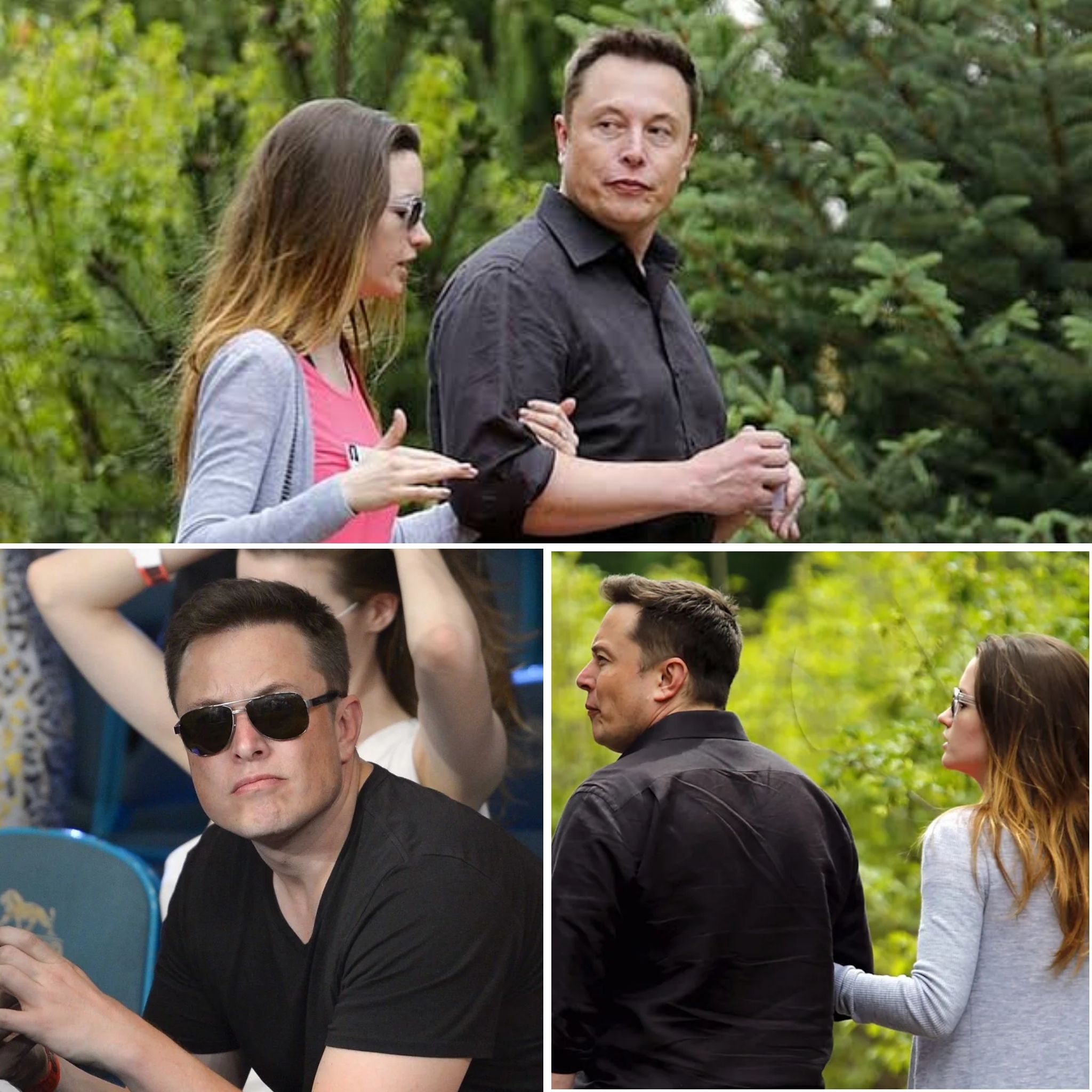
In the summer of 2022, reporters discovered that Musk and Shivon Zilis, an executive at his brain-technology company Neuralink, had quietly welcomed twins the previous November.
The public had not known.
Even some people professionally close to Zilis apparently had not known.
Years later, in 2026, Zilis would testify in federal court that the original plan had been for her to raise the twins without publicly revealing Musk as their father. She said the arrangement became public only after a reporter found Texas court filings connected to changing the children’s names. Musk and Zilis have since had four children together.
For many people, it was another bizarre Elon Musk headline.
For anyone who remembered an interview he gave years earlier, however, there was something strangely poignant about it.
Because long before the hidden children, the custody battles, the unconventional relationships and the political power, Musk had said something remarkably simple about himself.
Speaking to Rolling Stone in 2017, he described how much he disliked an empty house.
Then he recalled what he used to say as a boy:
“I never want to be alone.”
It may be the shortest explanation ever offered for one of the most complicated personal lives in modern public life.
Musk was born in Pretoria, South Africa, in 1971, the eldest of three children.
His mother, Maye Musk, built a decades-long career as a model and dietitian. His father, Errol Musk, was an engineer. Elon grew up with his younger brother Kimbal and sister Tosca, both of whom would later pursue entrepreneurial careers of their own.
From the outside, the ingredients for an extraordinary future were already there.
Books.
Engineering.
Computers.
An almost obsessive curiosity.
But Musk’s own descriptions of childhood have rarely sounded warm.
He has said he spent enormous amounts of time reading and described himself as largely raised by books. He also described years of severe bullying at school.
Home did not provide a simple refuge.
After his parents separated, Musk eventually chose to live with his father because, he later said, he felt sorry for him being alone.
Musk would come to deeply regret that decision.
As an adult, he described his relationship with Errol in extraordinarily harsh terms and said the two became estranged. Errol Musk has disputed some of his son’s descriptions of their family life.
Yet Musk remained visibly close to other members of the family.
His brother Kimbal worked with him during the early internet years.
His mother became a regular presence at important public moments, even walking the Met Gala carpet beside him in 2022.
The boy who feared being alone had built a family network around him.
Then he started building one of his own.
Musk met Canadian writer Justine Wilson while they were students at Queen’s University.
Their courtship had started long before the money became staggering. In an essay Justine later wrote about their marriage, she remembered Musk pursuing her persistently and taking her ambitions as a writer seriously.
They married in 2000.
Two years later came the kind of loss no résumé or bank account can protect anyone from.
Their first child, Nevada, died at 10 weeks old.
Justine later wrote openly about the devastating experience and about how differently she and Musk handled the grief.
The couple turned to IVF.
They subsequently had twins, followed by triplets.
Within a few years, Musk was simultaneously trying to keep Tesla alive, launch SpaceX and raise a household with five surviving young children.
The marriage did not survive the pressure.
Musk filed for divorce in 2008.
Justine later published a deeply personal account of the relationship, describing a marriage she believed had become increasingly unequal. Musk has not publicly accepted all of her characterizations.
By the time their divorce became final, the man who feared sleeping alone was already moving into another relationship.
Her name was Talulah Riley.
The British actress had appeared in Pride & Prejudice and would later star in Westworld.
Musk and Riley married in 2010.
They divorced in 2012.
For most couples, that would have been the end.
Not for them.
They remarried in 2013.
Then they divorced again in 2016.
That is why headlines often say Elon Musk has been “divorced three times.”
He has had three divorces, but from two women: one from Justine and two from Riley.
The surprising part is what happened afterward.
There was no permanent public war between Riley and Musk.
Years after their second divorce, Riley continued to speak warmly about him, acknowledging that her personal view of Musk differed from many public portrayals.
When Riley married actor Thomas Brodie-Sangster in England in 2024, Musk attended the wedding.
Two people had married, divorced, married again and divorced again.
And somehow, they remained friends.
That detail complicates the easy version of Musk’s story.
His relationships cannot neatly be reduced to one pattern.
Some ended painfully.
Some evolved into friendships.
Others became legal battles.
In 2018, Musk appeared at the Met Gala beside Canadian musician Grimes, whose real name is Claire Boucher.
They were an unlikely celebrity pairing even by Silicon Valley standards.
He was an industrialist obsessed with rockets, factories and artificial intelligence.
She was an experimental musician fascinated by futuristic aesthetics and technology.
Their relationship began, appropriately enough, through an obscure joke about artificial intelligence.
Two years later, they welcomed their first child together.
They eventually had three children.
But the relationship became increasingly complicated, with periods of separation and questions over co-parenting spilling into public view. In 2023, Grimes filed a petition seeking to establish parental rights, and she later described a year-long custody dispute with Musk.
Even as that relationship was unfolding, another part of Musk’s family was growing almost completely outside public view.
In November 2021, Zilis gave birth to twins fathered by Musk.
The timing stunned people when it eventually became public.
Only weeks later, Musk and Grimes welcomed their daughter through a surrogate.
At the time, the public knew about one expanding Musk family.
It did not know another one was growing simultaneously.
The twins with Zilis became known only because court records surfaced in 2022.
And what initially looked like an unusual episode turned into something much larger.
Zilis and Musk later had two more children together.
By 2026, she was no longer merely “the Neuralink executive who secretly had Musk’s twins” in old headlines. During Musk’s legal battle with OpenAI, testimony brought substantially more of their personal arrangement into the open, including the fact that they had deliberately planned their first children through IVF and initially expected Musk’s paternity to remain private.
Then another surprise arrived.
In February 2025, conservative author and influencer Ashley St. Clair announced that she had given birth to a son several months earlier and said Musk was the father.
A bitter public dispute followed.
St. Clair sought a legal determination of paternity and custody. Musk initially said publicly that he did not know with certainty whether he was the father.
Eventually, a Labcorp test reported a 99.9999% probability of paternity.
The child became Musk’s 14th publicly known child, including Nevada, who died in infancy. Thirteen are living.
By this point, it was tempting to look at Musk’s personal life as pure chaos.
Three divorces.
Children with four publicly known women.
Relationships overlapping in ways outsiders struggled to understand.
Secret births.
Court proceedings.
Custody disputes.
An adult daughter, Vivian Jenna Wilson, publicly estranged from him.
A man running some of the world’s most ambitious companies while his family tree became increasingly difficult for the public to follow.
But that interpretation misses the twist.
Because Musk’s enormous family is not disconnected from his worldview.
It is part of it.
For years, Musk has repeatedly warned about falling birth rates.
He has described population decline as one of the greatest threats facing civilization and argued that societies need more children.
At a 2024 investment conference, after discussing falling birth rates, Musk acknowledged that he was personally trying to practice what he preached.
He has publicly encouraged others to have larger families as well.
Suddenly, the extraordinary number of children looked less like an accidental collection of unrelated circumstances.
There was an ideology underneath it.
The same man who thinks in terms of extending civilization to Mars also thinks in terms of whether civilization will have enough people to reach the future at all.
Critics of Musk’s pronatalist views question both his rhetoric and what they see as contradictions between promoting large families and the public disputes surrounding some of his own relationships.
Supporters see something different: a man genuinely acting on a demographic concern he has discussed for years.
Either way, his private choices and his public philosophy had become impossible to completely separate.
And then something else happened.
His personal life collided with political power.
A few years earlier, an article could describe Musk as merely “talking to presidential hopefuls.”
That description aged very quickly.
By 2024, he was doing considerably more than talking.
Musk publicly endorsed Donald Trump after the July assassination attempt, poured enormous resources into supporting Trump’s campaign and became the most prominent billionaire surrogate around him.
America PAC, the political organization Musk backed, became a major force during the election.
After Trump won, Musk entered Washington not as an elected official but as an extraordinarily influential adviser.
During the first months of Trump’s second administration, Musk became closely associated with the Department of Government Efficiency, or DOGE, and the sweeping effort to cut government staffing and spending.
The White House said Musk was formally serving as a senior adviser to the president rather than as DOGE’s official administrator, even while his public influence over the project was enormous.
By May 2025, Trump was giving Musk a farewell ceremony in the Oval Office as his temporary government service wound down.
The businessman who once existed mainly at the intersection of technology and celebrity had become a major actor in American politics.
Supporters saw an entrepreneur taking his efficiency philosophy into government.
Opponents saw an unelected billionaire exercising extraordinary influence.
Almost everyone agreed on one point:
Elon Musk’s life had become very far removed from that of an ordinary CEO.
And yet, underneath the companies, elections, rockets and billions, an old contradiction remained.
Musk has spent his life building things designed to defeat distance.
PayPal moved money instantly.
Tesla tried to transform transportation.
SpaceX built rockets that could carry humans beyond Earth.
Starlink connected people thousands of miles apart.
X became a platform where a thought could reach millions of strangers within seconds.
But human closeness has always been harder.
There is no engineering equation for a marriage.
No launch sequence guarantees a family stays together.
No amount of wealth removes grief.
No algorithm makes co-parenting uncomplicated.
No acquisition can purchase trust.
And nobody, billionaire or otherwise, can build a life so crowded that loneliness becomes mathematically impossible.
That is what makes Musk’s personal story more interesting than a list of girlfriends, marriages or children.
It begins with a boy describing himself as lonely.
It passes through a marriage formed before extraordinary wealth, the death of an infant, five surviving children, a divorce, another woman he married twice, a relationship with one of the world’s most unconventional musicians, four children with a technology executive, another child whose paternity became the subject of litigation—and eventually a political life that placed him beside the president of the United States.
From the outside, it can look like excess.
From another angle, it looks like relentless motion.
Build another company.
Solve another problem.
Have another child.
Launch another rocket.
Enter another arena.
Keep moving.
The public may never know how Musk himself connects those pieces, and pretending to know would turn biography into psychology.
But one documented sentence from years ago continues to hang over the entire story.
“I never want to be alone.”
He has since become surrounded by employees, followers, politicians, executives and one of the largest publicly known families of any contemporary business figure.
Yet his story is also filled with separation: from his father, from three marriages, from former partners, and from at least one adult child.
That does not prove some hidden explanation for his behavior.
It reveals something far more universal.
You can be extraordinarily successful at building systems and still discover that relationships refuse to behave like systems.
They cannot simply be optimized.
They cannot always be repaired by working harder.
And the people inside them are not components that can be rearranged until the machine performs as intended.
Perhaps that is the quiet irony behind the loudest life in technology.
Elon Musk has spent decades asking how humanity can reach another planet.
But his personal history keeps returning to a much older challenge—how human beings stay connected to one another while everything around them changes.
Power can build rockets, companies and political movements. But closeness is one thing nobody can automate—and sometimes the hardest distance to cross is the space between two people.