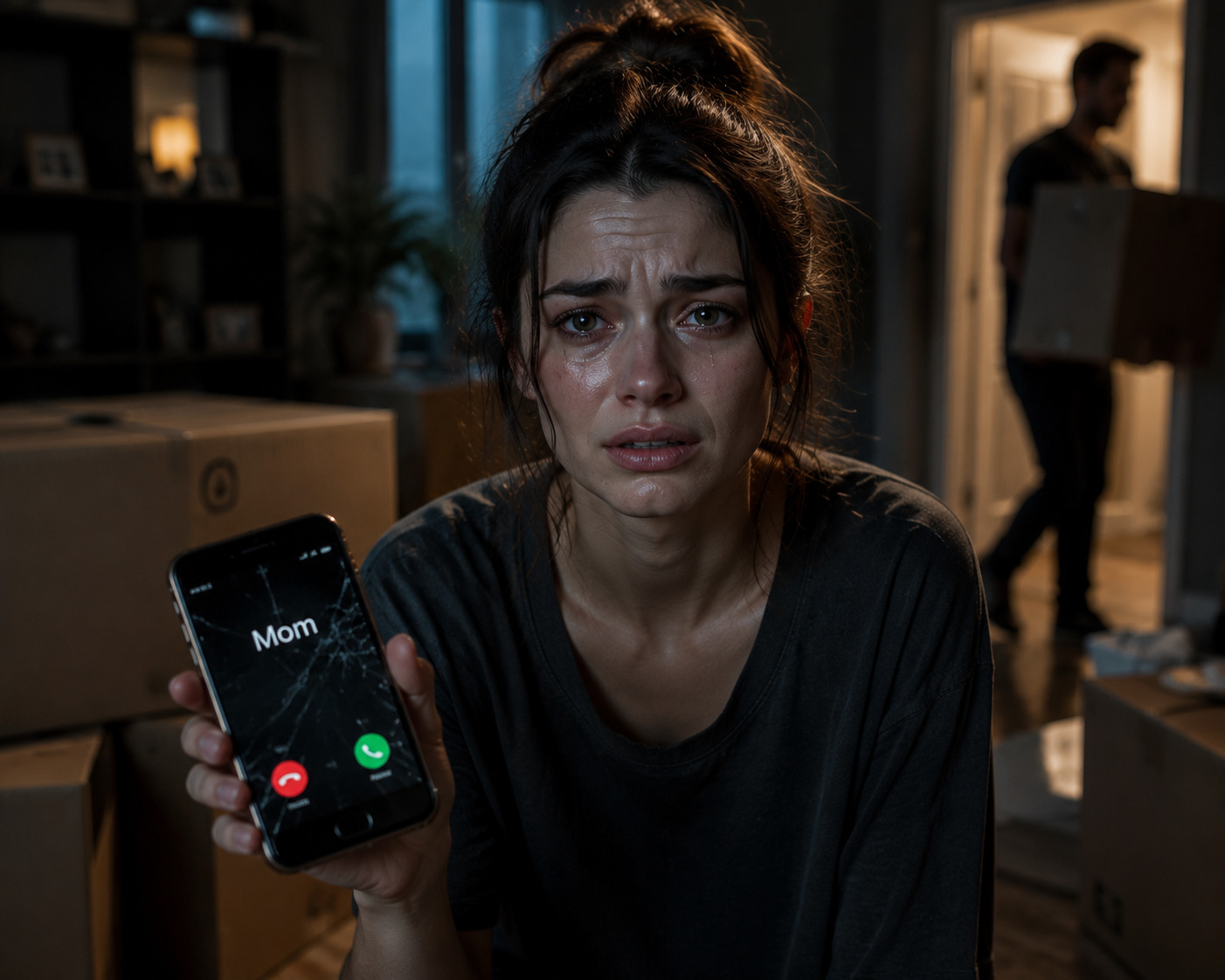
The 911 call that came into the Rowlett, Texas dispatch center at 2:31 a. m. on June 6, 1996, lasted just over five minutes, but its echoes have reverberated through nearly three decades of legal battles, forensic debates, and a death row cell.
The voice on the recording belongs to Darlie Routier, a 26-year-old mother of three, who is heard screaming, hyperventilating, and begging for help. Somebody came in here, she cries out. They stabbed my babies.
 Within hours, two of her children, six-year-old Devon and five-year-old Damon, would be dead. Within months, she would be on trial for their murders. And now, nearly 28 years later, Darlie Routier remains on Texas death row, prisoner number 999220, waiting for an execution date that could come at any time.
But what makes this case extraordinary is that a significant number of forensic experts, journalists, and legal advocates now believe Texas may have convicted the wrong person. This is not a conclusion based on emotion or sympathy, but on evidence that was ignored, misinterpreted, or never properly examined. This is not a simple story of guilt or innocence.
It is a story about how a crime scene can be read in radically different ways, about how a grieving mother’s behavior became more damaging than the physical evidence, and about how a six-second video clip may have sent a woman to death row.
Rowlett, Texas, in 1996 was an affluent suburb about 20 miles northeast of Dallas. It was the kind of place where people didn’t lock their doors, where children played in cul-de-sacs until dark, where violent crime was almost unheard of. At 5801 Eagle Drive stood a beautiful two-story brick home, four bedrooms, immaculately maintained, the kind of house that announced its owners had made it.
Inside lived the Routier family. Darren Routier, 28, owned a successful electronics testing business called Testnec. His wife Darlie, 26, was a former high school cheerleader who neighbors described as the cookie-baking mom type.
Their three sons were Devon, six, Damon, five, and seven-month-old Drake. On the night of June 5th, the family followed their usual routine. Darren and Darlie stayed up past midnight talking.
Around 1 a. m. , Darren went upstairs to the master bedroom where baby Drake slept in his crib.
Darlie remained downstairs. She had been sleeping on the family room couch that week. Devon and Damon were camping out on the floor nearby since school had let out.
Darlie was a light sleeper who would wake whenever Drake stirred in his crib upstairs. She later told investigators she fell asleep on the couch with the television on, a light blanket covering her.
According to Darlie’s account, she was awakened by pressure on her shoulder. Damon was touching her, saying Mommy. In the darkness, she saw a figure, a man, moving through the utility room toward the garage.
She instinctively followed him. As she entered the utility room, she saw a knife on the floor. She picked it up, then placed it on the kitchen counter.
Only then did she realize she was injured. Blood was pouring from her neck and right forearm. She screamed for Darren.
She turned and saw Devon and Damon on the family room floor surrounded by blood. At 2:31 a. m.
, she called 911. The call transcript reveals a woman in extreme distress, but it also contains moments that would later trouble investigators. At one point, Darlie asks Darren if their jewelry has been stolen.
She tells the dispatcher about touching the knife, worried about fingerprint contamination. Her voice shifts between panic and what some describe as unusual composure. Officer David Waddell arrived at 2:34 a.
m. , just three minutes after the call. What he found was a scene of horrific violence.
Devon Routier lay on the floor near the couch, his small body surrounded by blood. He had been stabbed four times. One wound had severed his right lung, another had cut through his spine.
He was already dead. Damon Routier was a few feet away, still breathing but barely. He had been stabbed five times.
One wound had penetrated his liver, another had punctured his left lung. Paramedics worked frantically, but the damage was catastrophic. He would die at the hospital less than an hour later.
Darlie stood near her sons, blood-soaked, her white nightshirt nearly completely red. A gaping wound crossed her throat, approximately six inches long. Her right forearm bore a deep defensive-type wound.
She was bleeding heavily but was conscious, alert, and talking rapidly to officers. Within minutes, the house was flooded with police, paramedics, and crime scene investigators. What they documented that night would fuel nearly three decades of controversy.
The murder weapon was quickly identified, a large kitchen knife from the Routiers’ own butcher block. It sat on the kitchen counter, covered in blood. The blade measured approximately eight inches.
In the garage, investigators found a window screen that had been cut, sliced from the outside, consistent with forced entry. This appeared to support Darlie’s account of an intruder. But experienced homicide detectives know that not everything is as it appears.
Almost immediately, they began noticing details that didn’t align with Darlie’s story. The window screen had been cut, yes, but the window sill beneath it showed an undisturbed layer of dust. If someone had climbed through that window, they would have disturbed the dust.
They hadn’t. The mulch in the flower beds directly outside that window showed no footprints, no disturbance. If someone had fled that way, there should have been evidence.
Inside the garage itself, investigators found something troubling. No blood trail leading to or from the cut window. If an intruder had just stabbed three people, his hands, clothes, and weapon should have left some trace.
There was nothing.
Detective Jimmy Patterson was one of the first investigators on scene. Years later, he would describe his immediate impression. The scene felt wrong.
It felt staged. By dawn, investigators had made a decision that would define everything that followed. They began treating Darlie Routier not as a victim, but as a suspect.
To understand why investigators focused on Darlie, you have to understand who the Routiers were, and more importantly, who they were trying to be. Darlie Lynn Peck met Darren Routier in 1985. She was 15, he was 17.
He was working at a Western Sizzlin Steakhouse in Lubbock, Texas, already managing staff despite his age, voted most likely to succeed in his high school class. When Darlie walked in that day, Darren later said it was love at first sight. They had their first date that same evening.
Three years later, in August 1988, they married. Darlie was 18, Darren was 20. They were young, ambitious, and determined to build something extraordinary.
Darren launched Testnec, which tested electronic circuit boards for the booming computer industry. The business took off faster than anyone expected. By 1995, Testnec was generating approximately half a million dollars in gross annual revenue.
Darren was paying himself a salary of $125,000, serious money in the mid-90s. The Routiers moved to Rowlett and purchased their Eagle Drive home for $130,000. They poured another $60,000 into renovations.
Darren bought a Jaguar and a 30-foot cabin cruiser. Darlie got breast augmentation surgery in 1992, bringing her to a size 36 DDD. She wore diamond rings on every finger.
Her closet overflowed with designer clothes. Her nails were always manicured. Her blonde hair always perfect.
To their neighbors, they embodied the American dream.
But the Routiers were more than just conspicuous consumers. Multiple neighbors would later testify that Darlie was genuinely kind. She baked cookies for neighborhood children.
She made meals for families going through difficult times. She once made a mortgage payment for a friend battling cancer. When Barbara Davis’ daughter was murdered, Darlie was one of the first people to reach out with food and support.
Davis would later testify on Darlie’s behalf, describing her as compassionate and devoted to her children. Devon was born in June 1989, followed by Damon in February 1991. By all accounts, Darlie was an attentive mother.
Home videos from this period show her playing with the boys, celebrating birthdays, being affectionate and engaged. Then, in October 1995, their third son Drake was born and something began to shift. Darlie struggled after Drake’s birth.
Friends noticed she seemed overwhelmed, exhausted, not quite herself. What nobody recognized at the time was that Darlie was experiencing postpartum depression, a condition that affects approximately one in seven new mothers. On May 3rd, 1996, exactly one month before the murders, Darlie made an entry in her diary that would later haunt her case.
She wrote about feeling hopeless. She wrote about suicide. She addressed her three sons, asking them to forgive her and not to blame themselves.
The entry is heartbreaking to read, the raw confession of a woman struggling with mental health in an era when postpartum depression was poorly understood and heavily stigmatized. Darlie never attempted suicide. The feelings passed as they often do with proper support.
But prosecutors would later present this diary entry as evidence that Darlie wanted to escape motherhood, even if it meant killing her children. What the jury never fully heard was the context. Postpartum depression is a medical condition, not a predictor of violence.
The vast majority of women who experience it never harm anyone.
There was another pressure mounting in the Routier household: money. By early 1996, Testnec was struggling. The tech industry was changing, orders were slowing, revenue was dropping.
The Routiers had bills they couldn’t pay. They were at least one month behind on their mortgage, about $1,800 past due. They owed $10,000 in back taxes to the IRS.
Credit card debt had climbed to approximately $12,000. On June 5th, the day before the murders, Darren applied for a $5,000 loan to take the family on vacation. He was turned down due to their deteriorating financial situation.
Prosecutors would later argue that financial stress gave Darlie a motive. Both Devon and Damon had life insurance policies. The prosecution suggested she killed them to collect the insurance money.
But the defense quickly demolished this theory. The policies totaled just $10,000, barely enough to cover the funeral costs, which exceeded $14,000. If Darlie wanted insurance money, why not kill Darren?
He had an $800,000 policy. And if she killed to escape the burdens of motherhood, why did she leave seven-month-old Drake alive upstairs? An infant requires far more care than school-age children.
These questions have never been adequately answered. But in the weeks following the murders, prosecutors weren’t looking for answers that exonerated Darlie. They were building a case to convict her.
And then they found the evidence that would seal her fate.
Eight days after Devon and Damon were murdered, the Routier family gathered at their graves for what would have been Devon’s seventh birthday. What happened at that cemetery on June 14th, 1996, would become the most infamous moment in the entire case. It had nothing to do with forensic evidence.
The Routiers had invited local news station KXAS Channel 5 to film a birthday celebration at Devon’s grave. When the cameras started rolling, they captured something that would shock viewers across the nation. The video shows Darlie Routier standing at her son’s headstones, smiling.
She is chewing gum. She is singing Happy Birthday with family members. Then she picks up a can of silly string, bright pink foam in a spray can, and begins spraying it all over the graves.
The footage shows Darlie laughing, joking with relatives, appearing almost celebratory. There are balloons tied to the headstones. Birthday gifts are placed on the graves.
An airplane flies overhead towing a banner that reads, Happy Birthday Devon. We love you. Darlie appears happy, almost giddy.
Just eight days earlier, these same children had been brutally murdered. Just eight days earlier, she had called 911 screaming that her babies were dying. Behind Darlie in the footage stands Darren, hands in his pockets, head down.
At one point, when Darlie starts spraying the silly string, Darren visibly steps backward as if embarrassed or uncomfortable. When prosecutor Greg Davis saw that video, he later said he knew immediately it would be the key to convicting Darlie Routier. It had only been eight days, he would tell reporters.
Eight days since these boys died, and we have a full-blown birthday party happening at the grave site. It was more than curious. It was damning.
The video aired on local news. The public reaction was swift and brutal. How could a mother celebrate at her murdered children’s graves?
What kind of person does that? For days after the broadcast, on June 18th, 1996, Darlie Routier was arrested and charged with capital murder. But there is something the jury would never see, something that fundamentally changes the context of that six-second clip.
Police had secretly installed surveillance equipment at the cemetery. They were monitoring the Routier family looking for evidence of guilt. That surveillance captured the entire event at the cemetery, not just the moments shown on the news.
Before the silly string celebration, the Routiers held a private, solemn memorial service. They gathered around the graves and prayed. They cried.
They grieved. The service was emotional, painful, and completely private. The silly string party came afterward.
It was meant to honor Devon the way a seven-year-old would have wanted, with joy, with celebration, with balloons and birthday wishes rather than tears. Darlie’s mother, Darlie Kee, would later explain, We wanted to celebrate his life, not just mourn his death. Devon loved birthdays.
We thought this is what he would have wanted. The police surveillance captured all of this, the tears, the prayers, the genuine grief. But because of legal concerns about the hidden recording, that footage was deemed inadmissible at trial.
The jury saw the silly string. They never saw the tears. They never saw the prayer.
They never saw the context. They saw six seconds of what appeared to be a heartless mother celebrating at her children’s graves. For many of them, that was all they needed to see.
The trial of Darlie Routier began on January 6th, 1997, in Kerrville, Texas. The venue had been moved from Dallas County due to intense media coverage. Kerrville is located in one of the most conservative counties in Texas, a jurisdiction with one of the highest death penalty conviction rates in the state.
The prosecution was led by Greg Davis, assisted by Toby Shook and Sherry Wallace. The defense was led by Doug Mulder, a prominent criminal defense attorney whose fees had forced the Routier family to mortgage their homes. From the opening statements, it was clear the prosecution’s strategy would focus on two things: Darlie’s behavior and the physical evidence suggesting the crime scene had been staged.
The prosecution called 38 witnesses over the course of the trial. Their case rested on several key pillars. First, the crime scene staging.
James Cron, a crime scene consultant, testified that he arrived at the Eagle Drive house at 5:30 a. m. , just three hours after the murders.
Within 20 minutes of examining the scene, he testified he believed Darlie was responsible. Why? The vacuum cleaner that had been knocked over was lying on top of Darlie’s bloody footprints, meaning it had fallen after the blood was deposited.
Broken glass from a wine rack was on top of blood drops, not underneath them. The cut window screen showed no signs that anyone had actually climbed through it. To Cron, this was obvious staging.
Someone trying to make it look like a burglary gone wrong.
Second, the blood evidence. This was perhaps the most damaging forensic testimony of the entire trial. Blood spatter expert Tom Bevel examined Darlie’s nightshirt, the white cotton nightshirt she had been wearing during the attack.
On the back of the shirt, near the shoulders, Bevel found what he identified as cast-off blood spatter. Cast-off occurs when blood flies off a weapon as it is raised or swung. Bevel testified that the pattern on Darlie’s nightshirt could only have been created one way: by Darlie raising the knife above her head and bringing it down repeatedly into her sons’ bodies.
Each time she lifted the knife for another blow, blood would fly off the blade in an arc, landing on her back. This was devastating testimony. It suggested that Darlie hadn’t just killed her children.
She had stood over them and stabbed them again and again with enough force to create cast-off spatter. The defense brought in their own experts who challenged this interpretation. They argued the blood could have gotten on her shirt through transfer, through her own attack, through contamination at the hospital or crime scene.
But the damage was done. The jury believed Bevel. Third, the bread knife fibers.
Investigators found that fibers from the cut window screen matched fibers on a bread knife from the Routier kitchen. The prosecution argued this proved Darlie had cut the screen herself to stage a break-in. Fourth, Darlie’s behavior.
Multiple witnesses testified that her demeanor seemed wrong for a grieving mother. Hospital nurses said she didn’t cry enough. She was more concerned about her appearance than her children.
A police officer testified that she asked about stolen jewelry while her son was dying on the floor. And of course, there was the silly string video. The prosecution played it for the jury multiple times.
Some jurors later admitted they watched it seven or eight times during deliberations.
The defense fought back hard. They brought in Dr. Vincent DiMaio, a highly respected medical examiner from San Antonio.
DiMaio testified that the wound to Darlie’s throat came within two millimeters of her carotid artery. Two millimeters, roughly the width of two pennies stacked together. If that knife had gone just slightly deeper, Darlie would have bled to death in minutes.
DiMaio testified that in his decades of experience, he had never seen someone intentionally self-inflict a wound that came that close to killing them. It was simply too dangerous. People who stage injuries give themselves superficial cuts, not wounds that nearly sever major arteries.
The defense also pointed out the lack of motive. The insurance policies were insignificant. There was no history of child abuse.
Darlie had no criminal record. She had been a devoted mother by all accounts. And then there was the bloody sock.
One of Damon’s white tube socks was found in an alley approximately 75 yards from the house, halfway down the block. The sock contained blood from both Devon and Damon. Significantly, it contained none of Darlie’s blood.
The prosecution argued that Darlie had planted the sock herself to support the intruder story, that she had run down the alley while staging the scene. But the defense asked, How? Darlie was bleeding profusely from a throat wound.
If she had run 150 yards round trip to the sock location and back, there should have been a blood trail. There wasn’t. And why would she run that far while her children were bleeding on the floor?
These questions were never adequately answered.
Perhaps the most critical mistake came when Darlie herself took the witness stand. Against the advice of her attorneys, Darlie insisted on testifying. She wanted to tell her story directly to the jury.
She wanted them to see her as a human being, a mother, not the monster the prosecution was portraying. It backfired spectacularly. Under cross-examination by Toby Shook, Darlie claimed amnesia about crucial moments, but her amnesia seemed selective.
She couldn’t remember things that hurt her case, but she could suddenly recall details that helped explain away damaging evidence. Shook hammered her relentlessly. Isnt it convenient, he asked, that you cant remember anything that would prove your guilt, but you can remember everything that might prove your innocence?
The jury didn’t believe her. Her testimony may have sealed her fate. After nearly five weeks of testimony, the case went to the jury on January 31st, 1997.
They deliberated for approximately eight hours over two days. On February 1st, they returned with a verdict: guilty of capital murder in the death of Damon Routier. Interestingly, Darlie was only tried for Damon’s murder, not Devon’s.
Prosecutors wanted to keep the second murder charge in reserve in case the first conviction was overturned on appeal. Three days later, on February 4th, the jury reconvened for the penalty phase. In Texas death penalty cases, the jury must answer specific questions about future dangerousness and mitigating circumstances.
The jury took less time to decide Darlie’s sentence than they had to decide her guilt. They sentenced her to death by lethal injection. Darlie Routier became one of only six women on death row in Texas at that time.
She was 27 years old. She was transferred to the Mountain View Unit in Gatesville, Texas, where she has remained for nearly 28 years.
But unlike most death penalty cases, Darlie’s case has never stopped generating controversy. The reason is simple: evidence continues to emerge that wasn’t properly considered at trial. The most significant issue involves DNA testing.
In 1997, DNA technology was far less sophisticated than it is today. Testing that can now be done in days took weeks or months back then, and it was prohibitively expensive. As a result, much of the physical evidence from the crime scene was never DNA tested, including evidence that could prove Darlie’s innocence.
A bloody fingerprint was found in the house that didn’t match Darlie, Darren, or the children. It has never been identified. The sock found 75 yards from the house contained DNA that was tested, but only partially.
Modern testing could reveal far more. Most significantly, there was evidence of an unidentified male presence at the crime scene. Blood that wasn’t from the family.
Fingerprints that didn’t match. None of this was adequately explained at trial. In 2008, Darlie’s appellate attorneys filed a motion for DNA testing on multiple pieces of evidence.
The motion was granted. But the testing has been delayed repeatedly by legal challenges, funding issues, and procedural obstacles. As of 2024, some testing has been completed.
The results have not exonerated Darlie, but they have raised new questions. Questions about contamination, about evidence handling, about what was missed in the original investigation. The blood spatter evidence, the most damaging testimony at trial, has also come under intense scrutiny.
Multiple forensic experts have now examined the nightshirt and challenged Tom Bevel’s conclusions. Some believe the blood could have gotten on her shirt through other means. Some believe the pattern isn’t consistent with cast-off at all.
The Innocence Project has not taken Darlie’s case, which is significant. They typically only accept cases where DNA evidence can definitively prove innocence. The evidence in Darlie’s case is more ambiguous.
It raises questions, but doesn’t provide clear answers. Darlie has exhausted most of her appeals. The Texas Court of Criminal Appeals has upheld her conviction multiple times.
The US Supreme Court has declined to hear her case. But she still has attorneys fighting for her. And she has something else: supporters who refuse to let this case die.
Darlie Kee, Darlie’s mother, has spent nearly three decades advocating for her daughter. She runs a website. She gives interviews.
She refuses to accept that her daughter is a murderer. Darren Routier divorced Darlie in 2011, but he has remained adamant about her innocence. He has given numerous interviews stating he believes an intruder killed their sons.
And Drake Routier, the surviving son who was just seven months old at the time of the murders, is now 29 years old. He has stated publicly that he believes his mother is innocent. The case has been featured in countless documentaries, true crime shows, and investigative series.
Each one ends with the same question: Did Texas get it right? The Darlie Routier case forces us to confront uncomfortable truths about our criminal justice system. How much weight should we give to a mother’s behavior in the worst moment of her life?
Can we really judge how grief should look? How reliable is blood spatter analysis, a field that has come under intense criticism in recent years for lacking scientific standards? What happens when a case is built more on perception and circumstantial evidence than on physical proof?
And perhaps most importantly, what do we do when doubt remains?
Two little boys died on June 6th, 1996. Devon and Damon Routier were six and five years old. They deserve justice.
Their killer, whoever that was, deserves to be held accountable. The question that haunts this case nearly three decades later is whether justice was actually served, whether the right person is sitting on death row. Darlie Routier maintains her innocence.
She has never confessed. She has never wavered in her account of what happened that night. She has spent 28 years in a cell waiting to die for a crime she insists she didn’t commit.
The state of Texas maintains that the evidence was overwhelming, that the jury got it right, that justice was served. The truth, whatever it is, remains locked somewhere in the evidence, the testimony, and the unanswered questions that refuse to go away. This case isn’t over.
Darlie Routier is still on death row. DNA testing is still pending. And the debate continues.
What do you think happened in that house on June 6th, 1996? Share your thoughts, but please be respectful. Remember two children lost their lives, and that tragedy deserves to be honored regardless of what we believe about guilt or innocence.