The Royal Navy is advertising itself as a dream career now. Glossy footage of warships, happy sailors, exciting postings. I saw that ad three times before a film the other week, and it made me laugh out loud. The reality is the opposite of that advertisement.
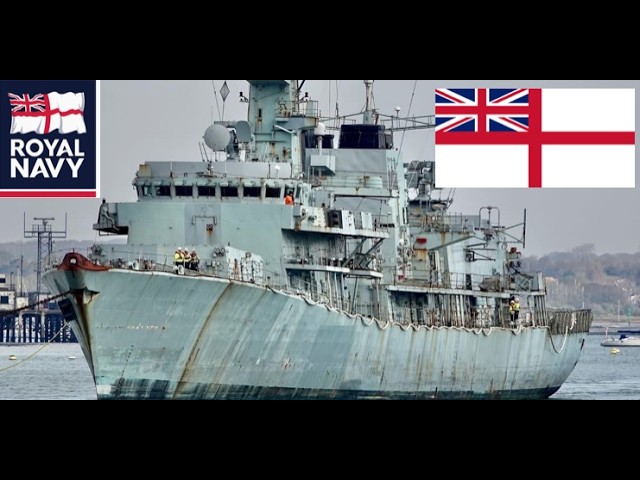
That gleaming fleet they’re showing? It barely exists anymore. And I’m not blaming the men and women who serve. They’re doing their best with what they’ve been given.
I’m blaming the politicians and civil servants who have spent thirty years dismantling one of the world’s great navies. Consider this: Britain hasn’t commissioned a single new frigate in nearly twenty-five years. In that same period, we’ve been scrapping the ones we had. The Type 23 class once had sixteen ships.
Now the two new classes that are supposed to replace them won’t even match that number, meaning we’ll still be smaller than we were a quarter of a century ago. The submarine fleet has shrunk from twenty-two boats in 1997 to just nine today, and four of those are only there to carry the nuclear deterrent. They’re not hunter-killers. They’re just sitting there as a deterrent.
Our amphibious capability has basically vanished. The techniques it took eighty years to develop were thrown away with the signing of a single document. If we faced another Falklands-type scenario tomorrow, we couldn’t put the troops ashore. And here’s the absurd part: we sold our helicopter carrier and one of our two assault ships to foreign navies, and they’ve found plenty of uses for them.
Here’s a statistic that should shame every government that’s held office in the last three decades: there are now more British frigates serving in foreign navies than in the Royal Navy itself. Eight former Royal Navy frigates sail under foreign flags. Chile has four, including the former HMS Sheffield and three Type 23s. Romania has two Type 22s.
Brazil bought our helicopter carrier at a knockdown price and also operates two of our former frigates. So, after all the cuts and the sell-offs, here’s where we stand today. The Royal Navy officially has seven Type 23 frigates in service. But they don’t actually have seven.
They have five. HMS Iron Duke was quietly taken out of service, not long after the taxpayer funded a full refit costing £103 million. The ship went to sea in 2023, monitored Russian warships in the Channel, spent sixteen months deployed, and then was withdrawn because there simply weren’t enough sailors to man her and the mechanical problems piled up. That’s over a hundred million pounds of your money, wasted.
She’s now been stripped of her weapons and will join her sister ships rotting in Portsmouth Harbour, waiting to be scrapped. And it gets worse. HMS Richmond is about to be decommissioned to join them. So the Royal Navy will soon have more frigates awaiting scrapping than it has actually in service.
Six ships sitting in the harbour, five ships at sea. That’s where we are. So what about the replacements? They’re building thirteen new frigates in two classes.
The first Type 26, HMS Glasgow, is supposedly due to enter service in 2027. Her sisters are under construction. But rumors are already circulating that the government plans to sell one of them to Norway before it ever serves in a British port. The Type 31s are progressing too, but I can see us getting a rerun of what happened with the Type 45 destroyers.
Twelve were ordered, then the government cut the order in half to save money. Now we have six Type 45s, and only one of them is actually operational today. The rest are in refit. Everyone talks about the rule of three: one ship deployed, one in training, one in deep maintenance.
That’s the minimum for any operational role. The current Royal Navy can’t even get close to that with the few ships it has left, because there simply aren’t enough crew to man them. So here’s the question that no one in the Ministry of Defence seems willing to answer: if the Navy is decommissioning frigates primarily because it doesn’t have enough sailors, how on earth is it going to crew thirteen new vessels? It can barely crew five frigates today.
I’ll be very surprised if the government doesn’t end up selling off half of those new ships to foreign nations, and I suspect we might even see one of our two aircraft carriers permanently docked just to free up manpower for the rest of the fleet. That’s what’s feeding the doom loop. Recruitment is collapsing. Since 2012, the Navy’s personnel has dropped by sixteen percent.
Last year alone, another 1. 1 percent walked out the door. In the last twelve months, 220 trained personnel left, which is basically the entire crew for two new frigates. Recruitment for 2023 to 24 was forty percent short of its target.
The sailors who remain are overworked and over-deployed, morale is falling, and more people leave. It’s a death spiral, and the Navy is at the bottom of it. The Ministry of Defence admits the Royal Navy is about a thousand trained personnel under strength. And you can’t fix that by advertising on cinema screens.
You can’t fix that by showing glossy footage of patrol vessels. Young people aren’t stupid. They can see this is a service that’s being hollowed out, a career that offers overwork and uncertainty. The army has found its own fix, at least partially.
They’ve been recruiting Gurkhas and Fijians to fill the gaps that Britons no longer want to fill. The Gurkhas now make up eight percent of the entire British Army, and they’re some of the best soldiers in the world. Fijians now make up over two percent. But that’s not a long-term solution for a navy that needs highly trained technical specialists, not just infantry.
I’ll say it plainly: very few of those thirteen new frigates will ever serve in the Royal Navy. Many will be cancelled before they’re even built, and the ones that get finished will likely be sold overseas to recoup costs. The doom loop isn’t just a clever name. It’s the reality of where we are.
The Royal Navy looks increasingly doomed to operational impotence and irrelevance on the world stage. That’s something I never thought I’d live to see.