The morning began like any other, but by noon, the world I knew had stopped existing. I was in the capital when the first bombs hit the presidential palace. Two bomber pilots circled our apartment building ten times, and each time they came back around, they dropped more fire on La Moneda. I stood there, frozen at the window, unable to look away.
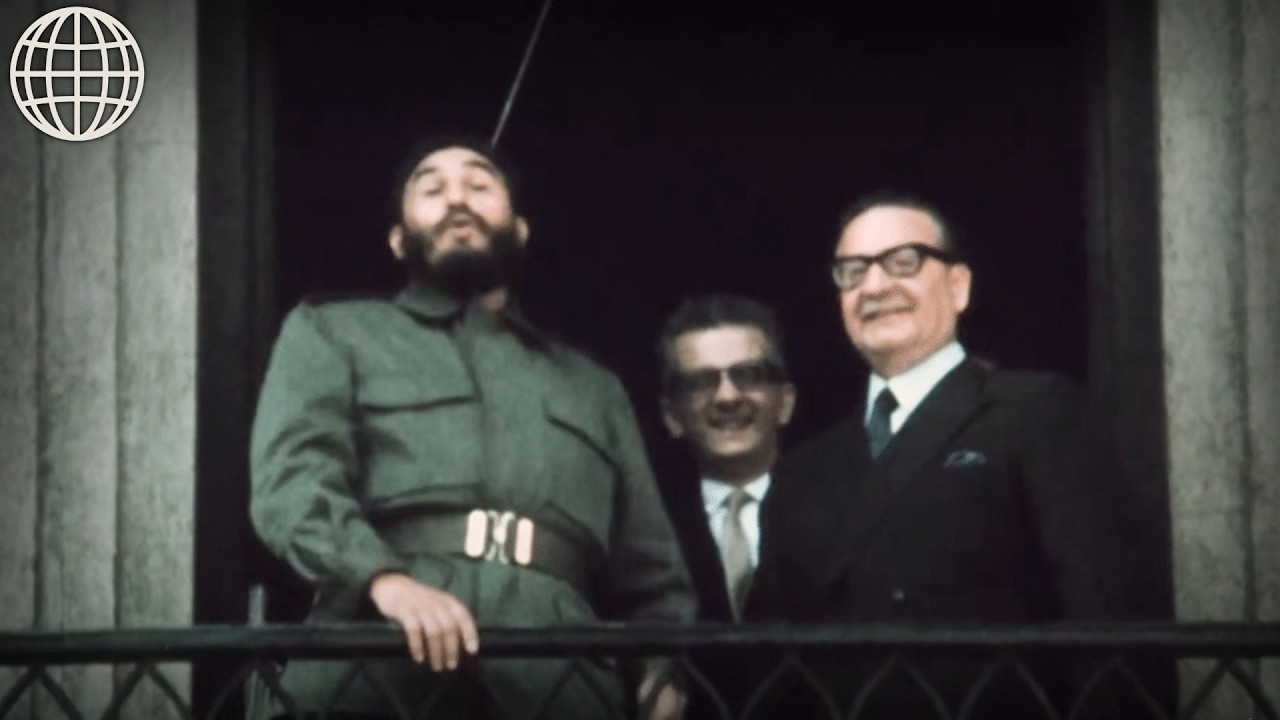
I thought there would be resistance, that the army would not turn on our own government. We were wrong. I had believed in what we were building. When Salvador Allende was elected, the first Marxist president in Latin America to win power through democratic means, we felt a change in the air.
For so long, Chile had been ruled by an oligarchy, with the country’s copper mines and national resources in the hands of American companies. Allende nationalized those mines, the major banks, the great land holdings. He promised a new future. We were so happy because Allende represented a big change in Chilean society.
But Washington saw a communist at their doorstep, just under four thousand miles south of the United States. Nixon said to Kissinger, “You must stop the Allende government in any way. ” First, they cut off our credit. The International Bank, the Monetary Fund, they closed any help with Chile.
The economy slowed, and soon food became scarce. When demonstrations broke out, Allende declared a state of emergency and began rationing. We didn’t see the American hand at the time. But they were talking with different members of the army, convincing them of the necessity of overthrowing the government.
The tension built, and the first attempted coup failed. Six weeks later, Allende was reelected. But relief didn’t come. Instead, truckers went on strike, paid for with American money, recently released documents revealed.
The economy collapsed. The results were cataclysmic. When the military attacked the presidential palace, I thought there would be resistance. We didn’t believe all the armed forces would side with the coup.
We were wrong. The attack was merciless. Within hours, Allende was found dead in the Moneda Palace from a bullet wound to the head. Some say suicide.
Others say he was killed. The debate has raged ever since. The military leader was General Augusto Pinochet, whom Allende had appointed commander-in-chief of the army just one month earlier. Pinochet began seventeen years of brutal dictatorship.
He would kill over three thousand people and torture more than twenty-nine thousand. They broke into my house and destroyed my books and everything. Many people from my group were killed, like my dear friend Dr. Emma Enrique, who disappeared.
They refused to give his call to his wife. It was a terrorist state. They used the power of the guns to create a silent society. Communism had been crushed in Chile, but the results failed to bring freedom to the people.
While the fight in Chile faded into the silence of tyranny, another war was claiming lives on the other side of the world. By 1973, no American military forces remained in Vietnam. President Nixon declared that the seventeen million people of South Vietnam had the right to choose their own government without outside interference. He believed Vietnamization had given them the strength to defend that right.
But when the supply of American military aid was cut off in late ’74, the result was inevitable. We couldn’t fight with our bare fists. I lived my final days of the war on the front line as a medical doctor for a ranger regiment. The enemy kept raining down their most powerful artillery.
We had to dig down into the ground and live like rats in the trenches. If you pressed your ear to the ground, you could hear the faint rumbling of enemy tanks nearby, and that scared the hell out of everyone. April 1975, the Viet Cong crossed the border dividing North and South. The surge toward Saigon began.
Bodies were left to rot in the streets, mutilated by animals and traffic. In only a few days, the communists reached the outskirts of the capital. The jets attacked during rush hour, when the streets were packed. Shops, banks, and offices closed.
People jammed the streets in their hurry to get home. Foreigners—French, Americans, Germans—rushed to buy tickets for any flight out. Embassies evacuated their staff. On April 30th, the last American helicopter lifted off from the roof of the embassy.
For hours after the last departure, scores of people still crowded onto the roof in the vain hope of rescue. Hundreds scrambled in panic onto any aircraft they could reach, not caring how they got aboard or what they left behind. After several failed attempts, finally, my fiancée—who is my wife now—and I escaped together. We knew the danger, but we decided we would either leave in freedom together or die together.
It was a treacherous sea journey on a very small boat, nine meters long, carrying thirty-three people. The boat was so overloaded that you could reach down and touch the water. Shortly after midday came the climax of thirty years of fighting. The victorious forces entered Saigon.
They were disciplined. Among the thousands who arrived, there wasn’t a single reported case of theft, drunkenness, rape, or shooting. People who had feared for their lives hours earlier now turned out on the streets to cheer and welcome them. The sense of relief in the city was almost tangible.
Not everyone saw defeat so optimistically. One officer shot himself in front of the soldiers’ monument a couple of hours before the communists entered the city. When the president capitulated, tears streamed down my face. I cried silently for my country.
I felt anger, frustration, and hatred for the betrayal of allies. People will always agree with the word losing. But that’s what it was. We lost.
South Vietnam was just a victim in the global chess game. When it fell, seven other countries fell to communism in rapid succession. For many Vietnamese, years of oppression still lay ahead. As one proxy war ended in Asia, another erupted in Africa.
In 1975, Angola was on the rebound from centuries of Portuguese colonial rule. The Portuguese simply pulled out, leaving the freedom movements to fend for themselves. It was the survival of the strongest. The MPLA was strong in Luanda, the capital, and on November 11th, 1975, it declared independence.
The MPLA was communist, with both popular support and Soviet weaponry. The Soviet Union couldn’t send its own soldiers, due to a protocol between Moscow and Washington that they themselves should not be physically involved. So they sent their allies. Thousands of Cuban military forces arrived.
Between five and seven thousand Cubans seemed to be everywhere except Cuba. You had to choose sides. You could not be in Angola now without being for or against. That was quite traumatic.
The USA supported the opposing factions, the FNLA and UNITA, with money and weapons. They did not send soldiers; they sent the means for the anti-government forces to acquire them. The CIA provided money for the FNLA and UNITA to pay mercenaries. It was covert, not something that could be reported to Congress.
People committed terrible atrocities, not knowing they were funded by the CIA. Mercenaries, people who take part in armed conflict in foreign nations for private gain, bulked up the FNLA and UNITA forces. Their starting point and their end point was money. Some went to fight communism.
Others went out there basically to get enough money to buy a house. The effects of the war on the Angolan people were very bad. It kept the nation in a state of severe poverty for a long time. Land mines were planted, limbs were lost, people were killed, villages were destroyed.
A ten-year-old boy was seriously hurt in an attack; his leg had been severed. The civilians fled, and Cahama was abandoned to the cows and the soldiers. The prolonged conflict and the deaths and destruction hurt. The Cubans or the Russians had no right to kill Angolans.
The Angolans should have been left alone to solve their own problems. The mercenaries had a reputation for brutality. They were also illegal under the Geneva Convention. If captured, they were not classified as prisoners of war; they were tried as common criminals.
Thirteen men stood trial for their lives in Luanda. Three were Americans, and the other ten were British. They were paid to fight against the MPLA, the movement that won the civil war and now ran Angola. They were charged with crimes against peace.
Their leader was Costas Georgiou, who went under the name of Colonel Callan. He claimed all the men were under his direct command, and any responsibility or charges against them were his. When asked if it was worth all the trouble and killing, one replied, “Yeah, I’d go back again. To fight communism.
” Another said, “I went out there basically to get enough money to buy a house. ”
The verdict was guilty. The crimes included murder. Nine men were given sixteen to thirty years in jail.
Four were sentenced to be shot: Costas Georgiou, Andrew McKenzie, Derek Barker, and Daniel Gearhart. Appeals were made to over ten countries, to the Angolan president, through international organizations like the Red Cross. The American and British governments talked directly to President Neto, who said he would wait before signing the execution order until he had seen the world’s reaction. Ten days later, all four convicted mercenaries were lined up to face an MPLA firing squad.
Andrew McKenzie, in a wheelchair due to combat injuries, chose to stand for his execution. While the proxy wars raged, the superpowers kept negotiating the end of the world. SALT II talks aimed to turn back the hands of the Doomsday Clock. In June 1979, there was a breakthrough.
Brezhnev came to Vienna to sign SALT II, perhaps the most significant arms limitation agreement since the Second World War. It set regulations on many types of missiles and committed the USA and the USSR to limit their nuclear weapon systems to 2,400 each. It was a milestone. For thirty years, the world had been accelerating toward a precipice.
SALT II started to apply the brakes. But just as the treaty was making progress, a chilling headline stopped everything. A new nuclear weapon was being developed. Jimmy Carter found out when a Washington Post headline flashed across the globe.
The neutron bomb. It was a development of thermonuclear weapons, a devilish weapon, basically totally inhuman. It was the ultimate doomsday weapon, killing people without knocking over buildings. Carter saw it as the only way to stop a Soviet land invasion.
The neutron bomb had a small blast range but released ten times the amount of lethal radiation. You could stop an invasion by killing all the tank crews and infantry while keeping their tanks intact. The Russians called it a weapon of capitalist brutality. Anti-bomb demonstrations flared up all over Europe.
Under public pressure, Carter decided to shelve the neutron bomb. Not a single one was sent to Europe. The standoff between the superpowers was far from over.
As one chapter in the Cold War closed, a new and more dangerous one began.


