The commanding officer walked into the briefing room and didn’t bother with a greeting. He had a stack of papers in his hand and a face that told us everything we needed to know about what was coming. “Gentlemen,” he said, “the directive has changed. As of February 14th, 1942, the Air Ministry has authorized area bombing.
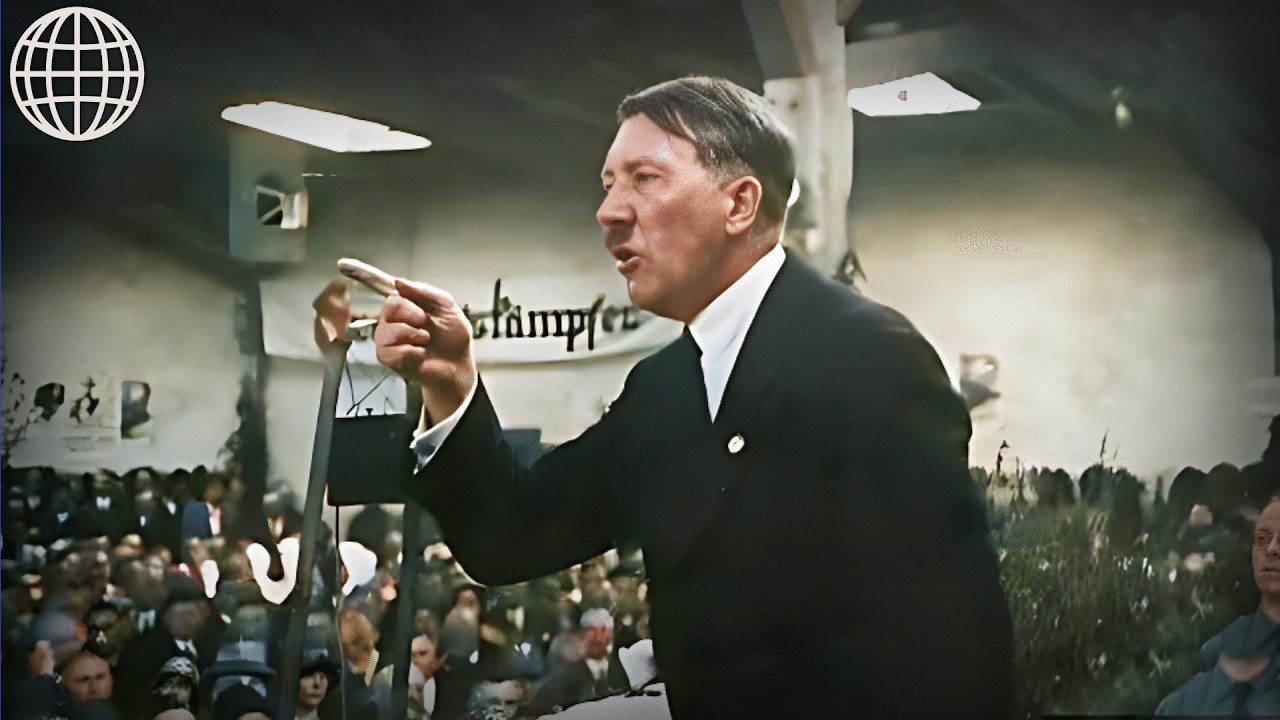
”
Nobody said a word. We all knew what that meant. We were no longer aiming at factories, docks, or rail yards. We were aiming at cities.
At homes. At people. I remember looking around the room at the other crews. Most of them were younger than me.
Raw recruits, straight out of training, who had never flown a mission over Germany. They didn’t know what it was like to have a searchlight lock onto your wing, or to hear the thump of flak bursting so close the whole aircraft shuddered. They hadn’t watched a Lancaster ahead of them explode in a ball of fire and disappear from the sky. And the worst part was, nobody was telling them.
They had not arranged for the crews who had completed their thirty operations to come back and say, “Listen, this is what you do. If you fly at 7,000 or 10,000 feet, that will be the best protection you can get. ” They didn’t do that. All we had were raw recruits doing bombing raids on Germany and learning the hard way.
We called ourselves Bomber Command. Air Marshal Harris, our new commander-in-chief, had a simple message for us. He told us that if we individually succeeded, we would deliver the most devastating blow against the very vitals of the enemy. “Let him have it right on the chin,” he said.
That was the order. The first thousand-bomber raid was on Cologne at the end of May. The operational order was simple: destroy the city of Cologne. Barely two days later, almost as great a number of bombers hit Essen, and at the end of June, Bremen was the target.
I was a bombardier on one of those Lancasters. The Avro Lancaster was the most powerful and efficient bomber in the world, they told us. It could carry more than six tons of bombs, far more than the American B-17 or the German Heinkel. It was one of the most important war-winning weapons ever devised, they said.
But they didn’t tell you about the escape hatches. The survival rate for the seven-man crew of a disabled Lancaster was 1. 3 people on average. That was the number they didn’t put in the recruitment posters.
On the night we were hit, we were coming out of the target area. I got caught in a beam—a searchlight—and I panicked. I have thought about it a thousand times since. I knew I should have stayed at the same height, kept changing course.
But instead, I tried to get out of the beam by diving. I increased my speed and went down. I got free of the beam, but it wasn’t long before the rear gunner reported we were being attacked. A night fighter.
Again, I took evasive action. Again, I dove. I lost all my height. I thought I was flying at about 500 feet when suddenly I hit a tree.
I remember two of the crew coming around and saying, “Come on, you’ve got to get out of here. ” I did. The bombardier, who was in front of me, and the wireless operator, they were killed in the crash. That left three of us.
I survived. I spent the rest of the war as a prisoner. Years later, after it was all over, I met a German woman who lived through the bombing. She told me about watching the houses come down.
She said nobody could believe it was happening. When she was finally pulled out of the ruins in Nuremberg, the lower part of the city was level with the ground. The top of Nuremberg, that was pretty well level, too. She said it was pathetic to see it all.
But then she would watch the old ladies getting the bricks, knocking the cement off, stacking them, ready to rebuild. They knew they had lost the war, but they weren’t going to lose their lives. She said, “They bombed everything. They didn’t know what they were dropping when they dropped those bombs.
” And I thought, she’s right. I didn’t know. I just dropped. There’s a debate that’s never ended about what we did.
They compare area bombing to the Holocaust, say we were murdering civilians. I understand why they say it. I saw the cities when I was over them. I saw the fires spreading from block to block, the searchlights, the explosions below.
I know what we did. But I also know that the cities were not defenseless. Germany tied up a million service personnel in anti-aircraft defense. The night fighters were among the most skilled pilots in the world.
Bomber Command took 24 percent of British military deaths while representing only 7 percent of British military manpower. Tens of thousands of Allied airmen died over Germany. We weren’t attacking from a safe distance. We were flying into the middle of it, night after night.
I remember one mission where I was sitting out in front, and I heard a voice in my ear saying, “Help, help me. ” It was the operator on a tank that had been hit. He was trapped inside, still transmitting over the wireless. He kept calling out.
“For God’s sake, help me. ” One of our tanks put a shot through the side of it, and the voice stopped. That burns inside me. It still does.
When the war ended, everybody wanted to talk about the big battles, the turning points, the victories. But what I remember is that night over the target, the searchlights, the flak, the fear that you would not come back, and the faces of the young men who went out and never returned. We were told that bombing would bring Germany to her knees, that the disruption to industry and the effect on civilian morale would end the war sooner. Harris believed it until the very end.
Maybe it did. Maybe it saved lives in the long run. I don’t know. I’ll never know.
All I know is what I saw. And I carry it with me every day.