In the winter of 1942, the world was burning. Nearly 90 million soldiers were in uniform, and more than 30 million lives had already been lost. Cities had become battlegrounds, and civilians were no longer just collateral damage—they had become targets. But 1943 was the turning point.
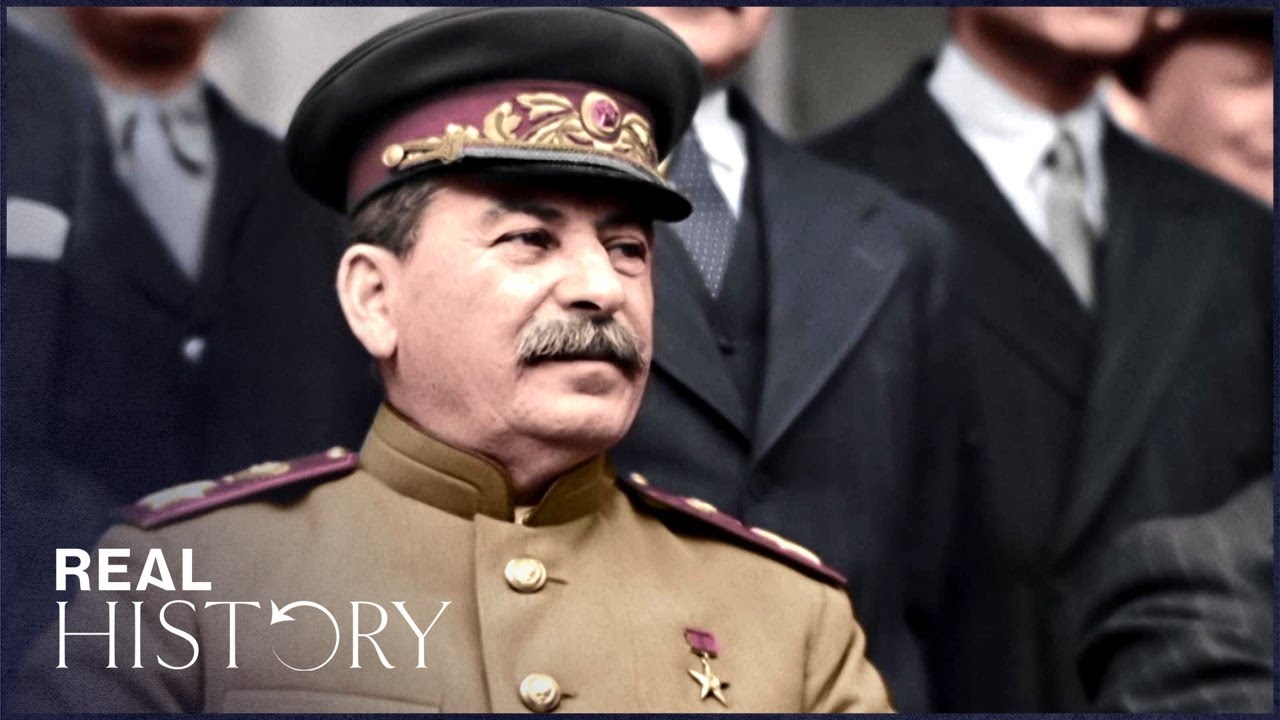
Hope was reborn among nations desperate to see the war end. The year would not only herald the fall of fascist empires but also signal the rise of new superpowers destined to rule the world. In the Soviet Union, a decisive battle was unfolding amid the ruins of Stalingrad. German troops advanced cautiously, unable to maneuver through the debris and with no air support for fear of hitting their own men.
From a distance, Soviet snipers picked them off with deadly precision. A shepherd from the Urals, gifted with exceptional skill, lay hidden beneath the rubble. His name was Vasili Zaitsev. In his crosshairs, a German soldier had only seconds left to live.
Nearly 300 Nazis would fall to his deadly aim. Soviet propaganda seized upon his exploits, turning Zaitsev into a living legend. For the Russians, the war wasn’t global. It was personal.
Soldiers fought fiercely for their own land, and the survival of the regime hinged on the outcome of this battle. In Russia, World War II is still known as the Great Patriotic War, a myth deeply embedded in the nation’s identity. On November 19, 1942, the Red Army assaulted the flanks around Stalingrad. Russian forces succeeded in linking up.
Stalin’s strategy paid off. Instead of stubbornly defending the city, he had let the enemy in, only for them to be left surrounded. 290,000 German soldiers were trapped. Hitler ordered them to hold at all costs.
On the other side of the globe, Japan had expanded its empire through a string of conquests. The Americans fought fiercely to reclaim Guadalcanal. After a brutal six-month battle, the American GIs emerged victorious. In February 1943, the Japanese army had no choice but to fall back.
This marked the start of America’s reconquest of Asia and a new strategic approach: jumping from island to island, establishing bases ever closer to mainland Japan. America wasn’t merely trying to defeat Japan. It was laying the groundwork for a lasting foothold in the Pacific, a strategy that would position Washington as judge, jury, and executioner in future conflicts across Asia, from Korea to Vietnam. Japanese soldiers fought to the last bullet, driven by fanaticism or the fear of bringing shame on their families by surrendering.
Eight out of every ten Japanese soldiers perished. The Americans lost 7,000 men—five times fewer than the Japanese, yet still an agonizingly high price for a war America had initially never wanted. On January 12, 1943, in Waterloo, Iowa, a US Army officer knocked on Mr. and Mrs.
Sullivan’s door to deliver devastating news. All five of their sons had died at Guadalcanal. Following this tragedy, the US military adopted a policy to prevent brothers from serving in the same unit. In America, the sacrifices at Guadalcanal shocked the public, especially as American soil had remained untouched by direct combat.
The war crept into every household, imposing strict rationing of sugar, meat, and canned goods. Yet Americans rallied as one. Nothing mattered more than showing solidarity with those fighting overseas. In January 1943, when it was still extremely rare for an American president to cross the Atlantic, Roosevelt traveled to Casablanca near the front lines for a conference intended to demonstrate Allied strength.
For nearly two years, the British had been fighting Italian and German forces alone in Africa. But the Americans had recently landed in North Africa during Operation Torch. Joined by British Prime Minister Winston Churchill, Roosevelt announced their determination to crush the Axis and accept nothing less than the unconditional surrender of Germany, Italy, and Japan. Yet America and Britain could not shoulder this burden alone.
In Europe, resistance against Nazism was rallying around charismatic leaders such as France’s General de Gaulle. Roosevelt would have preferred General Giraud, a more compliant figure, but de Gaulle prevailed, insisting that France would never let others dictate its destiny. As the Casablanca Conference concluded, Russian soldiers were triumphing amid the ruins of Stalingrad. On February 2, 1943, the Soviets accepted the surrender of German General Paulus, carefully filmed by Soviet cameras.
Victory belongs to those who can best stage it. Stalingrad became a symbol, the turning point where Nazi defeat shifted from possibility to probability. The battle would also come to illustrate the staggering price paid by the Soviet people: 27 million dead, 70 times higher than American losses. Today, in Western memory, the heroic image of the American savior overshadows Soviet martyrdom, a historical oversight that still fuels deep resentment in Russia.
Germany’s defeat at Stalingrad, with 100,000 prisoners captured, sent shockwaves across the Reich. Even though Nazi propaganda sought to minimize the disaster, Hitler had convinced the Germans that war was inevitable, a necessary response to the humiliation of World War I. Early swift victories had reinforced the myth of the country’s invincibility. This feeling wasn’t shared by Hans and Sophie Scholl, brother and sister aged 24 and 21.
Two weeks after the shock of Stalingrad, they distributed anti-Nazi leaflets in the halls of their university in Munich. Sophie flung a stack of leaflets into the university hall. They were spotted by the caretaker and immediately reported to the Gestapo. Hans and Sophie were tried four days later and swiftly executed.
Before his execution by guillotine, Hans Scholl warned his executioners: “Soon it will be you standing in our place. ”
Hans and Sophie Scholl were exceptions in Hitler’s Germany, where every child and teenager had been indoctrinated from an early age to idolize the Führer, ready to lay down their lives for him. It would take several generations for the country to overcome this painful past. Six days after the Scholls’ execution, Nazi propaganda minister Joseph Goebbels declared total war to galvanize the German people.
Hitler was fully aware that this war was also an arms race. Under Albert Speer, Hitler’s minister and close confidant, German industrial production had tripled. The Reich had transformed into an immense factory state. Even under relentless Allied bombardment, German industries endured, streamlining their processes, burying factories underground or dispersing them widely.
Nazi science surged forward. The Germans had initiated the uranium project, aiming to build an atomic bomb. They also pursued the development of rockets and long-range missiles to strike distant targets like London, whose destruction had obsessed Hitler since the Blitz of 1940. The V1 rockets, closely followed by the V2s, ushered in a new form of warfare and, above all, a new era of conquest.
America too was racing toward technological breakthroughs and was sparing no expense to win. Entrusted to physicist Robert Oppenheimer, the Manhattan Project, the largest scientific endeavor of World War II, advanced at a relentless pace. At Los Alamos, deep in the New Mexico desert, thousands of scientists and engineers worked day and night building the first atomic bomb in history. In 1943, thanks to progress in radar and computing, submarine warfare shifted decisively.
During Black May, the German fleet suffered unprecedented losses. German submarines had long sown fear across the seas, but the Allies knew exactly where they operated. Thanks to their success in cracking Enigma, the Nazis’ notorious coding machine, mathematician Alan Turing and his team had finally unlocked its secrets. Their wartime research led directly to machines capable of automating codebreaking, paving the way for the first computers.
To protect their crucial secret, the Allies made a ruthless decision to allow certain ships and their crews to sink. Intelligence followed its own merciless logic, losing some battles to ultimately win the war. The United States leveraged intelligence to extend its global influence. Since the creation of the OSS, the precursor of the CIA, American agents operated on every front.
They coordinated with resistance movements and encouraged guerrilla warfare. In Burma, Detachment 101, consisting of around 100 American operatives, organized local tribes. The same unit operated in Indo-China, supporting insurgent warfare. In China, they aided Mao Zedong’s communist forces.
Against all odds, guerrilla warfare, seemingly primitive compared to modern tanks, planes, and artillery, proved remarkably effective, becoming a lasting tactic in future conflicts. After the war, impenetrable jungles and mountains would continue to shelter rebels. Eventually, guerrilla forces turned against the very regimes that had armed them. If the war upset various balances in Asia, it also shook Africa’s colonial empires.
African soldiers were on the front line in the North African campaign. Those who had witnessed France’s defeat in 1940 and refused collaboration now fought alongside the Allies against German and Italian forces. Four months after Operation Torch, Allied forces converged in Tunisia. Following intense fighting, Axis troops surrendered in May 1943.
North Africa was finally liberated. Now it was time to roll back Axis forces in Europe itself. Occupation grew harsher, shortages intensified, and the black market became essential. Some collaborators remained loyal to the Reich, but others chose resistance.
This was a vital opportunity for the Allies, who found crucial support points across Europe. Ordinary men and women took extraordinary risks to resist oppression. Initially scattered in France, Greece, and Yugoslavia, resistance groups organized under leaders in direct contact with London. Supported by Allied intelligence services, these groups became a strategic asset in the struggle against the Axis.
In Norway, Joachim Rønneberg, aged 23, was parachuted into the mountains along with six companions. Britain’s SOE had entrusted them with a mission of the utmost importance. After skiing covertly for 15 days through freezing conditions, on February 27, 1943, they infiltrated the Vemork heavy water production plant, a key site in the Nazis’ nuclear program, and destroyed it. This daring strike shattered the Reich’s atomic ambitions.
For the first time, the resistance also placed women at the forefront. Subject to less suspicion, they became couriers, saboteurs, and spies, even though they were rarely allowed to bear arms. The exception was in the USSR, where women served both behind the lines and at the front, some forming entirely female battalions. On June 28, 1942, Yevdokia Amosova, commander of the 588th Night Bomber Regiment, took off for her first mission.
Piloting a fragile biplane, she silently glided at low altitude over enemy lines. Shutting off her engine to avoid detection, she dropped her bombs, narrowly escaping heavy flak from below. This daring raid inaugurated the legend of the Night Witches—female pilots whose nocturnal missions would terrify Nazi troops. Despite their pivotal roles, after the war women were largely pushed back into traditional positions.
Yet their extraordinary wartime contributions left a lasting legacy in the struggles for equality. Six months after Stalingrad, Soviet forces had advanced nearly 600 kilometers, forming a salient around the Kursk region that Hitler was determined to eliminate. He mobilized substantial resources to halt the Russian advance. The Panzers charged forward only to meet fierce resistance from Soviet T-34 tanks.
The battle decisively demonstrated Soviet superiority on the Eastern Front. The Red Army took the lead in liberating Europe, and Stalin secured a strong bargaining position for future negotiations. Ironically, these Soviet tanks, celebrated as instruments of liberation, would later become symbols of fear across postwar Europe. The Soviet economy successfully adapted to war conditions by relocating factories eastward far from the front lines and by standardizing production methods.
By 1943, Soviet tank production had quadrupled from the previous year, vastly outperforming the Reich and proving that the Soviet economic model could match that of other major powers. The Eastern Front had become a graveyard for Nazi ambitions. Meanwhile, another front was opening in Italy. On July 10, 1943, the Allies landed in Sicily.
General Patton commanding American troops and General Montgomery leading British forces quickly became heroes of Allied propaganda. Frequently filmed and celebrated, Patton—wearing his Colt on his belt, fiery and charismatic—symbolized America’s fearless resolve. Montgomery played the calm, meticulous strategist. They were outnumbered by Axis forces on the island, but Italian and German forces crumbled in just two weeks.
The two German divisions holding Sicily retreated. On July 25, Mussolini, betrayed by his own inner circle, was removed from power and imprisoned. After more than 20 years under dictatorship, Italians joyfully celebrated in the streets as their tyrant fell. From Italy, British and American bombers could now strike southern Germany, previously untouched.
Even as the north already burned under heavy bombardment, Allied bombers had relentlessly targeted German industrial facilities and urban centers, seeking unconditional surrender no matter the human cost. Germany erupted into flames. On July 27, 1943, Hamburg was devastated by a relentless rain of incendiary bombs. Temperatures reached 750 degrees Celsius, melting windows and asphalt alike.
From his plane above Hamburg, Royal Air Force officer Trevor Timperley watched the immense inferno engulfing the city. Below, Henni Klonn, clutching her infant, fled her burning apartment with her husband. Their neighbor wasn’t so lucky—set ablaze before their very eyes. 37,000 civilians perished in Hamburg, and 60% of the city lay in ruins.
The Allies deliberately targeted civilian populations, escalating the brutality. Soon, other German cities would share the same fate. By the war’s end, the devastation was so profound that Germans spoke of “year zero. ”
Yet the Axis powers refused to collapse.
On September 3, 1943, the Allies landed on mainland Italy. Secretly, Italy’s king and prime minister negotiated an armistice. But when the Germans discovered this betrayal, they swiftly seized Rome and occupied northern Italy. The country was now divided in two.
Royalists in the south, loyalists of Il Duce in the north. The fallen dictator, imprisoned in isolation high in the Apennine Mountains, became the centerpiece of a spectacular rescue orchestrated by a weakened Germany desperate for a propaganda victory. On September 12, 1943, an elite commando unit of 382 Waffen-SS soldiers freed Mussolini in a daring raid. Carefully filmed by Nazi propaganda to boost morale, Mussolini was promptly reinstalled as the figurehead of a puppet state, a mere shadow of the fascist empire he once dreamt of.
Soon, Nazis began organizing the deportation of Italian Jews, something Mussolini had previously resisted. Every day, hundreds of trains crossed Europe, carrying deported Jews toward death camps. Despite mounting defeats and fading prospects of victory, Nazi priorities did not waver. Instead, the Holocaust intensified.
Writer Primo Levi was arrested two months later and deported to Auschwitz. He wrote: “We traveled here in sealed wagons. We watched our women and children disappear into nothingness. None of us will return.
Nobody will ever leave this place alive to bear witness. ”
In Denmark, until then spared the roundups, the Nazis planned the deportation of the Jewish population. But this time they faced determined resistance. An underground network emerged.
Danish citizens hid their Jewish neighbors, warning them in advance. For nearly three weeks, every night, fishing boats spirited entire families away to safety. On October 3, 1943, in northern Denmark, Henny Sinding, aged 22, hurriedly guided a Jewish family aboard a fishing boat. From the lighthouse, her father kept watch on the docks.
Otto Andersen, a crew member, distracted German patrols. Quietly, the small vessel slipped away into darkness, heading towards freedom in Sweden. Within days, nearly 90% of Denmark’s Jews were rescued. This unparalleled nationwide mobilization earned Denmark’s resistance the collective honor of “Righteous Among the Nations.
”
Yet the war was far from over. German military setbacks convinced Hitler that the continent itself must become an impregnable fortress. Along 2,600 kilometers of coastline, he ordered construction of the Atlantic Wall, a formidable defense line of bunkers, forts, and gun emplacements. Ironically, the Führer who had effortlessly bypassed the Maginot Line now relied on concrete fortifications to repel an anticipated Allied invasion.
Hitler had good reason to worry. In November 1943, the Allies met in Tehran. These summits had become the place where great powers shaped the world’s future. For the first time, Stalin attended.
No one ignored the stark ideological divide between communist dictatorship and democracy. Yet coordination was essential for the final assault on Nazi Germany. The Soviets would push from the east while the Allies launched a massive invasion from the west. The countdown had begun.
Five months remained until D-Day.