The German invasion of Norway began on April 9, 1940, and within two months the country had fallen. But long before the first shots were fired, there was already a political movement in place waiting for that moment. — the National Samling, or National Rally, led by a man whose name would become a permanent synonym for traitor: Vidkun Quisling. .
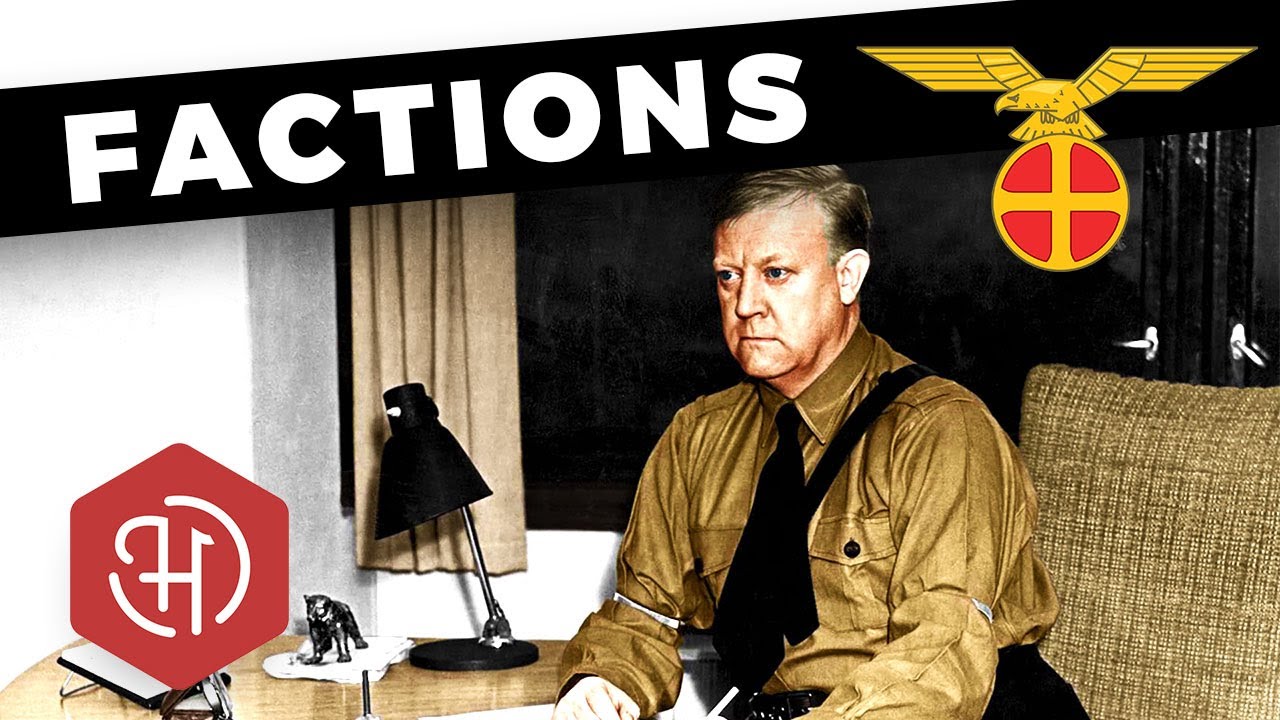
The party was founded in 1933, only a couple of months after Hitler rose to power in Germany. That timing was probably not a coincidence, though its roots went deeper. Quisling was no stranger to politics— he had served as Norway’s minister of defense, but by the early thirties he was convinced that liberal democracy was rotten and that Norway needed radical change. In its first election, the National Samling won barely 2 percent of the vote— more than the communists, but hardly a mandate for revolution.
By the eve of the war, its membership hovered between five and six thousand people. Small, loud, and convinced that history was on its side. The party itself was a strange mixture of ideas and people. There were conservative Christians and followers of old Norse neopagan religions.
There were traditional Norwegian nationalists and there were radicals who looked admiringly toward Mussolini and Hitler. There were even those influenced by the German racial theorist Hans F. K. Günther, who argued that the Nordic race was biologically superior to all others.
Quisling tried to hold these factions together under one roof. From the start, he insisted on a leadership principle— he was the Fører, just as Hitler was the Führer and Mussolini wasthe Il Duce. There was no room for debate about who was in charge. But Quisling was careful NOT to call his movement fascist or Nazionalsozialist.
He knew those labels were poison in a country like Norway, withits strong liberal traditions. The smaller groups that had tried that path before him— the National Legion, the Norwegian National Socialist Workers’ Party— had all flopped spectacularly. Nobody in Norway wanted to be a Nazi. So Quisling chose different words.
In a public speech in August 1933, he declared:
“We are not trying to adapt any foreign doctrine here in this country. We seek to solve the issue based on the Nordic conditions and to accommodate things in Norwegian purposes. We neither want fascism nor national socialism. ”
Instead, he pushed a homegrown mix: anti-socialism, anti-parliamentarism, and a vague promise of national rebirth.
He wanted to restore Norway to something older, prouder, more Viking. The party’s symbol was not the swastika— unlike their Danish and Swedish cousins who happily copied Hitler’s emblem— but the Olaf’s Cross, a sun cross tied to Norway’s beloved saint king, Saint Olaf. Their greeting was not “Heil Hitler” but” Hail and Healthy” — an old Norse phrase— delivered with the right arm raised in a distinctly fascist style. The packaging was Norwegian.
The instinct was borrowed. Quisling himself was an odd combination. He was not originally a German sympathizer at all— he had been pro-British. What he actually dreamed of was a third way: a synthesis of Italian fascism and German Nazism, reworked into something genuinely Norwegian.
He wanted an independent movement, independent party, independent Norway— leading a Nordic community of Scandinavian nations inside a Germanic Europe, with Hitler at the top. When German troops stormed into Norway on April 9, 1940, the Norwegian army fought back, but it was badly equipped and badly trained. British and French reinforcements landed at Narvik and prolonged the fight, but onlyfor a couple of months. On June 10, the remaining Norwegian forces signed a capitulation treaty.
Norway belonged to Germany now. Hitler placed Josef Terboven over the country as Reichskommissar. All political parties were banned— except one. Only the National Samling was allowed to operate.
Quisling’s people became the new face of Norwegian administration. Members of his party were appointed as commissary ministers, ruling over schools, police, labor, justice— all of it, under Terboven’s shadow. By February 1942, Hitler formally made Quisling the head of a collaborationist government. Hewas now, on paper, the leader of Norway.
But everyone understood the real power lay with Terboven, who answered only to Hitlerhimself. Quisling was a puppet— but a willing one. He genuinely believed Germany would win the war. He believed in the idea of Nordic-Germanic racial unification.
He believed Norway’s future lay insidea Germanic Europe, with Hitler as its head. And he was willing to send young Norwegian men to die for that belief. In January 1941, before Germany even invaded the Soviet Union, a recruitment drive began for volunteers to join the SS Regiment Nordland. Around 200 Norwegian men were sworn in by Heinrich Himmler himself, at a ceremony in Oslo.
In the following months, several hundred more followed. But the big push came after Operation Barbarossa began. On June 29, 1941, Terboven proclaimed the creation of the Norwegian Legion on the radio. The propaganda was simple and sharp: come save Finland.
The Soviets had attacked Finland back in 1939, and now was the moment for the Nordic races to stand together— to defend the Nordic lands, to save all of Europe from the red menace. The Norwegian Legion was eventually sent toethe Leningrad front. And there, the grand ideology collided with reality. The unit was plagued by disillusionment.
Men deserted. Some deliberately injured themselves to get sent home. Whatever Quisling and Terboven had promised them, what they found in the snow was nothing but mud, blood, hunger, and death. In May 1943, the Norwegian Legion was officially dissolved.
Around 1,900 Norwegians had served in it. Around 180 of them were dead. Hundreds more were wounded, broken, or disappeared. Norwegian nurses also went to the front.
Some 400 of them served, and 20 were killed or listed missing in action. Norway stayed under German rule until the very end of the war. Quisling remained in power, dancingslowly at the end of a German leash, until the Reich collapsed. In October 1945, the war over, the occupiers gone, Quisling stood trial for treason.
He was found guilty and executed by firing squad. The name Vidkun Quisling had done something strange. It had stopped being just a name. It became a word.
In languages all across Europe, “quisling” came to mean traitor. A collaborator. Someone who sells out their own people for power. His movement was dead.
His soldiers were buried. His Reich had crumbled. But the word lived on— a permanent reminder of what happened when a man decided his own ambition meant more than his own country.


