On Boxing Day 2004, at 7:58 in the morning, a massive earthquake struck beneath the Indian Ocean. It measured 9. 1 on the Richter scale and triggered one of the largest tsunamis ever recorded. Within 24 hours, over 250,000 people had lost their lives, including 149 British citizens.
I’m Dr. Xand van Tulleken, and as a doctor, I’ve witnessed many disasters firsthand. But to truly understand what happened that day, I’m following the tsunami’s path minute by minute. I’ll meet survivors who lived through it and experts who can explain the science behind the destruction.
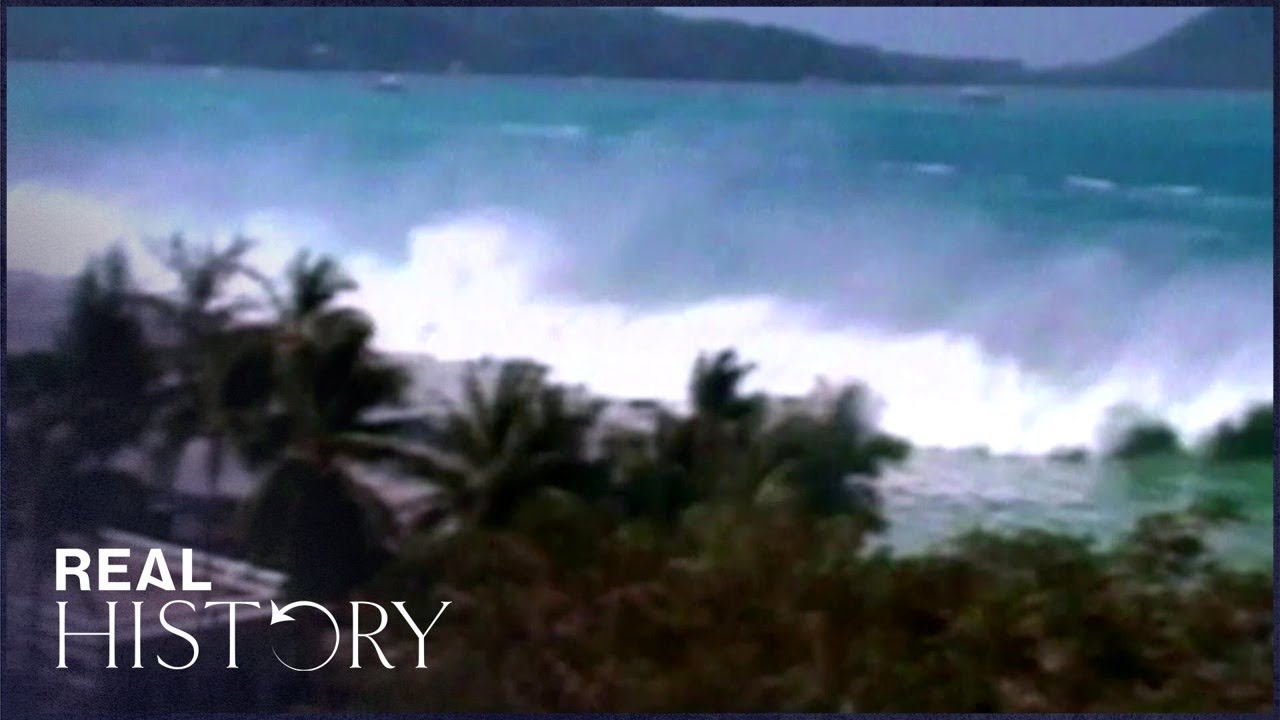
The wave wasn’t a Hollywood-style crashing wall. It was more like a massive flood, consuming everything in its path. Cars and debris were swept along like toys. I’m joining forces with Raksha Dave to investigate why this earthquake and tsunami were so devastating.
That morning in Indonesia, the Earth’s crust was under immense pressure. Two tectonic plates, the Indian and the Eurasian, had been pushing against each other for millions of years, moving at the speed fingernails grow. Finally, they snapped. The seabed lifted over 40 feet along a stretch longer than the entire UK.
Imagine half of Britain tearing off and leaping violently into the air. That released energy equivalent to thousands of atomic bombs, sending shockwaves racing through the planet. In the remote city of Banda Aceh, Sumatra, the earthquake hit with terrifying force. Dendy Montgomery, a journalist, was in his bathroom when the walls began shaking like rubber.
He and his wife ran outside, where the ground moved like porridge. Nobody could stand. Dendy grabbed his camera and captured some of the only footage ever shot of a 9. 1 magnitude earthquake.
The quake lasted nearly ten minutes. Buildings collapsed, and people jumped from windows to escape. Dendy was terrified but kept filming, driven by duty. His footage shows the city reduced to rubble.
Meanwhile, in Hawaii, the Pacific Tsunami Warning Center detected the earthquake. They issued a bulletin saying no destructive tsunami threat existed based on historical data. They were wrong. What they couldn’t predict was that the quake had displaced 30 trillion liters of water, sending enormous ripples racing across the ocean at 500 miles per hour.
A tsunami was heading directly for land. To understand the difference between normal waves and tsunamis, I visited Europe’s largest tsunami simulator. Scientist Iain Chandler explained that wind creates ordinary waves, which break on the beach and roll back. Tsunamis are different.
They arrive as one massive surge of water, more like a supercharged flood. In the simulator, an 8-foot sea wall stopped storm waves completely. But the tsunami wave rose over it effortlessly, engulfing everything. Each cubic meter of water weighs about a ton, and that weight keeps coming.
Back in Banda Aceh, Dendy heard rumors that water was coming from the sea. He dismissed them at first, but then he saw people running. A 30-foot wave was sweeping inland, carrying street carts and overwhelming buildings. Dendy’s Jeep became a refuge as 25 people climbed aboard.
The first wave hit, but the weight of the passengers kept the Jeep stable. They survived, but when they tried to return home, they found the river had burst its banks, filled with debris and bodies. Dendy knew then that Banda Aceh was gone. The tsunami wasn’t finished.
It was racing toward Thailand. On the island of Khao Lak, Andy Chagger and his girlfriend Nova were asleep in their beachside bungalow. Andy woke to a strange noise, like a jet engine building louder and louder. The bungalow shook violently.
Then the wave hit. Andy was swept away in a torrent of bricks, metal, and glass. He fought to surface, gasping for air, completely disoriented. He was dragged through a half-built hotel, his leg pinned against a concrete pillar by debris.
When the water receded, Andy was badly injured and alone. He feared the worst for Nova. She had been swept away and killed. Her body wasn’t found for six months.
On the island of Phuket, 11-year-old Becky Croston was playing on the beach with her parents. Her dad, a science teacher, noticed a Thai fishing boat being pushed into the water. He wanted a photo, but as he looked through the camera, he saw something strange. The sea had vanished.
It had gone out so fast that fish were left flapping on the sand. An eerie silence fell over the beach. Becky’s dad knew what it meant. A tsunami was coming.
He shouted for everyone to run. A shuttle bus pulled up, and he jumped aboard, urging the driver to head for high ground. Just as the bus sped away, the wave hit. It was a towering wall of water that obliterated the beach huts in seconds.
Becky and her family made it to safety with moments to spare. Her dad’s quick thinking saved at least 50 lives that day. Becky says proudly, if he hadn’t been there, she and her mom likely would have died. On Koh Phi Phi island, Luke and his brother Piers were having breakfast at a café.
Suddenly, people came running through the tables, screaming. Instinct took over, and Luke joined them, running down a side alley. He saw plastic petrol containers and climbed onto a corrugated iron shed. The water hit, and Luke pulled his friend Sophie onto the roof.
Piers was still below, trying to hoist her up. Sophie was hit by debris and barely survived. Luke’s priority was Sophie. He didn’t even think about his brother in that moment.
The chaos and fear were overwhelming. Just 90 minutes had passed since the earthquake struck. The survivors thought the worst was over, but they were wrong. A second wave was coming, and it would be even deadlier.
The tsunami continued its devastating journey toward Sri Lanka, and news was just beginning to break back in Britain. For those caught in the path, the nightmare was far from over.


