CHICAGO — In a seismic development that threatens to dismantle the entire federal case against embattled rap star Lil Durk, a key co-defendant and longtime associate took the witness stand Tuesday and delivered explosive testimony, admitting to his involvement in three separate murders while directly implicating Durk and two others in the 2022 killing of rapper Lul Pab.
The testimony from OTF Jam, also known as Jamie The Bull, sent shockwaves through the federal courthouse in Los Angeles, where Durk, whose real name is Durk Banks, is facing racketeering and murder-for-hire charges. With the courtroom packed to capacity and a throng of supporters and detractors gathered outside, Jam’s appearance marked the most damaging moment yet for the “All Love” rapper, who has maintained his innocence since his arrest last October.
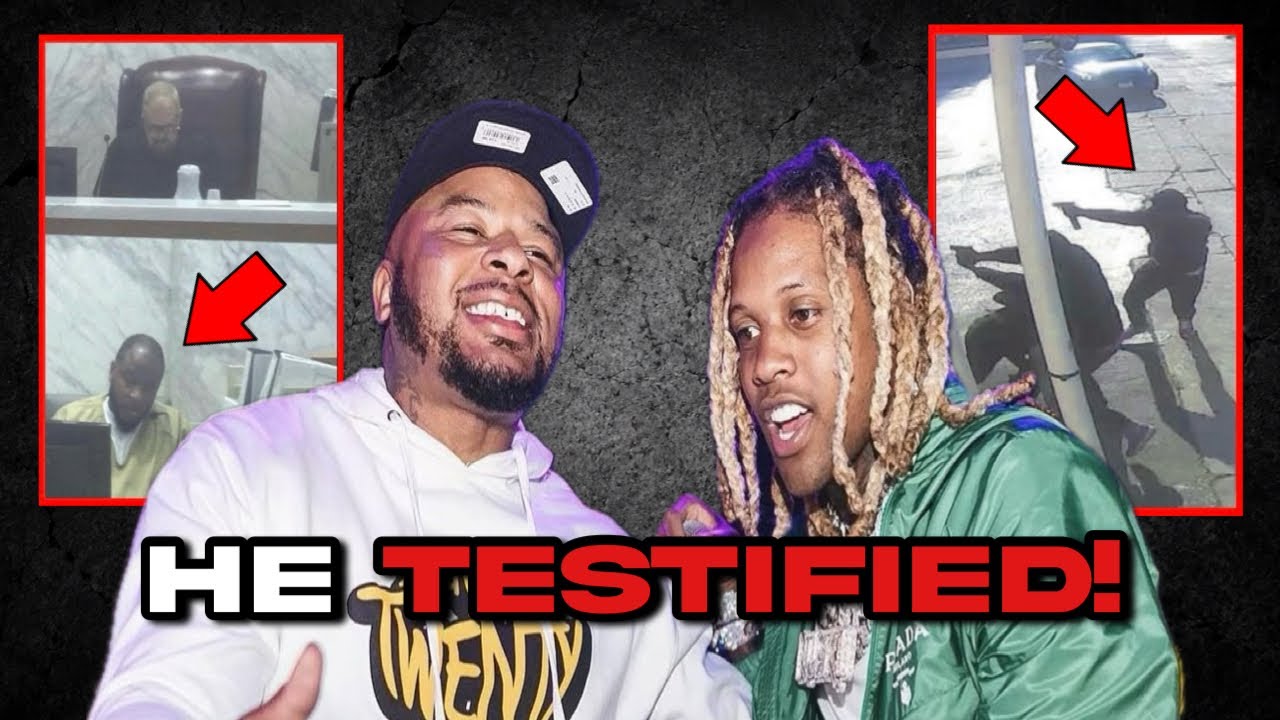 According to multiple sources inside the courtroom and live updates from legal commentators, Jam did not hesitate when prosecutors asked him to identify the individuals involved in the fatal shooting of Lul Pab, whose real name is Saviay Robinson. The witness, clad in standard federal detention attire rather than a suit, pointed directly at Durk, co-defendant DD, and another individual named Lindsey, stating unequivocally that all three were participants in the murder plot.
The admission, which came after Jam acknowledged his own role as one of the shooters, represents a catastrophic blow to Durk’s defense strategy. For months, legal analysts have speculated about the extent of Jam’s cooperation with federal authorities, but Tuesday’s testimony confirmed the worst-case scenario for the OTF (Only The Family) founder. Jam, who has been incarcerated for years on unrelated charges, revealed that he had been in communication with Durk throughout his prison stint, with the accused rap star going so far as to ensure Jam had access to a phone after changing his own number.
The atmosphere inside the courtroom grew tense as prosecutors played Durk’s track “Back Again,” focusing the jury’s attention on lyrics that appeared to reference Jam directly. Lines about giving someone “50” and that individual never needing to ask for money again took on new significance as Jam testified that he heard his name mentioned in the song while still behind bars. The prosecution’s decision to use Durk’s own music against him, a tactic that has proven successful in numerous federal cases against rappers, appeared to resonate with the jury, several of whom were seen taking notes during the audio playback.
Perhaps most stunning, however, was the revelation that Jam admitted to three separate murders as part of his cooperation agreement with federal prosecutors. While the specifics of the other two killings have not yet been fully detailed in open court, legal experts suggest that this admission could be the linchpin prosecutors need to secure a conviction. The question now becomes whether Jam’s testimony will be viewed as credible by the jury, given his own admitted involvement in multiple homicides and the inherent incentives that come with cooperation agreements.
 Outside the courthouse, the scene descended into near-chaos as tensions boiled over. Noted legal commentator Trap Lore Ross, who has been providing extensive coverage of the trial, found himself at the center of a heated confrontation with members of Durk’s entourage. According to Ross, a member of Durk’s public relations team confronted him directly, demanding he delete a tweet that had been posted earlier in the day.
The situation escalated to the point where court security was forced to intervene, separating the parties before the altercation could turn physical.
Ross, who has become a polarizing figure in the coverage of this case, later stated that he may take a step back from live-tweeting the proceedings following the incident. In a video posted to his social media accounts, flanked by two personal security guards, Ross described the encounter as “unprofessional” and “frightening,” noting that he had been approached aggressively despite being a member of the press. The confrontation has raised concerns about the safety of journalists covering the trial, with some outlets already considering enhanced security measures for their reporters.
 The testimony also shed new light on the alleged conspiracy that led to Lul Pab’s death. According to Jam’s account, the plot began to take shape when he encountered a member of rival artist Tory Lanez’s camp in Miami. Jam testified that he approached Durk with a proposal to rob the individual, who was wearing expensive jewelry at the time.
Rather than discouraging the plan, Durk allegedly responded with enthusiasm, telling Jam that this was the kind of initiative he had been waiting for. This exchange, prosecutors argue, demonstrates Durk’s direct involvement in orchestrating violent acts on behalf of the OTF organization.
The defense, led by attorney Brian Steel, has signaled that they intend to aggressively cross-examine Jam, focusing on his credibility and the motivations behind his cooperation. Steel has already hinted at the possibility that Jam may be lying to protect himself, a line of questioning that could prove crucial in undermining the prosecution’s case. The defense team has also pointed to the sheer number of interviews Jam conducted with federal agents, suggesting that his story may have shifted over time to align with prosecutors’ expectations.
 Adding another layer of complexity to the proceedings is the presence of Lul Pab’s mother in the courtroom. Reports indicate that she was seen making gestures toward Durk’s supporters outside the courthouse, a development that has further inflamed tensions. While it remains unclear whether she will be called to testify, her presence serves as a powerful reminder of the human toll at the center of this case.
The trial, which has already drawn comparisons to some of the most high-profile racketeering cases in hip-hop history, shows no signs of slowing down. With Jam’s testimony now on the record, prosecutors are expected to continue building their case against Durk, potentially calling additional witnesses in the coming days. The defense, meanwhile, faces the daunting task of rehabilitating Durk’s image in the eyes of the jury while simultaneously poking holes in the prosecution’s narrative.
As the proceedings continue, one thing has become abundantly clear: this trial has the potential to reshape the landscape of the music industry and serve as a cautionary tale for artists who blur the lines between their on-stage personas and their off-stage actions. The lyrics that once made Durk a star are now being used as evidence against him, and the loyalty that was once the cornerstone of his brand has been exposed as fragile, at best.
For now, all eyes remain fixed on the Los Angeles federal courthouse, where the fate of one of hip-hop’s most prominent figures hangs in the balance. With Jam’s testimony now a matter of public record, the prosecution has gained significant momentum, but the trial is far from over. The coming days will determine whether Durk can mount a successful defense or whether the weight of the evidence, and the testimony of his former friend, will prove too heavy to overcome.