The Lakers need more than star power around Luka Doncic, and these seven names could help fix their biggest problems with size, defense, shooting, and playoff-level depth.

The Lakers are trailing 0-2 against the Thunder, and this series has once again exposed a familiar issue. Los Angeles depends too much on superstar shot creation and does not have enough reliable strength in the middle of the roster. Luka Doncic being sidelined by a left hamstring strain changes the immediate series, but it does not change the bigger concern. Even when Doncic is healthy, the Lakers still look behind Oklahoma City in speed, size, defensive pressure, bench production, and overall two-way balance.
Game 2 was a clear warning sign. The Lakers lost 125-107, turned the ball over 19 times, allowed 26 points off those turnovers, and were outscored 48-20 by the Thunder bench. Oklahoma City built that gap even though Shai Gilgeous-Alexander played only 28 minutes because of foul trouble. That should worry the Lakers most. The Thunder did not need a perfect night from their MVP-level guard to take control. Their roster had enough answers everywhere else.
The Lakers are constructed differently. Doncic averaged 33.5 points, 7.7 rebounds, and 8.3 assists this season, and Los Angeles beat the Rockets in six games without him in the first round. But Oklahoma City finished 64-18, owned the best record in the NBA, and entered this series with a 4-0 regular-season mark against the Lakers. This gap is not only about one injury. It is about roster quality.
The offseason has to be centered on role players who fit around Doncic, LeBron James, and Austin Reaves. The Lakers can keep Reaves on his $20.9 million cap hold, use space first, and then re-sign him with Bird rights. After the 2026 draft, the 2033 first-round pick can also become tradable under the seven-year rule, though the Stepien rule still prevents reckless movement of consecutive first-round picks. Each trade idea below should be viewed separately. The same picks are reused because the Lakers would choose one path, not make every deal at once.
Here are the seven role players the Lakers should target this offseason if they want to become true contenders.
- Quentin Grimes
Unrestricted Free Agent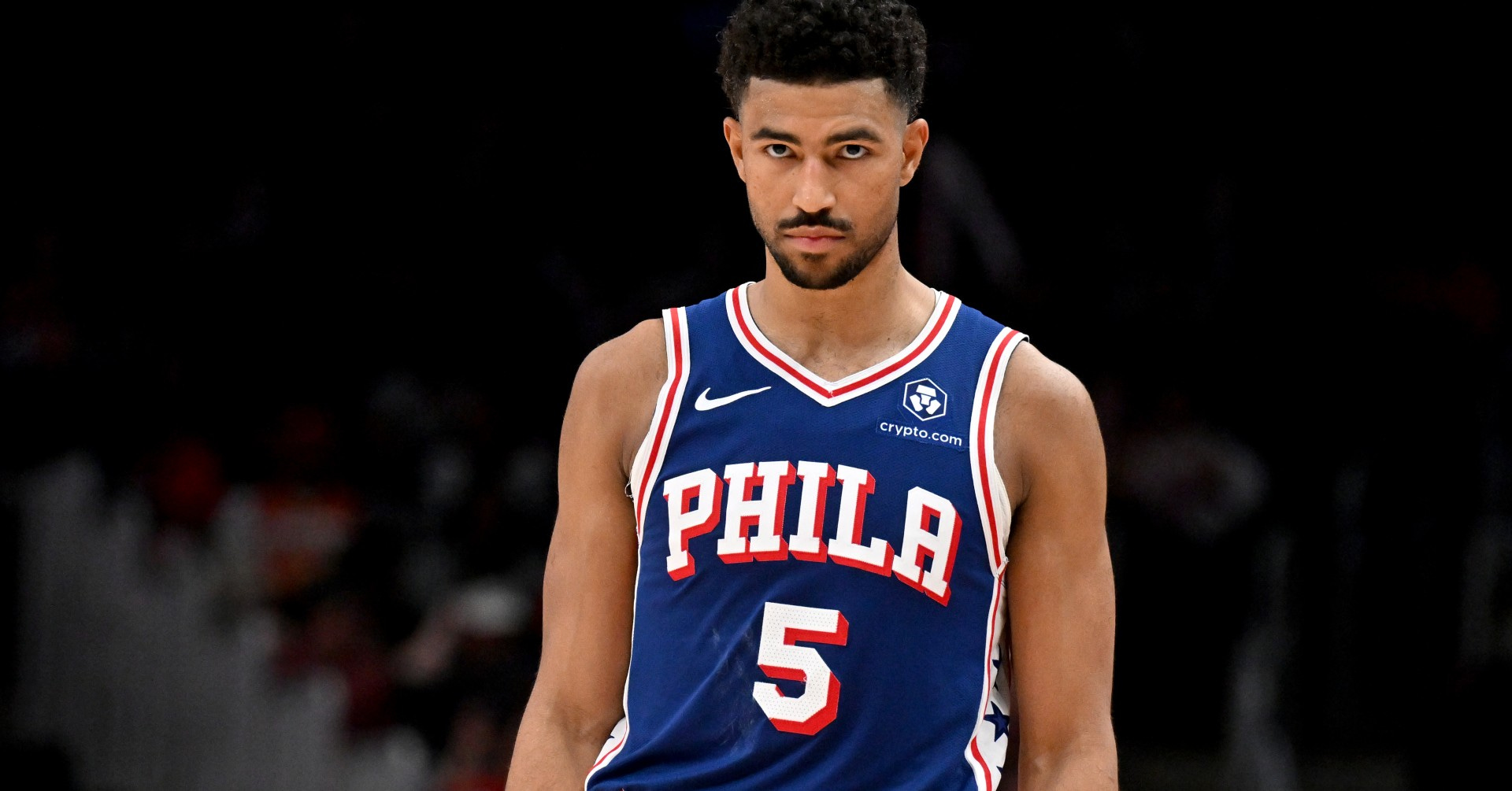
Quentin Grimes is the lowest-ranked target here, but he still makes sense because he would not cost the Lakers any draft picks. Los Angeles needs at least one move like this. They cannot use every major asset in one trade and then try to fill out the bench with minimum players again. That would only create the same problem: too many weak rotation spots against elite playoff teams.
Grimes averaged 13.4 points, 3.6 rebounds, and 3.3 assists in 75 games this season. He played 29.4 minutes per game, shot 45.0% from the field, 33.4% from three, and 84.0% from the line with a 58.5% true shooting mark. The three-point percentage is not perfect, but the volume matters. He attempted 5.1 threes per game, which means defenses still have to respect him. He also averaged only 1.8 turnovers, an important detail for a team that already has Doncic, LeBron, and Reaves handling the ball.
A fair contract would be around three years and $48 million, or roughly $16 million per season. If the market becomes stronger, the Lakers could stretch closer to three years and $54 million, but they should not go beyond that. Grimes is a useful rotation guard, not a core franchise piece. His value comes from being a playable two-way guard without requiring a first-round pick.
His free-agent situation is also simple. Grimes signed the $8.7 million qualifying offer with the 76ers after long negotiations, setting him up to become an unrestricted free agent in a stronger 2026 market. He also averaged 23.0 points per game after the All-Star break last season, which suggests there is more scoring upside than his full-season numbers show.
The fit is clean. Grimes can defend bigger backcourt players, hit catch-and-shoot threes, attack closeouts, and keep the ball moving. He does not need to run the offense. That is exactly what the Lakers need because Doncic will control the ball, Reaves will create in second-side actions, and LeBron will still have playmaking possessions.
The 76ers finished 45-37 and reached the second round as the No. 7 seed after eliminating the Celtics, so Grimes also gained meaningful playoff experience. He is not the main solution, but he would improve the Lakers’ guard rotation. After watching Oklahoma City pressure them for two straight games, that need is obvious.
- Andrew Wiggins
Los Angeles Lakers Receive: Andrew Wiggins
Miami Heat Receive: Jarred Vanderbilt, Jake LaRavia, Dalton Knecht, 2030 first-round pick swap, 2032 second-round pick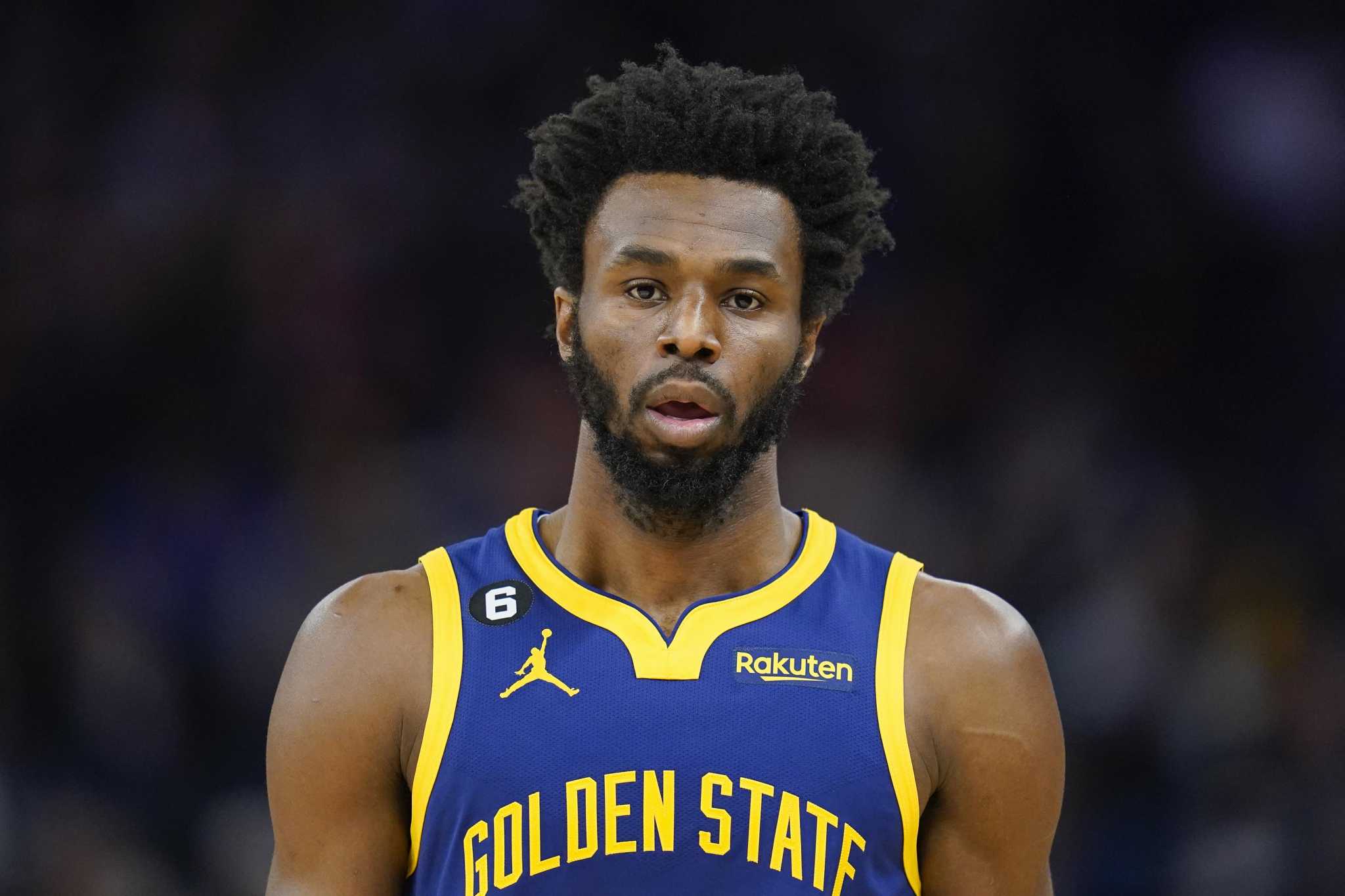
Andrew Wiggins may not be the most exciting name, but he has been connected to the Lakers for a long time. Los Angeles needs bigger wings who can defend, run the floor, shoot well enough, and play without needing designed touches. Wiggins can still provide those things.
Wiggins averaged 15.4 points, 4.8 rebounds, and 2.7 assists in 68 games this season. He played 30.3 minutes per game, shot 47.5% from the field, 41.4% from three, and 78.4% from the free-throw line. He also averaged 1.1 steals and 1.0 blocks with a 58.6% true shooting mark. If the three-point shooting is real, that is strong role-player production.
The contract is the main concern. Wiggins has a $30.2 million player option for the 2026-27 season. That is expensive for someone who is now more of a fourth option than a primary scorer. That salary would limit the Lakers’ flexibility. Los Angeles should only consider this move if Miami views him more as movable salary than as a premium asset.
The package makes sense because the salary affects the price. Miami would receive Dalton Knecht as a young shooter, Jarred Vanderbilt as a defensive forward, Jake LaRavia as salary, a 2030 first-round pick swap, and a 2032 second-round pick. The Heat finished 43-39, ranked 10th in the East, and lost in the play-in, so they have reason to consider cheaper pieces and future flexibility.
For the Lakers, Wiggins’ value comes from his body type. He can defend wings, which means LeBron would not have to take the toughest forward matchup every night. Wiggins can run with Doncic, spot up in the corner, cut behind help defenders, and punish smaller guards if teams try to hide them on him.
This is not a superstar move. Wiggins would not push the Lakers above the Thunder by himself. But he would make the rotation more stable. Los Angeles is too thin on the wing. They have too many lineups where opponents can attack one weak defender or ignore one weak shooter. Wiggins would reduce that problem.
The risk is the cost. If his three-point shooting drops closer to average, the salary becomes heavy. If he stays near 40% from deep, he becomes a useful playoff forward. That is why he belongs at No. 6, not higher. He helps, but he does not solve enough alone.
- Nicolas Claxton
Los Angeles Lakers Receive: Nicolas Claxton
Brooklyn Nets Receive: Jarred Vanderbilt, Jake LaRavia, Dalton Knecht, Adou Thiero, 2026 first-round pick (draft rights), 2031 first-round pick
Nicolas Claxton is a real center target, and the trade price has to reflect that. He is not a player the Lakers can land with one weak first-round pick and salary filler. He is a starting center in his prime, on a long-term contract, with defensive range and passing value.
Claxton averaged 11.7 points, 6.9 rebounds, 3.7 assists, and 1.1 blocks in 69 games this season. He played 27.8 minutes per game, shot 57.1% from the field, and posted a 59.2% true shooting mark. He also averaged 2.4 offensive rebounds and only 1.4 turnovers. That is useful production for a center who touches the ball as a passer.
The assist number is important. Claxton is not just a lob finisher. He can catch in the short roll and make the next pass. That matters with Doncic because playoff defenses will trap him, send help early, and force the ball out of his hands. The Lakers need a center who can keep those possessions alive instead of turning them into bad shots or turnovers.
His contract is also better than it first appears. Claxton signed a four-year, $97 million deal, but the salary declines over time. His 2026-27 salary starts at $23.1 million and decreases each year after that. It is still real money, but it is not extreme for a starting center who brings defense and playmaking.
The Nets finished 20-62 and 13th in the East. That is why the Lakers should call. Claxton is 27 and useful now, but Brooklyn is not close enough to need a veteran center on that timeline. A package with Knecht, Thiero, the 2026 first-round pick as draft rights, and the 2031 first-round pick is a serious offer. It gives the Nets young players and future upside instead of treating Claxton like a low-value asset.
For the Lakers, Claxton would change their defensive structure. He can play higher in pick-and-roll coverage, switch in certain matchups, recover to the rim, and move better than most centers. That gives JJ Redick more defensive options. The Lakers cannot keep choosing between protecting the rim and guarding the three-point line. Claxton helps with both.
The weakness is shooting. Claxton does not space the floor. That means the Lakers would need shooting at both forward spots if he starts. But Doncic teams do not need every big man to shoot. They need the center to screen, dive, finish, pass, and defend. Claxton does enough of those things to be one of the better trade targets available.
- Herbert Jones
Los Angeles Lakers Receive: Herbert Jones
New Orleans Pelicans Receive: Jarred Vanderbilt, Jake LaRavia, Dalton Knecht, Adou Thiero, 2026 first-round pick (draft rights), 2030 first-round pick swap, 2031 first-round pick
Herbert Jones is a different kind of target. He would not fix the Lakers’ offense. He might even make spacing more difficult if the rest of the lineup is not built correctly. But he solves a defensive issue that has hurt the Lakers all season: they do not have a true stopper for elite perimeter players.
Jones averaged 8.9 points, 3.4 rebounds, and 2.8 assists this season while shooting 38.3% from the field. That is the concern. The Lakers cannot pretend he is a normal 3-and-D wing right now. The offense is not strong enough. If they trade for him, they have to accept the trade-off.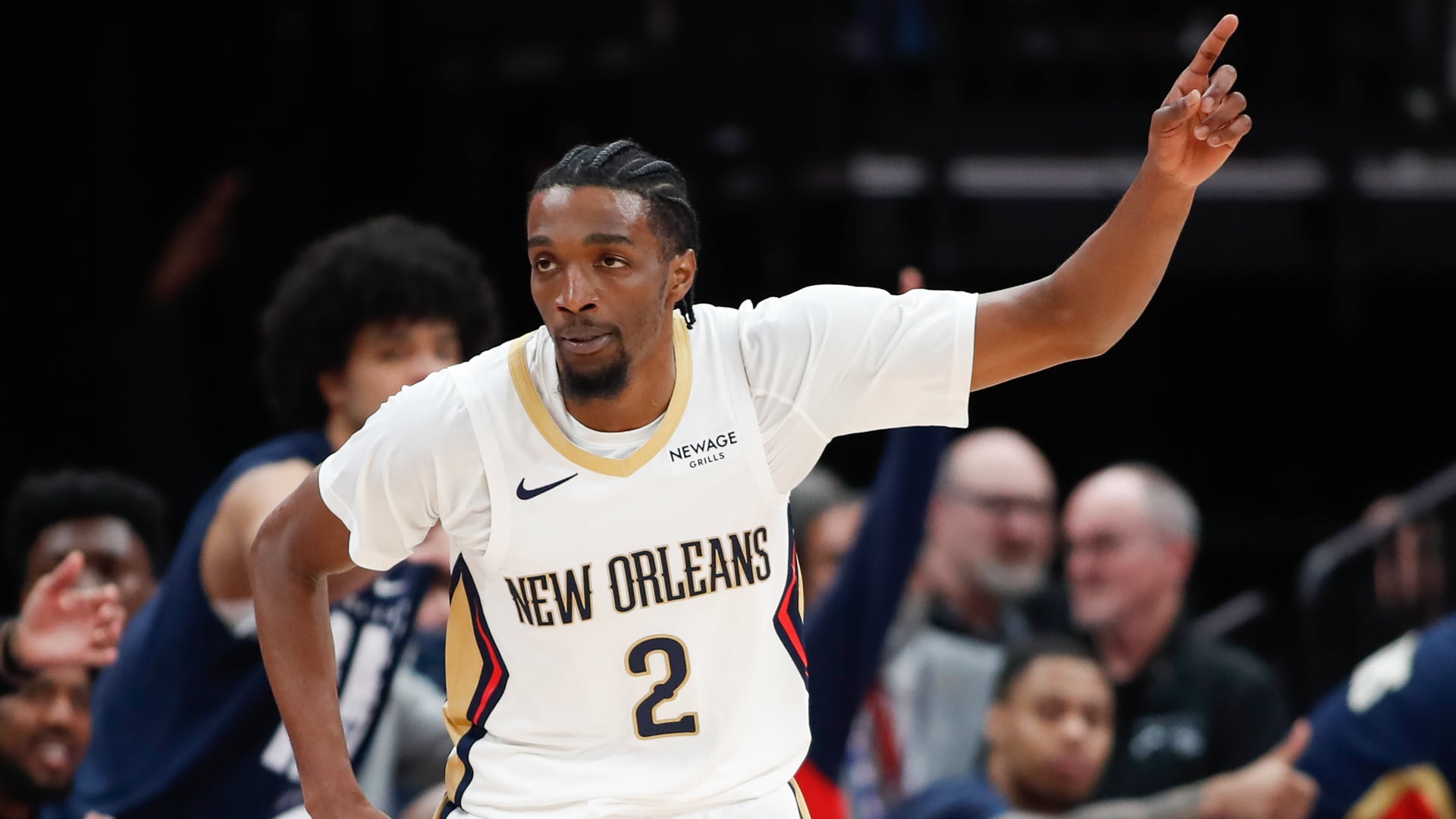
The defensive résumé is why he still ranks this high. Jones was named to the All-Defensive First Team in 2023-24. That season, he recorded 105 steals and a career-high 62 blocks, and he has averaged 1.6 steals per game across his career. He also signed a three-year, $68 million extension, giving the Pelicans long-term control with a player option for 2029-30.
That contract makes him expensive. New Orleans does not have to move him. Marc Stein reported that the Pelicans have resisted trade interest in both Jones and Trey Murphy III, and they would want a Desmond Bane-type offer for either player. That is a very high price. The Grizzlies received four future first-round picks and a first-round pick swap in the Bane deal, so the Lakers cannot make a light offer and expect real traction.
The package here is still below a full Bane-style return, but it is strong for a player below Bane’s level. Dalton Knecht gives shooting. Adou Thiero adds another young athlete. The 2026 first-round pick gives New Orleans an immediate draft asset. The 2031 first-round pick and 2030 swap provide future upside. Vanderbilt gives defensive value back, but Jones is the better and more flexible defender.
The Pelicans finished 26-56 and 11th in the West, so the Lakers should at least test their direction. A team with that kind of record has to decide how long it wants to keep expensive role players around a losing core.
For the Lakers, Jones would guard the opponent’s best perimeter scorer every night. Reaves would get easier assignments. LeBron would save energy. Doncic would be protected more often. That matters. Against the Thunder, one defender like Jones would not fix everything, but he would give Los Angeles a real first line of resistance.
The offensive fit keeps him from ranking higher. The defensive fit is why he has to be on the list.
- Tari Eason
Los Angeles Lakers Receive: Tari Eason
Houston Rockets Receive: Dalton Knecht, Adou Thiero, 2026 first-round pick (draft rights), 2030 first-round pick swap
Tari Eason is the younger and more aggressive swing. He is not as proven as Jones, not as stable as Wiggins, and not as obvious positionally as Claxton or Walker Kessler. But the Lakers need this kind of player. They need more force, more athleticism, more offensive rebounding, and more defensive activity.
Eason averaged 10.5 points, 6.3 rebounds, 1.5 assists, 1.2 steals, and 0.5 blocks in 25.8 minutes across 60 games this season. He did not shoot well overall, finishing at 41.6% from the field, but his full profile still has value because he creates possessions without needing plays called for him. He runs the floor, attacks the glass, deflects passes, guards multiple positions, and brings pressure against second units.

Houston has control because Eason is a restricted free agent. He becomes restricted after failing to agree to an extension last offseason, and the Rockets can match any offer. That makes him difficult to steal.
The Lakers have two possible paths. The first is an offer sheet around four years and $80 million. That is expensive for a player who averaged 10.5 points, but that is the point. A normal offer likely gets matched. A painful offer at least forces Houston to think. The second path is a sign-and-trade, which would require careful cap planning because sign-and-trades create hard-cap issues. It can still work if the Lakers organize the offseason properly.
The sign-and-trade package would give Houston Knecht, Thiero, the 2026 first-round pick, and a 2030 swap. That is not cheap for a player who has not become a full-time starter, but the Rockets finished 52-30 and fifth in the West. They are not rebuilding. If they lose a rotation piece, they need useful talent back.
Eason fits with Doncic because he does not need the ball. Doncic-led teams need three types of players around him: shooters, vertical bigs, and forwards who do the dirty work without touches. Eason fits the third group. He would defend, rebound, run, and attack broken defenses.
This is an identity move. The Lakers already have enough slow possessions and enough players who need structure. Eason gives them controlled chaos. The Thunder have beaten them with waves of speed and pressure. Eason would help close that athletic gap.
- Walker Kessler
Los Angeles Lakers Receive: Walker Kessler
Utah Jazz Receive: Dalton Knecht, Adou Thiero, Jarred Vanderbilt, 2026 first-round pick (draft rights), 2030 first-round pick swap, 2032 second-round pick
Walker Kessler is the best center fit if the Lakers want a pure rim protector next to Doncic. Claxton is more flexible on the perimeter and more advanced as a passer, but Kessler gives Los Angeles the simpler answer: size, rim protection, vertical finishing, rebounding, and paint presence.
Kessler played only five games this season because he needed surgery to repair a torn labrum in his left shoulder. That is the risk. Before the injury, he averaged 14.4 points, 10.8 rebounds, 3.0 assists, 1.8 blocks, and 1.4 steals while shooting 70.3% from the field. The sample size is small, but the player type is clear. He lives around the rim and converts efficient looks.
The fit with Doncic is almost automatic. Doncic has always made rim-running centers better because he creates angles most guards cannot see. He can throw the lob, hit the pocket pass, find the seal, and deliver the late dump-off. Kessler would give him a true vertical target. That matters because the Lakers cannot make every possession depend on a difficult pull-up, a Reaves drive, or a LeBron post touch.

Kessler would also help the defense. The Lakers need a back-line player who changes shots. They need someone who lets perimeter defenders apply pressure without panicking about what happens behind them. Kessler is not perfect in space, but he gives real paint protection. That is something Los Angeles does not have at a high enough level.
The Jazz finished 22-60 and 15th in the West. They now have Lauri Markkanen and Jaren Jackson Jr., which makes the contract question important. If Kessler receives an offer in the four-year, $88 million to $96 million range, Utah has to decide whether paying a non-shooting center fits its expensive cap picture.
The trade package is serious because restricted free agents are hard to take. Knecht gives shooting. Thiero adds athletic upside. Vanderbilt brings defensive forward value. The 2026 first-round pick gives Utah an immediate draft asset. The 2030 swap and 2032 second-round pick add future value. That is a real price for a center coming off surgery, but the Lakers would be paying for the exact role they lack.
The injury has to be the first question. If the medical review is not strong, the Lakers should not force it. But if Kessler is healthy, he is the most natural center target on this list. The Lakers need a paint defender and a lob finisher. He is both.
- Trey Murphy III
Los Angeles Lakers Receive: Trey Murphy III
New Orleans Pelicans Receive: Jarred Vanderbilt, Jake LaRavia, Dalton Knecht, Adou Thiero, 2026 first-round pick (draft rights), 2028 first-round pick swap, 2031 first-round pick, 2033 first-round pick
Trey Murphy III is the best target because he changes the Lakers’ ceiling. The other players fix specific needs. Grimes helps the guard rotation. Wiggins gives wing size. Claxton brings center defense and passing. Jones provides elite perimeter defense. Eason adds athletic pressure. Kessler gives rim protection. Murphy gives the Lakers a legitimate big wing scorer who also fits without dominating the ball.
Murphy averaged 21.5 points, 5.7 rebounds, 3.8 assists, and 1.5 steals in 66 games this season. He played 35.5 minutes per game, shot 47.0% from the field, 37.9% from three, and 88.6% from the line. He made 3.2 threes per game on 8.6 attempts and finished with a 61.3% true shooting mark. That is not ordinary role-player production. That is high-level wing production with real volume.
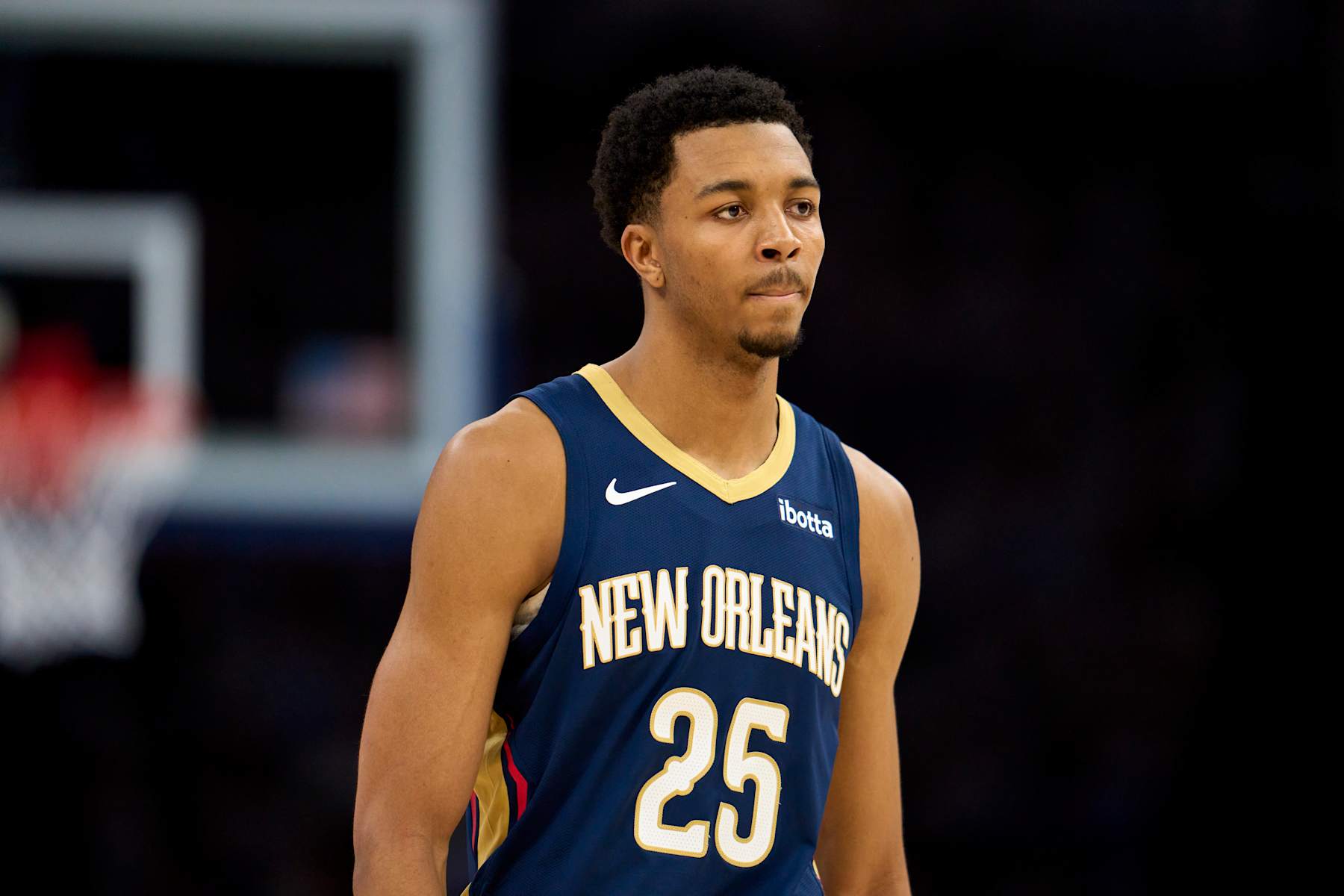
That is why the price would have to hurt. Murphy is beginning a four-year, $112 million extension, and that deal was already in place when he suffered a shoulder injury last season. A 25-year-old wing with his scoring, shooting volume, size, and long-term contract does not get moved for one first-round pick and salary filler.
The Pelicans’ stance also makes this difficult. Reports have indicated resistance to moving both Murphy and Jones, which means multiple first-round picks and swaps would be needed. It would require real pain. The Lakers would likely have to offer three first-round picks, a swap, Knecht, Thiero, and salary. Even that may not be enough.
The reason to try anyway is simple. Murphy fits every important player on the Lakers. Doncic would create open threes for him. LeBron would find him in transition and on cuts. Reaves would get more space because defenses could not help off Murphy the same way they help off weaker shooters. Murphy can score 20 without requiring the entire offense to be built around him.
He also gives Los Angeles a player type they currently do not have. Big wings who can shoot, run, attack closeouts, and survive defensively are among the most expensive role players in the league. Oklahoma City has several players who can defend, move, shoot, and keep the game fast. The Lakers do not. That is why the Thunder look deeper and more modern.
The Pelicans missed the playoffs again, so their front office has to choose a direction. Keeping Murphy makes sense because he is young and productive. But if New Orleans decides to reset its asset base, the Lakers need to be ready with their strongest possible offer.
Murphy is not a lockdown defender like Herb Jones, and the Lakers would still need a center after this deal if Deandre Ayton does not opt in. That is the downside. But Murphy would change the main rotation more than anyone else on this list. He would give the Lakers a third offensive weapon who does not take the ball away from Doncic. He would raise their shooting level and give them real size on the wing.
This is the hardest move to make. It is also the best one. If the Lakers want to become more than just a good team built around stars, they need one more high-end two-way piece. Murphy is the closest thing to that on this list.