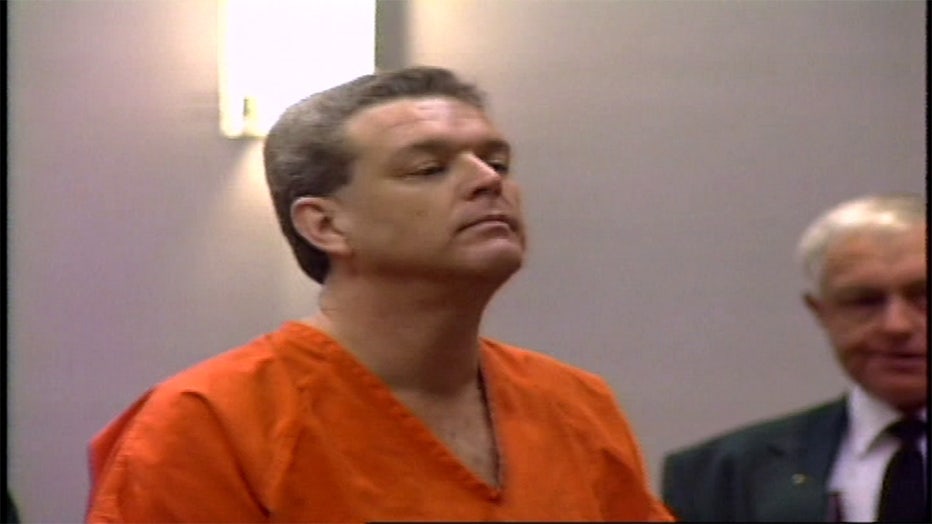
Michigan Man Sentenced After Wife’s Body Was Hidden Inside Sealed Tank on Family Property
Case Leaves Family and Community Searching for Answers Years After Dee Warner’s Disappearance



A Michigan man convicted in the death of his wife after prosecutors said he concealed her body inside a sealed industrial tank has been sentenced to spend decades in prison in a case that deeply shocked both investigators and the local community.
Dale Warner, 58, was sentenced in Lenawee County after being found guilty of second-degree murder and tampering with evidence in the death of his wife, Dee Warner, 52.
The sentencing marked the latest chapter in a case that began with a mysterious disappearance in 2021 and evolved into a years-long investigation involving buried evidence, conflicting explanations, and emotional testimony from family members who spent years searching for answers.
Prosecutors said Dee Warner’s remains were eventually discovered on the couple’s property inside a sealed tank that had once been used to hold anhydrous ammonia.
The disturbing details surrounding the concealment of her body became central to the emotional sentencing hearing, where relatives described years of confusion, grief, and anger.
Dee Warner’s Disappearance
Dee Warner was last seen on April 25, 2021, at her home in Michigan.
When she suddenly disappeared without warning, family members quickly became concerned. According to testimony later presented in court, relatives said her disappearance felt entirely out of character.
Family members stated that Dee maintained close relationships with her children and relatives and would not normally leave without communicating with them.
Still, in the immediate aftermath of her disappearance, uncertainty dominated the case.
At the time, Dale Warner reportedly told friends and family that his wife had left voluntarily.
According to testimony presented later in court, some family members were initially unsure what to believe.
Her son, TJ Bock, later described the emotional conflict created by the situation.
“I did not want to believe he was capable of this,” he said during sentencing.
At the same time, he said he also struggled to believe his mother would abandon her family without explanation.
Years later, he concluded only one of those possibilities turned out to be true.
A Family Blended Together — Then Torn Apart
Court testimony revealed that Dee and Dale Warner each entered the marriage with children from previous relationships.
Together, they blended two large families and eventually had one child together.
Relatives later described the years following Dee’s disappearance as emotionally devastating, especially for younger family members trying to understand why their mother was suddenly gone.
During sentencing, Dee Warner’s daughter, Rikkel Bock, described the emotional consequences of the disappearance and what she believed her younger sibling had been led to believe.
According to her testimony, she said family communication had been disrupted after Dee vanished.
She told the court:
“He made her believe that her own mom had simply walked out of her life.”
The comments reflected the deep emotional damage the family said continued long after Dee disappeared.
The Discovery That Changed the Investigation
For years, the case remained unresolved.
Investigators searched for answers while Dee Warner’s family continued pushing for progress in the investigation.
Then, after roughly three years, authorities discovered human remains buried on the couple’s property.
According to prosecutors, the remains were found inside a sealed industrial tank that had once been used for anhydrous ammonia storage.
Authorities stated the tank had been sealed shut on both ends.
Investigators also confirmed there was no ammonia inside when the remains were discovered.
The discovery transformed the investigation from a missing person case into a homicide prosecution.


Prosecutors Detail the Alleged Killing
At trial, prosecutors presented evidence alleging that Dee Warner had been:
- beaten
- strangled
- restrained with duct tape over her mouth and nose
before her body was placed inside the tank.
The prosecution argued the concealment of the body demonstrated a deliberate attempt to hide the crime for an extended period of time.
The image of the sealed tank became one of the most disturbing aspects of the case and heavily influenced emotional reactions during sentencing.
Family members repeatedly referenced the condition in which Dee Warner’s remains were found.
Her brother, Greggory Hardy, delivered one of the strongest victim impact statements heard during the hearing.
He condemned Dale Warner in direct and emotional terms, describing the concealment of his sister’s body as:
“a barbaric act.”
He also referred to the tank as a “cold steel tomb,” a phrase that later became associated with media coverage of the case.
Defense Describes Warner as a “Kind” Man
Despite the conviction, Dale Warner’s defense team argued during sentencing that the case represented a tragic collapse rather than the actions of someone known for violence.
Defense attorneys described Warner as:
- “kind”
- “even-tempered”
- community-oriented
- someone who had helped others throughout his life
The defense acknowledged the jury’s verdict while attempting to present mitigating personal history.
Such arguments are common during sentencing proceedings, where defense teams seek to present the broader context of a defendant’s life and character before punishment is imposed.
Still, the emotional impact of the case dominated the courtroom atmosphere.
Emotional Victim Impact Statements
Sentencing hearings in homicide cases often become deeply emotional because they provide families an opportunity to publicly express the damage caused by the crime.
In this case, multiple relatives spoke about:
- grief
- confusion
- betrayal
- years spent searching for answers
Judge Michael Olsaver instructed those speaking to direct comments toward the court rather than toward Warner directly and warned against personal attacks.
However, emotions remained raw throughout the proceedings.
Family members repeatedly emphasized the emotional toll caused not only by Dee Warner’s death, but by the years of uncertainty that followed.
For many relatives, the concealment of the body intensified the trauma.
The idea that Dee’s remains had been hidden for years on the family property deeply disturbed those who spoke in court.
The Judge’s Sentencing Remarks
During sentencing, Judge Michael Olsaver reflected on the years of life Dee Warner lost.
He noted that beyond the immediate loss of life, the crime also robbed:
- children of a mother
- siblings of a sister
- relatives of future memories and relationships
The judge reportedly considered both:
- the severity of the homicide
- the prolonged concealment of evidence
when determining the sentence.
Ultimately, Warner received consecutive prison terms:
- 31.25 years to 60 years for second-degree murder
- followed by 17 months to 10 years for tampering with evidence
Combined, the sentence means Warner could spend the remainder of his life in prison.
Why Cases Like This Leave Lasting Impact
Criminal cases involving the disappearance and concealment of loved ones often have especially deep psychological effects on families.
Unlike immediate homicide investigations, long-term disappearance cases create years of uncertainty where relatives struggle with unanswered questions.
Experts often describe this experience as:
- ambiguous grief
- unresolved mourning
- prolonged psychological stress
Families may spend years hoping for answers while simultaneously fearing the worst.
When remains are eventually discovered, the emotional impact can become even more intense because grief that had been suspended suddenly becomes real and permanent.
Domestic Violence and Escalation
Although prosecutors did not publicly frame the case primarily as a domestic violence prosecution, the killing occurred within a marriage and involved intimate-partner violence.
Experts frequently warn that homicide risk increases in situations involving:
- relationship conflict
- separation fears
- control issues
- emotional instability
- escalating disputes inside the home
Cases involving spouses or partners often generate especially strong public reactions because they involve betrayal within trusted relationships.
Community Reaction
The Warner case attracted significant public attention across Michigan and in true-crime media coverage nationwide.
Many people following the case focused on:
- the years-long mystery
- the concealment of the body
- the emotional victim statements
- the unusual details surrounding the industrial tank
At sentencing, supporters of Dee Warner reportedly filled the courtroom, reflecting the strong emotional impact the case had on those who knew her.
For many observers, the sentencing represented not closure, but the end of a painful chapter in a tragedy that had already unfolded over several years.
The Psychological Toll of Concealment Cases
Cases involving hidden remains often affect communities differently from other homicide cases because of the uncertainty involved.
Investigators, families, and communities may spend years wondering:
- whether the missing person is alive
- what happened
- who was responsible
- where evidence might be hidden
When remains are eventually discovered, the emotional reality becomes unavoidable.
In this case, prosecutors argued the concealment effort prolonged suffering for Dee Warner’s family by delaying answers for years.
A Case That Stayed in the Public Eye
The Warner case remained widely discussed partly because it combined several elements that often capture public attention:
- a missing spouse
- conflicting explanations
- years without answers
- discovery of concealed remains
- emotional courtroom testimony
True-crime followers and local residents alike continued following developments as the investigation unfolded.
By the time sentencing arrived, the case had already become one of the most talked-about criminal proceedings in the region.


Conclusion
The sentencing of Dale Warner closed a major legal chapter in the death of Dee Warner, but it did not erase the years of grief, uncertainty, and emotional trauma experienced by her family.
What began as a missing person case evolved into a homicide investigation that shocked investigators and deeply affected the surrounding community.
For Dee Warner’s loved ones, the years spent searching for answers became part of the tragedy itself.
And while the court’s sentence may provide a measure of legal accountability, family members made clear during the hearing that the emotional impact of the crime will remain with them permanently.
As the case comes to an end in court, many who followed it say the focus should remain not on the disturbing details of the concealment, but on the life of Dee Warner and the family left behind to carry the loss forward.