British Woman Who Married Death Row Inmate Speaks Out After Execution as Unusual Friendship Draws Attention
Case Reignites Debate Over the Death Penalty, Claims of Wrongful Conviction, and the Emotional Toll on Families
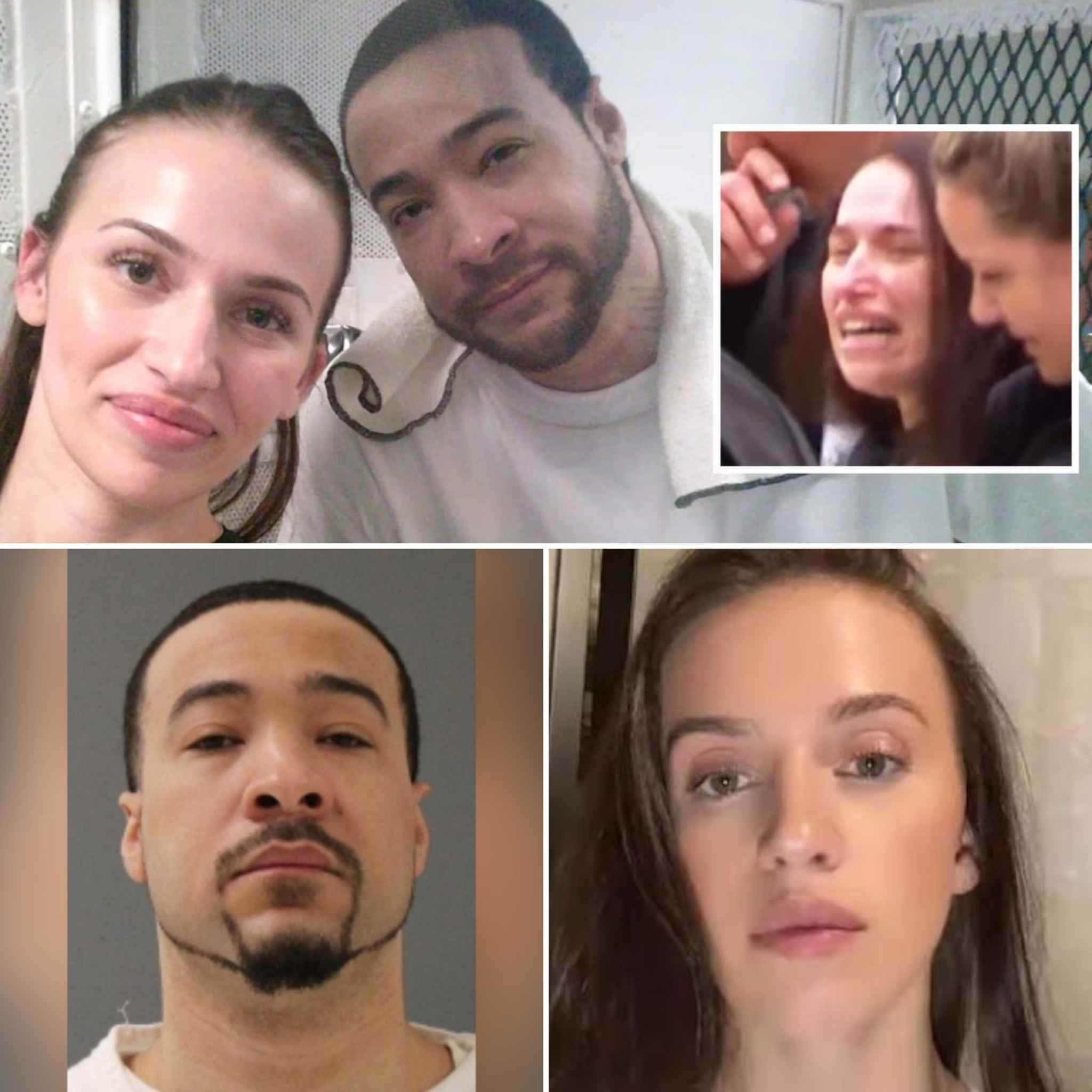
The execution of Texas death row inmate James Broadnax has sparked renewed public debate over capital punishment, wrongful conviction claims, and the emotional aftermath experienced by families connected to violent crimes.
But beyond the legal arguments and courtroom filings, one deeply personal story has captured attention online and across international media: the relationship between Broadnax’s British wife, Tiana Krasniqi, and the daughter of one of the men Broadnax was convicted of killing.
The unlikely connection has become one of the most emotionally complex aspects of a case already surrounded by controversy.
Broadnax was executed by lethal injection in Texas on April 30, 2026, after being convicted in the fatal shootings of two music producers during a robbery in Garland, Texas, in 2008.
Just days before his execution, he married Tiana Krasniqi, a 31-year-old law school graduate originally from South East London.
Now, following his death, Krasniqi has publicly described the trauma of witnessing the execution and has spoken openly about her friendship with McKayla Butler, whose father, Matthew Butler, was one of the victims in the case.
The relationship between the two women has shocked many observers because it developed despite standing on opposite sides of one of Texas’s most serious criminal cases.
The Crimes That Led to Death Row

James Broadnax was convicted in connection with the 2008 killings of music producers Matthew Butler and Stephen Swan.
According to prosecutors, the men were robbed and fatally shot in the parking area of a recording studio in Garland, near Dallas.
Authorities maintained throughout the case that Broadnax was the gunman responsible for firing the fatal shots.
His cousin, Demarius Cummings, also received a life sentence without parole related to the same crime.
For years, prosecutors argued the evidence—including statements Broadnax allegedly gave to investigators—proved his direct involvement in the killings.
However, Broadnax later withdrew earlier admissions and insisted he had been wrongly identified as the shooter.
His legal team repeatedly argued that his police statements were unreliable because he had allegedly been under the influence of PCP during questioning.
A Last-Minute Confession Changes the Narrative

Shortly before the execution, the case drew renewed attention after Demarius Cummings reportedly recorded a statement claiming he—not Broadnax—had been the actual shooter.
According to Broadnax’s legal team, the statement supported longstanding arguments that the wrong man was facing execution.
Cummings allegedly stated:
“It was me. I was the killer.”
Broadnax’s lawyers argued the confession aligned with forensic evidence they believed supported their client’s innocence.
Defense attorneys also claimed DNA connected to Cummings—not Broadnax—was reportedly found on the weapon involved in the killings.
Despite those arguments, Texas authorities proceeded with the execution after appeals failed.
Prosecutors continued maintaining that Broadnax had admitted involvement and that evidence presented during trial supported the conviction.
Family members of the victims also strongly rejected the last-minute confession.
Matthew Butler’s mother, Theresa Butler, reportedly dismissed it as a desperate legal tactic designed to delay the execution.
A Relationship That Began Through Letters and Calls

While legal battles continued, another story quietly developed behind prison walls.
Tiana Krasniqi, a British graduate student and law school graduate, had formed a relationship with Broadnax while he was on death row.
The relationship eventually became serious enough that the pair married shortly before his execution.
Krasniqi later traveled from the United Kingdom to Texas in order to be present during his final days.
She has since publicly spoken about the emotional toll of witnessing the execution and the deep bond she believed they shared.
Cases involving romantic relationships with death row inmates are rare but not unprecedented.
Psychologists note that such relationships can form through:
- prison outreach programs
- letter-writing campaigns
- legal advocacy
- emotional attachment formed over years of communication
In this case, however, the story became even more unusual because of another connection that developed alongside it.
The Unexpected Friendship With a Victim’s Daughter

According to Krasniqi, she was contacted earlier this year by McKayla Butler, the daughter of victim Matthew Butler.
The two women eventually developed a friendship through lengthy phone conversations.
Krasniqi stated they spoke openly about:
- the case
- the execution
- family trauma
- unanswered questions surrounding the investigation
She later described their conversations as emotional and deeply personal.
According to Krasniqi:
“We both cried and decided to stay in touch.”
The relationship quickly drew public attention because it challenged expectations surrounding victims’ families and condemned inmates.
Different Perspectives Inside the Victim’s Family
One of the most complicated aspects of the story is that different members of the victim’s family appear to hold different views about Broadnax’s guilt and execution.
Krasniqi claimed McKayla Butler believed Broadnax should not have been executed and questioned whether he had truly been the shooter.
However, Matthew Butler’s mother publicly defended the prosecution’s case and rejected claims of innocence.
This contrast highlights how families connected to violent crimes do not always respond uniformly.
Within many high-profile criminal cases, relatives may disagree about:
- punishment
- forgiveness
- innocence claims
- the justice system itself
These internal divisions can create lasting emotional strain long after trials end.
Claims of Racial Bias During Jury Selection
Broadnax’s legal team also raised constitutional concerns related to jury selection during the original trial.
According to court filings, attorneys alleged prosecutors disproportionately removed Black prospective jurors during selection.
The defense argued prosecutors used a system that identified Black jurors during jury review.
Such allegations reference the 1986 U.S. Supreme Court decision in Batson v. Kentucky, which ruled that excluding jurors on the basis of race violates constitutional protections.
Ultimately, however, courts did not overturn the conviction based on those claims.
Still, the allegations contributed to broader public debate surrounding fairness in death penalty prosecutions.
Rap Lyrics Used During Trial
Another controversial issue involved prosecutors introducing rap lyrics allegedly written by Broadnax.
According to court records, prosecutors used excerpts referencing violence, robbery, and drugs during sentencing proceedings to argue Broadnax posed a future danger.
Critics of this practice argue that using artistic expression as evidence can unfairly influence juries and reinforce racial stereotypes.
Supporters argue such material can sometimes reflect intent or mindset depending on context.
The use of rap lyrics in criminal trials has become an increasingly debated issue across the United States in recent years.
Witnessing an Execution
After the execution, Krasniqi publicly described the emotional trauma she says she experienced while witnessing Broadnax’s death.
She spoke about:
- panic attacks
- flashbacks
- grief
- emotional collapse after the procedure
According to her account, Broadnax’s final words to her included:
“Don’t give up” and “I love you.”
She also described the experience of watching him strapped to the execution gurney moments before lethal injection began.
Executions are highly controlled legal procedures, but witnesses—including family members, journalists, spiritual advisors, and attorneys—often describe them as emotionally overwhelming experiences.
Psychologists note that witnessing state executions can create lasting trauma responses, particularly for loved ones emotionally connected to the condemned person.


The Larger Debate Around the Death Penalty
The Broadnax case has become part of a broader national debate over capital punishment in the United States.
Supporters of the death penalty argue it remains appropriate in severe homicide cases involving multiple victims.
Critics argue the system carries too much risk of:
- wrongful convictions
- racial disparities
- inconsistent sentencing
- irreversible mistakes
Cases involving late confessions or disputed evidence often intensify those concerns.
According to legal experts, even unsuccessful last-minute appeals can significantly shape public perception of a case.
Why This Story Captured So Much Attention
Several factors combined to make the Broadnax case unusually visible online:
- a last-minute confession
- claims of wrongful conviction
- a marriage shortly before execution
- emotional eyewitness accounts
- a friendship involving a victim’s daughter
- debates about race and the justice system
Together, these elements transformed the case from a standard death penalty story into a deeply emotional and polarizing public discussion.
Social media further amplified the story after Krasniqi began posting videos from Texas discussing the execution and her relationship with Broadnax.
The Human Complexity Behind High-Profile Cases
One reason stories like this resonate so strongly is because they resist simple narratives.
The case involves:
- grieving families
- disputed evidence
- emotional relationships
- conflicting beliefs about justice
- arguments over race and fairness
- trauma experienced on multiple sides
For some observers, the execution represented justice finally carried out after years of legal appeals.
For others, lingering questions about evidence and fairness left discomfort even after the sentence was completed.
Emotional Fallout After Execution
Following the execution, Krasniqi has continued publicly discussing her grief.
She described struggling with:
- recurring flashbacks
- fear
- emotional instability
- feelings of helplessness
Her comments illustrate how capital punishment cases often continue affecting people emotionally long after legal proceedings end.
While the legal process may conclude with an execution, the emotional consequences often continue for:
- families of victims
- relatives of the condemned
- attorneys
- witnesses
- advocates on both sides
Conclusion
The execution of James Broadnax closed one of Texas’s most closely watched death penalty cases of recent years.
But the case also left behind unresolved public debate about guilt, race, evidence, and the emotional cost of capital punishment.
At the center of that debate stands an unlikely and deeply complicated relationship between a British woman who married a condemned inmate and the daughter of one of the victims connected to the case.
Their friendship challenged expectations about grief, forgiveness, and the human relationships that sometimes emerge even in the darkest legal cases.
Whether viewed as a story about justice, tragedy, controversy, or emotional survival, the Broadnax case continues raising questions that remain deeply divisive in America:
How certain must society be before carrying out an irreversible punishment?
Can legal closure ever truly heal emotional loss?
And what happens to the people left behind after the execution chamber doors close?