Chance or Design? The Truth Behind Evolution
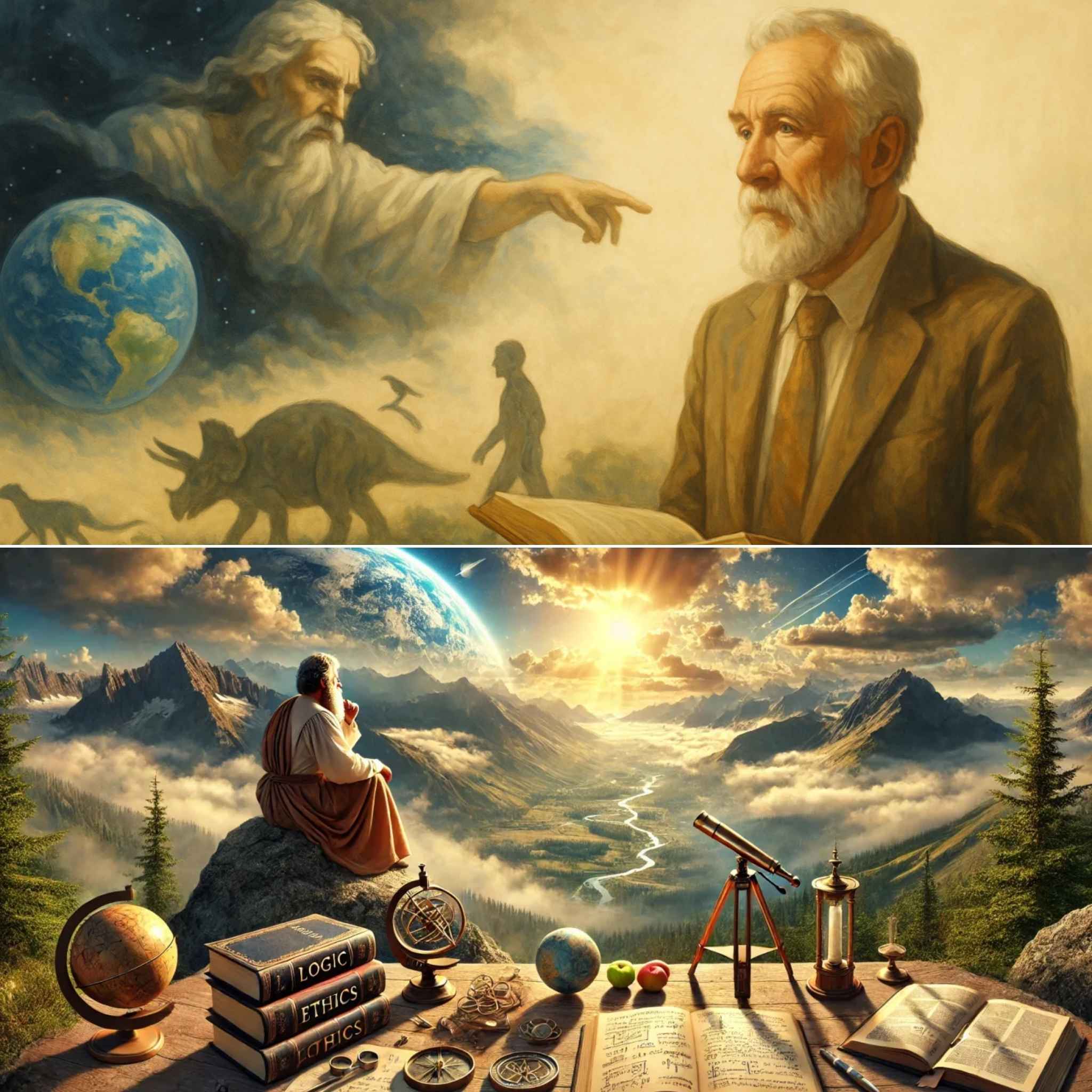
In this episode, Karlo Broussard responds to prominent atheists like Richard Dawkins and Christopher Hitchens, challenging the claim that evolution’s randomness eliminates the need for God by showing that chance actually presupposes an underlying order or design. Drawing on classical philosophy and the teachings of Thomas Aquinas, Karlo argues that evolutionary processes can fit within divine providence, rather than undermine it.
The Evolution Debate: Richard Dawkins and Christopher Hitchens
In his 1986 book The Blind Watchmaker, popular atheist Richard Dawkins famously wrote:
“Although atheism may have been logically tenable before Darwin, Darwin made it possible to be an intellectually fulfilled atheist” (pg. 6).
This statement encapsulates the belief held by many atheists that Darwin’s theory of evolution provides a naturalistic explanation for life that renders belief in a divine Creator unnecessary. The idea that life, as we know it, could have evolved from random mutations and natural selection without the need for a higher power has gained significant traction in modern secular thought.
But are these claims valid? Karlo Broussard contends that they are not. In today’s episode, he’s going to focus on two main objections raised by atheists that attempt to use evolution as proof that God is unnecessary, and show why neither one actually undermines the need for a Creator.
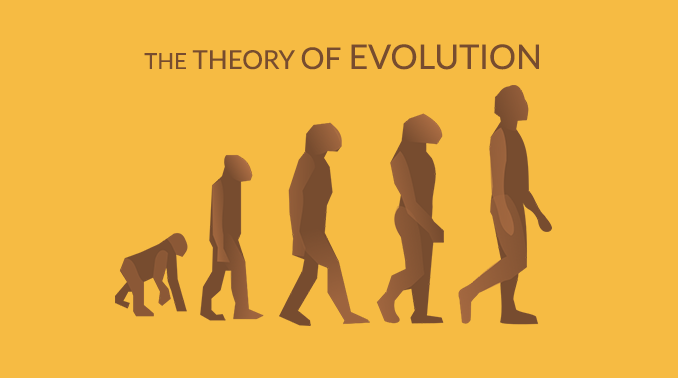
The First Objection: Evolution Eliminates the Need for an Intelligent Designer
The first and most common argument made by atheists is that evolution removes the need for an intelligent designer because genetic mutations are random. This, they argue, means that the process of evolution is driven by chance, and if chance is at work, then there is no need for a purposeful designer behind it.
Christopher Hitchens, in his 2009 debate with William Lane Craig titled “Does God Exist?” famously said:
“It’s not very much contested anymore that we are not designed as creatures, but that we evolved by a rather laborious combination of random mutation and natural selection into the species that we are today.”
Later, in the debate, Hitchens doubled down on this point:
“I don’t believe that we are here as the result of a design.”
To Hitchens, and many other atheists, evolution is driven by random mutation, and if things happen by chance, then there is no design involved. And if there is no design, then there is no designer—no God.
Challenging the Claim: Chance and Design Are Not Mutually Exclusive
Karlo Broussard pushes back on this claim, showing that it rests on a false assumption: that chance and design are mutually exclusive. According to classical philosophy, especially the teachings of Aristotle, chance isn’t a force that does things on its own. Rather, chance is the result of different causes coming together in a way that none of them specifically intended.

Here’s an example:
Let’s say you head to the grocery store to buy milk for your kids’ cereal, while your friend, Joe, is going to the same store to buy bread for his kids. You both end up meeting in the cereal aisle and start talking. That’s a chance meeting.
However, the key point is that both of you were acting intentionally with specific goals in mind. The chance encounter was a byproduct of your purposeful actions. In other words, chance presupposes design.
Karlo also gives another example involving a person digging a grave and unexpectedly discovering buried treasure. The person digging had one goal—dig a hole. The person who buried the treasure had another goal—to hide something valuable. When the treasure was discovered, neither person intended for it to happen, but it resulted from the intersection of two separate, directed actions.

This principle applies to evolution. Genetic mutations may appear random, but they occur within an already existing biological system, one governed by natural laws and physical constants. Mutations do not occur in a vacuum; they depend on an organized, ordered system to take place. And so, randomness doesn’t cancel out design; it exists within a framework of design.
If we acknowledge that the universe is designed, then even random mutations in evolution happen within a system that is already governed by divine design.
The Second Objection: Chance Means Something Has Escaped God’s Providence
The second concern raised by some atheists is that if new beings emerge by chance, then something has escaped God’s providence. This objection holds that if random mutations are happening in evolution, then God isn’t in control of every part of creation. This would make God less than omnipotent, which contradicts the classical theistic view of a God who is the universal cause and governor of all things.
Explaining Divine Providence and Governance
In response to this concern, Karlo Broussard points out that in the classical theistic view, everything—including chance—still falls under God’s providence. The concept of divine providence involves two key aspects: the plan and the execution.
- The Plan: This is the divine ordering of all things toward an ultimate end. God, in His intellect, has a complete blueprint for creation, including all the events and actions that will unfold.
- The Execution: This is how the plan is carried out. God doesn’t directly intervene in every event, but He governs everything through secondary causes—like natural processes, human actions, and even chance encounters.
For example, while a laborer might accidentally find treasure while digging, that accident is still under God’s providence, as God is the ultimate cause of both the worker’s actions and the treasure being hidden.
Even in the case of evolution, where mutations may seem random, they still fit within God’s divine plan. Everything in creation, including random events, serves a purpose in God’s ultimate design. God’s providence does not exclude chance; instead, it includes and directs it.
Karlo concludes that chance does not mean something has escaped God’s plan. Instead, everything that happens, even random mutations in evolution, is part of God’s divine governance.
Conclusion: Evolution Does Not Eliminate God
In the end, Karlo Broussard’s argument is simple: Chance does not rule out God. In fact, without the foundation of design, there wouldn’t even be room for chance. Everything that we perceive as random or by chance is actually unfolding within a world that has been designed by God, with a purposeful end in mind.
So, when it comes to evolution, believers need not fear that it undermines the existence of God. Instead, they can view it as part of the ongoing process of divine providence, where even randomness still points to the intelligent design of a Creator.