📜 Hidden in Scotland’s Highlands: The Secret Whisky Still That History Forgot
The mist‑shrouded hills of the Scottish Highlands have once again revealed a secret long buried by time — a secret that combines archaeology, whisky lore, and centuries of local ingenuity.
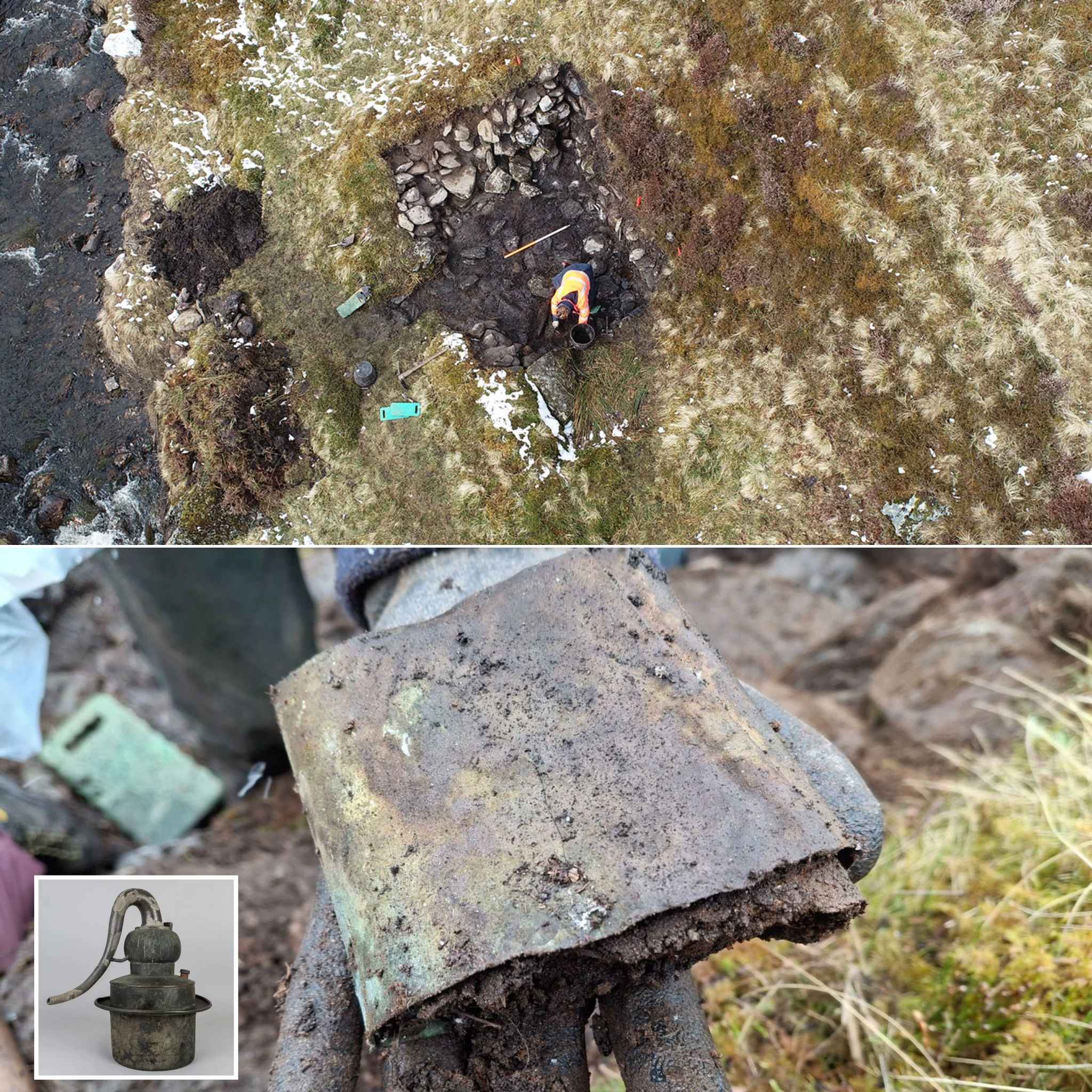
*Scenic Highlands landscapes and the archaeological site where researchers uncovered evidence of a secret whisky still. Photos: *
🏞️ A Bothy Hidden in the Hills
In the Ben Lawers National Nature Reserve — a rugged and pristine part of Scotland cared for by the National Trust for Scotland — archaeologists and volunteers have uncovered the remnants of what appears to be an illicit whisky distillery that thrived more than two centuries ago.
The discovery came to light during targeted excavations near the upper reaches of the Lawers Burn, a mountainous stream winding through the reserve’s remote terrain. Excavators found not just stones and soil, but tangible evidence that this place was once used to produce whisky in secret.
🍀 What Did They Find?
Among the most telling discoveries was a piece of copper alloy, believed to be part of a whisky still — specifically a connecting collar between a still and its lyne arm. In Gaelic, this component is known as An Gearradan, meaning the piece that controlled how much vapor returned to the pot during distillation. Archaeologists matched the fragment with illustrations from early 20th‑century Gaelic sources.
But that wasn’t all:
- A well‑constructed hearth was buried under the ground, with clear signs of burning.
- A stone‑capped drain ran beneath the floor — a sophisticated feature for a clandestine structure.
- A timber roof support post was discovered buried under collapsed stones.
All signs pointed to a purpose‑built bothy — a small stone shelter — specifically designed for secret distilling.
🥃 Whisky, Taxes, and a Highland Battle of Wits
To understand why this hidden bothy existed, we have to go back to the late 18th century. In the 1780s, the UK government imposed taxes and strict licensing requirements on whisky production. Many Highland farms and crofts had been producing unlicensed whisky — a vital source of income — long before then. But with taxes came enforcement: excise officers were dispatched across the Highlands to find and destroy illegal stills.
In response, distillers became ingenious. They moved their operations to remote upland areas, building hidden bothies and carrying out distillation under the cover of hills and glens. The tough terrain worked in their favor, providing natural concealment and distance from the authorities.
As Derek Alexander, Head of Archaeology at the National Trust for Scotland, put it:
“In the early 19th century, illicit whisky distilling in these hills became a real battle of wits between excise officers and distillers. Those who distilled spirit in this bothy will have picked the location carefully to make sure they were well hidden.”
🧭 Was This Still Ever Caught?
Interestingly, the find suggests this still may never have been seized by authorities. Because if excise officers had discovered the operation, the equipment would almost certainly have been destroyed. The fact that parts were found suggests the distillers dismantled the still quickly when danger approached, possibly leaving behind just this small copper fragment in their haste.
This discovery marks the fifth illicit distillery site found within Ben Lawers, but it’s the first where part of a still itself has been recovered — making it especially rare and exciting to historians and archaeologists alike.
🧠 Why It Matters
This small piece of copper — sitting quietly in the Highland soil for centuries — tells a big story about daily life, survival, and resistance in rural Scotland. It’s not merely about whisky; it’s about:
- 📍 The resourcefulness of Highland communities in the face of restrictive laws.
- ⚖️ The cat‑and‑mouse game between local distillers and government enforcers.
- 🏔️ The way Scotland’s dramatic landscapes shaped human activity and culture.
And as more such sites are studied, archaeologists hope to piece together a detailed picture of the social and economic importance of illicit whisky distilling in a time when life was hard and every resource counted.

🍁 What do you think this tells us about Scottish history and culture?
Is the story of illicit distilling just fun folklore — or a deeper symbol of Highland identity? Share your thoughts below!
👉 Follow for more hidden history and archaeological discoveries!