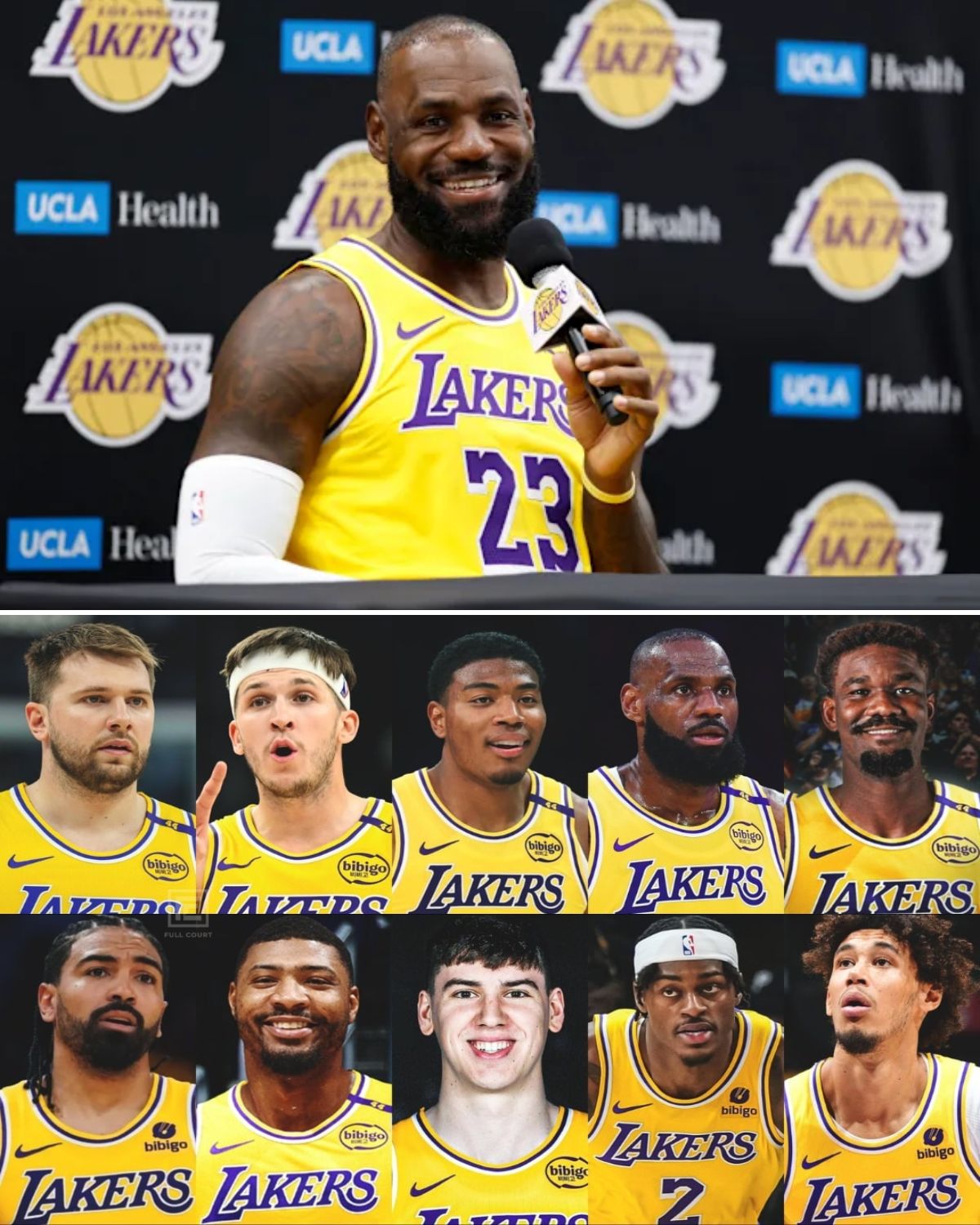
The Lakers’ biggest offseason priority will be centered around making five decisions that could define their future after a brutal playoff exit.
The Lakers’ playoff run came to a devastating end on Monday, with a 115-110 loss to the Oklahoma City Thunder, completing a second-round sweep. While the loss doesn’t require any dramatic analysis, it leaves the Lakers’ front office with difficult decisions ahead as they determine how much of the current roster should return for next season. The roster simply wasn’t strong enough to extend the series, and now it’s time to rethink their approach.
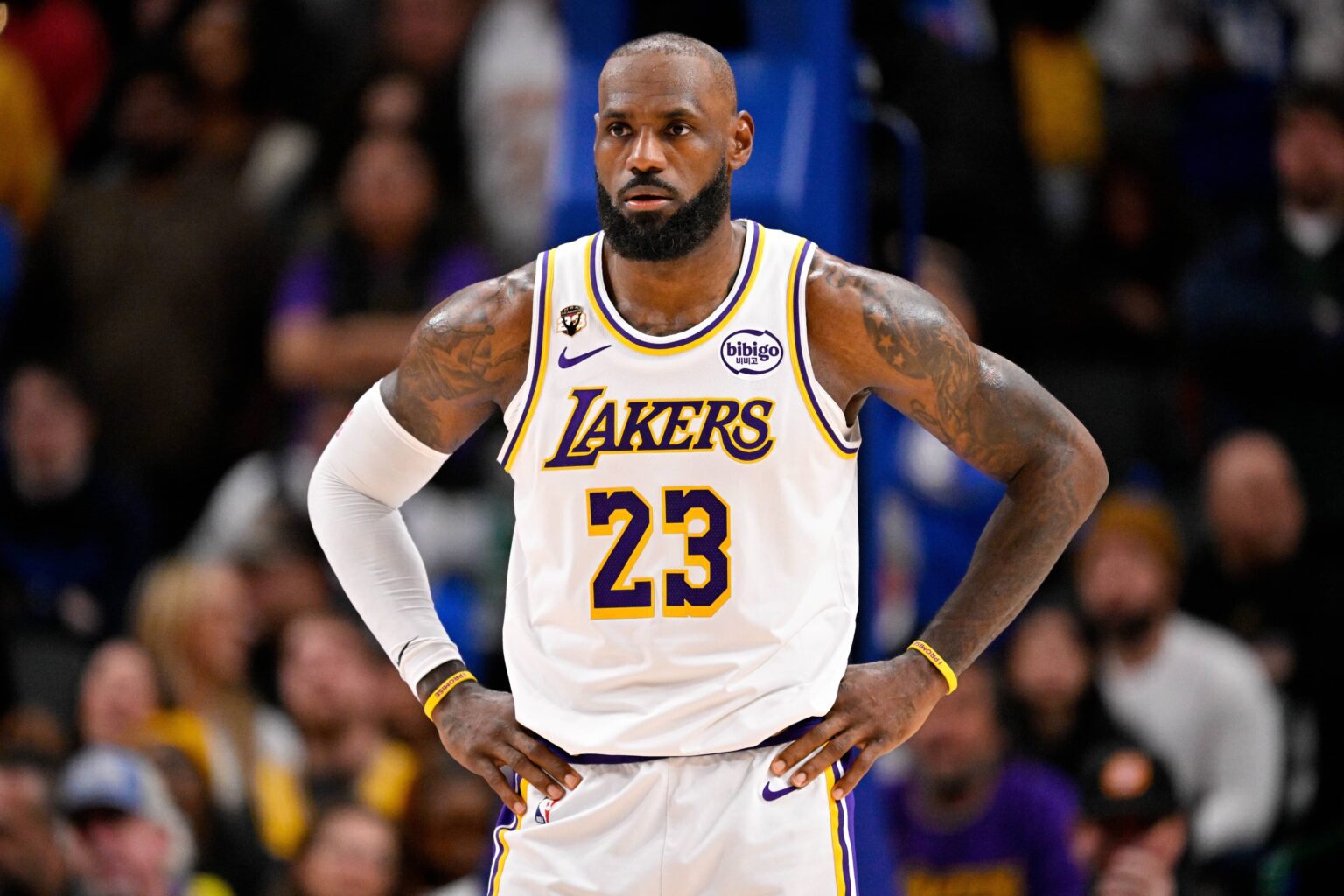
LeBron James will be the first major decision. After completing his 23rd NBA season, James is set to become an unrestricted free agent. Whether he decides to retire, return to the Lakers, or embark on one last title chase with another team will significantly affect the Lakers’ plans. The team cannot finalize their summer plans without understanding James’ decision.
Austin Reaves is the second critical question. He holds a $14.9 million player option for next season, but all signs suggest he will decline it in favor of a better deal. This puts the Lakers in a tough spot: either pay Reaves as a long-term piece of their core or trade him for a larger move.
Beyond James and Reaves, the Lakers must make more aggressive decisions this offseason. They need another playmaker, more athletic size, shooting, and a significant move to elevate their ceiling rather than simply maintaining their current level.
5. Re-Sign Rui Hachimura and Marcus Smart
The Lakers should start their offseason by securing Rui Hachimura and Marcus Smart, but they must be strategic about the money they offer. The Lakers shouldn’t make emotional decisions; they need these two players, but only at prices that do not block any larger moves.
Hachimura’s deal is the more significant one. After completing the final season of a three-year, $51 million deal, he is set to become an unrestricted free agent. His last cap hit was $18.3 million, so his next contract will likely be higher. A reasonable offer would be three years, $60 million to $66 million. If the market becomes too aggressive, they can extend it to four years, $80 million, but anything beyond that could hurt future flexibility.
Hachimura averaged 11.5 points, 3.3 rebounds, and 0.8 assists this season, with 51.4% field-goal shooting and 44.3% from three. These numbers show the type of efficiency the Lakers need from their role players. However, while Hachimura fits well in a larger lineup, he is not a lockdown defender and doesn’t address the Lakers’ perimeter defense needs. At $20 million to $22 million, he is an ideal starter or a top-tier bench player. Anything higher could hinder flexibility.
Marcus Smart, who signed a two-year, $10.5 million deal with a $5.4 million player option for 2026-27, is in a different situation. If he opts out, the Lakers should look to re-sign him on a short deal—ideally two years, $13 million to $15 million.
Smart averaged 9.3 points, 2.8 rebounds, 3.0 assists, and 1.4 steals while shooting 39.5% from the field and 33.1% from three. His shooting is limited, but his defense and leadership have valuable playoff edge. The Lakers should re-sign both, but only at reasonable prices that do not tie up too much of their cap space.
4. Sign Walker Kessler in Free Agency
The Lakers should target Walker Kessler aggressively, although acquiring him through free agency will not be straightforward. Kessler is a restricted free agent, meaning the Utah Jazz can match any offer sheet. The Lakers must offer enough to make the Jazz seriously consider whether to keep him.
Kessler is a perfect fit for what the Lakers need: a defensive center who can protect the rim, rebound, finish without needing plays, and cover defensive mistakes behind Luka Doncic and Austin Reaves. His stats before a shoulder injury this season were impressive, including 14.4 points, 10.8 rebounds, 3.0 assists, 1.4 steals, and 1.8 blocks per game. He also shot 70.3% from the field. While his sample size was small, his skill set is solid.
Kessler’s qualifying offer is $7.1 million, but his market value is significantly higher. A fair offer for him would be around four years, $112 million, which would make him a $28 million per season player. If the Lakers want to push the Jazz to make a decision, they may need to offer closer to $120 million over four years, with the last season as a player option.
The Jazz have a crowded frontcourt with Lauri Markkanen and Jaren Jackson Jr. already in place, and keeping Kessler, Markkanen, and Jackson might not be feasible long-term. The Lakers’ interest in Kessler has been well-known, and they may be able to sign him to an offer sheet, forcing the Jazz to decide whether to match.
The risk is obvious: committing a significant amount of money to Kessler could limit the Lakers’ flexibility. But a defensive center is a significant need, and Kessler addresses that gap in a way that the Lakers’ current roster does not.
3. Trade for Herb Jones
Los Angeles Lakers Receive: Herb Jones
New Orleans Pelicans Receive: Jarred Vanderbilt, Dalton Knecht, 2031 First-Round Pick
Herb Jones would be an ideal trade target for the Lakers if they want to fix their perimeter defense without adding another high-usage player. The Lakers don’t need another player who demands 18 shots per game—they need a wing defender who can guard elite scorers, play within the system, and contribute without taking over.
Jones is a high-level defender on a deal that could still hold value for the Lakers. After agreeing to a three-year, $68 million extension last summer, his salary will rise to $24.2 million by the 2029-30 season. The Lakers’ offer could consist of Jarred Vanderbilt, Dalton Knecht, and a 2031 first-round pick. Vanderbilt would give the Pelicans a cheaper defensive option, while Knecht adds shooting and youth at a low cost.
Jones averaged 8.9 points, 3.4 rebounds, 2.8 assists, and 1.6 steals this season. His shooting is a concern, with a 38.3% field-goal percentage and 30.9% from three, but his defense makes him valuable. He was named to the All-Defensive First Team in 2023-24, and his versatility could give the Lakers an elite perimeter defender.
Jones wouldn’t be an offensive solution for the Lakers, but his defense would fill a critical gap, especially alongside Luka Doncic and Austin Reaves. The Lakers should make this trade to improve their defense without sacrificing offensive versatility.
2. Re-Sign Austin Reaves with a Long-Term Deal
Re-signing Austin Reaves should be a priority, but the Lakers have to ensure the contract is fair for both sides. Reaves has become far too valuable to treat as a regular role player, but he isn’t the type of player who should be paid like a max contract player.
Reaves has a $14.9 million player option for 2026-27. If he declines it, the Lakers will have the option to re-sign him using their cap space, then use Bird rights to keep him after any major moves are made.
Reaves averaged 23.3 points, 4.7 rebounds, and 5.5 assists in 51 games this season, with a true shooting percentage of 64.1%. His ability to shoot and create offense makes him crucial to the Lakers’ plans, especially next to Doncic. Reaves has already turned down a four-year, $89.2 million extension, which is why the Lakers must act swiftly.
Reaves’ market value is expected to be between $35 million and $40 million per year. The Lakers should aim for something closer to $28 million to $30 million per year, with a four- or five-year deal worth between $112 million and $150 million. That would keep Reaves in the range of a third option, but not exceed what he is truly worth.
1. Sign-and-Trade LeBron James
Los Angeles Lakers Receive: Sam Merrill, Jaylon Tyson, 2031 Second-Round Pick
Cleveland Cavaliers Receive: LeBron James
The Lakers must consider signing and trading LeBron James, even if it feels uncomfortable. James has played at an elite level for 23 seasons, but his next contract may no longer fit into the Lakers’ vision of the future.
James made $52.6 million this season, and paying him that amount again would significantly limit the Lakers’ ability to make other moves. A sign-and-trade to the Cleveland Cavaliers for a deal around $14 million to $16 million would be a clean exit that allows the Lakers to rebuild around Luka Doncic.
The Cavaliers would benefit from bringing James back for one final season, adding him alongside Donovan Mitchell and Evan Mobley. For the Lakers, this deal would open up cap flexibility, allowing them to focus on building a new roster around Doncic, Austin Reaves, and other core players. If James won’t take a massive discount to stay, this may be the best option.
The Lakers’ front office must face reality: they cannot re-sign everyone at their desired price points. A sign-and-trade is the best solution if they want to start fresh with a more flexible salary cap.
![Bold & Beautiful Preview: [Spoiler] Serves Deacon and Taylor a Jarring Reminder That They Should Lock the Dang Door!](https://soaps.sheknows.com/wp-content/uploads/2026/06/Screen-Shot-2026-06-12-at-1.58.48-PM.png?resize=681%2C397)