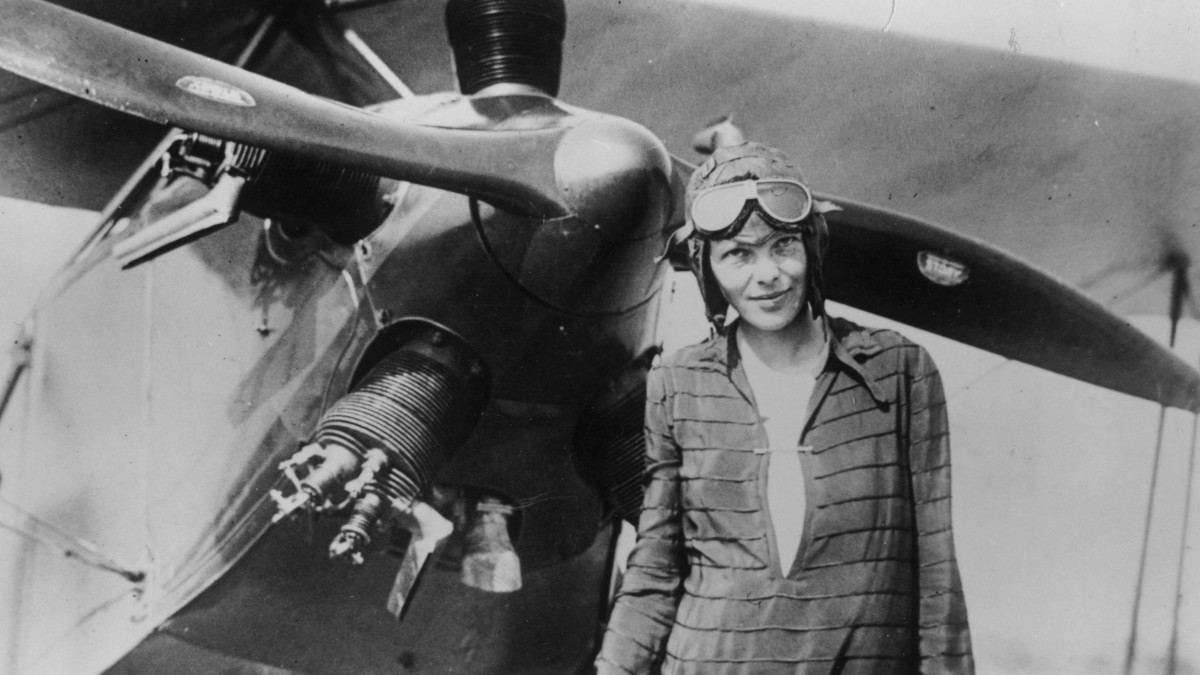
After 88 years of silence, one of the greatest mysteries in modern history may finally be cracking open. New evidence suggests that Amelia Earhart’s missing Lockheed Electra may have been hiding in plain sight all along—submerged in the shallow lagoon of Nikumaroro Island, a remote speck of land in the western Pacific that has long haunted researchers. What was once dismissed as rumor is now taking shape as something far more disturbing—and far more real.

Recent high-resolution satellite images have revealed a strange, aircraft-shaped form beneath the lagoon’s surface. Labeled the “Taraia Object,” the shadowy outline bears an uncanny resemblance to a fuselage and wing structure. Its proportions, angles, and location align eerily well with Earhart’s last known flight path. For the first time in nearly a century, the possibility that she did not vanish into the open ocean feels terrifyingly close to confirmation.

Even more unsettling is the object’s apparent appearance in historical aerial photographs dating back to 1938, just one year after Earhart disappeared. Researchers now believe these early images may have unknowingly captured the wreckage before coral growth and sediment obscured it. If true, it would mean the answer to one of aviation’s greatest riddles has been visible for decades—ignored, misidentified, or deliberately overlooked.
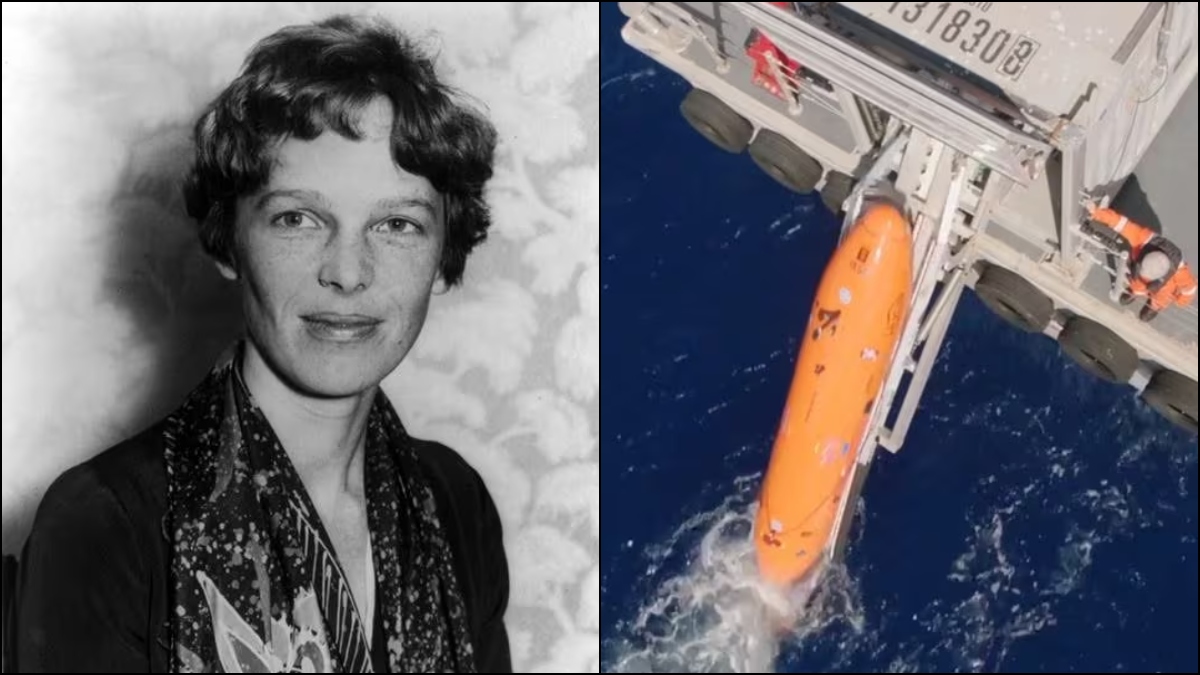
Now, an unprecedented expedition is being prepared. This November, a 16-member international team led by Purdue University and the Archaeological Legacy Institute will descend on Nikumaroro with technology never before used at this site. Advanced sonar, sub-bottom scanners, and autonomous underwater vehicles will probe the lagoon’s depths, navigating treacherous coral formations that may have protected the wreckage like a natural vault.
Unlike previous searches that focused on deep ocean trenches, this mission targets shallow water, where Earhart may have made a desperate emergency landing. Researchers have reconstructed tides, winds, and currents from 1937 and believe the Electra could have slid into the lagoon intact—trapping secrets that have waited nearly a century to surface.
Speculation is exploding. If the aircraft is confirmed, personal artifacts could still remain inside—tools, navigational instruments, even traces of Earhart’s final attempts to survive. Some researchers believe the wreckage could reveal signs of repair, signaling that she lived longer than officially recorded. Others fear the discovery may uncover evidence too haunting to dismiss.
Still, experts warn that the Taraia Object could be something else entirely—a coral formation, a sunken boat, or debris from a later era. Until the expedition reaches the site, certainty remains just out of reach. But the growing body of evidence has already reignited a global obsession.
As the expedition countdown begins, the world stands at the edge of history. Was Amelia Earhart lost at sea—or did she reach land, only to be forgotten by time? If the lagoon yields its secret, it won’t just solve a mystery. It will rewrite the final chapter of a legend whose courage refused to disappear.