How a Single Fossil Is Rewriting the History of Prehistoric Healthcare
Around 60,000 years ago, deep within the icy expanse of what is today Siberia, a Neanderthal adult faced a problem that resonates eerily with the dental woes of people today: a rotten tooth. But rather than simply enduring the pain, this individual appears to have sought treatment — not merely surviving the ailment but undergoing a precise, intentional drilling procedure that may represent the earliest known example of dental care in prehistory.
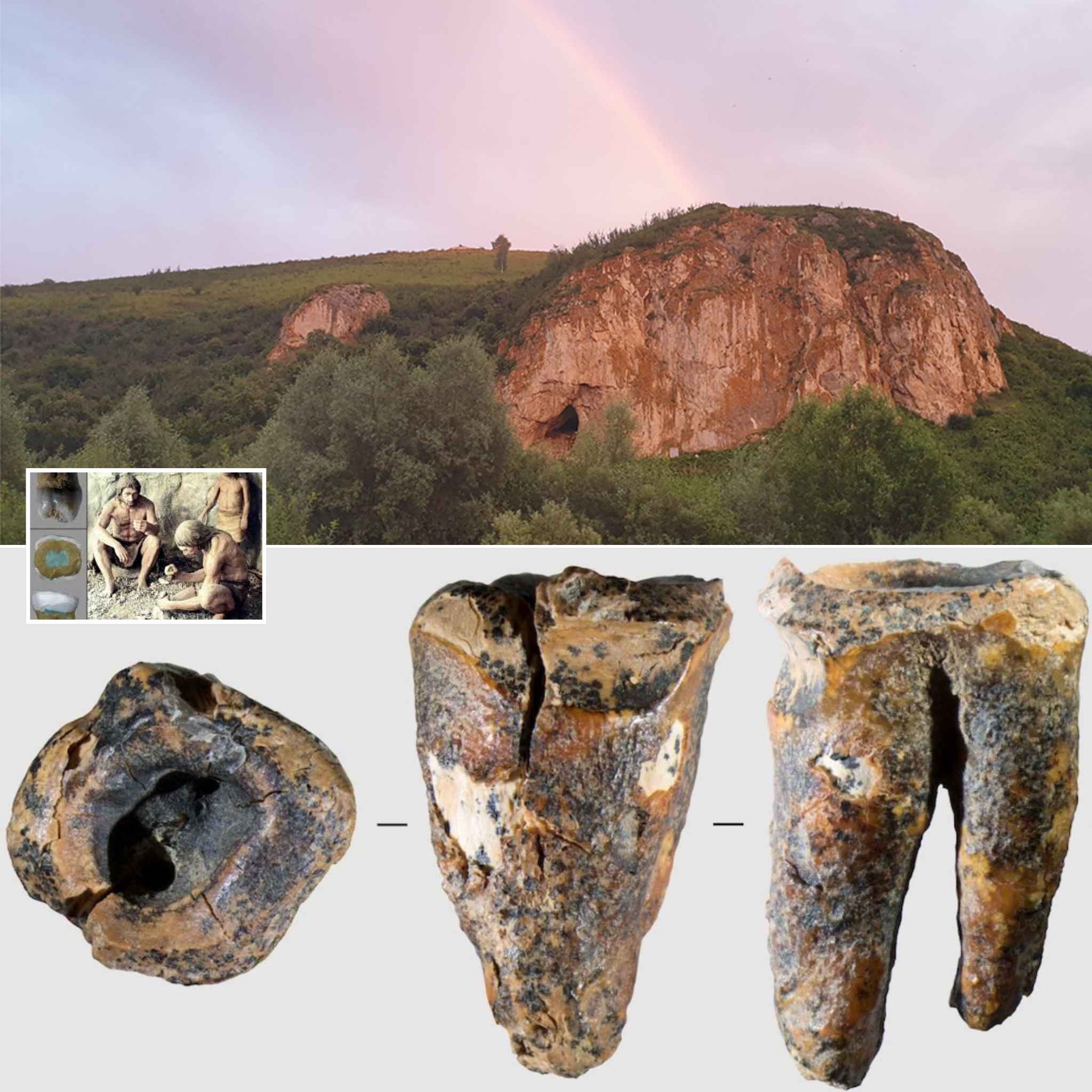
This discovery, published in PLOS One on May 13, 2026, dramatically pushes back the timeline of intentional dentistry — previously thought to be a uniquely human innovation — by tens of thousands of years. It challenges the assumption that such invasive medical behavior was exclusive to Homo sapiens, revealing instead that our closest evolutionary cousins, the Neanderthals, possessed sophisticated biological knowledge and fine motor skills far earlier than previously believed.

A Siberian Puzzle: The Discovery of a Drilled Tooth
In 2016, a team of archaeologists working in Chagyrskaya Cave — a prehistoric site nestled in southwestern Siberia — unearthed a single lower molar from a Neanderthal adult. At first glance, it was clearly not an ordinary tooth: a large, anomalous hole marred its surface. But the purpose and origin of that hole remained mysterious for years.
Was it an injury? A rare pathology? A post‑mortem accident? At the time, scientists could only speculate.
A Closer Look at the Evidence

Recent microscopic and experimental analyses have now transformed that mystery into one of the most remarkable insights into Neanderthal behavior to date:
- The hole measures approximately 4.2 mm in length, 2.8 mm in width, and 2.6 mm in depth — far too regular to be a random crack or result of wear.
- Beneath its surface, two distinct patches of deep demineralization were identified — clear signs of severe tooth decay.
- Along the rim of the cavity lay tiny, finely patterned grooves — clues that the hole was not accidental but intentionally made.
To test various hypotheses, researchers recreated conditions on three modern human teeth using stone tools made from jasper, a material known from the Chagyrskaya site. Only a twisting motion with a pointed stone implement produced grooves identical to those seen on the Neanderthal molar.
This evidence points strongly not merely to remedial action but to a deliberate and technically controlled procedure aimed at removing diseased tissue — in effect, a prehistoric form of dentistry.
Neanderthals: Pioneers of Prehistoric Healthcare

The implications of this discovery are staggering. Until now, the earliest confirmed evidence of intentional dental treatment in humans came from a Homo sapiens tooth found in Italy dated to around 14,000 years ago. These newly analyzed Neanderthal teeth precede that by roughly 45,000 years, fundamentally reshaping the timeline of healthcare in the human lineage.
“This Is More Than Healing — It’s Awareness”
John W. Olsen, a study co‑author and professor emeritus of anthropology at the University of Arizona, put it succinctly:
“The fact that this invasive treatment took place — and the individual survived — suggests a truly sophisticated Neanderthal understanding of human biology and when intervention was necessary.”
This wasn’t mere chance or rudimentary probing. The precision of the hole and the survival of the individual indicate intentional, informed action — possibly even by a second party assisting in the procedure or through self‑treatment with deliberate tools.
Gregorio Oxilia, a dental anthropologist not involved in the study, emphasized the broader significance:
“This suggests that the roots of invasive medicine and surgery do not belong exclusively to Homo sapiens, but are part of a broader legacy shared with our closest relatives.”
How the Drilled Tooth Was Analyzed

Scientists employed a suite of advanced techniques to analyze the tooth:
Microscopic Analysis
Under high magnification, two distinct areas of deep demineralization were visible:
- One at the gum line, likely where decay first developed.
- Another overlapping a more substantial cavity, where the drilling would have occurred.
These features are consistent with an attempt to access and remove infected tissue rather than incidental damage.
Experimental Replications
To understand tool‑related wear patterns, researchers tested a variety of prehistoric stone tools on modern teeth. Only one motion — a controlled twisting movement using a slender pointed implement — recreated the fine grooves along the edges of the cavity.
Artifacts already known from Chagyrskaya Cave include long, thin stone tools with expertly sharpened tips, consistent with implements that could have served this purpose.
Post‑Procedure Evidence
Perhaps the most compelling evidence came from signs of chew marks overlaying the grooves, indicating that the individual lived for a significant period after the drilling occurred. As Olsen noted:
“This individual not only survived the operation, but lived long enough for chewing activity to begin erasing the original markings.”
That survival indicates that whatever discomfort followed, the treatment was not immediately harmful and may even have relieved dental pain.
Was It Self‑Treatment or Assisted Care?
One of the most intriguing questions raised by this discovery is whether the Neanderthal drilled their own tooth or received help. It’s impossible to know for certain, but scholars have weighed in with informed perspectives.
Archaeologist Rebecca Wragg Sykes of the University of Cambridge, who has studied Neanderthal behavior extensively, believes self‑treatment is plausible:
“Digging into this rotten tooth probably didn’t need anyone to help,” she said.
“We’ve learned from other primates that they can survive serious conditions without group intervention — though emotional support from group members could certainly have helped.”
Either scenario — self‑treatment or assisted dentistry — suggests remarkable cognitive complexity and fine motor control.
Why Dental Evidence in Neanderthals Is Rare
Neanderthals are not typically associated with tooth decay. Their diet — low in carbohydrates and rich in protein and tough plant foods — resulted in lower rates of cavities compared with many later human populations. Because decay was less common, and fossil preservation is dependent on chance, evidence of dental pathology and treatment is rare in Neanderthal remains.
That makes this find all the more exceptional — not just rare, but revealing.
What This Discovery Tells Us About Neanderthal Intelligence
This drilled tooth is powerful evidence that Neanderthals:
1. Recognized pain and pathology.
This was not accidental drilling — it was a targeted attempt to reach decayed tissue causing discomfort.
2. Possessed fine motor skills.
The precision required to twist a pointed stone tool deep into a molar indicates advanced hand‑eye coordination.
3. Understood cause and effect.
Whether motivated purely by relief of pain or by observation of healing outcomes, this behavior indicates an early form of medical reasoning.
These traits place Neanderthals in an increasingly complex light — not primitive brutes, but intelligent beings capable of problem solving and active care for physical ailments.
Rethinking Neanderthal Legacy and Human Care
This discovery is part of a broader pattern of recent research showing that Neanderthals were more similar to Homo sapiens than once thought. Other discoveries — from symbolic artifacts to evidence of deliberate burials — have already challenged outdated portrayals of Neanderthals as impulsive or unsophisticated.
Now, with evidence of possible Neanderthal dentistry, scientists are forced to reconsider the origins of medical care, healthcare empathy, and cultural transmission of knowledge.
A Shared Behavioral Legacy?
Gregorio Oxilia emphasizes this point:
“Dental intervention, even at this deep level, suggests a shared legacy of biological understanding and adaptation — not something uniquely human, but something embedded within the broader evolutionary lineage of hominins.”
This challenges long‑standing assumptions about when and how complex behaviors emerged in prehistory.
The Broader Context: Neanderthals and Health

Neanderthal survival into late Pleistocene Europe involved adaptation to dramatic climate change, shifting food resources, and competition with early Homo sapiens. Yet their apparent level of sophistication — including this possible dental treatment — shows that Neanderthals were capable of far more than once believed.
A Window Into Prehistoric Life
This drilled tooth is more than an anomaly; it is a window into Neanderthal lived experience — a painful moment 60,000 years ago preserved in enamel and stone marks.
It reveals that Neanderthals:
- Suffered from dental ailments similar to humans today.
- Identified and actively treated those ailments.
- Had the cognitive and physical abilities to do so.
Each of these points underscores the complexity of Neanderthal life and behavior, bridging the gap between ancient prehistory and modern human experience.
Conclusion: A Milestone in Human Evolutionary History
What began as a mysterious hole in a fossilized tooth has become one of the most groundbreaking windows into Neanderthal behavior ever found. This single drilled tooth from Chagyrskaya Cave shows that:
- Neanderthals intentionally treated dental disease.
- They used stone tools with remarkable precision.
- They survived the procedure, indicating its effectiveness or at least sophisticated technique.
- Complex healthcare behaviors did not begin with Homo sapiens alone.
In the millennia before modern dentistry, a Neanderthal sought relief from pain — and unwittingly provided scientists today with a touchstone for understanding the depth of prehistoric cognition, technique, and empathy.
This discovery reshapes our understanding of both Neanderthal intelligence and the evolution of healthcare in human history.
Would you like this rewritten into a Facebook‑ready article with an engaging caption for sharing, or as a carousel post with image captions?