Elite Roman Woman Buried in Lead Coffin With Exotic Goods Reveals Wealth, Ritual, and Identity in Roman Britain
Archaeologists working in the historic Roman settlement of Colchester have uncovered an exceptionally rich burial belonging to a high-status woman from the late Roman period. The discovery, which includes a rare lead coffin, imported resins, glass vessels, and carefully arranged personal items, offers a striking glimpse into elite life—and death—in Roman Britain.
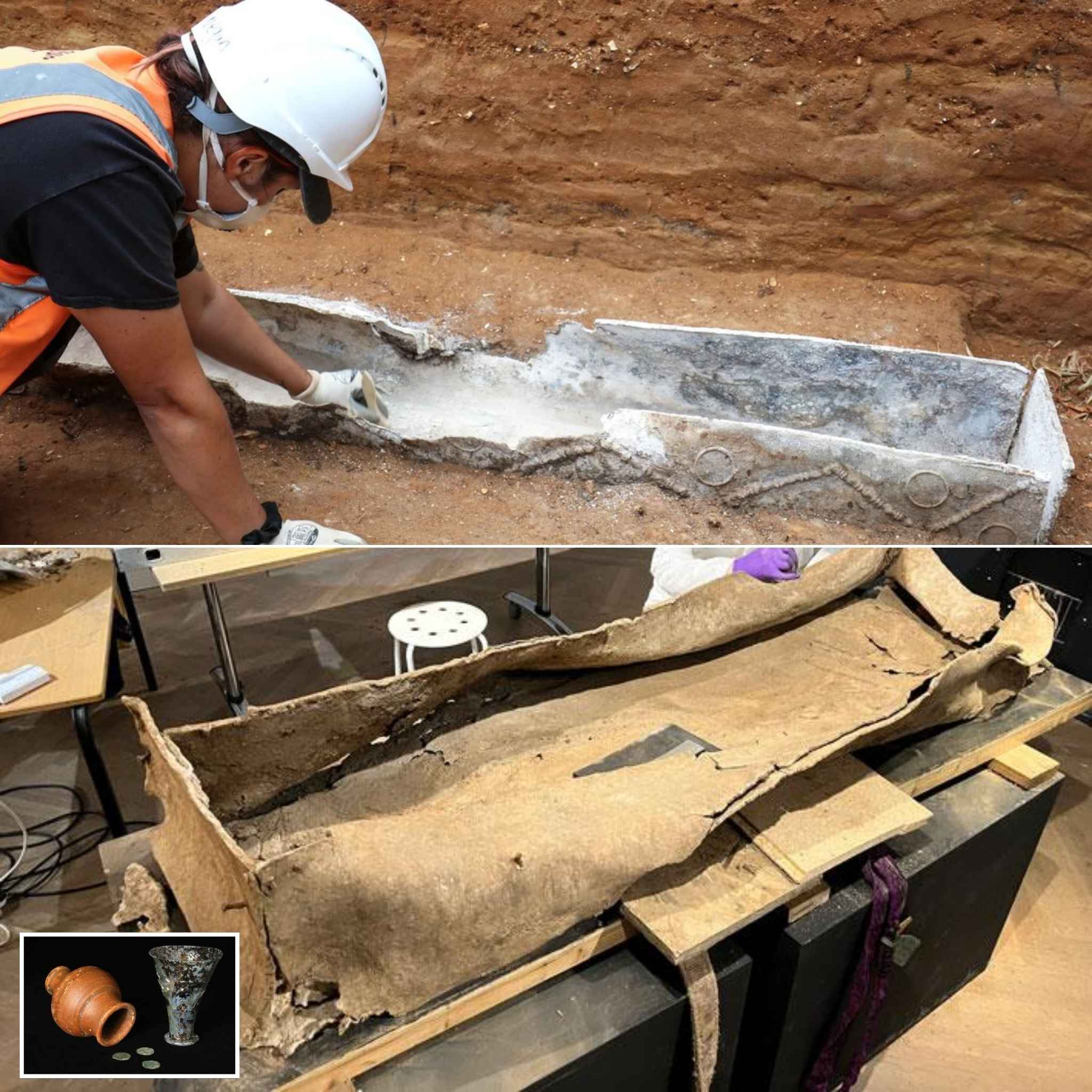
The burial was uncovered during excavations carried out in 2023 at a redevelopment site on the grounds of a former hospital, though its full significance has only recently been made public. Researchers now describe it as one of the most remarkable Roman-era burials found in the region in recent years.
A carefully staged burial for a young elite woman


The woman, believed to have been between her late 20s and early 30s at the time of her death, lived during the period when the Roman Empire still controlled Britain, likely in the late 3rd to early 5th century AD.
Her burial was unusually elaborate. She was placed in a decorated lead coffin, a luxury reserved for individuals of significant wealth or status. Lead coffins were expensive, heavy, and often custom-made, signaling high social standing and access to specialized craftsmanship.
Inside and around the coffin, archaeologists discovered a carefully arranged set of grave goods that suggests the burial was not only ceremonial but also highly symbolic.
Jet hairpins, glass flasks, and imported materials
Among the most striking objects found were jet hairpins—ornamental items carved from a glossy black gemstone-like material often associated with mourning and protection in Roman Britain. Jet was commonly sourced from the Whitby region in northern England, but its use in elite burials often carried symbolic meaning beyond decoration.
Alongside these were rare glass flasks, likely imported or produced in specialized workshops. Glass vessels were luxury items in Roman Britain, often used for perfumes, oils, or ritual substances.
The combination of these items indicates a deliberate effort to present the deceased as both refined and socially prominent.
Exotic resins and the scent of empire
One of the most intriguing discoveries in the burial is the presence of exotic resins, including frankincense, derived from trees in the genus Boswellia, which grow in regions such as the Middle East, North Africa, and parts of India.


Frankincense was a highly valuable commodity in the Roman world, used in religious rituals, perfumes, and medicinal practices. Its presence in a provincial British burial underscores the vast trade networks of the Roman Empire, which connected distant regions through complex supply chains of luxury goods.
Archaeologists believe these resins may have been burned as incense or used during funerary rituals to honor the dead, creating a sensory and symbolic connection between the deceased and the divine.
A body treated with gypsum
Another unusual feature of the burial is the use of gypsum, a mineral that can form a plaster-like substance when mixed with water. In some Roman burials, liquid gypsum was poured over the body, creating a protective casing as it hardened.
This practice was rare and likely reserved for individuals of high status or special significance. In well-preserved cases, gypsum burials can preserve the shape of the body in remarkable detail, sometimes even capturing facial outlines or clothing folds.
The use of gypsum in this burial suggests a carefully managed post-mortem treatment, possibly intended to preserve the body or enhance the ritual presentation of the deceased.
A burial shaped by wealth, identity, and care
According to archaeologists from the Colchester Archaeological Trust, the combination of materials and grave goods indicates a highly structured and symbolic burial process.
The presence of imported substances, luxury objects, and specialized burial techniques all point to a woman who was not only wealthy but also deeply embedded in the cultural and economic systems of Roman Britain.
Adam Wightman, director of archaeology at the Trust, described the find as one of the most compelling Roman burials excavated in Colchester in recent years, noting how the combination of artifacts and scientific analysis provides rare insight into elite funerary practices.
The Roman world in provincial Britain


The burial reflects the broader cultural landscape of Roman Britain, where local traditions blended with imperial customs. Roman Britain was a complex frontier region of the empire, where wealth, trade, and identity were constantly negotiated.
Colchester itself—one of the earliest Roman towns in Britain—was a major administrative and military center. Its cemeteries often reveal a mix of local Britons and Romanized elites, showing how deeply imperial influence had reshaped social structures.
This burial stands out, however, for the richness of its materials and the apparent care taken in preparing the body. It suggests not only wealth but also strong social ties and familial investment in funerary ritual.
Robert Masefield, an excavation director involved in the project, described the woman as clearly “cherished by her family and community,” emphasizing the emotional dimension behind the archaeological data.
Trade routes, luxury, and global connections
One of the most significant implications of the burial is the evidence it provides for long-distance trade networks in the Roman world.
Frankincense, glassware, and possibly other imported goods found in the coffin point to economic connections stretching across the Mediterranean, the Near East, and beyond. Even in a provincial town on the edge of the empire, elite individuals had access to materials that originated thousands of kilometers away.
This reinforces the idea that Roman Britain was not isolated, but deeply integrated into a globalized ancient economy.
Death as performance and identity
In Roman culture, funerals were not only personal events but also public performances of identity, status, and memory. The arrangement of objects in this burial suggests careful attention to how the deceased would be remembered.
Jet ornaments, imported resins, and precious glass would have created a layered sensory experience—visual, tactile, and aromatic—transforming the burial into a ritual act of social display.
The woman’s identity in life may remain unknown, but in death, her burial speaks clearly: she belonged to an elite stratum of society that could access rare materials and complex ritual practices.
From excavation to public display
The coffin and its contents are expected to be displayed at the Colchester Roman Circus Visitor Centre beginning in May 2026, allowing the public to view one of the most significant Roman-era discoveries in recent years.
For archaeologists, however, the significance of the find goes beyond its visual impact. It provides a rare, well-preserved snapshot of how wealth, religion, and identity intersected in the final centuries of Roman rule in Britain.
A final reflection on a forgotten life
Despite the richness of the burial, many questions remain unanswered: Who was she? What role did she play in her community? Why was she given such an elaborate send-off?
What remains is a carefully constructed message from the past—one encoded in resin, stone, glass, and lead.
And like many discoveries from the Roman world, it reminds us that beneath modern cities lie layered stories of people who lived, loved, and were remembered in ways both familiar and deeply distant from our own.


