
The Ethiopian Biblical manuscripts, preserved in a canon of 81 texts, reveal a radically different understanding of Jesus’ origin, nature, and mission, challenging the narratives preserved by Western Christianity. These texts describe a world before Jesus’ arrival that was profoundly affected not only by human corruption but by the interference of celestial beings. Two hundred angels, known as the Watchers, descended to Earth and taught humanity forbidden knowledge—weaponry, seductive arts, and forms of magic. Their actions led to the birth of the Nephilim, a hybrid race that caused widespread chaos and destruction, suggesting that the corruption of the world was both supernatural and human in origin.
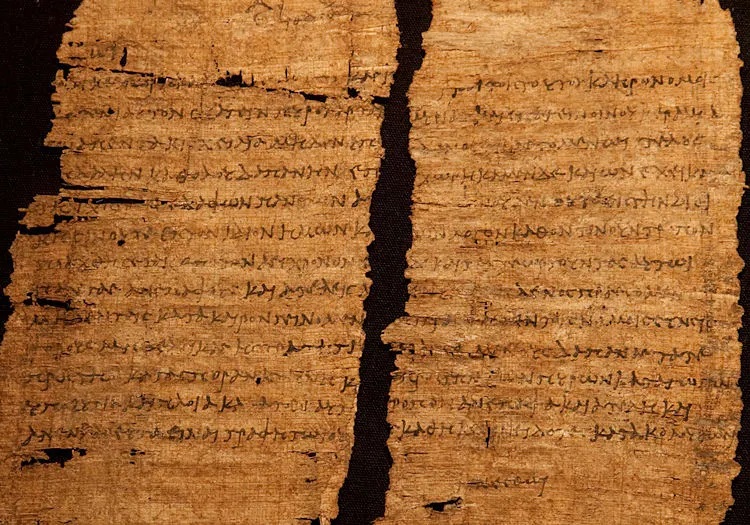
In these manuscripts, the title “Son of Man” carries immense preordained authority. Jesus is depicted as a cosmic judge, a preexistent being whose role spans the entirety of creation. He holds dominion not only over humanity but also over the fallen angels, positioning him as a central figure in the maintenance of cosmic order. This portrayal reframes the traditional understanding of Jesus, presenting him as a figure of ultimate power and judgment rather than solely as a moral teacher or humble savior.
The texts also describe Jesus’ descent to Earth in a manner entirely absent from canonical scripture. He is said to traverse multiple heavens, carefully evading dark forces, until reaching the human realm. His crucifixion is framed not merely as a sacrifice for sin but as a strategic intervention to confront death itself from within the system it controlled. This interpretation presents Jesus’ earthly mission as a sophisticated cosmic operation, orchestrated to restore balance to both human and spiritual dimensions.

A particularly striking element is Jesus’ journey into Sheol, the underworld, during the three days before his resurrection. He is described as breaking the gates of hell, liberating trapped souls, and pronouncing judgment on the imprisoned Watchers. This narrative demonstrates his authority over both human and supernatural realms, portraying him as actively dismantling structures of corruption and oppression. Salvation, in this context, extends far beyond the cross; it encompasses the restoration of cosmic order and the liberation of those confined by malevolent forces.
The Western Church deliberately excluded these manuscripts from the canon during the fourth century under Emperor Constantine. Political and religious motives drove this omission, consolidating Church authority and suppressing texts that emphasized direct spiritual experience and personal mystical engagement. By removing these works, the Church reshaped the narrative of Jesus, focusing on a mediated, hierarchical faith that aligned with imperial interests rather than the radical, cosmic authority depicted in the Ethiopian canon.

In recent years, these perspectives have resurfaced in contemporary media, notably in Mel Gibson’s upcoming project, which seeks to reinterpret the resurrection story through the lens of these ancient texts. By revisiting the narrative in this way, the project emphasizes Jesus’ immense cosmic power and strategic mission, portraying him as a preexistent, authoritative agent orchestrating salvation across both human and supernatural realms.
Ultimately, the Ethiopian manuscripts challenge long-held assumptions about Jesus’ nature and purpose. He is not only a moral or spiritual savior but a preexistent, powerful figure engaged directly with the forces that corrupted the world before his birth. Salvation, according to these texts, is both spiritual and operational: Jesus’ mission restores harmony to human and celestial systems alike, confronting hidden structures of power and recalibrating the balance of creation itself. These manuscripts present a Jesus who transcends traditional theological portrayals, offering a vision of divine authority and cosmic strategy that continues to provoke, inspire, and challenge our understanding of the sacred.