Can the Secrets of This Bronze Age City Finally Be Revealed? Inside Mohenjo Daro
Other ancient civilizations built monuments that scraped the sky: pyramids in Egypt, ziggurats in Mesopotamia, palaces and gilded tombs for kings and gods. By contrast, the people of the Indus civilization—flourishing between 2600 and 1900 B.C.—appear to have devoted a great deal of their ingenuity to something far humbler: toilets and drainage systems.
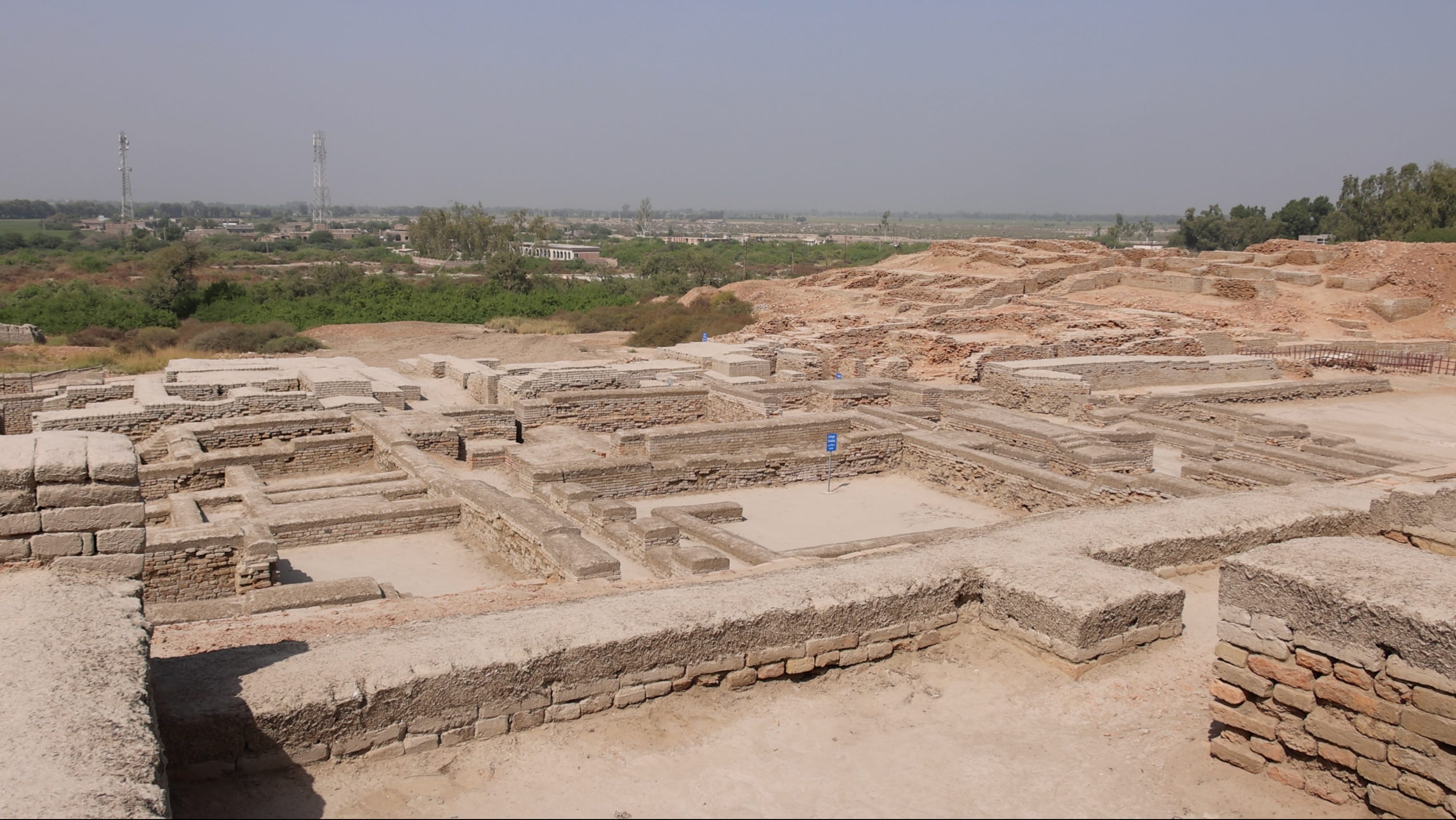
Mohenjo Daro, in what is now Pakistan’s Sindh Province, exemplifies this practical brilliance. Unlike Ur in Mesopotamia or Memphis in Egypt, cities that radiated awe and dominance, Mohenjo Daro feels disarmingly human. Its streets and buildings whisper of the daily lives of ordinary people as much as of rulers and priests. The city’s dome-shaped stupa, perched atop the ruins like a dusty cake topper, is perhaps its most visually striking feature—but historians agree it was likely added centuries later, when Buddhism spread through the region. The architectural centerpiece of the Bronze Age city itself is the Great Bath, a massive communal water tank, not built to impress visitors but to serve a clear, functional, and likely ritual purpose.
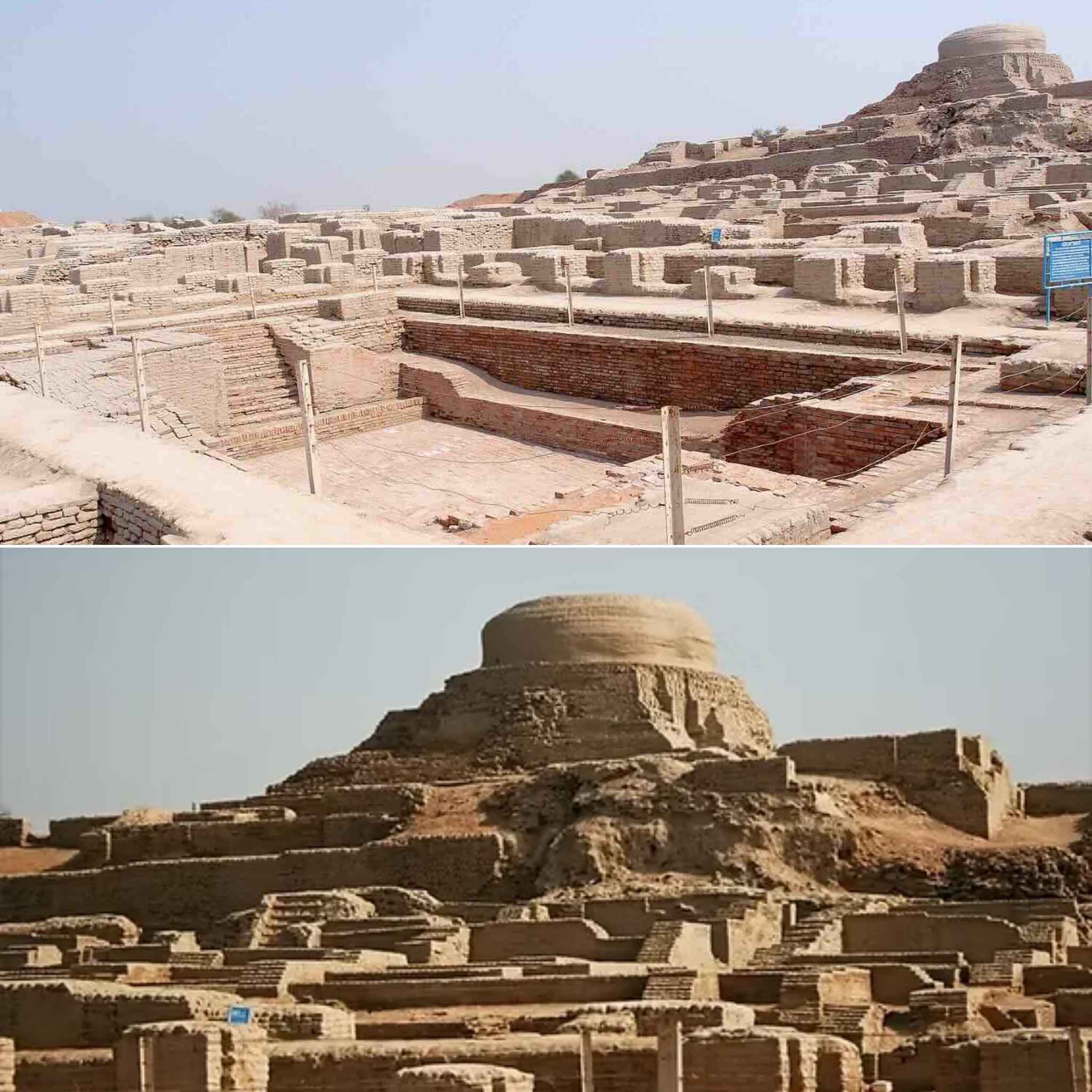
An aerial view reveals the city’s grid layout, sophisticated drainage, and large communal structures, highlighting the Indus Valley’s urban planning prowess.
The Marvel of Practicality
To understand Mohenjo Daro, you have to lean closer. Much closer. On a wind-whipped winter morning, an archaeologist might find themselves squatting over a Bronze Age latrine, squinting at an ancient toilet, retracing the movement of millennia-old waste.
These toilets were often simple storage jars embedded in the floor, with a hole punched through the base. Water was poured into the jar to flush waste, which would seep gradually into the ground or flow into covered drains outside the house. Some households had access to their own wells—an extraordinary feature when compared to contemporaneous civilizations, whose inhabitants relied on water carried by hand from rivers like the Nile, Tigris, or Euphrates.
In many homes, bathing platforms were slightly tilted for drainage, channeling the effluent into the city’s communal sewage system. The network of covered drains and cesspits ensured that waste traveled efficiently away from living quarters before eventually dispersing into the plains beyond. For a city of up to 100,000 inhabitants, this represented a staggering level of civic organization and engineering skill.
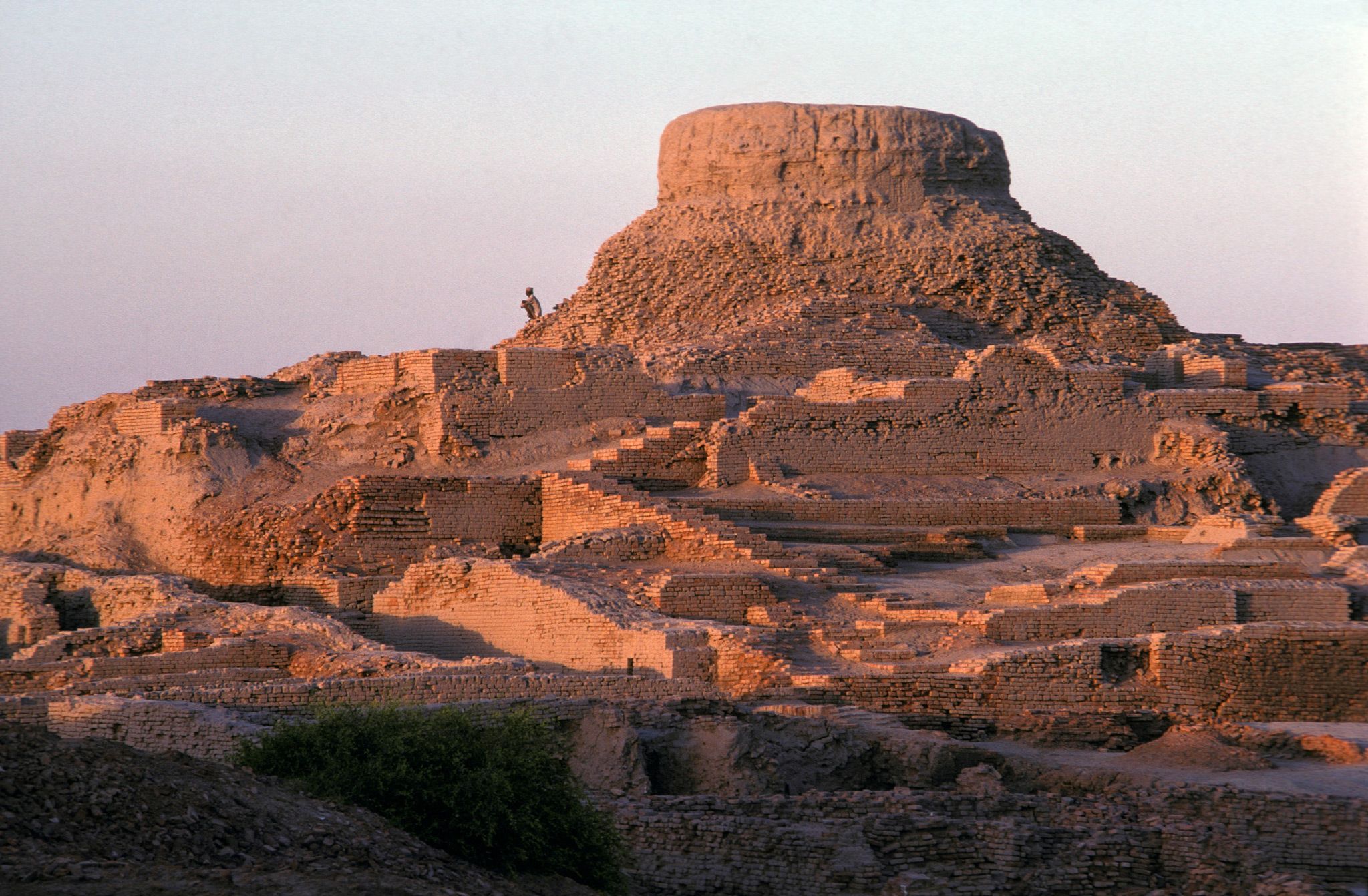
Covered drains like this one illustrate the sophisticated sanitation systems that allowed Mohenjo Daro to flourish in the Bronze Age.
Urban Planning Like No Other
Mohenjo Daro’s streets were arranged in a precise grid, dividing residential blocks from marketplaces, public baths, and ceremonial centers. Brick homes—often two stories high—lined the streets. Each had access to private toilets, wells, and bathing areas, and each was connected to the city-wide drainage system.
Unlike contemporaneous societies, where monumental architecture dominated urban landscapes, Mohenjo Daro prioritized functionality, hygiene, and urban coherence. Public spaces were meticulously planned. Streets ran north-south and east-west, intersecting at right angles, while wider thoroughfares accommodated movement and commerce. Homes were uniform in size and construction, suggesting standardized building practices, but also hints of social hierarchy—larger homes likely housed wealthier or more influential families.
The Great Bath, measuring roughly 12 meters long, 7 meters wide, and nearly 3 meters deep, was the largest communal water feature in the city. Built from finely fitted bricks and sealed with bitumen to make it watertight, it may have been used for ritual purification or communal gatherings. Unlike the grand temples and palaces of other civilizations, the Great Bath was human-scaled—a space for civic life rather than royal spectacle.
Artifacts and Evidence of Daily Life
Mohenjo Daro’s artifacts further illuminate its unique character. Small figurines, pottery, and tools hint at everyday activities, while bronze statuettes, like the famous “Dancing Girl,” reveal a sophisticated sense of artistry and performance. Seals, engraved with animals and geometric motifs, suggest trade and administration practices that were remarkably standardized for their time.
Archaeologists have found bead-making workshops, bronze tools, and intricate pottery kilns, evidence of specialized labor and extensive craftsmanship. Trade appears to have been regional and international; materials such as carnelian and lapis lazuli indicate connections to Afghanistan and beyond. Standardized weights and measures point to a structured economy and an attention to fairness and consistency that is extraordinary for the Bronze Age.
The 10-centimeter bronze figurine known as the “Dancing Girl” demonstrates the artistic skill and aesthetic sensibilities of Mohenjo Daro’s inhabitants.
The Mystery of Abandonment
Despite its sophistication, Mohenjo Daro was abandoned around 1900 B.C., and the reasons remain debated. Flooding from the Indus River, shifts in river channels, climate change, and soil salinity may have rendered the city uninhabitable. Some scholars point to potential social unrest, or the gradual decline of trade networks that sustained the city’s economy.
Unlike Egypt or Mesopotamia, the Indus Valley left few written records that can be deciphered today. The Indus script, found on seals and pottery, remains largely unreadable. As a result, Mohenjo Daro keeps its secrets well. Who led the city? What rituals took place in the Great Bath? How did its citizens govern themselves? These questions remain tantalizingly unanswered, ensuring that every excavation brings new insight but also new mysteries.
Lessons from the Past
Mohenjo Daro is not only an archaeological treasure; it is a testament to human ingenuity and practicality. Its residents engineered systems that provided clean water, waste management, and urban order for tens of thousands of people. The city reflects a society that valued efficiency, hygiene, and community organization over the grandiose displays of power common elsewhere in the ancient world.
In an era when cities often struggled with sanitation and planning, Mohenjo Daro stands as a remarkable example of urban foresight. Its lessons continue to resonate today, reminding us that the greatest achievements of civilizations are sometimes those that serve everyday life, not just kings and deities.

A typical residential home featured a private bathing platform, latrine, and access to the city’s drainage system, illustrating the Indus Valley’s commitment to daily hygiene.
Mohenjo Daro remains one of the most human-scaled cities of the Bronze Age—a place where the ingenuity of ordinary people shines as brightly as any palace or pyramid. Its streets, latrines, and baths tell the story of a society that thrived by solving practical problems, weaving ritual and daily life into a seamless whole.
The secrets of Mohenjo Daro are still only partially revealed, but each discovery brings us closer to understanding how a civilization nearly 5,000 years old built a city that was remarkably modern in its concern for human needs. As archaeologists continue to dig, survey, and analyze, one thing becomes clear: in Mohenjo Daro, history is measured not in monuments alone, but in the ingenuity of everyday life.