Initial DNA Analysis of the Paracas Elongated Skulls Sparks Global Debate
For nearly a century, the mysterious elongated skulls discovered on the desert peninsula of Paracas have fueled speculation, fascination, and controversy across the worlds of archaeology, anthropology, and alternative history. With their dramatically extended craniums and unusual anatomical features, the skulls have often been cited as evidence of forgotten civilizations, lost human lineages, or even non-human origins.
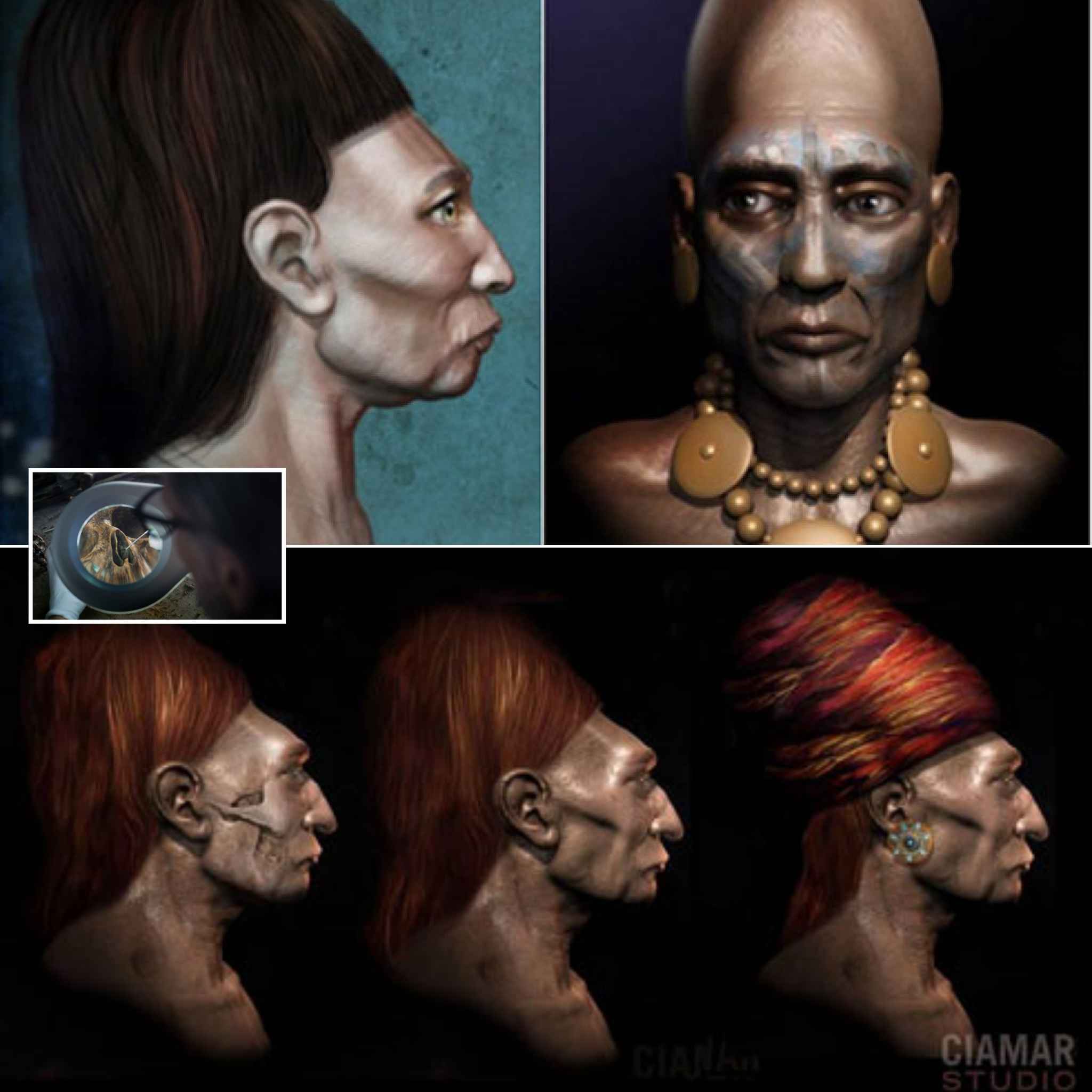
Now, renewed attention has erupted after preliminary DNA claims linked to one of the skulls suggested the possibility of genetic mutations “unknown in any human, primate, or animal known so far.” The statements, popularized by author and researcher Brien Foerster, quickly spread across the internet, reigniting one of archaeology’s most enduring mysteries.
But how much of the story is supported by science—and how much remains speculation?
The Discovery That Shocked Archaeology
The story begins in 1928, when Peruvian archaeologist Julio Tello made a remarkable discovery on the arid coast of southern Peru.
Inside a sprawling ancient cemetery near Paracas, Tello uncovered elaborate burial chambers filled with textiles, artifacts, and human remains unlike anything previously documented in the region. Among the finds were more than 300 elongated skulls—many displaying cranial shapes far more pronounced than ordinary examples of artificial skull deformation known from ancient cultures worldwide.
The skulls were eventually associated with the ancient Paracas culture, a civilization that flourished roughly between 800 BCE and 100 BCE along Peru’s southern coast.


At first glance, scholars believed the skulls reflected the ancient practice of cranial deformation—a process in which the skull shape of infants is intentionally altered through binding or pressure over time. Similar practices have been documented in numerous cultures throughout history, from Central Asia to Mesoamerica.
Yet some researchers argued the Paracas skulls appeared unusually large, heavy, and anatomically distinct.
This became the foundation for decades of speculation.
The Claims About Skull Volume and Structure
Supporters of the mystery surrounding the Paracas skulls often point to several unusual anatomical claims.
According to some researchers, certain skulls possess cranial volumes significantly larger than those of average modern humans. Others allegedly feature only a single parietal plate rather than the two plates typically found in human skull anatomy.
Brien Foerster and other alternative-history researchers have argued these traits cannot be explained solely through artificial cranial deformation.
The implication is dramatic: if the skulls were not merely reshaped human skulls, then perhaps they belonged to a biologically distinct population.
However, mainstream anthropologists urge caution.
Experts note that cranial deformation can dramatically alter skull appearance, and measurements from ancient remains often vary naturally due to genetics, nutrition, environmental adaptation, and individual development. Additionally, damage, reconstruction methods, and incomplete remains can complicate anatomical interpretation.
Some specialists also dispute claims regarding the “single parietal plate,” arguing that fusion patterns or preservation conditions may account for the appearance.
Still, the visual impact of the skulls continues to provoke intense curiosity.
The DNA Analysis That Went Viral
The controversy escalated dramatically when samples from several Paracas skulls were reportedly submitted for genetic testing.
According to widely circulated reports, hair, teeth, bone fragments, and skin samples were collected from skulls housed at the Paracas History Museum. The testing process was allegedly conducted without initially informing the geneticist about the origins of the samples to avoid bias.
Then came the statement that ignited global fascination.
Brien Foerster publicly claimed that preliminary mitochondrial DNA results revealed mutations “unknown in any human, primate, or animal known so far.” He further quoted the unnamed geneticist as suggesting the specimens might represent “a new human-like creature” distinct from Homo sapiens, Neanderthals, and Denisovans.
The claims spread rapidly across alternative media websites, documentaries, and social platforms.
To many readers, it sounded like evidence that human history itself might need rewriting.
What Mainstream Science Says
Despite the sensational headlines, mainstream geneticists and archaeologists remain highly skeptical of the extraordinary claims.
One major issue is the absence of peer-reviewed published data.
The alleged DNA findings were never formally presented in a recognized scientific journal with transparent methodology, laboratory verification, contamination controls, and reproducible sequencing results. Without those safeguards, experts argue the conclusions cannot be independently evaluated.
Ancient DNA analysis is notoriously difficult. Samples are often contaminated by environmental exposure, modern handling, bacteria, fungi, or degraded genetic material accumulated over thousands of years.
Even small sequencing anomalies can appear “unknown” simply because the sample quality is poor or incomplete.
Furthermore, professional geneticists note that if a completely unknown human-like species had truly been discovered, the scientific implications would be revolutionary—and would immediately trigger extensive international analysis involving multiple laboratories and academic institutions.
That has not occurred.
Most mainstream researchers continue to interpret the Paracas skulls as human remains shaped primarily through intentional cranial modification combined with normal biological variation.
Why Ancient Cultures Elongated Skulls
Artificial cranial deformation is one of the oldest known body-modification practices in human history.
Infants’ skulls are naturally soft and malleable during early development. By applying pressure using cloth bindings, wooden boards, or specialized wrapping techniques, ancient societies could permanently reshape the head into elongated forms.
The reasons varied widely between cultures.
In some societies, elongated skulls symbolized nobility, intelligence, spiritual status, or tribal identity. In others, the practice marked social class or religious affiliation.
Evidence of cranial deformation has been discovered among the Maya civilization, the Huns, ancient Andean groups, and even some European populations.


Anthropologists argue that the Paracas skulls likely represent an extreme regional version of this widespread cultural tradition rather than evidence of a non-human species.
Yet proponents of alternative theories counter that the sheer scale and anatomical characteristics of some specimens remain difficult to explain entirely through deformation alone.
The debate continues largely because the skulls occupy a strange intersection between archaeology, biology, and popular imagination.
The Role of Alternative History
The Paracas skulls have become central figures in alternative-history communities that challenge conventional understandings of the ancient world.
Some theories propose the skulls belonged to a lost advanced civilization. Others connect them to mythical beings described in ancient legends. More extreme claims link them to extraterrestrial origins or forgotten hybrid populations.
While mainstream scientists reject these ideas due to lack of evidence, the public fascination surrounding them remains enormous.
Part of the appeal lies in the mystery itself.
The elongated skulls look visually startling, almost alien compared to ordinary human anatomy. Combined with incomplete scientific data and dramatic media narratives, the result is a perfect recipe for speculation.
Modern internet culture has amplified this phenomenon. Videos, documentaries, podcasts, and viral posts often present tentative or disputed claims as groundbreaking revelations.
In many cases, nuance disappears entirely.
What DNA Can—and Cannot—Tell Us
DNA analysis has transformed archaeology in recent decades.
Scientists can now reconstruct migration patterns, identify ancient diseases, and trace evolutionary relationships with extraordinary precision. Ancient DNA studies have revolutionized our understanding of early humans, including discoveries involving Neanderthals and Denisovans.
But genetic research also requires rigorous standards.
Extraordinary claims demand extraordinary evidence.
A valid ancient DNA breakthrough typically involves:
- Multiple independent laboratories
- Transparent sequencing data
- Published methodologies
- Contamination safeguards
- Peer review
- Replication by outside researchers
Without these steps, preliminary findings remain speculative.
Experts also emphasize that unusual mitochondrial DNA mutations alone would not automatically indicate a new species. Human genetic diversity is vast, and ancient populations sometimes carried rare lineages no longer common today.
In short, “unknown mutations” do not necessarily equal “non-human.”
The Broader Mystery of Ancient Peru
Regardless of the controversy, the Paracas culture itself remains one of the most fascinating civilizations of ancient South America.
Known for extraordinary textiles, complex burial traditions, and advanced artistic craftsmanship, the Paracas people thrived centuries before the rise of the Inca Empire.
Their desert environment preserved organic materials with remarkable quality, allowing archaeologists to study ancient fabrics, hairstyles, ceremonial objects, and funerary customs in exceptional detail.
The elongated skulls form only one part of a much larger archaeological story.
Some historians believe the intense fascination with the skulls sometimes overshadows the real cultural achievements of the Paracas civilization itself.
Why the Mystery Endures
The enduring fascination with the Paracas skulls reflects something deeper than archaeology alone.
Human beings are naturally drawn to mysteries that challenge established narratives. The idea that hidden chapters of history might exist beyond conventional textbooks is emotionally powerful.
Whether the subject involves ancient civilizations, unexplained artifacts, or lost genetic lineages, people are captivated by the possibility that history still contains profound secrets waiting to be uncovered.


At the same time, the Paracas skull debate highlights the growing tension between scientific caution and viral storytelling in the digital age.
Careful academic research often moves slowly, filled with uncertainty and technical nuance. Online narratives, by contrast, reward dramatic conclusions and sensational headlines.
As a result, preliminary findings can quickly evolve into global myths before the scientific process has fully unfolded.
The Current Scientific Position
As of today, there is no verified scientific evidence proving that the Paracas skulls belonged to a non-human species or an unknown branch of humanity.
The dominant academic explanation remains intentional cranial deformation practiced by ancient human populations.
However, researchers continue to study the skulls, and some questions about their anatomical variation remain open for further analysis.
Future advances in DNA sequencing, imaging technology, and bioarchaeology may eventually provide clearer answers.
Until then, the Paracas skulls remain suspended between science and legend—ancient relics that continue to inspire wonder nearly a century after they first emerged from the sands of Peru.