Drive through Southern California and a familiar image appears again and again.
White stucco walls glowing beneath the sun. Curved archways casting soft shadows across tiled courtyards. Black wrought-iron balconies twisting around windows framed by flowering vines. Red clay roofs rising above palm trees and bougainvillea.
Today, the style feels timeless—so deeply woven into the identity of California that many assume it has existed there forever.
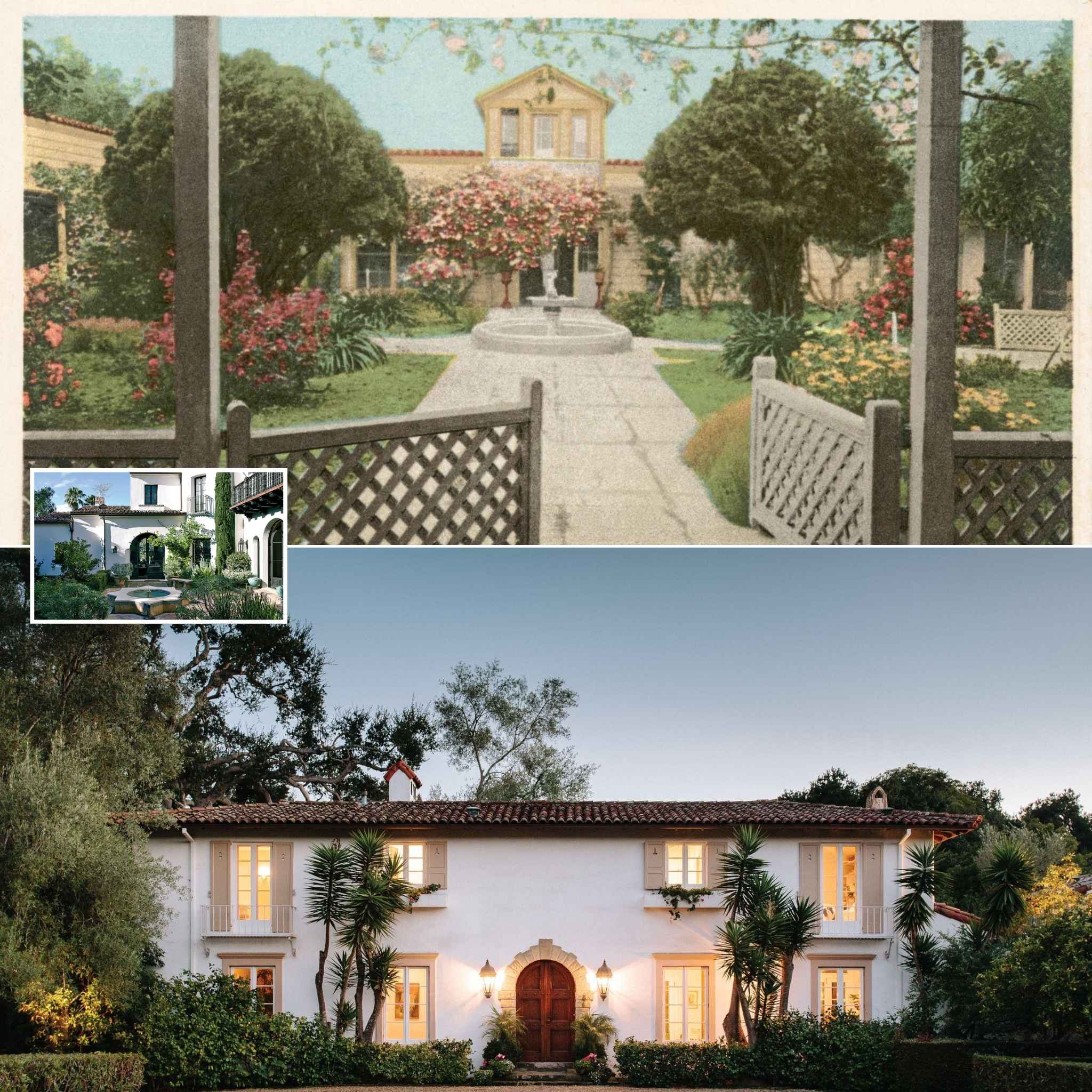
But the architectural language that came to define much of the American Southwest was not born naturally from the landscape alone.
It was, astonishingly, fueled by a bestselling 19th-century romance novel.
That novel was Ramona.
Published in 1884 by writer Helen Hunt Jackson, the book became a cultural sensation that reshaped how Americans imagined California. Though intended as a political protest against the treatment of Native Americans, the novel unexpectedly ignited a fantasy of Spanish-style romance, mission-era nostalgia, and idyllic hacienda living.
Its influence would spread far beyond literature.
In time, Ramona helped inspire one of the most recognizable architectural movements in American history: Spanish Colonial Revival.
The Novel That Captivated America
At its core, Ramona was a tragic love story.
Set in the turbulent years after the American conquest of California, the novel follows its heroine, Ramona, a beautiful orphan raised by a wealthy Mexican family in Southern California.
She falls in love with Alessandro, a young Native American man of Luiseño heritage who works for her adoptive family.
Their romance unfolds against a landscape of immense beauty and growing violence. The lovers flee social prejudice and racial hostility, escaping into the hills, valleys, and wilderness of Southern California while trying desperately to survive.
But their love story ends in tragedy.
Alessandro is murdered by an Anglo-American settler, and Ramona ultimately retreats to Mexico in grief.
Though fictional, the novel struck an emotional chord across the United States.
Within ten months of publication, Ramona sold more than 15,000 copies—an enormous success for its era.
Readers became obsessed not only with the romance itself, but with the world Jackson described: a dreamy California filled with orange groves, mission bells, shaded verandas, adobe homes, and golden landscapes bathed in eternal sunlight.


Helen Hunt Jackson’s Real Mission
Ironically, the romantic fantasy that captivated readers was not Jackson’s primary goal.
Helen Hunt Jackson was one of the most prominent writers in America during the late 19th century. She wrote essays, poems, fiction, and travel stories for major publications including Harper’s Magazine and The Atlantic.
Her career changed dramatically after attending a lecture by Standing Bear in 1879.
Standing Bear spoke about the forced displacement and suffering endured by Native American communities under U.S. expansion. His speech deeply affected Jackson.
Determined to expose these injustices, she spent years researching federal mistreatment of Indigenous peoples and published her findings in A Century of Dishonor.
The book harshly criticized American policies toward Native Americans.
But despite Jackson sending copies to every member of Congress, the work failed to create major political change.
Disappointed, Jackson turned to fiction.
She hoped a powerful emotional story could reach the public in ways political argument could not. Inspired by the cultural impact of Uncle Tom’s Cabin, Jackson imagined Ramona as a novel that would awaken sympathy for Native Americans through storytelling.
Instead, many readers focused almost entirely on the romance and scenery.
California Becomes a Fantasy
The timing of Ramona’s release proved crucial.
In the 1880s, Southern California was transforming rapidly. Railroad expansion suddenly connected the region to the rest of the United States, making it easier for tourists and settlers to travel west.
The Atchison, Topeka and Santa Fe Railway aggressively marketed California as a paradise of sunshine, romance, and opportunity.
Ramona became part of that campaign almost immediately.
Railroads advertised routes connected to locations supposedly featured in the novel. Real-estate developers used the book’s imagery to sell land and luxury homes.
Tourists flooded Southern California searching for “Ramona’s home.”
Two historic ranch properties emerged as likely inspirations:
- Rancho Camulos
- Rancho Guajome Adobe
Visitors mobbed the private estates hoping to experience the romantic California Jackson described.
Souvenir vendors sold Ramona-themed merchandise. Guided tours emerged. Entire communities capitalized on the literary craze.
The fictional world of Ramona was becoming real.
The Birth of the “Mission Myth”
One of the most influential aspects of the novel was its romantic portrayal of California’s old Spanish missions.
Throughout the book, Jackson described mission-era California as peaceful, beautiful, and harmonious. Ramona’s world seemed filled with gracious landowners, flowering courtyards, and idyllic rural life.
The missions themselves became symbols of nostalgia.
In reality, historians note that many Native Americans living under the mission system endured forced labor, cultural suppression, disease, and violence.
But the novel softened this history into something dreamlike and picturesque.
This romanticized vision became known as California’s “mission myth.”
It inspired growing interest in preserving and restoring the crumbling mission buildings scattered across the state.
Writers, artists, and architects began treating the missions not merely as historical ruins, but as symbols of a uniquely Californian identity.
Architecture Inspired by Fiction
Soon, architects started translating the fantasy of Ramona into actual buildings.
This movement evolved into what became known as Mission Revival architecture.
The style borrowed heavily from old Spanish colonial missions and ranch estates, featuring:
- White stucco walls
- Red clay tile roofs
- Arched corridors
- Bell towers
- Courtyards
- Wrought-iron details
Unlike the dark, crowded Victorian homes popular on the East Coast, these California-inspired homes emphasized openness, sunlight, and outdoor living.


Architects including Julia Morgan, Willis Polk, and George Washington Smith helped refine and popularize the style.
By the early 20th century, Mission Revival evolved into the even broader Spanish Colonial Revival architecture.
This new style blended influences from:
- Spain
- Andalusia
- Italy
- Morocco
- Mediterranean architecture
The result became the defining look of Southern California.
Hotels, train stations, civic buildings, mansions, and suburban homes all embraced the aesthetic.
Ramona’s House Becomes the California Dream
Central to the architectural movement was the image of Ramona’s fictional home itself.
Jackson described a sprawling adobe house organized around shaded verandas and an open courtyard.
Unlike rigid Victorian homes divided into formal rooms, Ramona’s house encouraged fluid living between indoors and outdoors.
Family life unfolded on verandas open to gardens and sunlight. Cool breezes passed through archways. Nature became part of daily life.
This ideal deeply appealed to Americans moving westward.
The architecture symbolized freedom from industrial Eastern cities and harsh northern winters.
Southern California promised something different:
- Relaxation
- Beauty
- Romance
- Climate
- Escape
The physical design of Spanish Colonial Revival homes embodied those fantasies perfectly.
Architect Irving Gill later wrote that Ramona’s home represented one of the most practical and emotionally satisfying residential models for California living.
In many ways, Americans were not simply buying houses.
They were buying a story.
Hollywood Helps Spread the Myth
Ramona’s influence expanded even further through theater and film.
In 1905, the novel was adapted into a stage play. A young actor named D. W. Griffith played Alessandro before eventually becoming one of Hollywood’s earliest famous directors.
In 1910, Griffith directed a film adaptation of Ramona, helping bring the story to even larger audiences.
Meanwhile, annual performances of the Ramona play became a long-standing California tradition.
The mythology surrounding the novel only deepened.
As Hollywood rose nearby, the romantic image of Spanish California merged seamlessly with the growing fantasy-machine of the film industry itself.
The Style That Never Truly Disappeared
By the 1920s and 1930s, Spanish Colonial Revival architecture had become almost synonymous with Southern California.
Entire neighborhoods adopted the style.
Even as modernist architecture gained popularity later in the century, the romantic California aesthetic never fully vanished.
In the 1960s and 1970s, traditional revival styles returned to popularity across America. Spanish Colonial Revival re-emerged as a timeless symbol of warmth, elegance, and luxury.
Today, its influence remains everywhere:
- Beverly Hills mansions
- Suburban tract homes
- Resorts
- Courthouses
- Restaurants
- Universities
- Hotels
The style became so normalized that many Americans no longer recognize its literary origins.


The Strange Legacy of Helen Hunt Jackson
Helen Hunt Jackson died in 1885 at just 54 years old, shortly after Ramona was published.
She never witnessed the enormous cultural and architectural impact her novel would eventually have.
Ironically, the political message she cared most deeply about largely faded from public memory.
Her criticism of racial violence and Indigenous dispossession became overshadowed by romantic imagery of missions, ranches, and idyllic California landscapes.
Yet her influence proved extraordinary in another way.
Few writers have ever shaped the physical appearance of an American region so profoundly.
Through fiction, Jackson helped create an architectural identity that still defines millions of homes and buildings more than a century later.
A tragic love story intended as social protest ultimately transformed into one of the most successful acts of architectural branding in American history.
And even today, every red-tile roof and shaded stucco courtyard across Southern California still carries a faint echo of Ramona’s dream.