Thousands of years before modern debates over gender identity emerged in politics and media, some of the world’s earliest civilizations appear to have understood gender in remarkably complex ways.
In ancient Mesopotamia—the cradle of civilization located between the Tigris and Euphrates rivers—gender-diverse individuals were not necessarily marginalized or hidden from society. In some cases, they occupied positions of spiritual authority, royal influence, and cultural importance precisely because they existed outside traditional gender boundaries.
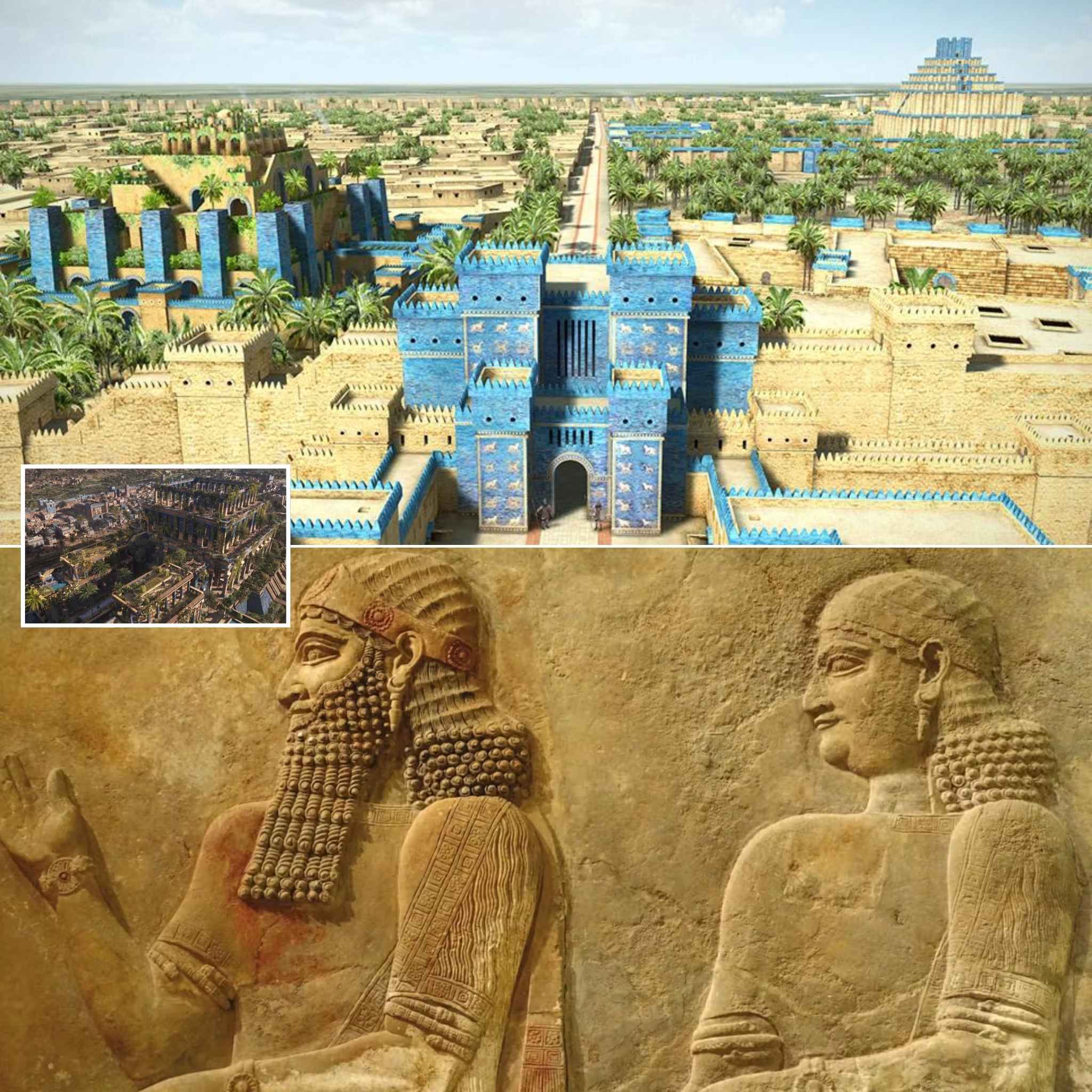
New historical analysis of ancient Mesopotamian texts suggests that gender ambiguity was not viewed solely as a social anomaly. Instead, it could function as a form of sacred and political power.
For historians studying the ancient world, the evidence reveals a society whose understanding of identity may have been far more fluid and nuanced than many modern assumptions allow.
The Birthplace of Civilization
Mesopotamia is often called the birthplace of urban civilization.
Stretching across parts of modern-day Iraq, Syria, Turkey, and Iran, the region was home to some of humanity’s earliest cities and empires.
Among the cultures that flourished there were:
- The Sumerians
- The Akkadians
- The Assyrians
- The Babylonians
These societies pioneered innovations that transformed human history:
- Writing
- Large-scale agriculture
- Legal systems
- Astronomy
- Monumental architecture
The Sumerians, in particular, developed one of the world’s first writing systems: cuneiform.
Using wedge-shaped marks pressed into clay tablets, scribes recorded myths, trade transactions, laws, royal decrees, and religious rituals.
It is through these surviving tablets that historians have uncovered evidence of gender-diverse individuals holding important positions within Mesopotamian society.


Gender Beyond the Binary
Modern conversations about gender often frame the subject as something new or uniquely contemporary.
But ancient Mesopotamian texts suggest otherwise.
Historians studying religious and administrative records have identified references to individuals whose identities did not fit neatly into male or female social categories.
Among the most notable were cultic attendants associated with the goddess Inanna—later known as Ishtar in Akkadian traditions.
Ishtar was one of the most powerful deities in Mesopotamian religion. She embodied:
- Love
- War
- Fertility
- Political power
- Sexuality
Unlike many later religious traditions, Mesopotamian mythology often associated divine power with transformation, contradiction, and fluidity.
Some texts even describe Ishtar as possessing the power to “turn men into women and women into men.”
This symbolic connection between divinity and transformation appears deeply tied to the social roles of certain gender-diverse individuals within Mesopotamian religious life.
The Assinnu and Sacred Roles
One important category of individuals connected to Ishtar’s worship were known as the assinnu.
The precise meaning of the term remains debated among historians and linguists. Ancient records do not map neatly onto modern concepts such as “transgender,” “nonbinary,” or “third gender.”
However, evidence suggests these individuals occupied identities or social positions that blurred conventional gender expectations.
The assinnu served as ritual attendants within temples dedicated to Ishtar and other deities. Some texts associate them with music, ceremony, lamentation rituals, and sacred performances.
Importantly, ancient sources do not portray them as marginal curiosities.
Instead, they appear integrated into formal religious structures and recognized as possessing specialized spiritual authority.
Their gender ambiguity may have been viewed as symbolically powerful because it reflected the transformative nature of the goddess they served.
In Mesopotamian thought, crossing boundaries could itself become sacred.
Royal Eunuchs and Political Power
Another important category discussed by historians involves the ša rēši.
Often translated as “royal eunuchs,” these high-ranking officials played critical roles within royal courts, particularly during the Assyrian Empire.
The term itself literally means “the one of the head” or “the one of the king,” indicating proximity to royal authority.
Eunuchs occupied uniquely powerful positions because they were often viewed as trustworthy intermediaries.
Since they typically could not establish hereditary dynasties of their own, rulers believed they posed less threat to royal succession.
Yet their influence was enormous.
Some eunuchs commanded armies, governed provinces, controlled palace administration, and advised kings directly.


Historians argue that their gender status may have contributed to their authority rather than diminishing it.
Existing outside traditional patriarchal family structures potentially allowed them to operate within political systems in unusual ways.
Their ambiguous social identity became intertwined with state power itself.
Ancient Gender Was Not the Same as Modern Gender
Scholars caution against directly projecting modern terminology onto ancient societies.
The people of Mesopotamia did not use categories like “transgender” in the modern sense, nor did they understand identity through the same frameworks used today.
Ancient gender systems were shaped by religion, labor, family lineage, ritual, and social hierarchy.
Nevertheless, historians increasingly emphasize that ancient cultures often recognized more complex variations of gender expression and identity than simplistic modern narratives suggest.
In Mesopotamia, gender appears to have functioned not merely as a biological category, but also as a symbolic and social force connected to religion and political legitimacy.
The evidence challenges assumptions that strict gender binaries have always dominated human civilization.
Ishtar: The Goddess of Transformation
Much of this complexity centers on Ishtar herself.
As one of the most influential deities in Mesopotamian religion, Ishtar represented contradiction and duality.
She was simultaneously:
- A goddess of fertility and war
- A patron of love and destruction
- Associated with both sexuality and violence
Her myths frequently involved crossing boundaries between opposites.
Some ancient hymns describe Ishtar as altering human destinies, social identities, and even biological characteristics.
Researchers believe this divine symbolism may explain why gender-diverse individuals occupied respected roles within her cult.
Rather than being seen purely as outsiders, they could be interpreted as embodying the transformative powers associated with the goddess herself.
Why These Discoveries Matter Today
Modern discussions about gender often become framed as conflicts between tradition and social change.
But ancient history reveals a more complicated reality.
The Mesopotamian evidence suggests that some early civilizations recognized and institutionalized forms of gender diversity thousands of years ago.
That does not mean ancient societies were universally accepting or egalitarian by modern standards. Mesopotamian civilization was highly hierarchical and often brutal in many respects.
Still, the historical record complicates simplistic assumptions that gender diversity is purely a modern phenomenon.
It also highlights how societies across history have interpreted identity in radically different ways depending on religious beliefs, political structures, and cultural values.
The Power of Ancient Texts
Much of what historians know about Mesopotamian gender roles survives only because clay tablets endured for millennia beneath desert sands.
Unlike paper, the baked clay of cuneiform tablets can survive thousands of years when preserved properly.
Archaeologists continue uncovering new tablets that reshape understanding of ancient civilization.
Some contain royal records.
Others preserve myths, prayers, contracts, or medical knowledge.
Together, they reveal a civilization far more sophisticated and psychologically complex than many people realize.


And within those texts emerge glimpses of individuals who lived beyond conventional categories—people whose identities became intertwined with religion, authority, and power itself.
Rethinking the Ancient World
For centuries, popular portrayals of ancient civilizations often simplified the past into rigid categories and straightforward narratives.
But archaeology and historical research continue revealing worlds that were far more fluid, contradictory, and diverse.
Ancient Mesopotamia was not merely the birthplace of writing and cities.
It was also a society wrestling with questions about identity, power, divinity, and social order in ways that still resonate today.
The surviving evidence suggests that gender ambiguity was not automatically viewed as weakness or deviance.
In some cases, it became a source of sacred authority and political influence.
More than 4,500 years later, the clay tablets of Mesopotamia continue challenging modern assumptions about the boundaries of human identity—and reminding us that history is often far more complicated than the stories societies tell about themselves.