Nearly 55 years after stepping onto the lunar surface as the youngest astronaut ever to walk on the Moon, Apollo 16’s Charles M. Duke Jr. is finally sharing vivid memories of what he truly saw and felt on the desolate, alien world — experiences far beyond grainy NASA photos and textbook descriptions. Duke, who served as NASA’s spacecraft communicator for Apollo 11 before becoming lunar module pilot on Apollo 16, has decades of reflection behind him but still vividly recalls how starkly different the Moon was in person compared to how the world imagined it from Earth.

On April 20, 1972, Duke and commander John W. Young touched down in the rugged lunar highlands of Descartes, a landscape filled with sharp rocks, deep craters, and an eerie silence that no one back on Earth could truly comprehend. Once on the surface, Duke described the Moon not as serene, but as a harsh, unforgiving place where every movement, every rock, every shadow stood in stark contrast to human life — an “otherworldly” environment that challenged both their equipment and their mindset.
He often recounts the first surreal moment when he stepped off the lunar module and saw the surface stretch endlessly under a sky that was completely black even in daylight. The horizon looked closer than expected, the dust held tight underfoot, and the scale of the landscape made familiar Earth views seem almost unreal — details that simply don’t come through in televised footage.
Beyond the terrain itself, Duke’s reflections have included the profound emotional impact of witnessing Earthrise and seeing our blue planet hover over the stark gray horizon of the Moon — a sight that changed how astronauts viewed humanity’s place in the universe. The view of Earth from lunar orbit, massive and vibrant against the void, was a powerful reminder of both how small we are and how connected we remain to our home world.
Perhaps one of the most human parts of Duke’s story involves what he chose to leave behind: a small, sealed family photograph placed on the lunar surface — a symbolic gesture so personal that it linked his own legacy to the landscape of the Moon forever. The photo, still resting where he left it, represents not just personal memory but the human side of exploration beyond science and technology.
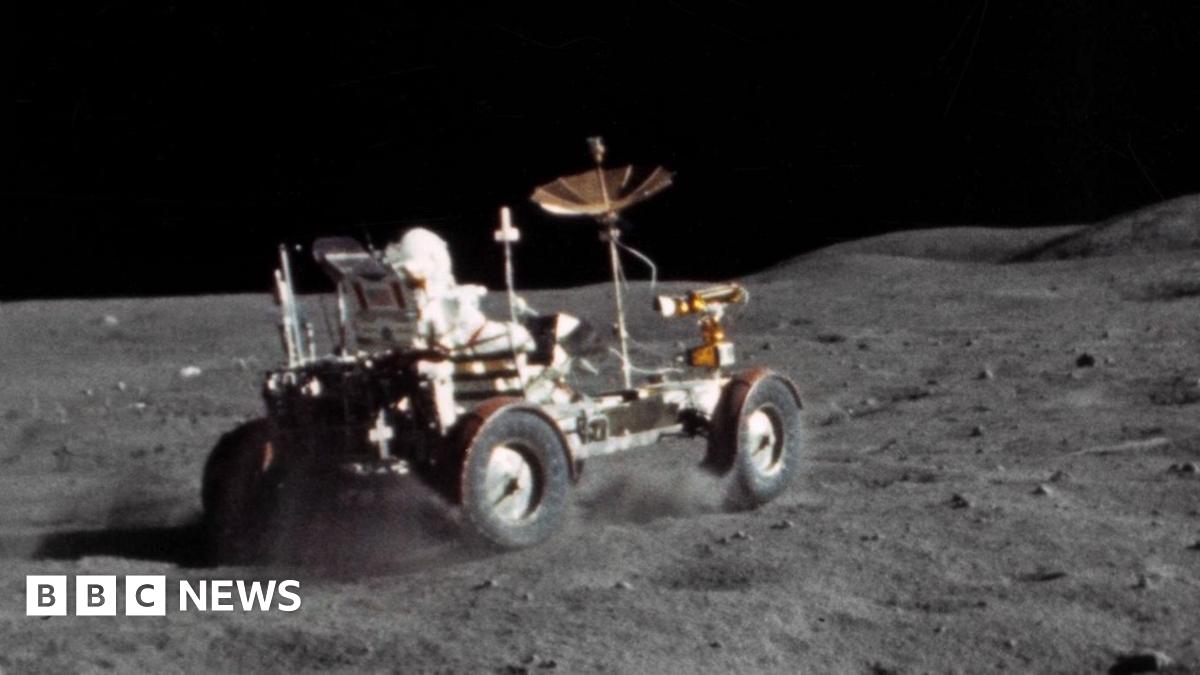
Today, Duke’s recollections continue to inspire new generations of space explorers as NASA’s Artemis program prepares to return humans to lunar orbit and beyond. His firsthand accounts — of dust swirling under the Rover, of desolate panoramas that felt alive in their silence, and of Earth glowing from afar — remain some of the most compelling firsthand descriptions from the Apollo era. In his words, the Moon was not just a destination but a