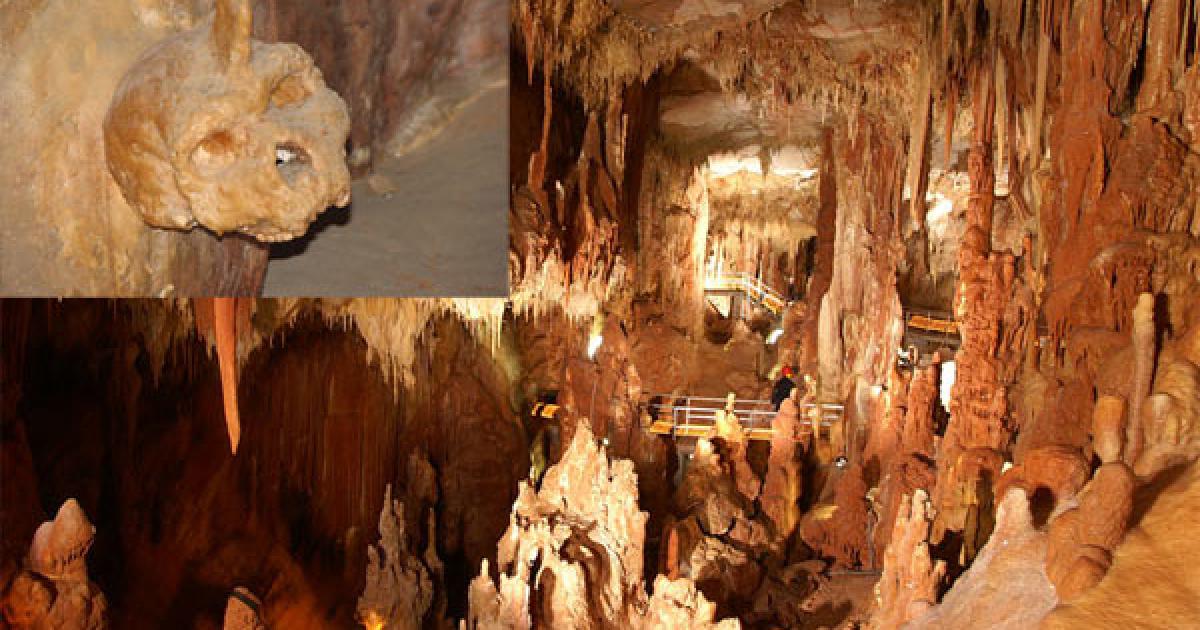
 In the caves of Petralona, northern Greece, a discovery was made that has the potential to rewrite our understanding of human evolution. Known as the “Petralona man” or Archanthropus of Petralona, this fossilized human skull presents unique features and a surprisingly ancient age that challenge the conventional Out of Africa model of modern human origins.
Discovery and Initial Study
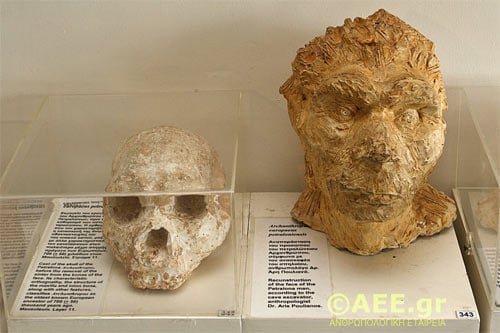
The skull was discovered in Petralona Cave and entrusted to the University of Thessaloniki for research, with an agreement to display it in a museum afterward. Dr. Aris Poulianos, a prominent Greek anthropologist and founder of the Anthropological Society of Greece, began studying the fossil after returning to Greece from the University of Moscow. His research concluded that the skull was approximately 700,000 years old, making it the oldest known human fossil in Europe exhibiting distinctly European traits.
Dr. Poulianos’ findings suggested that the Petralona man evolved independently in Europe and was not descended from populations that migrated from Africa, directly contradicting the prevailing Out of Africa theory.
Controversy and Suppression
Shortly after the discovery, some researchers attempted to dismiss Poulianos’ conclusions. In 1964, German scientists Breitinger and Sickenberg argued that the skull was only 50,000 years old and consistent with African lineage. However, studies published in Archaeology magazine in 1971 confirmed the 700,000-year-old age based on stratigraphic analysis and sediment dating.
Excavations in the cave revealed additional evidence, including isolated teeth, two pre-human skeletons dated to 800,000 years ago, fossilized plant material, animal remains, and coprolites, along with continuous stone and bone tool use across the layers. These findings confirmed the presence of an archaic European human lineage spanning from 750,000 to 550,000 years ago.
Despite the significance of these discoveries, research was halted during the Greek dictatorship, and access to the cave was denied for 15 years. Even after legal intervention allowed archaeologists to return, the Ministry of Culture has made continued access difficult, and the skull’s current location remains unknown.
Unique Features of the Petralona Skull
The Petralona skull displays a combination of traits from multiple human lineages, including archaic hominids, Homo erectus, Neanderthals, and early modern humans. Its European characteristics and extreme antiquity make it distinct from both African ancestors and known Neanderthal populations.
Modern researchers, including Professor C.G. Nicholas Mascie-Taylor of the University of Cambridge, have confirmed the 700,000-year dating and criticized governmental suppression of the discovery, highlighting its importance for understanding human evolution in Europe.
Implications
If accepted as accurate, the Petralona skull implies that humans evolved in Europe independently of African populations for hundreds of thousands of years. It also raises questions about the diversity of hominid evolution, the timing of migrations, and the interpretation of other European fossils.
The Petralona case demonstrates the complexity of paleoanthropology, the influence of politics on scientific research, and the persistent mystery of human origins. For over half a century, this fossil has remained controversial, yet it continues to challenge mainstream theories and inspire further research into our ancient past.


