Newly Discovered “Ghost” Human Lineage in China May Rewrite the Origins of Tibetans
A 7,100-year-old skeleton buried deep beneath layers of ancient graves in southwestern China has revealed one of the most mysterious human lineages ever identified — a “ghost” population scientists previously knew only from traces hidden inside modern DNA.
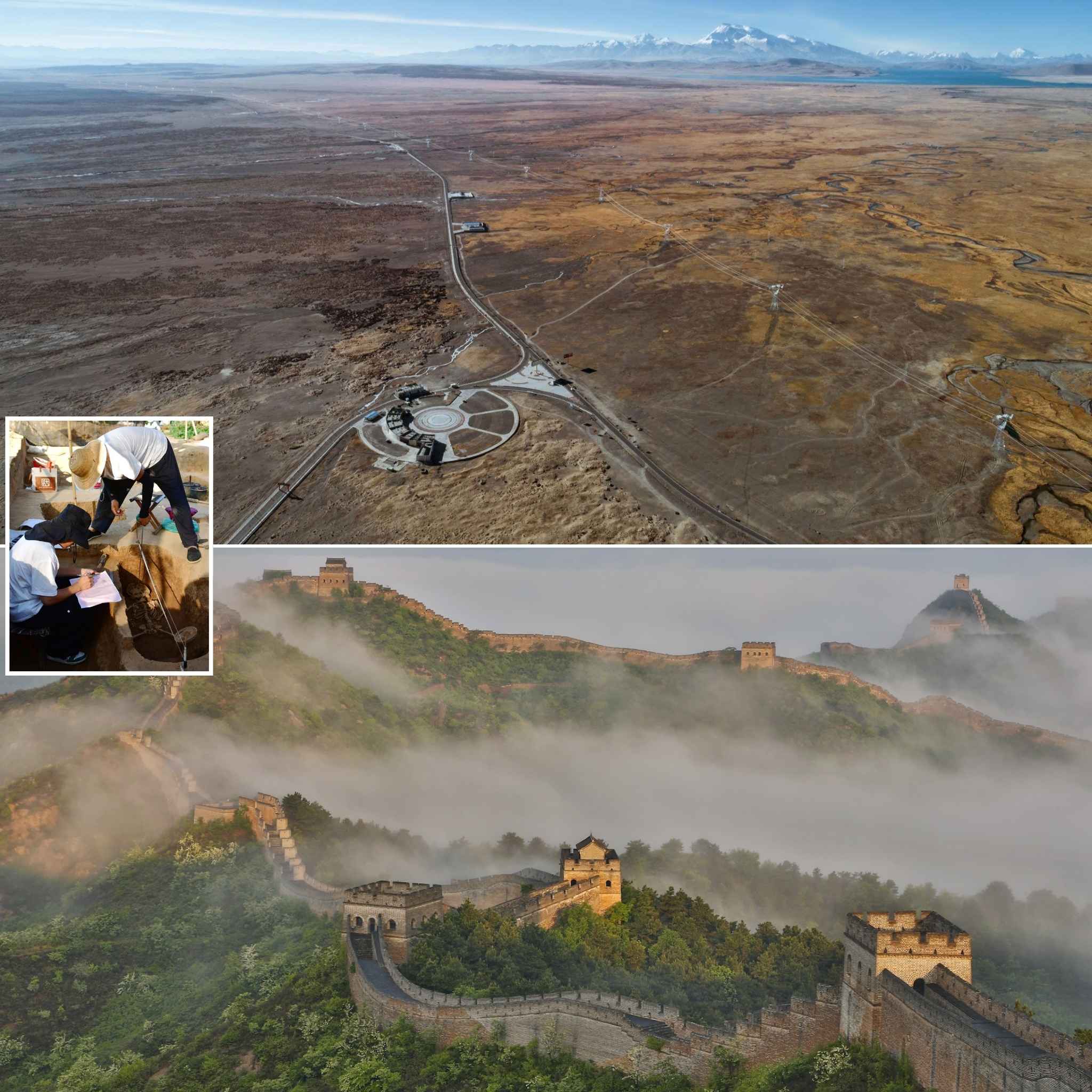
The discovery, announced in a major 2025 study published in the journal Science, is reshaping what researchers thought they understood about ancient Asia. Instead of a simple story of migration and replacement, the findings point to a far older and more complicated human landscape — one filled with isolated populations, lost branches of humanity, and genetic legacies that survived for tens of thousands of years.
At the center of the mystery is a woman now known as Xingyi_EN.
She lived more than 7,000 years ago in what is now Yunnan province, a mountainous region in southwestern China famous today for its extraordinary ethnic and linguistic diversity. But when scientists extracted DNA from her remains, they found something completely unexpected.
Her ancestry did not closely resemble that of ancient East Asians, Neanderthals, or Denisovans.
Instead, she belonged to a previously unknown human lineage — one that may help explain the origins of a mysterious genetic signature still carried by some Tibetan people today.
A burial hidden beneath centuries of history


The discovery emerged from excavations at the Xingyi archaeological site in Yunnan province, where archaeologists uncovered dozens of burials spanning thousands of years, from the Neolithic period through the Bronze Age.
Beneath all the later graves, researchers found a solitary female skeleton.
Unlike many other burials at the site, hers contained no grave goods, ornaments, or ceremonial offerings. Radiocarbon dating showed she lived roughly 7,100 years ago, making her the oldest individual analyzed in the study.
Chemical isotope analysis of her bones suggested she likely survived as a hunter-gatherer rather than as part of an early farming community.
At first glance, the burial appeared relatively ordinary.
Then scientists examined her DNA.
The “ghost population” scientists had been searching for
For years, geneticists studying modern Tibetan populations noticed something strange.
Tibetans carry ancestry connected to northern East Asian populations, but they also possess traces of another ancient lineage — one that could not be linked to any known human population from the fossil record.
Researchers referred to this missing ancestry as a “ghost population.”
A ghost population is not supernatural. In genetics, the term describes a group of people whose existence is inferred from DNA patterns even though no confirmed skeletal remains have previously been identified.
Until now, scientists only knew this mysterious lineage existed because fragments of its genetic signature appeared in modern populations.
Xingyi_EN may finally provide the first direct evidence that these people were real.
Not Neanderthal. Not Denisovan. Something else entirely.
The researchers discovered that Xingyi_EN’s ancestry diverged dramatically from other ancient and modern Asian populations.
Importantly, this lineage was not connected to Neanderthal or Denisovan ancestry, both of which already contributed DNA to living humans.
Instead, the woman represented an entirely separate branch of humanity.
Scientists named it the “Basal Asian Xingyi lineage.”
According to the study, this lineage may have split from other human populations at least 40,000 years ago.
That means Xingyi_EN’s ancestors may have remained genetically isolated for tens of thousands of years while other human populations across Asia mixed, migrated, and evolved.
Researchers believe this long isolation helped preserve the lineage’s distinctive genetic identity.
A hidden branch of humanity survived in isolation


The implications are astonishing.
For decades, many scientists assumed that by the Holocene period — roughly the last 12,000 years — most ancient Asian populations had already extensively mixed with one another.
But Xingyi_EN suggests at least one deeply ancient lineage remained relatively isolated far longer than expected.
Researchers say her people may have occupied remote environments in southwestern China for millennia, separated geographically and genetically from neighboring populations.
At some point, however, members of this lineage did interbreed with other East Asian groups.
That mixed population later contributed DNA to people living on the Tibetan Plateau.
In other words, traces of this ancient “ghost” lineage may still survive inside modern humans today.
The mystery of Tibetan origins
The findings may help answer one of the biggest unresolved questions in Asian population history: where did Tibetan people come from?
The Tibetan Plateau is one of the harshest inhabited regions on Earth, with extreme altitude, low oxygen levels, and freezing temperatures.
Modern Tibetans possess unique genetic adaptations that help them survive in these conditions. Previous studies suggested their ancestry was a combination of northern East Asian populations and an unidentified ancient lineage.
Xingyi_EN may represent that missing ancestral source — or at least a close relative of it.
If confirmed, the discovery would fundamentally reshape scientists’ understanding of how humans adapted to high-altitude Asia.
A far more complicated human story
The discovery also reinforces a growing realization among paleoanthropologists and geneticists: ancient human history was far messier than once believed.
Instead of a world occupied by a few cleanly separated populations, prehistoric Asia may have contained numerous isolated groups that interacted, mixed, vanished, or survived in unexpected ways.


Some of these lineages are known from fossils. Others survive only as faint echoes hidden inside DNA.
The Basal Asian Xingyi lineage now joins a growing list of mysterious ancient populations identified through genetics rather than traditional archaeology.
It is increasingly clear that the human family tree was less like a ladder and more like a dense forest of overlapping branches.
Many of those branches disappeared completely.
Some left descendants.
Others, like Xingyi_EN’s people, may have survived only as genetic shadows inside living populations.
Why a single skeleton matters so much
One of the most remarkable aspects of the study is that these conclusions come from a single individual.
That makes researchers cautious.
The team emphasized that far more evidence is needed before scientists can fully understand the Basal Asian Xingyi lineage and its relationship to Tibetan ancestry.
There may have been entire populations related to Xingyi_EN spread across southwestern China or neighboring regions that have simply not yet been discovered.
Future excavations could reveal additional skeletons, helping researchers determine how widespread the lineage once was and how long it survived.
Still, even one genome can transform scientific understanding.
Ancient DNA technology has repeatedly revealed human groups no one knew existed — populations erased from the visible archaeological record but preserved invisibly within genetics.
Ancient DNA is rewriting human history
Over the last decade, ancient DNA research has revolutionized archaeology.
Scientists can now extract genetic material from bones and teeth thousands—or even tens of thousands—of years old, reconstructing migrations, family relationships, diseases, diets, and population movements once thought impossible to trace.
In many cases, genetics has overturned long-held assumptions.
The discovery of the Denisovans themselves began with DNA from a tiny finger bone found in Siberia. Now researchers believe Denisovan ancestry survives in populations across Asia and Oceania.
The Xingyi_EN discovery may represent another similar breakthrough.
What began as a lone skeleton beneath ancient graves in Yunnan province may ultimately reveal an entire lost branch of humanity.
The questions are only beginning
The discovery leaves scientists with profound unanswered questions:
- How widespread was the Basal Asian Xingyi lineage?
- Why did it remain genetically isolated for so long?
- Did its people possess unique cultural traditions or technologies?
- How did they interact with neighboring populations?
- And how much of their DNA still survives in people today?
Researchers hope future excavations in southwestern China and the Tibetan Plateau will provide more clues.
For now, Xingyi_EN stands as one of the most mysterious individuals ever discovered in ancient DNA research—a woman from a forgotten human lineage whose descendants may still walk the mountains of Tibet today.
And her story is a reminder that human history is far from complete.
Beneath the soil of Asia, countless lost populations may still be waiting to be found.