A remarkable archaeological discovery in central Spain is shedding new light on the far-reaching connections of the Roman Empire. What first appeared to be nothing more than a broken bronze vessel has now been identified as an extraordinarily rare Roman souvenir cup — one that preserves a miniature depiction of Hadrian’s Wall and several military forts once stationed along Britain’s northern frontier nearly 1,900 years ago.
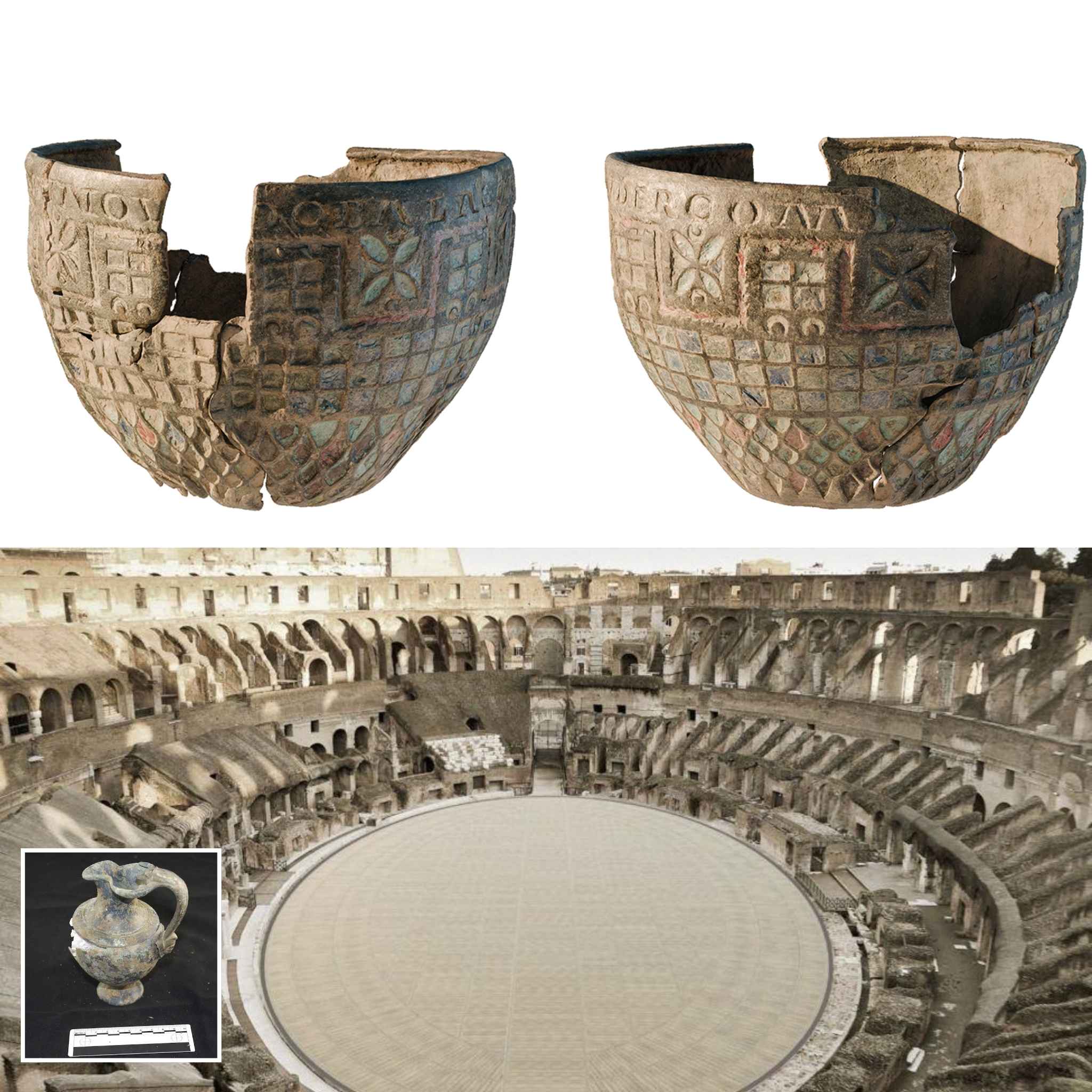
The artifact, now known as the “Berlanga Cup,” was uncovered in the municipality of Berlanga de Duero in Spain, almost 1,200 miles away from the Roman defensive system it appears to commemorate. Archaeologists believe the cup may have belonged to a Roman auxiliary soldier who once served in Britain before eventually returning home to Hispania with a treasured keepsake from the edge of the empire.
The discovery offers an unusually personal glimpse into the lives of Roman soldiers and demonstrates how military service connected distant regions of the empire in ways historians are still trying to fully understand.
A Chance Discovery With Extraordinary Importance
The bronze vessel was found accidentally during archaeological investigations in Berlanga de Duero, a historic area long associated with Roman occupation. At first glance, the artifact appeared heavily damaged and incomplete. But closer examination revealed that the object carried detailed decorative patterns and inscriptions unlike anything previously discovered in the Iberian Peninsula.
Researchers later confirmed that the cup dates back roughly to the second century A.D., during the height of Roman control over Britain.
The vessel itself is relatively small — measuring approximately 4.5 inches (11.4 centimeters) wide and about 3.2 inches (8.1 centimeters) tall — yet its historical significance is enormous. Crafted from bronze and decorated with colorful enamel designs, the cup is believed to have functioned as a trulla, a Roman drinking vessel commonly used for water or wine.
Unlike mass-produced Roman objects, however, archaeologists say this particular piece appears to have been specially customized and likely created for a specific individual.
According to archaeologist Jesús García Sánchez of the Archaeological Institute of Mérida in Spain, the artifact was far more sophisticated than ordinary Roman tableware.
“It is not only crafted with metals, but also expensive enamels, and later customized,” García Sánchez explained in comments discussing the discovery. “It is definitely not an industrial product.”
The craftsmanship alone suggests the owner may have considered the cup highly valuable — perhaps even sentimental.


A Miniature Map of Rome’s Northern Frontier
What makes the Berlanga Cup truly exceptional is the imagery engraved onto its surface.
Researchers discovered that the vessel includes inscriptions naming four Roman forts located along the eastern section of Hadrian’s Wall in northern England. These forts include:
- Cilurnum (modern-day Chesters)
- Onno (Halton Chesters)
- Vindobala (Rudchester)
- Condercom (Benwell)
Each fort is represented by symbolic geometric designs consisting of squares and crescent-like shapes believed to depict gateways, towers, or defensive structures.
The imagery effectively transforms the cup into a miniature visual representation of the Roman frontier in Britain.
The discovery stunned historians because similar Roman souvenir vessels have been found before, but none had referenced this specific eastern sector of Hadrian’s Wall in such detail.
The cup therefore provides rare evidence that Roman soldiers and travelers may have purchased commemorative objects connected to their military service — something surprisingly similar to the souvenirs people buy today after visiting famous locations.
Archaeologists say the vessel was likely created near Hadrian’s Wall itself sometime between A.D. 124 and 199, only decades after the massive frontier system was constructed.
Hadrian’s Wall: Rome’s Northern Barrier
To understand the importance of the artifact, historians say it is necessary to understand Hadrian’s Wall itself.
Ordered by Emperor Hadrian around A.D. 122, the wall stretched approximately 73 miles across northern Britain from the River Tyne in the east to the Solway Firth in the west. It served as the northern boundary of Roman Britain and was intended to control movement, discourage raids, and demonstrate Roman military dominance.
Far from being a simple wall, the frontier system included forts, watchtowers, barracks, roads, and civilian settlements. Thousands of Roman soldiers from across the empire were stationed there over several centuries.
Among those troops were auxiliary units recruited from distant provinces — including Hispania.
Many soldiers serving on the wall would have spent years far from home in harsh climates and dangerous frontier conditions. Archaeologists now suspect the Berlanga Cup may have served as a deeply personal reminder of that experience.
The Mystery of How the Cup Reached Spain
Perhaps the greatest mystery surrounding the discovery is how an artifact apparently crafted near Hadrian’s Wall ended up buried in central Spain.
Researchers believe the answer likely lies in Rome’s complex military recruitment system.
Excavations around Berlanga de Duero revealed evidence of a Roman-era settlement known as Valeranica, including pottery fragments, masonry remains, and traces of what may have been a rural Roman villa occupied between the first and fourth centuries A.D.
Historians suspect the cup may have belonged to a former member of the Cohors I Celtiberorum, a Roman auxiliary military unit composed largely of recruits from the Celtiberian regions of Hispania.
Historical records indicate this unit was stationed near Hadrian’s Wall during the reign of Emperor Trajan.
If one of those soldiers later returned home after completing military service, he may have carried the souvenir cup back to Spain as a reminder of his years on Rome’s distant northern frontier.
The theory paints a surprisingly human picture of Roman military life — one in which soldiers formed emotional attachments to places thousands of miles from their birthplace.


A Rare Example of Roman Personal Identity
Historians say the Berlanga Cup is especially important because it offers insight into personal identity within the Roman Empire.
Rome governed enormous territories spanning Europe, North Africa, and the Middle East. Soldiers routinely traveled vast distances during service, encountering unfamiliar cultures, languages, and landscapes.
Yet physical evidence showing how ordinary individuals emotionally connected to those experiences is extremely rare.
The cup may represent one of the earliest known examples of a Roman “travel souvenir.”
Modern tourists purchase mugs, postcards, and memorabilia to remember meaningful journeys. Researchers now believe Roman soldiers may have done something surprisingly similar.
The artifact also reflects the interconnected nature of the empire. A soldier born in Hispania could serve in Britain, acquire an object crafted by local artisans near Hadrian’s Wall, and eventually transport it back across Europe to his homeland.
Few discoveries illustrate the mobility of Roman society so vividly.
The Artistry Behind the Cup
Scientific analysis of the artifact revealed additional clues about its origins.
The cup is primarily composed of copper and tin, with significant amounts of lead likely sourced from mines in northern England. The colorful enamel decorations include red, green, turquoise, and dark blue pigments carefully inset into the metal surface.
Such elaborate decoration required advanced craftsmanship and considerable expense.
Researchers believe the vessel was likely created by a specialized artisan familiar with both metalworking and enamel production techniques.
Unlike simple military equipment, the Berlanga Cup appears to have been intended as a prestigious personal possession.
The quality of the object also suggests that Roman frontier regions such as Hadrian’s Wall were not merely harsh military outposts but thriving cultural zones with active trade networks and skilled artisans.
Roman Britain Was More Connected Than Historians Once Thought
The discovery adds to growing evidence that Roman Britain maintained stronger links to the wider empire than previously believed.
For decades, historians often portrayed Britain as a distant and isolated frontier province. But discoveries in recent years have revealed extensive commercial, military, and cultural connections between Britain and continental Europe.
Objects from North Africa, Gaul, Germania, and Hispania have all been uncovered at Roman sites in Britain.
Now, the Berlanga Cup provides evidence of movement in the opposite direction — an object apparently produced in Britain that later traveled across Europe to Spain.
Researchers say such discoveries challenge older ideas about rigid regional separation within the Roman Empire.
Instead, the empire increasingly appears as a highly interconnected world where soldiers, merchants, craftsmen, and civilians routinely crossed enormous distances.
Why the Discovery Matters Today
Beyond its archaeological value, the Berlanga Cup resonates because it reveals timeless aspects of human experience.
Nearly two millennia ago, a Roman soldier may have carried this object home for the same reason modern travelers keep souvenirs today: memory.
The cup represents longing, identity, nostalgia, and connection across distance.
It also humanizes the Roman military system, which is often viewed only through the lens of conquest and imperial power. Behind the walls and armies were individuals living complicated lives far from home.
The artifact serves as a reminder that even in antiquity, people formed emotional bonds with places they traveled and experiences they endured.
Continuing Research
Archaeologists continue studying the Berlanga Cup in hopes of uncovering additional details about its production, ownership, and journey across the Roman world.
Researchers are particularly interested in identifying whether similar undiscovered objects may still exist elsewhere in Europe.
If more examples are found, historians may gain an even clearer understanding of how Roman soldiers commemorated their service and how frontier communities interacted with the wider empire.
For now, the cup remains one of the most intriguing Roman discoveries in recent years — a small but powerful object linking Britain and Spain across nearly two thousand years of history.


A Small Artifact With a Vast Story
The Berlanga Cup may fit in the palm of a hand, but its story spans continents.
From the windswept forts of Hadrian’s Wall to the rural landscapes of Roman Hispania, the vessel traveled across the vast Roman Empire before disappearing underground for centuries.
Now rediscovered, it offers historians a rare glimpse into the lives of ordinary Roman soldiers — men who crossed borders, defended distant frontiers, and carried pieces of those experiences back home.
In many ways, the cup feels astonishingly modern.
It is not merely an artifact of empire or warfare. It is a reminder that even nearly 2,000 years ago, people sought ways to preserve memories of places that changed their lives forever.