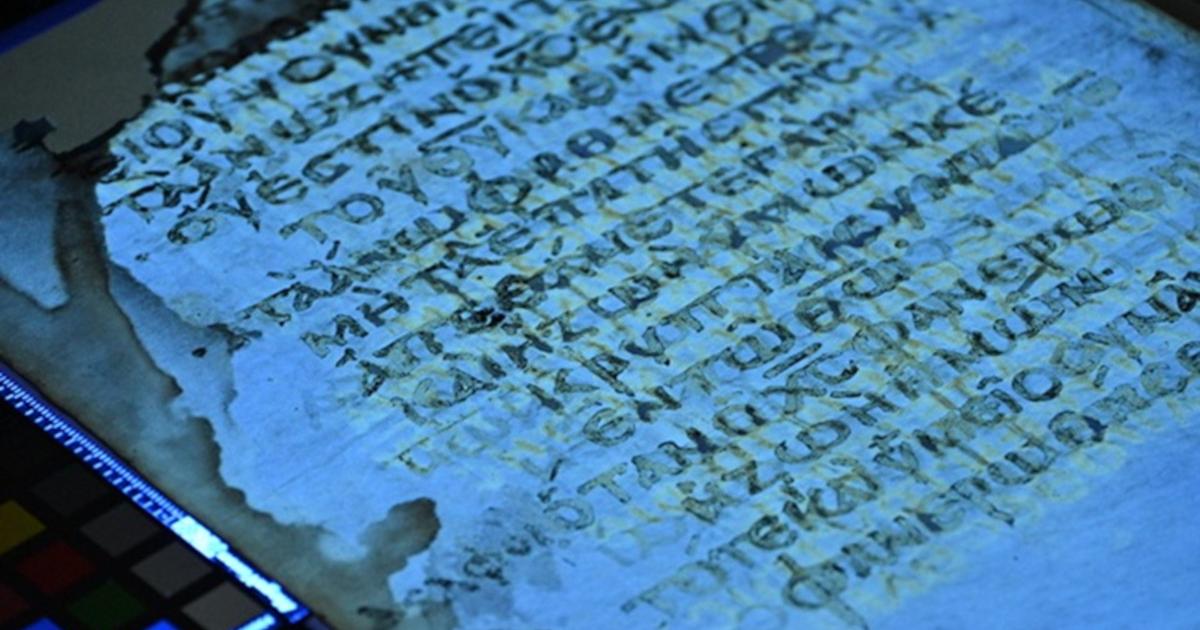
 In a groundbreaking discovery that is reshaping biblical scholarship, researchers have successfully recovered 42 previously lost pages from one of the world’s most important early New Testament manuscripts.
The breakthrough centers on Codex H, a rare 6th-century Greek codex containing the Letters of Saint Paul. Using advanced multispectral imaging technology, an international team led by the University of Glasgow managed to reveal text that had remained hidden for centuries after the manuscript was dismantled during the medieval period.
Scholars say the recovered material offers an extraordinary window into how early Christians studied, organized, and interpreted sacred scripture more than 1,400 years ago.
A Manuscript Torn Apart in the Middle Ages
Codex H, formally catalogued as GA 015, was originally created during the 6th century and contained portions of the letters written by Paul the Apostle.
What makes the manuscript especially valuable is its inclusion of the “Euthalian apparatus” — a sophisticated system of annotations, chapter lists, cross-references, and explanatory notes used by early Christian readers to navigate biblical texts.
Researchers say this demonstrates that ancient readers engaged deeply and analytically with scripture rather than simply copying or reading it passively.
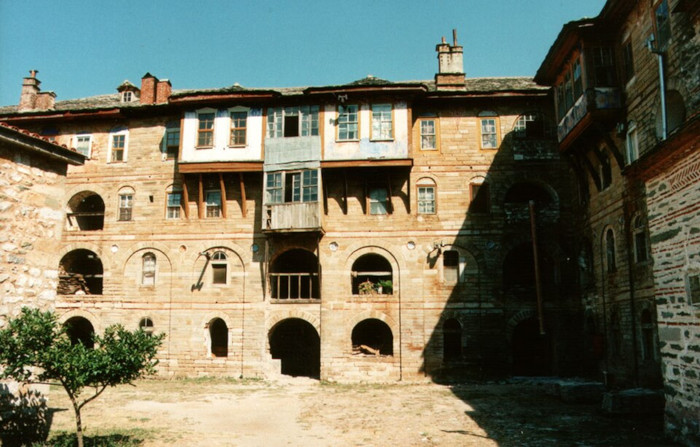
However, the manuscript’s survival took a dramatic turn in the 13th century at the Great Lavra Monastery on Mount Athos.
During this period, the codex was disassembled and its parchment pages were recycled as binding material and protective flyleaves for other manuscripts — a common medieval practice when parchment remained extremely valuable.
Over time, the scattered fragments of Codex H ended up spread across libraries and collections in Greece, France, Italy, Russia, and Ukraine, while many sections were believed lost forever.
 Technology Reveals “Ghost Text”
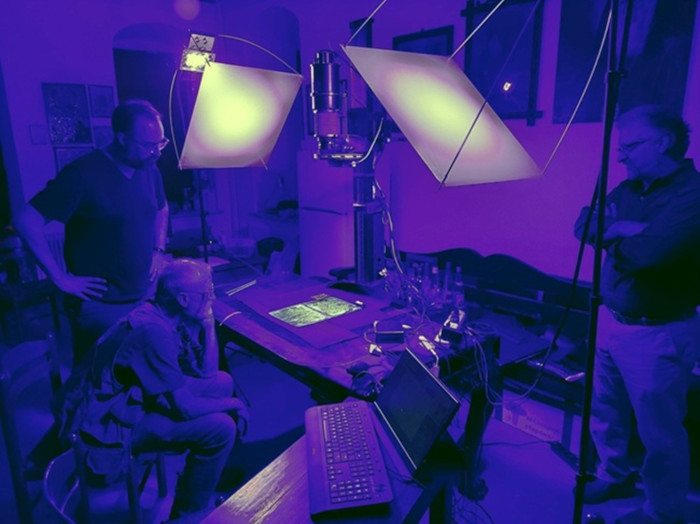
The recovery became possible through the use of multispectral imaging, an advanced technique capable of capturing traces of ink invisible to the human eye.
According to Professor Garrick Allen of the University of Glasgow, the breakthrough relied on the discovery that parts of the manuscript had been re-inked centuries ago.
The chemicals from the later ink left faint mirrored impressions — sometimes called “ghost text” — on adjacent pages. Though nearly impossible to see naturally, these traces became visible under specialized imaging using ultraviolet and infrared light.
Working alongside the Early Manuscripts Electronic Library, researchers digitally processed the surviving manuscript fragments and successfully reconstructed dozens of missing pages.
The team also collaborated with experts in Paris who performed radiocarbon testing to confirm the parchment dated back to the 6th century.
What the Lost Pages Reveal
Although the recovered text contains known portions of Saint Paul’s letters, scholars say its true importance lies in the additional annotations and structural information preserved within the manuscript.
Among the most significant discoveries are some of the earliest known chapter lists for Paul’s writings — structures that differ substantially from the chapter divisions used in modern Bibles.
Researchers also gained new insight into how early Christian scribes corrected texts, organized scripture, and guided readers through theological themes.
The manuscript further reveals how sacred books themselves evolved physically over time, including how valuable parchment was recycled and repurposed during the medieval era.
Professor Allen described the recovery as “nothing short of monumental,” noting that even small additions to a manuscript of this importance can dramatically expand scholarly understanding of early Christianity.
 A Major Achievement in Biblical Scholarship
The project, titled Annotating the New Testament: Codex H, Euthalian Traditions, and the Humanities, was funded by the Templeton Religion Trust and the UK’s Arts and Humanities Research Council.
Researchers also worked closely with the Brotherhood of the Great Lavra Monastery, which granted access to surviving fragments preserved on Mount Athos.
The team has since produced a new open-access digital edition of Codex H, allowing scholars and the public worldwide to study the recovered pages online.
Historians say the success of the project highlights how modern imaging technology is revolutionizing the study of ancient manuscripts. As techniques continue improving, researchers believe countless hidden texts may still await rediscovery inside libraries, monasteries, and archives around the world.
For now, the recovery of Codex H’s lost pages stands as one of the most significant recent discoveries in early Christian manuscript studies — reconnecting modern readers with voices and traditions preserved for nearly fifteen centuries.