Why the Great Pyramid of Giza Has Survived Earthquakes for 4,600 Years
The Great Pyramid of Giza has endured for more than four and a half millennia — surviving wars, erosion, extreme desert conditions, and even powerful earthquakes that have shaken Egypt over the centuries. Now, new scientific research is helping explain why the ancient wonder has proven so extraordinarily resilient.
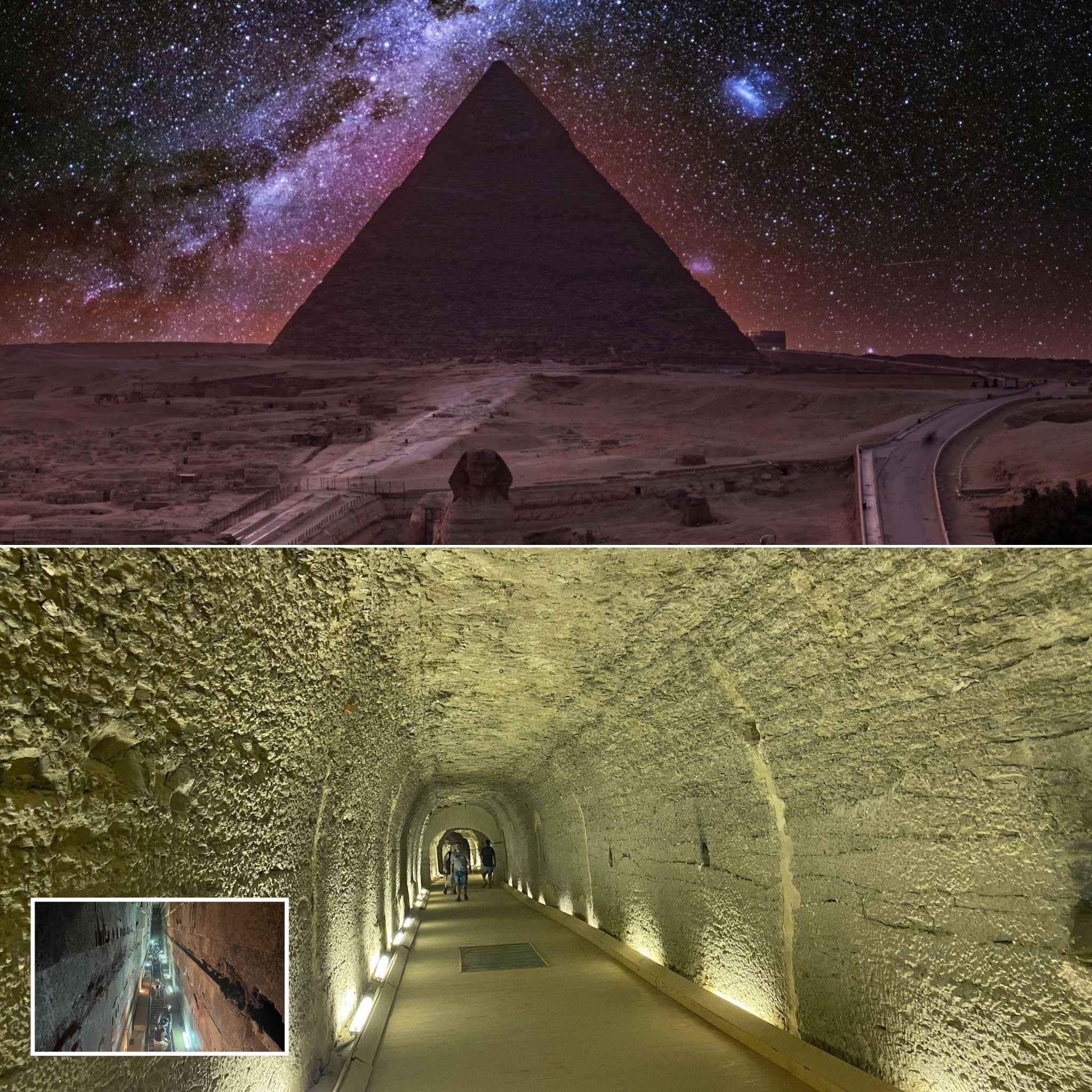
According to a recent study published in Scientific Reports, the pyramid’s internal design and massive structural geometry make it unusually resistant to seismic vibrations. Researchers found that the monument essentially “decouples” itself from earthquake waves traveling through the ground, allowing it to absorb and reduce damaging motion before it can destabilize the structure.
A Monument That Barely Changed in 46 Centuries
Built during Egypt’s Old Kingdom for Pharaoh Khufu around 2600 B.C., the Great Pyramid originally stood roughly 481 feet (146.6 meters) tall. Despite thousands of years of weathering and seismic activity, it has lost only about 33 feet (10 meters) of height.
That survival becomes even more impressive considering the earthquakes the pyramid has experienced. Historical tremors near Egypt included:
- An estimated magnitude 6.8 earthquake near Fayum in 1847
- A magnitude 5.9 earthquake in 1992 that dislodged stones near the pyramid’s top
Yet the structure remained fundamentally intact.
Inside the Pyramid’s Earthquake Resistance


To understand the pyramid’s resilience, scientists placed vibration sensors at 37 locations inside and around the structure. They measured ambient vibrations when the monument was empty of tourists and compared how seismic frequencies behaved in different parts of the pyramid.
The results revealed something remarkable.
The pyramid naturally vibrates at frequencies between roughly 2.0 and 2.6 hertz, while the surrounding ground vibrates at much lower frequencies — around 0.6 hertz.
That mismatch matters because earthquake energy travels through the ground in waves. Since the pyramid’s natural vibration frequency differs significantly from the surrounding earth, much of the seismic energy fails to efficiently transfer into the structure itself.
In simple terms, the pyramid “moves differently” from the ground beneath it during an earthquake, reducing the destructive resonance that often damages buildings.
The Role of the Relieving Chambers
One of the most important discoveries involved the famous relieving chambers above the King’s Chamber.
These stacked granite chambers were traditionally believed to exist mainly to redistribute the enormous weight of the pyramid away from Khufu’s burial chamber below. But the new research suggests they serve another purpose as well: vibration damping.


Researchers observed that vibration intensity increases toward the pyramid’s upper sections — something common in tall structures. However, the relieving chambers interrupt and weaken that movement before vibrations can continue upward toward the apex.
The effect acts somewhat like a built-in shock absorption system embedded within the monument’s architecture.
Ancient Engineering Far Ahead of Its Time
The findings reinforce growing admiration for the engineering sophistication of ancient Egyptian builders.
Several design elements appear to contribute to the pyramid’s stability:
- Its enormous square base
- Symmetrical geometry
- Dense limestone foundation
- Carefully distributed internal chambers
- Massive stone weight creating structural inertia
Together, these features make the monument exceptionally stable against external forces.
Researchers say the study demonstrates that Egyptian architects possessed highly refined practical engineering knowledge developed through centuries of experimentation.
More Than Just a Tomb
The study also highlights how pyramids were not crude piles of stone but carefully engineered structures designed with incredible precision.
The Great Pyramid’s builders understood:
- Weight distribution
- Load transfer
- Structural balance
- Material durability
- Geometric stability
Even without modern mathematics or seismic engineering theory, they developed solutions that continue outperforming many later structures.
A Legacy of Architectural Evolution


The Great Pyramid did not emerge in isolation. Earlier Egyptian pyramids show evidence of experimentation, including failed structural designs and changing construction techniques.
By the time Khufu’s pyramid was built, Egyptian engineers had already spent generations refining:
- Pyramid angles
- Internal layouts
- Foundation techniques
- Stone-cutting precision
That accumulated knowledge helped create what remains one of the most durable human-made structures in history.
Still Teaching Scientists Today
Researchers plan to continue measuring seismic behavior not only at the Great Pyramid but also at other ancient Egyptian monuments.
The work could improve both archaeological preservation and modern engineering by revealing how ancient builders achieved extraordinary structural longevity using simple materials and geometry.
More than 4,600 years after its construction, the Great Pyramid still stands as proof that ancient engineering was far more advanced than many people once imagined.