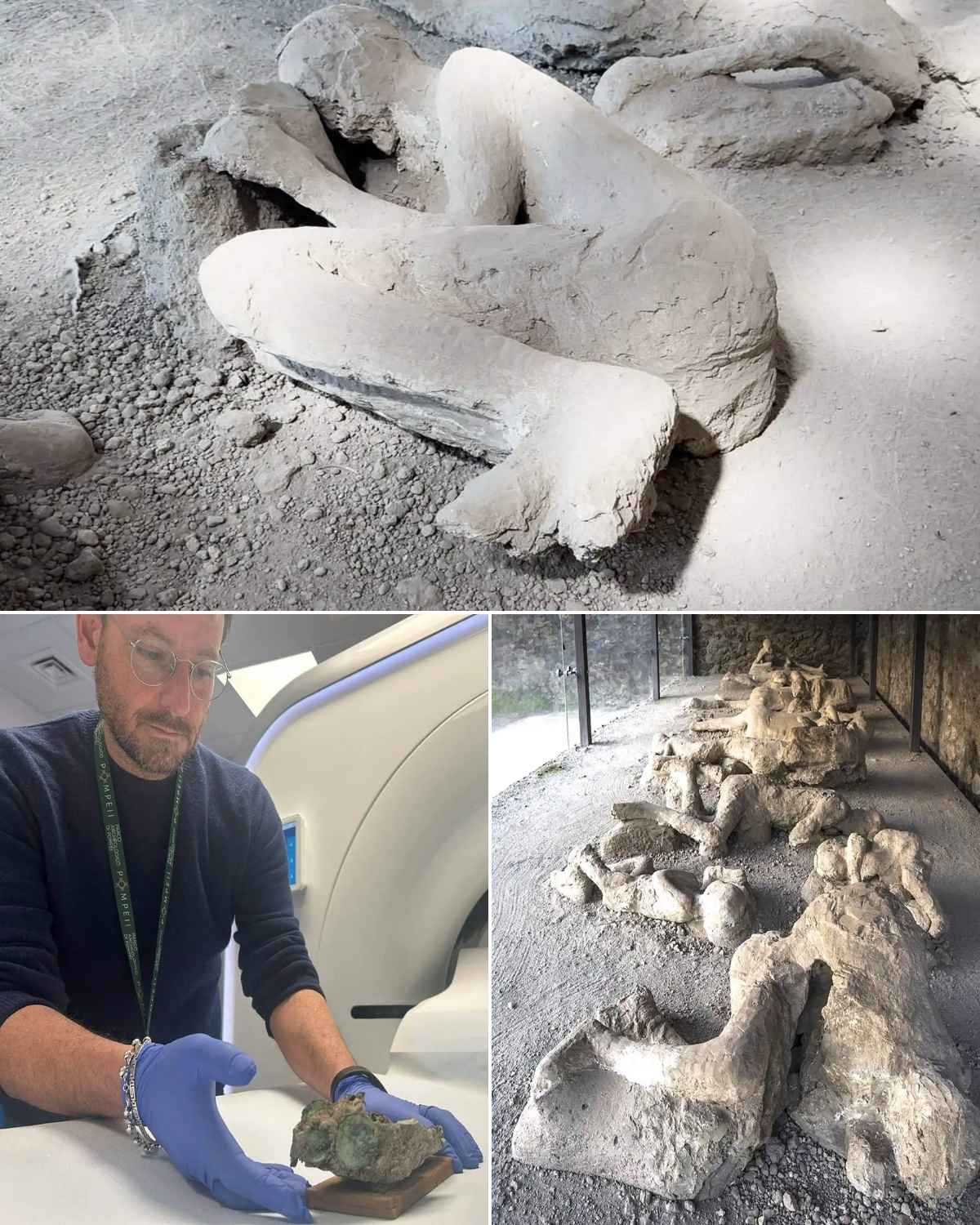
A Pompeii Victim May Have Been A Doctor Carrying His Medical Tools While Trying To Escape Death — And The Discovery Changes The Way We See The Ancient Tragedy
For nearly 2,000 years, the victims of Pompeii have mostly been remembered as frozen shadows of one catastrophic moment in history. But a new scientific discovery is giving one of those victims something deeply human again — an identity, a profession, and perhaps even a final purpose.

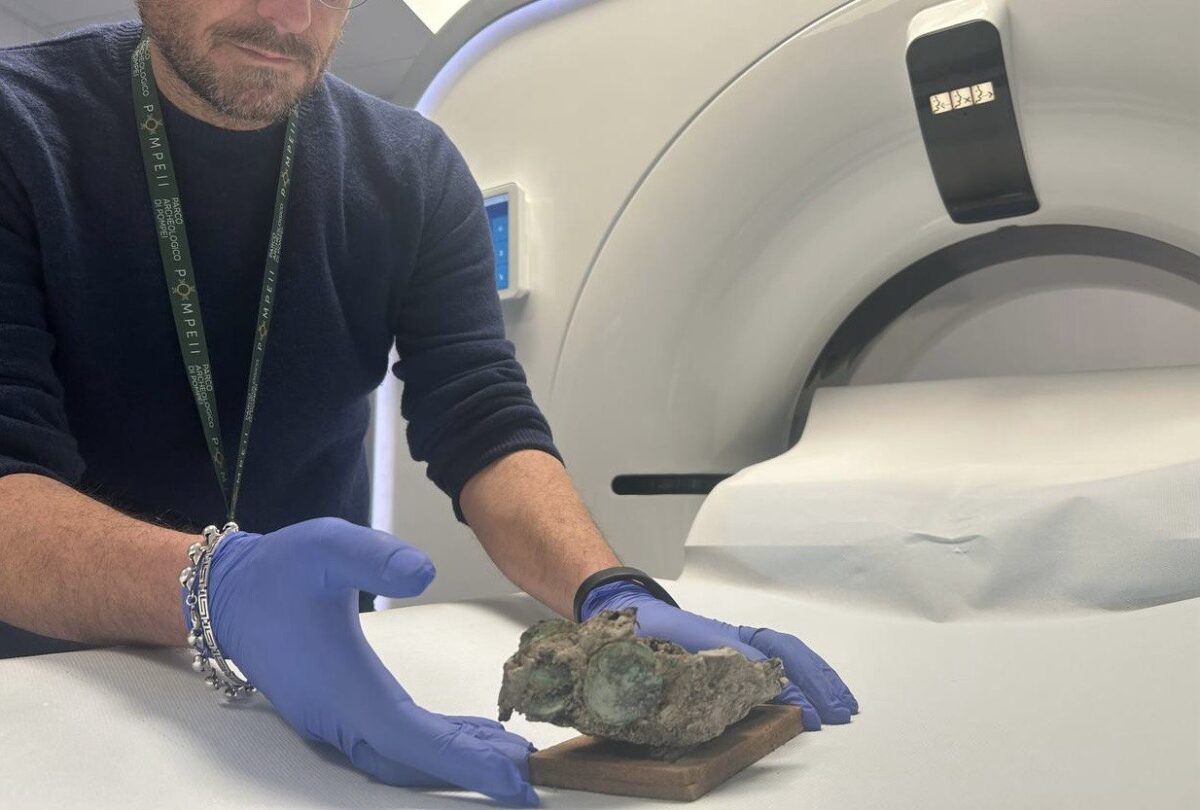
Researchers studying the remains of a man found in Pompeii’s famous “Garden of the Fugitives” now believe he may have been a physician fleeing the eruption of Mount Vesuvius in 79 A.D. Beside his body was a small case that had remained largely unexplored for decades. At first glance, it seemed insignificant. But modern technology changed everything.
Using CT scans, artificial intelligence, and 3D reconstruction tools, scientists were finally able to examine the contents without damaging the artifact itself. Inside, they found bronze and silver coins, small precision metal instruments believed to belong to a medical set, and a slate slab historically used to prepare medicinal substances in the ancient Roman world.
That discovery transformed the story completely.
This was no random object grabbed during panic. Experts now believe the man was likely a “medicus” — the Latin term for a doctor. And suddenly, one haunting possibility emerged: while thousands were running for their lives under clouds of burning ash and toxic gas, this man may have chosen to bring the tools of his profession with him.
That detail matters more than it may initially seem.
In moments of disaster, people usually reach for what they value most. Some grab money. Some grab family heirlooms. Some grab food or weapons. But this man appears to have grabbed the instruments connected to healing, survival, and service to others.
It suggests he may have believed there would still be people to save after the nightmare ended.
Archaeologists say the victims were found sheltering inside a vineyard area while Pompeii collapsed around them. Most residents likely died from suffocation caused by volcanic ash and extreme thermal shock within less than 24 hours after Vesuvius erupted. The speed and violence of the disaster gave many people little chance to escape.
Yet even inside that chaos, this man may have still been thinking like a doctor.
Dr. Gabriel Zuchtriegel from the Archaeological Park of Pompeii explained that the victim possibly carried the tools because he hoped to rebuild his life elsewhere after escaping the city. But there’s another emotional layer hidden underneath that theory: perhaps he also carried them because helping others was inseparable from who he was.
And that is what makes this discovery so emotionally powerful.
For decades, Pompeii has fascinated the world because it preserved death in horrifying detail. Bodies trapped mid-motion. Families embracing each other. Victims frozen in fear. But discoveries like this remind us that Pompeii was not just a site of destruction — it was a living city filled with individuals, responsibilities, professions, dreams, and identities abruptly erased in a single day.

This man was not merely “a victim of Vesuvius.”
He may have been a healer.
A professional.
Someone people trusted.
Someone who possibly believed, until the final moments, that his skills would still matter somewhere beyond the ash.
And nearly two millennia later, science has finally allowed his story to speak again.