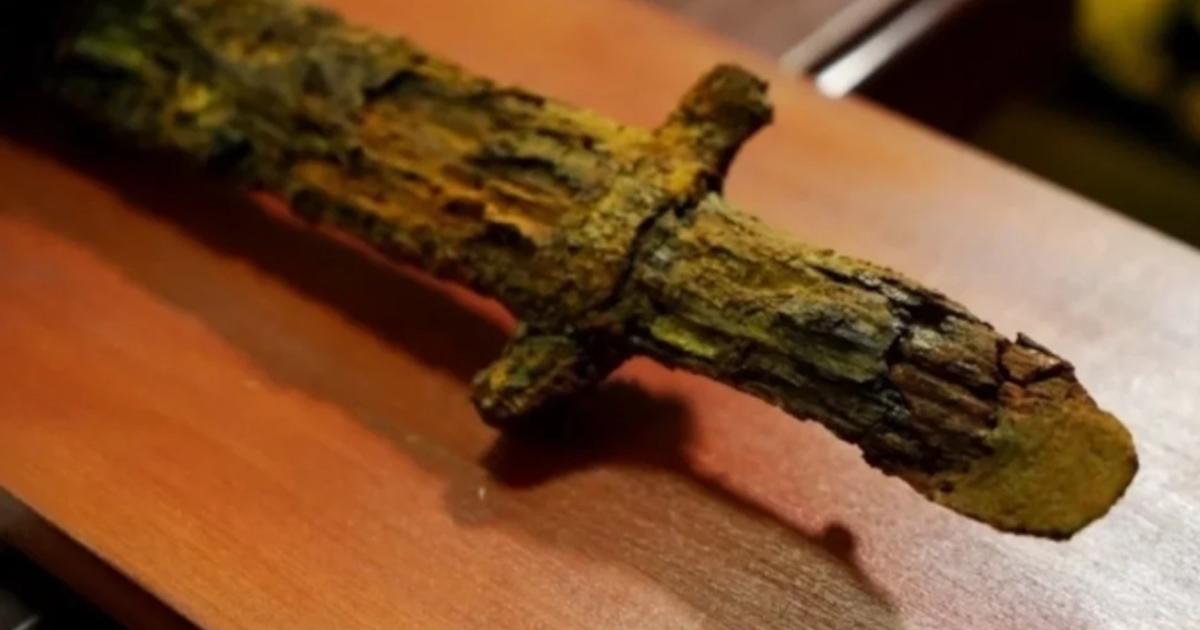
 Archaeologists in southern Russia have uncovered an extraordinary medieval weapon that is rewriting assumptions about warfare on the Eurasian steppe.
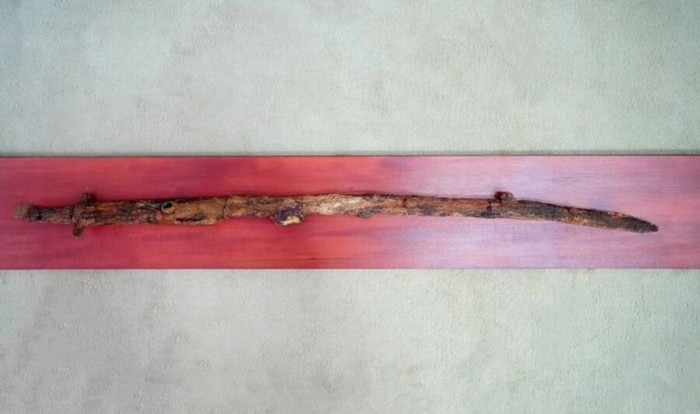
During excavations at the ancient Eagle’s Nest (Orlinoye Gnezdo) burial ground, researchers discovered a massive 13th-century saber measuring an astonishing 112 centimeters (44 inches) in length — far larger than most weapons of its era.
The remarkable find is being hailed as one of the most important recent discoveries in the region and could provide valuable new insights into the elite warrior culture of the Golden Horde.
A Rare Discovery Beneath the Steppe
The weapon was found during excavations of more than 50 medieval Muslim burials uncovered at the Eagle’s Nest archaeological complex in Russia’s Astrakhan region.
While most graves contained few or no artifacts, two burials stood out for their unusual characteristics.
One grave contained a man buried face down alongside horse equipment and riding gear, suggesting a burial practice with symbolic or ritual significance.
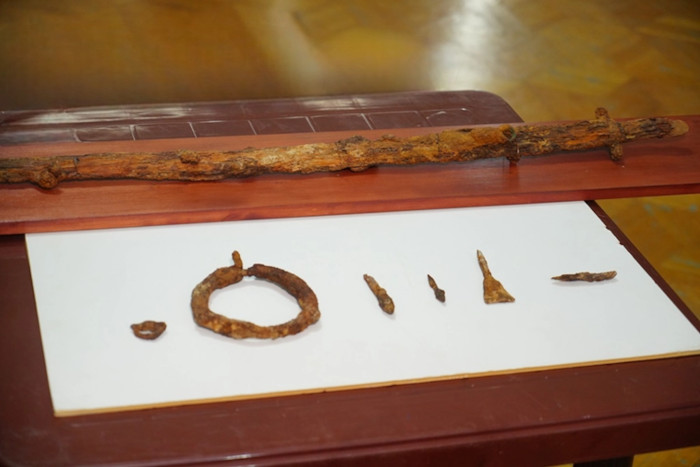
Nearby, archaeologists uncovered a second burial containing a male warrior accompanied by arrowheads, traces of armor, a helmet, and the enormous saber still preserved within its wooden scabbard.
 A Weapon Unlike Any Other
The saber immediately attracted attention because of its extraordinary size.
Most sabers from the 13th century typically featured blades around 70 centimeters long. This example, however, measures nearly one meter in blade length and 112 centimeters overall.
Researchers carefully removed the artifact as a single block weighing approximately 15 kilograms before beginning a lengthy conservation process.
According to restoration specialists, the wooden scabbard played a crucial role in preserving the weapon. Chemical reactions involving iron oxides helped protect the organic material, allowing the saber to survive in exceptional condition.
Experts believe the weapon was likely custom-made rather than mass-produced.
The Mystery of Its Owner
One of the most intriguing aspects of the discovery is the apparent mismatch between the weapon and the man buried with it.
Based on skeletal analysis, the warrior stood roughly 175 centimeters (5 feet 9 inches) tall.
Yet researchers estimate that effectively drawing and wielding such a long saber would have been easier for someone approaching two meters (6 feet 5 inches) in height.
This has sparked several theories.
The saber may have:
- Been a prestigious ceremonial object
- Served as an inherited family heirloom
- Represented a symbol of rank or authority
- Been designed for a specialized combat style
Additional finds, including arrowheads, riding equipment, and what may be remnants of a quiver, reinforce the warrior’s connection to mounted warfare.
 A Window Into the Golden Horde Era
The discovery dates to a transformative period in Eurasian history.
During the 13th century, the lower Volga region became a crossroads of cultures influenced by the expanding Mongol world. Trade routes, military traditions, and religious practices intersected across the vast steppe landscape.
Archaeologists say the Eagle’s Nest discoveries offer a rare opportunity to examine how elite warriors lived, fought, and were remembered during the early Golden Horde period.
The giant saber, in particular, stands as a powerful symbol of status, military identity, and craftsmanship in a society where mounted warriors played a central role in political and military power.
As analysis continues, researchers hope the burial will reveal even more about the people who shaped the medieval history of the Eurasian steppe.